Psalms 31
People in this chapter
Psalm 31 begins where faith so often has to begin - not in triumph, but in trouble. In thee, O LORD, do I put my trust; let me never be ashamed: deliver me in thy righteousness (v. 1). The psalmist is caught in a net laid secretly for him (v. 4), hemmed in by enemies, with fear… on every side (v. 13).
And yet the first words out of his mouth are not the danger but the refuge: in thee. Everything that follows hangs on that opening preposition. He does not start by describing how bad things are; he starts by naming where he has run, and the rest of the psalm is the long working-out of what it means to have run there.
Tap any highlighted phrase to jump to the commentary that unpacks it.
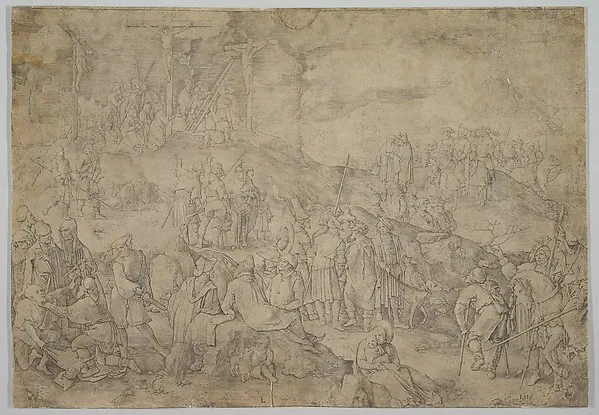
Psalm 31:1-8 · To the chief Musician, A Psalm of DavidInto Thine Hand I Commit My Spirit
1In thee, O LORD, do I put my trust; let me never be ashamed: deliver me in thy righteousness. 2Bow down thine ear to me; deliver me speedily: be thou my strong rock, for an house of defence to save me. 3For thou art my rock and my fortress; therefore for thy name’s sake lead me, and guide me. 4Pull me out of the net that they have laid privily for me: for thou art my strength. 5Into thine hand I commit my spirit: thou hast redeemed me, O LORD God of truth. 6I have hated them that regard lying vanities: but I trust in the LORD. 7I will be glad and rejoice in thy mercy: for thou hast considered my trouble; thou hast known my soul in adversities; 8And hast not shut me up into the hand of the enemy: thou hast set my feet in a large room.
Notice the ground of the appeal in the very first verse: deliver me in thy righteousness. The psalmist does not ask to be rescued because his own record is clean - later he will confess that his strength fails because of mine iniquity (v. 10). He asks God to act according to God's faithful, covenant-keeping character, not his own merit. This is a profound move, and it is the reason the prayer can be confident even when the one praying is not. Rescue rests on who God is.
And the second verse stacks up the names for what he is asking God to be: strong rock, house of defence - not a feeling of safety but an actual fortress to be hidden inside. He is not asking God to send help from a distance; he is asking God to be the place he runs to.
For thou art my rock and my fortress (v. 3) is the language of someone who has run out of places to hide and found that God Himself is the hiding place. A rock cannot be moved; a fortress cannot be stormed. The psalmist is not asking God to provide security as one might provide a service - he is saying that God is the security.
And then comes a striking little phrase: for thy name's sake lead me, and guide me. He ties his request to God's own reputation. Lead me, he says in effect, because leading the helpless is the kind of thing your name stands for - rescuing those who cannot rescue themselves is what you are known for, so do it now, and let the doing of it bring honour to you. It is a way of praying that lifts the appeal off the smallness of the petitioner and rests it on the greatness of God.
Verse 4 then names the danger exactly: a net… laid privily, a trap set in secret, the kind of thing he cannot fight because he cannot even see it - which is precisely why he needs a strength outside himself: for thou art my strength.
Before any deliverance arrives, the psalmist already has something to be glad about: he is known. I will be glad and rejoice in thy mercy: for thou hast considered my trouble; thou hast known my soul in adversities (vv. 7-8). God does not know us only in our best moments - the answered prayer, the public victory, the day everything finally works out. He knows our soul in the adversities: He sees the tears no one else sees, hears the prayer whispered in the dark, has considered - actually looked at and weighed - the trouble.
And to be known like that, before anything changes, is itself a kind of rescue.
The verses go further: thou hast not shut me up into the hand of the enemy: thou hast set my feet in a large room. The picture is of being released from a tight, cornered, hunted place into open ground where a person can breathe and move. Sometimes that is exactly how deliverance first feels - not the end of every trouble, but room to stand.
Psalm 31:9-18My Times Are in Thy Hand
9Have mercy upon me, O LORD, for I am in trouble: mine eye is consumed with grief, yea, my soul and my belly. 10For my life is spent with grief, and my years with sighing: my strength faileth because of mine iniquity, and my bones are consumed. 11I was a reproach among all mine enemies, but especially among my neighbours, and a fear to mine acquaintance: they that did see me without fled from me. 12I am forgotten as a dead man out of mind: I am like a broken vessel. 13For I have heard the slander of many: fear was on every side: while they took counsel together against me, they devised to take away my life. 14But I trusted in thee, O LORD: I said, Thou art my God. 15My times are in thy hand: deliver me from the hand of mine enemies, and from them that persecute me. 16Make thy face to shine upon thy servant: save me for thy mercies’ sake. 17Let me not be ashamed, O LORD; for I have called upon thee: let the wicked be ashamed, and let them be silent in the grave. 18Let the lying lips be put to silence; which speak grievous things proudly and contemptuously against the righteous.
This is some of the most unflinching language of grief anywhere in the Psalms. The trouble is not one kind but three at once. It is physical - an eye consumed with grief, strength that faileth, bones consumed, a life spent with grief and years with sighing (vv. 9-10). It is social - a reproach to enemies, but worse, especially among my neighbours, a fear to mine acquaintance; even the people who knew him best draw back, and they that did see me without fled from me (v. 11).
And it is mortal - slander on every side, a plot to take away my life (v. 13).
The psalm gives us permission to be exactly this honest with God. It does not skip to the comfort; it does not tidy the grief before bringing it. It names the brokenness fully - and only then, in verse 14, turns. The honesty is not the opposite of faith here; it is the soil faith grows in.
Verse 14 is the hinge of the whole psalm, and it turns on a single word: But I trusted in thee, O LORD: I said, Thou art my God. Nothing in the circumstances has changed. The enemies, the slander, the failing body, the plot on his life - all of it is still there, exactly as it was in the verses before. What changes is the direction of his gaze. Trust, as this psalm understands it, is not the feeling that everything is fine; it is the deliberate turn from the trouble in front of him to the God above him.
And it speaks. It does not merely think; it says - I said, Thou art my God. Three words, staked like a flag in hard ground: a claim made not because the evidence of the moment supports it but because it is true and he means to live by it. Faith here is an act of the will, spoken aloud against the noise of fear.
The plea make thy face to shine upon thy servant (v. 16) reaches back to the oldest blessing in Israel: The LORD make his face shine upon thee, and be gracious unto thee (Num. 6:25). A shining face is a face turned toward you in favour and gladness, not turned away in displeasure or indifference. The psalmist, who has just felt every human face turn from him (v. 11), asks for the one face whose turning toward him would change everything.
And he closes the appeal with the only currency he has - not merit, not bargaining, but mercy: save me for thy mercies' sake. It is the same logic as verse 1: he asks God to act on the basis of God's own character, not the petitioner's deserving.
Verses 17 and 18 then ask that the slander not have the last word - that the lying lips which speak grievous things proudly and contemptuously against the righteous be put to silence. This is not a thirst for personal revenge; it is a longing for the lie to fall and the truth to stand, and he hands that verdict to God rather than seizing it himself.
Psalm 31:19-24Oh How Great Is Thy Goodness
19Oh how great is thy goodness, which thou hast laid up for them that fear thee; which thou hast wrought for them that trust in thee before the sons of men! 20Thou shalt hide them in the secret of thy presence from the pride of man: thou shalt keep them secretly in a pavilion from the strife of tongues. 21Blessed be the LORD: for he hath shewed me his marvellous kindness in a strong city. 22For I said in my haste, I am cut off from before thine eyes: nevertheless thou heardest the voice of my supplications when I cried unto thee. 23O love the LORD, all ye his saints: for the LORD preserveth the faithful, and plentifully rewardeth the proud doer. 24Be of good courage, and he shall strengthen your heart, all ye that hope in the LORD.
The psalm turns, and the turn is a gasp: Oh how great is thy goodness! (v. 19). The same man who just catalogued his griefs in unsparing detail now cannot find the bottom of God's kindness. Notice what God has done with that goodness - He has laid it up, stored it in reserve, for them that fear thee. The trouble was real, but it was never the whole inventory; there was a treasury behind it the entire time.
And there are two audiences for it: the goodness is laid up in secret, but it is also wrought… before the sons of men - done openly, in the sight of others. God's kindness to those who trust Him is partly held back for later and partly displayed now, so that watching eyes can see how He treats His own. The verse moves the reader's attention away from the size of the trouble to the size of the goodness - and finds the goodness larger.
The shelter God gives turns out to be intimacy itself: Thou shalt hide them in the secret of thy presence from the pride of man (v. 20). The safest place is not a fortress wall but God's own nearness - a person tucked away in a pavilion from the strife of tongues, out of reach of the very slander that filled verse 13. The image is of being drawn into the inner room, the hidden place close to God where the loud cruelty of the world simply cannot follow.
There is a New Testament sentence that says the same thing from the far side: ye are dead, and your life is hid with Christ in God (Col. 3:3) - the believer's truest self stored where no enemy can reach it. The strife of tongues is real and it is loud; but it does not get into the secret place. There the only voice is the One whose face shines.
Verse 22 is one of the most honest confessions in all of Scripture: For I said in my haste, I am cut off from before thine eyes. He admits he panicked. In the heat of the trouble he jumped to the worst conclusion - that God had stopped seeing him, that he was finished, cut off and forgotten. He gave up too soon.
And then comes the word that rescues the whole verse: Nevertheless thou heardest the voice of my supplications when I cried unto thee. God answered the prayer of a man whose faith had momentarily failed. The panic did not disqualify the cry. This is enormously freeing to notice: the psalmist is not held up as a hero of unbroken confidence but as someone who concluded too quickly that God was gone - and was heard anyway. Faltering faith that still cries out is still heard. The nevertheless belongs to God, not to the steadiness of the one praying.
Research trail
Sources & further study
These references support the historical, linguistic, manuscript, and contextual notes in this chapter. Scripture remains the primary text; external sources are provided so readers can inspect the research directly.
- Psalm 31 · Hebrew text & classical Jewish commentaryThe Hebrew of Psalm 31 with Rashi and other classical commentators side by side - useful for the force of aphqid (v. 5, “I commit,” from paqad, to deposit for safekeeping), padah (v. 5, “redeemed,” to ransom at a price), and 'ittotai (v. 15, “my times,” the whole span of one's seasons).
- Psalm 31 ↔ Luke 23 · Acts 7 · 1 Peter 1 & 4Maps where Psalm 31 surfaces in the New Testament - chiefly verse 5 on the lips of Jesus (Luke 23:46) and Stephen (Acts 7:59), the language of ransom taken up in 1 Peter 1:18-19, and the call to commit the keeping of their souls in 1 Peter 4:19.
- Psalm 31 - Translators' NotesVerse-by-verse translation notes comparing the KJV wording with the underlying Hebrew - the imagery of the secretly laid net (v. 4), the broken vessel (v. 12), the strong city (v. 21), and the plural “times” held in God's hand (v. 15).
Where this echoes in Scripture
Into Thine Hand I Commit My Spirit
- Luke 23:46Father, into thy hands I commend my spirit: and having said thus, he gave up the ghost.The Lord Jesus prays Psalm 31:5 with His dying breath - the psalm of trust made His own.
- Acts 7:59And they stoned Stephen, calling upon God, and saying, Lord Jesus, receive my spirit.The first martyr echoes the same committing of the spirit at his death.
- 1 Peter 4:19Let them that suffer... commit the keeping of their souls to him in well doing, as unto a faithful Creator.The apostle turns verse 5 into a rule for every sufferer.
- 1 Peter 1:18-19Ye were not redeemed with... silver and gold... but with the precious blood of Christ.The ransom-word of verse 5 (“thou hast redeemed me”) taken up and named.
- Psalm 71:1-3In thee, O LORD, do I put my trust... be thou my strong habitation, whereunto I may continually resort.A near-twin opening - the same refuge prayed again, almost word for word.
My Times Are in Thy Hand
- Isaiah 53:3He is despised and rejected of men; a man of sorrows, and acquainted with grief: and we hid as it were our faces from him.The reproach of verse 11 drawn out into a full portrait of the suffering Servant.
- John 11:53Then from that day forth they took counsel together for to put him to death.The plot of verse 13 - “they devised to take away my life” - fulfilled against Christ.
- Numbers 6:24-26The LORD make his face shine upon thee, and be gracious unto thee.The blessing the psalmist reaches for in verse 16 - the face of God turned toward His own.
- Lamentations 3:54-57I said, I am cut off... thou drewest near in the day that I called upon thee: thou saidst, Fear not.The same descent into despair and the same nearness of God in answer.
- Acts 1:7It is not for you to know the times or the seasons, which the Father hath put in his own power.Our times (v. 15) are kept in a hand we cannot see into - held by the Father, not by us.
Oh How Great Is Thy Goodness
- 1 Corinthians 2:9Eye hath not seen, nor ear heard... the things which God hath prepared for them that love him.The goodness “laid up” of verse 19, still held in reserve for those who love God.
- Colossians 3:3For ye are dead, and your life is hid with Christ in God.Hidden “in the secret of thy presence” (v. 20) - the self kept where no enemy reaches.
- Psalm 27:14Wait on the LORD: be of good courage, and he shall strengthen thine heart: wait, I say, on the LORD.The closing charge of verse 24, sounded again almost word for word.
- Romans 8:31If God be for us, who can be against us?The “strong city” of verse 21 compressed into a single, unanswerable question.
- John 16:33In the world ye shall have tribulation: but be of good cheer; I have overcome the world.The same charge to courage (v. 24), now grounded in a victory already won.