Psalms 70
People in this chapter
Psalm 70 is the briefest cry in the Psalter, and one of the most naked: Make haste, O God, to deliver me; make haste to help me, O LORD. Five verses, no warm-up, no settled composure - just a man so pressed that long sentences are impossible. He can only say the most direct thing there is: Do not delay. Come quickly. The whole psalm has the breathlessness of real emergency about it; you can feel that the one praying it has run out of everything except the cry itself.
And yet this is not the prayer of someone who has stopped believing. It is the prayer of someone who believes God is close enough, and quick enough, to be reached with a single shout.1
Tap any highlighted phrase to jump to the commentary that unpacks it.
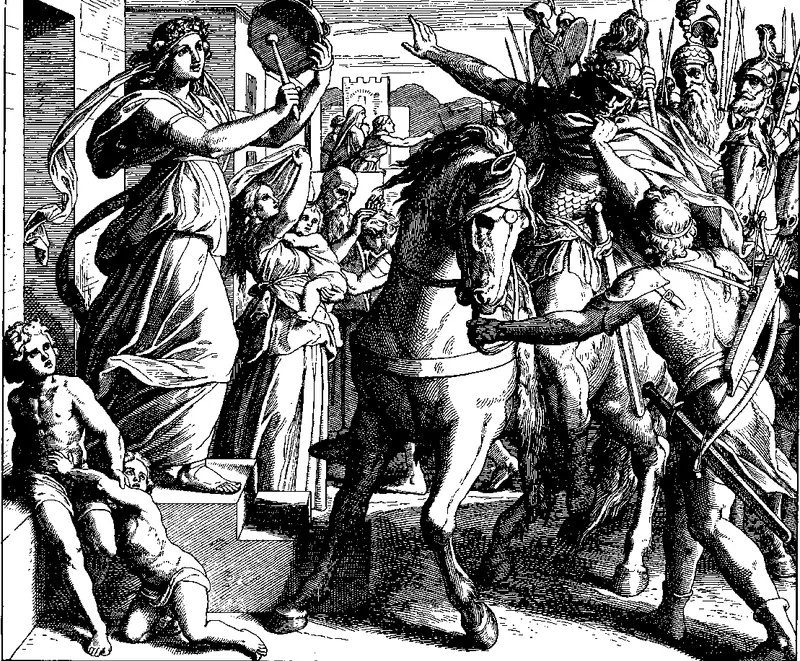
Psalm 70:1-3 · To the chief Musician, A Psalm of David, to bring to remembranceMake Haste, O God, to Deliver Me
1MAKE HASTE, O GOD, TO DELIVER ME; MAKE HASTE TO HELP ME, O LORD. 2Let them be ashamed and confounded that seek after my soul: let them be turned backward, and put to confusion, that desire my hurt. 3Let them be turned back for a reward of their shame that say, Aha, aha.
The psalm does not ease in; it begins already running. Make haste, O God, to deliver me; make haste to help me, O LORD. The very first word is the cry, and it is doubled - make haste… make haste - the language of someone who has no margin left. This is the prayer of the emergency, where every second matters and there is breath only for the most necessary thing.
Notice what the brevity itself is telling us. The psalmist does not stop to build a case or reason his way toward calm; the trouble is too immediate. All he can do is name his need and ask God to move, and move now.
And there is a quiet theology buried in that very urgency. To pray make haste is to believe that God is near enough to be reached with a shout and quick enough to act before it is too late. A person who had given up would not bother to ask God to hurry. The shortness of this prayer is not the sign of a shrinking faith; it is the reflex of a faith so sure of God's nearness that it dispenses with everything but the cry.
The cry for help has a backdrop, and it is hostile. There are those who seek after my soul - who hunt his very life - and who desire my hurt, who actively wish him harm (v. 2). The psalmist prays that they would be ashamed and confounded… turned backward, and put to confusion.
It is worth being clear about what this prayer is and is not. It is not a plot of private revenge; the singer lifts no hand against anyone. He asks God to turn the danger back - to frustrate the schemes aimed at him, to let the trap close on empty air. To be turned backward is to be stopped in mid-stride, the attack collapsing before it lands.
This is the cry of someone who knows he cannot defend himself and so commits his defense to God. He does not ask for his enemies' destruction so much as their defeat - that the malice desiring his hurt would come to nothing. There is a kind of trouble where the only honest prayer is, “Lord, stop this; turn it back; do not let them have their way” - and the psalm gives that prayer its words.
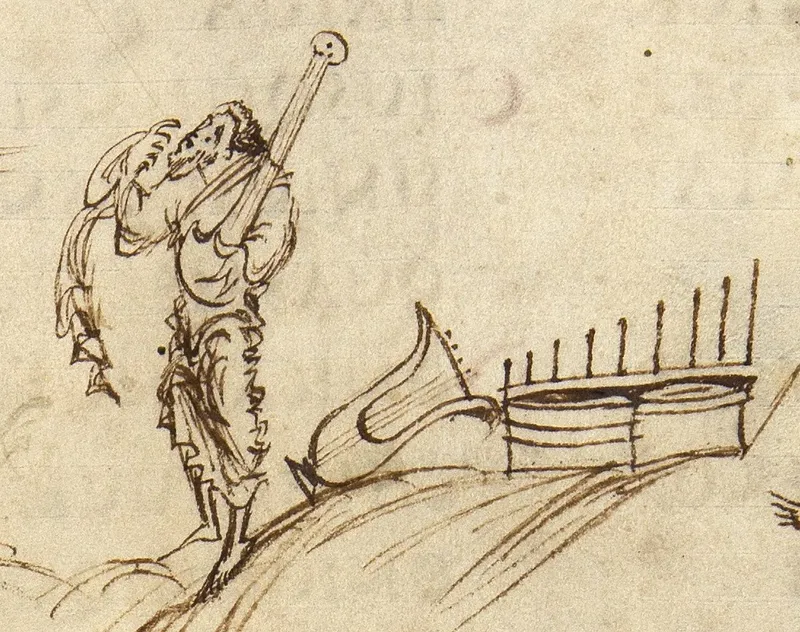
Psalm 70:4-5But I Am Poor and Needy
4Let all those that seek thee rejoice and be glad in thee: and let such as love thy salvation say continually, Let God be magnified. 5But I am poor and needy: make haste unto me, O God: thou art my help and my deliverer; O LORD, make no tarrying.
In the middle of his own emergency, the singer's heart widens. He has been praying for himself; now, for a moment, he prays for everyone else who belongs to God: Let all those that seek thee rejoice and be glad in thee: and let such as love thy salvation say continually, Let God be magnified (v. 4). This is a remarkable turn for a man under pressure. Trouble tends to shrink us, to narrow the whole world down to our own crisis - and yet here, mid-cry, the psalmist asks that the great company of all those that seek thee would be filled with joy.
Notice how he describes them: not as the strong or the deserving, but as those who seek God and love His salvation. That is the whole qualification - to want Him, to love being rescued by Him. And notice what he wants their joy to produce: a word said continually, over and over, Let God be magnified. To magnify God is not to make Him bigger - He cannot be made bigger - but to make Him look bigger, to enlarge the place He holds in human seeing, so that others catch sight of how great He truly is.
The singer's own rescue, when it comes, will be one more reason for that song; but even before it comes, he wants God magnified. His crisis has not made him selfish. It has made him long, for himself and for everyone, that God would be seen as great.
Then the psalm comes home to its truest note, and the contrast is deliberate: But I am poor and needy. Over against the rejoicing company of verse 4, the singer sets his own bare condition. He does not pretend to have risen above his circumstances; he names them flatly. He is poor - bowed down, afflicted, pressed low - and needy - lacking, dependent, with nothing of his own to fall back on. This is not self-pity; it is honesty, and it is the honesty that prayer is made of.
Many of us labor to assemble some reason God should help us - some merit, some strength, some track record - before we feel we have the right to ask. The psalmist does the opposite. He comes with empty hands and says exactly what he is: a poor and needy man with nowhere else to turn. And far from disqualifying him, that emptiness is precisely his claim on God. For the God of Israel is the One who heareth the poor (Ps. 69:33), who shall deliver the needy when he crieth; the poor also, and him that hath no helper (Ps. 72:12).
The confession I am poor and needy is not the end of the prayer's hope. It is the ground of it.
The last word of the psalm is the first word made personal and pressed once more: make haste unto me, O God… O LORD, make no tarrying. The cry that opened the prayer comes back to close it, but now with the confession of need wrapped around it and the names of rescue spoken into it: thou art my help and my deliverer. Between the two pleas to hurry, the singer states what he believes about the God he is calling - not a distant power he hopes might notice him, but my help and my deliverer, the One whose very character is to come to the aid of the helpless.
And then, make no tarrying. Do not delay. Do not be slow. This is faith doing its boldest work: not a vague hope that things may eventually improve, but the conviction that God is already in motion, that rescue is not far off but near, that the only thing left to ask is that He would not be slow.
The psalm ends without telling us the deliverance arrived - and that is part of its honesty. It leaves the singer mid-cry, still poor, still needy, still asking God to hurry. But it leaves him certain of who he is asking, and that certainty is the whole point. The God who is not slack concerning his promise (2 Pet. 3:9), who hears the poor the moment they cry, can be trusted to make no tarrying.
Research trail
Sources & further study
These references support the historical, linguistic, manuscript, and contextual notes in this chapter. Scripture remains the primary text; external sources are provided so readers can inspect the research directly.
- Psalm 70 - Translators' NotesThe NET Bible's detailed footnotes on Psalm 70 - the urgency of the “make haste” imperatives, the heading “to bring to remembrance,” the relationship between this psalm and the conclusion of Psalm 40, and the force of the closing confession “I am poor and needy.”
- Psalm 70 · Hebrew + classical Jewish commentaryThe Hebrew text of Psalm 70 with Rashi, Ibn Ezra, and other classical commentators side by side - useful for the doubled chushah (vv. 1, 5, “make haste”), for the mocking cry he'ach (v. 3, “Aha, aha”), and for ani we-evyon (v. 5, “poor and needy”), as well as the psalm's close relationship to the ending of Psalm 40.
- Psalm 70 ↔ Psalm 40 · Hebrews 5 · Mark 14Traces the verbal threads tying Psalm 70 to its near-duplicate in Psalm 40 (vv. 13-17), to the strong crying and supplications of Hebrews 5:7, and to the jeering of the passion narratives where the mockers' scorn echoes the Aha, aha of verse 3.
- The Great Psalms Scroll (11Q5 / 11QPsalmsᵃ)The largest of the Psalms manuscripts from Qumran, copied in the first century - high-resolution images of an ancient scroll of the Psalms preserved for two thousand years, a witness to how carefully Israel treasured and copied these prayers, including the short, much-loved cry for help that Psalm 70 distills.
Where this echoes in Scripture
Make Haste, O God, to Deliver Me
- Hebrews 5:7In the days of his flesh, when he had offered up prayers and supplications with strong crying and tears.The doubled cry of verse 1 on the lips of Christ in Gethsemane - strong crying to the One able to save.
- Psalm 22:19Be not far from me, O LORD: O my strength, haste thee to help me.The same urgent “haste” / chush (v. 1) - the cry that God would fold up the distance and come quickly.
- Mark 15:29-30They that passed by railed on him, wagging their heads... save thyself, and come down from the cross.The mockers' “Aha, aha” of verse 3 heard again beneath the cross of the Lord.
- Psalm 40:13-14Be pleased, O LORD, to deliver me: O LORD, make haste to help me.Psalm 70 is nearly word for word the close of Psalm 40, lifted out as a prayer of its own.
But I Am Poor and Needy
- 2 Corinthians 8:9Though he was rich, yet for your sakes he became poor, that ye through his poverty might be rich.The help and deliverer of verse 5 became poor and needy Himself, to make the empty-handed rich.
- Psalm 34:6This poor man cried, and the LORD heard him, and saved him out of all his troubles.The poor and needy one of verse 5 is exactly the one God bends down to hear.
- Matthew 5:3Blessed are the poor in spirit: for theirs is the kingdom of heaven.The gospel keeps the shape of verse 5 - the kingdom opens first to the poor and needy.
- 2 Peter 3:9The Lord is not slack concerning his promise... but is longsuffering to us-ward.The ground of “make no tarrying” (v. 5) - the God who is never finally slow to save His own.