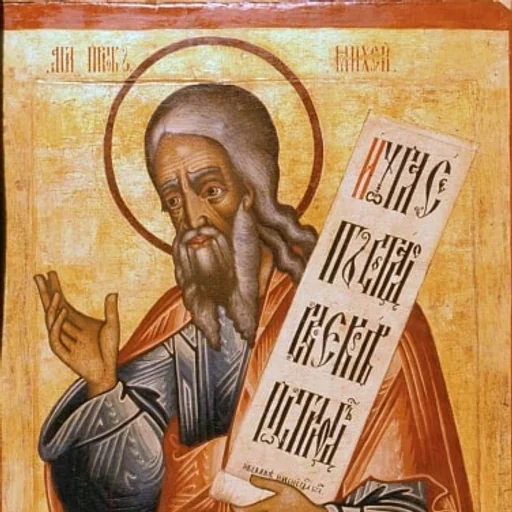
Who was Micah in the Bible?
Micah was a prophet from a small town in Judah who warned both Israel and Judah about their sins and promised a ruler to come from Bethlehem.
Prophet of Justice and Mercy
c. 730 BC
Micah was a prophet from a small town in Judah who warned both Israel and Judah about their sins and promised a ruler to come from Bethlehem.
Follow the reading trailBEYOND THE NAME
Micah of Moresheth prophesied during the reigns of Jotham, Ahaz, and Hezekiah, speaking against the corruption of leaders, priests, and prophets who oppressed the poor while claiming the Lord was with them. He announced judgment on Samaria and Jerusalem, yet wove through his warnings the hope of restoration, a remnant gathered, and a coming ruler born in Bethlehem. His most quoted words call God’s people to do justice, love mercy, and walk humbly with their God.
Themes in the authored commentary
These are other entries using this name. Compare their source passages before treating them as the same or different historical people.
These entries connect the study to the source’s recorded family context. Read their cautions when the family records or identifications differ.
FOLLOW THE PASSAGES
These are chapter studies associated with this record. Their order follows the books and chapters, rather than a reconstructed timeline of the person’s life.
cited as a precedent - his prophecy against Jerusalem was not punished by Hezekiah
Early in the reign of Jehoiakim the LORD sends Jeremiah to the most dangerous pulpit in the land: the court of the temple itself, where all the cities of Judah come up to worship. The instruction is unsparing - speak unto all the cities of Judah… all the words that I command thee to speak unto them; diminish not a word (v. 2). Not a syllable is to be trimmed for comfort. The message is the same one that had already made him hated - if the people will not turn, the LORD will do to this house what He once did to Shiloh, and make the city a curse to all the nations of the earth (vv. 4-6).
Chapter overview from the authored study guide.prophet whose opening vision against Samaria and Jerusalem is dated to the reigns of Jotham, Ahaz, and Hezekiah
The book opens with a heading and then a thunderclap. The heading tells us who and when: The word of the LORD that came to Micah the Morasthite in the days of Jotham, Ahaz, and Hezekiah, kings of Judah, which he saw concerning Samaria and Jerusalem (v. 1). Micah was a countryman from the small town of Moresheth, given a word about the two great capitals - Samaria in the north and Jerusalem in the south. But the summons he delivers throws its arms wide to the whole world: Hear, all ye people; hearken, O earth, and all that therein is: and let the Lord GOD be witness against you, the Lord from his holy temple (v. 2).
Chapter overview from the authored study guide.prophet who rebukes rulers who exploit the people and false prophets who prophesy for pay, contrasting their corruption with his own spirit-filled ministry
Micah speaks straight to the men in charge - the heads of Jacob and the princes of the house of Israel. His opening question is also an accusation: Is it not for you to know judgment? (v. 1). Knowing justice and doing it was the whole reason their office existed. Yet they have turned it upside down: they hate the good, and love the evil. What follows is some of the most violent imagery in the prophets. The rulers pluck off their skin, eat the flesh of my people, break their bones, and chop them in pieces, as for the pot (vv. 2-3) - a portrait of leaders who consume the very people they were charged to protect.
Chapter overview from the authored study guide.prophet who delivers the vision of universal peace and the restoration of a lame remnant to Zion
The first three chapters of Micah are mostly thunder - rulers who hate the good, and love the evil, prophets who cry Peace for a price, and the staggering word that Zion shall be plowed as a field, and Jerusalem shall become heaps. Then the storm breaks open onto light. But in the last days it shall come to pass, that the mountain of the house of the LORD shall be established in the top of the mountains, and it shall be exalted above the hills; and people shall flow unto it (v. 1).
Chapter overview from the authored study guide.prophet who voices God's covenant lawsuit against Israel and calls the people to remember their history
Micah stages the chapter as a courtroom drama. Hear ye now what the LORD saith; Arise, contend thou before the mountains, and let the hills hear thy voice (v. 1). The LORD has a controversy - a legal dispute - with His people, and He summons the oldest and most permanent witnesses there are, the mountains and the strong foundations of the earth, to hear the case. Then He does the unexpected: He opens with a question that lays His own conduct bare. O my people, what have I done unto thee? and wherein have I wearied thee? testify against me (v. 3).
Chapter overview from the authored study guide.prophet who laments the moral collapse of society and expresses confident trust in God's future restoration
Micah ends his book in despair before he ends it in worship, and the honesty of that order matters. The prophet looks out over his society and finds it rotted through. The good man is perished out of the earth: and there is none upright among men (v. 2). The powerful hunt the weak; rulers and judges take bribes openly; even the family has turned against itself, until a man’s enemies are the men of his own house (v. 6). This is not abstract lament. It is a man who has looked hard at the world around him and seen it come apart from the inside, and who will not paper over the rot with easy comfort.
Chapter overview from the authored study guide.THE PEOPLE AROUND THE PERSON
Relationships follow the source graph. Some are interpretive or uncertain, and individual verse citations are not yet available for every connection.
STUDY & INTERPRETATION
Micah stands among the eighth-century prophets, a countryman who saw firsthand how the rich devoured the fields and houses of the vulnerable, and who refused to separate worship from justice. His book moves in waves between searing judgment and tender promise, holding together the holiness that cannot ignore sin and the steadfast love that pardons iniquity and casts it into the depths of the sea. His foretelling of a ruler to come out of Bethlehem, whose origins are from of old, was understood by later readers as pointing to the Messiah, and the wise men were directed there by this very text. In Micah the longing of the prophets finds focus, a shepherd-king who would gather the scattered and lead them in the strength of the Lord.
From the Learn of Christ person commentary. Read alongside the linked Scripture passages.KEEP SCRIPTURE CLOSE
8 authored chapter guides feature this person. This is guide coverage, not an exhaustive count of biblical mentions.
ASK A BETTER QUESTION
Identity, story, early-life sources, family, and where to read.
Names and spellings in the source: Micah · Micaiah
Micah was a prophet from a small town in Judah who warned both Israel and Judah about their sins and promised a ruler to come from Bethlehem.
Micah of Moresheth prophesied during the reigns of Jotham, Ahaz, and Hezekiah, speaking against the corruption of leaders, priests, and prophets who oppressed the poor while claiming the Lord was with them. He announced judgment on Samaria and Jerusalem, yet wove through his warnings the hope of restoration, a remnant gathered, and a coming ruler born in Bethlehem. His most quoted words call God’s people to do justice, love mercy, and walk humbly with their God.
The individualized passage index associates this Micah record with Jeremiah, Micah. There are 2 distinct indexed verse references in the 66-book Bible. Browse the book-by-book list below; it separates this identity from other people who share the name. Source assignments and textual identifications can require interpretation.
A separate childhood account for Micah is not provided in our current authored profile sources. Begin with Jeremiah 26:18 and the passages linked here for the evidence that is available. The first indexed reference to a name is not a birth record. This profile does not establish a birth date, schooling, or childhood events beyond what its sources state.
The current source graph does not list immediate family for Micah. That is a limit of this data, not evidence that Micah had no relatives. Read the cited passages for the details they actually give.
Micah stands among the eighth-century prophets, a countryman who saw firsthand how the rich devoured the fields and houses of the vulnerable, and who refused to separate worship from justice. His book moves in waves between searing judgment and tender promise, holding together the holiness that cannot ignore sin and the steadfast love that pardons iniquity and casts it into the depths of the sea.
Answers draw on our existing authored biography and linked chapter studies. Where supplied, verse assignments come from the individualized STEP Bible index. Childhood answers distinguish documented events from gaps in the available sources.
FIND THE PERSON IN THE TEXT
2 distinct verse references in the source’s 66-book index. These are indexed name assignments, rather than every indirect allusion to this person. A name may also refer to descendants, a tribe, or a nation; read each passage to distinguish that usage from the individual.
“Micah the Morasthite prophesied in the days of Hezekiah king of Judah, and spake to all the people of Judah, saying, Thus saith the LORD of hosts; Zion shall be plowed like a field, and Jerusalem shall become heaps, and the mountain of the house as the high places of a forest.”
Jeremiah 26:18 · King James Version
“The word of the LORD that came to Micah the Morasthite in the days of Jotham, Ahaz, and Hezekiah, kings of Judah, which he saw concerning Samaria and Jerusalem.”
Micah 1:1 · King James Version
References are adapted from STEP Bible / Tyndale House TIPNR (CC BY 4.0). Deduplicated, matched to this identity, and checked against the bundled KJV’s verse bounds. Interpretive assignments and translation/versification differences may remain. This index is separate from evidence for individual family relationships.
YOUR OWN OBSERVATIONS
Notes, saved people, and study marks stay in this browser. They do not sync to your account.
KEEP EXPLORING
People featured in the same study guides. Sharing a chapter does not establish a family relationship.