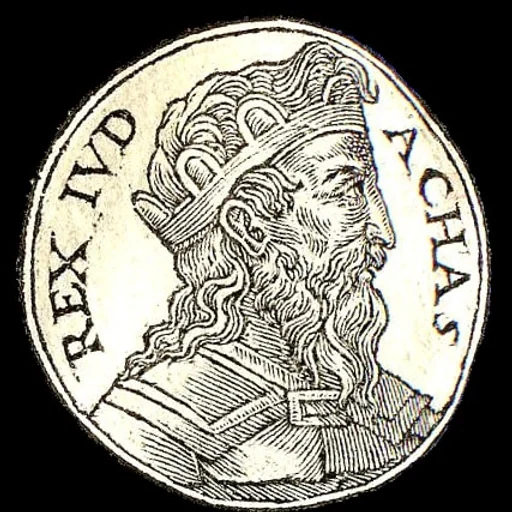
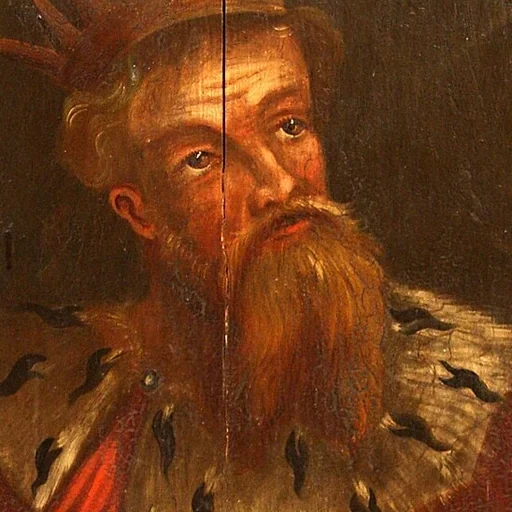
Who was Ahaz in the Bible?
Ahaz was a king of Judah who turned to idols, even sacrificing his own children, and led the nation into deep unfaithfulness.
King of Judah
c. 735-715 BC
Ahaz was a king of Judah who turned to idols, even sacrificing his own children, and led the nation into deep unfaithfulness.
Follow the reading trailBEYOND THE NAME
Ahaz, son of Jotham, abandoned the ways of his fathers and walked in the practices of the surrounding nations, making molten images for the Baals and burning his children in the fire. Defeated by Aram and by Israel and pressed by enemies on every side, he turned for help not to God but to the king of Assyria, who gave him trouble rather than aid. He shut the doors of the temple, set up altars on every corner of Jerusalem, and grew more unfaithful the harder he was pressed.
Themes in the authored commentary
These are other entries using this name. Compare their source passages before treating them as the same or different historical people.
FOLLOW THE PASSAGES
These are chapter studies associated with this record. Their order follows the books and chapters, rather than a reconstructed timeline of the person’s life.
king of Judah who seeks Assyrian aid, adopts a foreign altar, and plunders the temple
Ahaz ascends the throne of Judah at the age of twenty, heir to a century of Davidic kingship. But where his father Jotham kept the law of the Lord, Ahaz walks in the way of the kings of Israel - and worse. He commits his son to the fire, adopts pagan altars, and when faced with invasion, sends tribute to Assyria in place of any cry to God. In his desperation and compromise, we see a king who has forgotten the covenant, forgotten that the Lord is his shield and stronghold. Yet God does not abandon His people.
Chapter overview from the authored study guide.wicked king of Judah who worships foreign gods and calls on Assyria for help
A young king takes David’s throne and burns his own children in a fire. That is where 2 Chronicles 28 begins. Ahaz copies the kings of Israel, casts idols for Baal, fills the valley of Hinnom with smoke . The covenant snaps. Heaven stops shielding Judah, and the armies pour in. Syria strikes. Israel kills 120,000 of Judah’s finest in a single day and drags 200,000 more home as captives.
Chapter overview from the authored study guide.king of Judah named in the superscription as reigning during Isaiah's ministry
The book of Isaiah opens with a courtroom scene, and the LORD Himself is the plaintiff. He summons heaven and earth as witnesses - Hear, O heavens, and give ear, O earth: for the LORD hath spoken (v. 2) - and lays His charge: I have nourished and brought up children, and they have rebelled against me. This is not the complaint of a distant lawgiver but the grief of a father whose own children have turned against him. The wound is made sharper by a single unforgettable image: The ox knoweth his owner, and the ass his master’s crib: but Israel doth not know, my people doth not consider (v. 3).
Chapter overview from the authored study guide.king of Judah confronted by Isaiah and offered a sign from God amid the Syro-Ephraimite threat
It is a moment of national panic. Two kings - Rezin of Syria to the northeast and Pekah of Israel to the north - have formed an alliance and are marching on Jerusalem, meaning to tear down the house of David and set a puppet of their own on the throne. When word reaches King Ahaz, the dynasty trembles: his heart was moved, and the heart of his people, as the trees of the wood are moved with the wind (v. 2). Into that fear the LORD sends Isaiah, and with him a son named Shearjashub - a name that means “a remnant shall return.” The prophet’s word to the shaking king is a call to be still and trust: Take heed, and be quiet; fear not (v. 4).
Chapter overview from the authored study guide.king of Judah named in the superscription as one of Micah's contemporary rulers
The book opens with a heading and then a thunderclap. The heading tells us who and when: The word of the LORD that came to Micah the Morasthite in the days of Jotham, Ahaz, and Hezekiah, kings of Judah, which he saw concerning Samaria and Jerusalem (v. 1). Micah was a countryman from the small town of Moresheth, given a word about the two great capitals - Samaria in the north and Jerusalem in the south. But the summons he delivers throws its arms wide to the whole world: Hear, all ye people; hearken, O earth, and all that therein is: and let the Lord GOD be witness against you, the Lord from his holy temple (v. 2).
Chapter overview from the authored study guide.THE PEOPLE AROUND THE PERSON
Recorded parents
Recorded spouses
Recorded children
Relationships follow the source graph. Some are interpretive or uncertain, and individual verse citations are not yet available for every connection.
STUDY & INTERPRETATION
Ahaz is portrayed in Chronicles as a king who answered every crisis by sinking deeper into rebellion, gathering idols even as his kingdom crumbled around him. His reign is a study in misplaced trust: facing real danger, he looked to Assyria and to foreign gods instead of to the Lord, and each choice cost him more. The Chronicler’s line, “in the time of his distress he trespassed yet more,” captures a heart that hardened under pressure rather than humbling itself. Yet it was to this faithless house that Isaiah spoke the promise of a sign, a child called Immanuel, God with us, so that even in Judah’s darkest royal hour the hope of a faithful King quietly endured and would be fulfilled in Christ.
From the Learn of Christ person commentary. Read alongside the linked Scripture passages.KEEP SCRIPTURE CLOSE
5 authored chapter guides feature this person. This is guide coverage, not an exhaustive count of biblical mentions.
ASK A BETTER QUESTION
Identity, story, early-life sources, family, and where to read.
Names and spellings in the source: Ahaz · Achaz
Ahaz was a king of Judah who turned to idols, even sacrificing his own children, and led the nation into deep unfaithfulness.
Ahaz, son of Jotham, abandoned the ways of his fathers and walked in the practices of the surrounding nations, making molten images for the Baals and burning his children in the fire. Defeated by Aram and by Israel and pressed by enemies on every side, he turned for help not to God but to the king of Assyria, who gave him trouble rather than aid. He shut the doors of the temple, set up altars on every corner of Jerusalem, and grew more unfaithful the harder he was pressed.
The individualized passage index associates this Ahaz record with 2 Kings, 1 Chronicles, 2 Chronicles, Isaiah, Hosea, Micah, Matthew. There are 37 distinct indexed verse references in the 66-book Bible. Browse the book-by-book list below; it separates this identity from other people who share the name. Source assignments and textual identifications can require interpretation.
A separate childhood account for Ahaz is not provided in our current authored profile sources. Begin with 2 Kings 15:38 and the passages linked here for the evidence that is available. The first indexed reference to a name is not a birth record. This profile does not establish a birth date, schooling, or childhood events beyond what its sources state.
Ahaz’s source record lists Jotham (father), Abi (spouse), Hezekiah (child), Maaseiah (child). These are source-graph relationships; legal family, uncertain identifications, and ancestral language require the cautions below. Individual verse evidence is not yet retained for every family edge.
Ahaz is portrayed in Chronicles as a king who answered every crisis by sinking deeper into rebellion, gathering idols even as his kingdom crumbled around him. His reign is a study in misplaced trust: facing real danger, he looked to Assyria and to foreign gods instead of to the Lord, and each choice cost him more.
Answers draw on our existing authored biography and linked chapter studies. Where supplied, verse assignments come from the individualized STEP Bible index. Childhood answers distinguish documented events from gaps in the available sources.
FIND THE PERSON IN THE TEXT
37 distinct verse references in the source’s 66-book index. These are indexed name assignments, rather than every indirect allusion to this person. A name may also refer to descendants, a tribe, or a nation; read each passage to distinguish that usage from the individual.
“And Jotham slept with his fathers, and was buried with his fathers in the city of David his father: and Ahaz his son reigned in his stead.”
2 Kings 15:38 · King James Version
“And Ahaz slept with his fathers, and was buried with his fathers in the city of David: and Hezekiah his son reigned in his stead.”
2 Kings 16:20 · King James Version
“And Ahaz gathered together the vessels of the house of God, and cut in pieces the vessels of the house of God, and shut up the doors of the house of the LORD, and he made him altars in every corner of Jerusalem.”
2 Chronicles 28:24 · King James Version
“And Ozias begat Joatham; and Joatham begat Achaz; and Achaz begat Ezekias;”
Matthew 1:9 · King James Version
References are adapted from STEP Bible / Tyndale House TIPNR (CC BY 4.0). Deduplicated, matched to this identity, and checked against the bundled KJV’s verse bounds. Interpretive assignments and translation/versification differences may remain. This index is separate from evidence for individual family relationships.
YOUR OWN OBSERVATIONS
Notes, saved people, and study marks stay in this browser. They do not sync to your account.
KEEP EXPLORING
People featured in the same study guides. Sharing a chapter does not establish a family relationship.