Isaiah 14
The chapter opens with mercy. For the LORD will have mercy on Jacob, and will yet choose Israel, and set them in their own land (v. 1). After the long oracle of Babylon's fall in chapter 13, Isaiah turns to what that fall means for God's people: a homecoming, a reversal, and above all rest from thy sorrow, and from thy fear, and from the hard bondage wherein thou wast made to serve (v. 3).
The God who lets empires rise is the same God who brings them down on behalf of the lowly - and the comfort of the chapter is built on that.1
Tap any highlighted phrase to jump to the commentary that unpacks it.
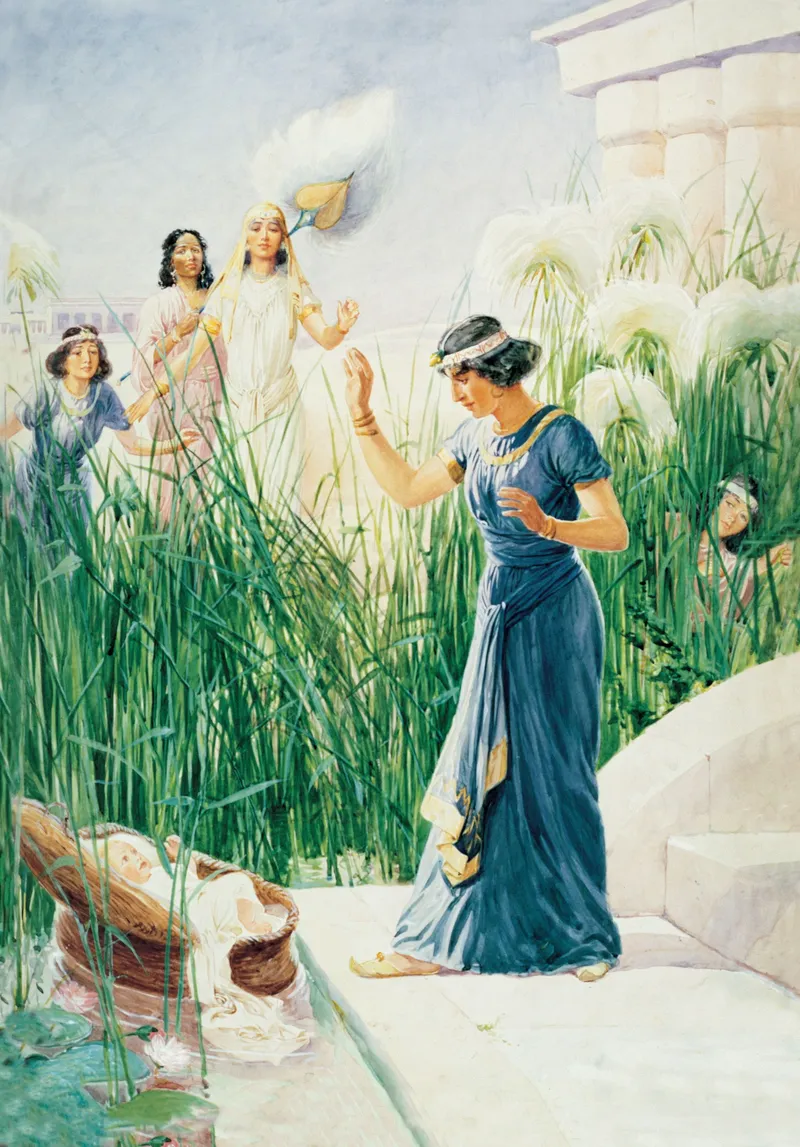
Isaiah 14:1-3The LORD Will Have Mercy on Jacob
1For the LORD will have mercy on Jacob, and will yet choose Israel, and set them in their own land: and the strangers shall be joined with them, and they shall cleave to the house of Jacob. 2And the people shall take them, and bring them to their place: and the house of Israel shall possess them in the land of the LORD for servants and handmaids: and they shall take them captives, whose captives they were; and they shall rule over their oppressors. 3And it shall come to pass in the day that the LORD shall give thee rest from thy sorrow, and from thy fear, and from the hard bondage wherein thou wast made to serve,
The oracle of Babylon's downfall does not end in mere ruin; it opens out into mercy for the people Babylon had crushed. For the LORD will have mercy on Jacob, and will yet choose Israel, and set them in their own land (v. 1). Notice the verbs: He will have mercy, He will choose again, He will set them back in their own land. This is the language of a homecoming, of a relationship restored after exile.
And the mercy is not narrow. The strangers shall be joined with them, and they shall cleave to the house of Jacob - foreigners are drawn in, attached to God's people, sharing in the restoration. The whole reversal of the chapter rests on this opening note. Before a single line of the taunt-song is sung, the reader is told why Babylon's fall matters: because the God who governs the rise and fall of empires has set His mercy on the lowly, and means to bring them home.1
Verses 2 and 3 spell out how complete the reversal will be. The people who were taken captive will themselves take them captives, whose captives they were; those who served under hard bondage will rule over their oppressors (v. 2). The whole order of master and slave is turned over. But the heart of the promise is rest. The LORD shall give thee rest from thy sorrow, and from thy fear, and from the hard bondage wherein thou wast made to serve (v. 3).
Three burdens are named - sorrow, the ache of long suffering; fear, the dread that never quite lifts under a tyrant; and hard bondage, the grinding labor itself. God promises rest from all three. This is what the fall of the oppressor finally secures for the oppressed: not just a change of fortune, but the deep relief of a soul that no longer has to be afraid.
Isaiah 14:4-11How Hath the Oppressor Ceased
4That thou shalt take up this proverb against the king of Babylon, and say, How hath the oppressor ceased! the golden city ceased! 5The LORD hath broken the staff of the wicked, and the sceptre of the rulers. 6He who smote the people in wrath with a continual stroke, he that ruled the nations in anger, is persecuted, and none hindereth. 7The whole earth is at rest, and is quiet: they break forth into singing. 8Yea, the fir trees rejoice at thee, and the cedars of Lebanon, saying, Since thou art laid down, no feller is come up against us. 9Hell from beneath is moved for thee to meet thee at thy coming: it stirreth up the dead for thee, even all the chief ones of the earth; it hath raised up from their thrones all the kings of the nations. 10All they shall speak and say unto thee, Art thou also become weak as we? art thou become like unto us? 11Thy pomp is brought down to the grave, and the noise of thy viols: the worm is spread under thee, and the worms cover thee.
Here the chapter names exactly what it is doing: thou shalt take up this proverb against the king of Babylon (v. 4). The whole passage that follows is addressed, from first word to last, to a human ruler - the king of Babylon, the great oppressor of the age. And the taunt opens with a shout of disbelief that the bully is really gone: How hath the oppressor ceased! the golden city ceased! The credit is given at once to the LORD: The LORD hath broken the staff of the wicked, and the sceptre of the rulers (v. 5).
The staff and the sceptre are the tyrant's instruments - the rod he beat the nations with, the scepter of his command - and God has snapped them both. The one who smote the people… with a continual stroke and ruled the nations in anger is now himself brought low, and none hindereth (v. 6). The relief is so great it spills out over all creation: The whole earth is at rest, and is quiet: they break forth into singing (v. 7).
The song now turns playful, almost startling, in its imagery. Yea, the fir trees rejoice at thee, and the cedars of Lebanon, saying, Since thou art laid down, no feller is come up against us (v. 8). The great forests of Lebanon, endlessly stripped by imperial logging crews to build palaces and war-engines, are pictured rejoicing that the axeman will never climb up against them again. Even the trees are glad the tyrant is dead.
Then the scene drops down into the realm of the dead itself: Hell from beneath is moved for thee to meet thee at thy coming (v. 9). The Hebrew is Sheol, the shadowy place where the dead go down. Isaiah pictures it stirring awake, rousing itself to receive the famous newcomer. It stirreth up the dead for thee, even all the chief ones of the earth… all the kings of the nations - the rulers who died before him heave themselves up from their dim thrones to watch the great king of Babylon come down to join them.
The dead kings speak, and their words are the sharpest line of the whole taunt: Art thou also become weak as we? art thou become like unto us? (v. 10). All his life this king had been a power apart, above the common run of mortals - and now he is exactly like the rest of them, weak, stripped, dead. The leveling is total: Thy pomp is brought down to the grave, and the noise of thy viols (v. 11).
His pomp - the splendor of his court - and the music of his banquets all follow him down into the dust. And then the unforgettable, deliberately humiliating image: the worm is spread under thee, and the worms cover thee. The man who slept on couches of state now lies on a bed of maggots, with worms for a blanket. This is the great theme sounding underneath the whole song: death is the great equalizer, and no amount of earthly power buys an exemption from it.
The tyrant who terrified the nations ends in the same silence as the slave he oppressed.
Isaiah 14:12-21How Art Thou Fallen, O Lucifer
12How art thou fallen from heaven, O Lucifer, son of the morning! how art thou cut down to the ground, which didst weaken the nations! 13For thou hast said in thine heart, I will ascend into heaven, I will exalt my throne above the stars of God: I will sit also upon the mount of the congregation, in the sides of the north: 14I will ascend above the heights of the clouds; I will be like the most High. 15Yet thou shalt be brought down to hell, to the sides of the pit. 16They that see thee shall narrowly look upon thee, and consider thee, saying, Is this the man that made the earth to tremble, that did shake kingdoms; 17That made the world as a wilderness, and destroyed the cities thereof; that opened not the house of his prisoners? 18All the kings of the nations, even all of them, lie in glory, every one in his own house. 19But thou art cast out of thy grave like an abominable branch, and as the raiment of those that are slain, thrust through with a sword, that go down to the stones of the pit; as a carcase trodden under feet. 20Thou shalt not be joined with them in burial, because thou hast destroyed thy land, and slain thy people: the seed of evildoers shall never be renowned. 21Prepare slaughter for his children for the iniquity of their fathers; that they do not rise, nor possess the land, nor fill the face of the world with cities.
Now the taunt rises to its most memorable height: How art thou fallen from heaven, O Lucifer, son of the morning! how art thou cut down to the ground, which didst weaken the nations! (v. 12). The name Lucifer comes from the Latin word for “light-bearer,” the way the early translators rendered the Hebrew phrase for the morning star - the brilliant planet Venus, blazing in the dawn sky just before the sun rises and outshines it.
It is a perfect image for this king. He shone like the brightest star of the morning - and like that star, his light was swallowed up the moment a greater light arose. Remember the frame the chapter set in verse 4: this is a proverb against the king of Babylon. The towering language of heaven and morning star is poetry pressed to its limit, exposing the gap between what this ruler imagined himself to be - a being of dawn-light, ascending the sky - and what he became: a corpse cut down to the ground. The higher the climb in his own mind, the more shattering the fall in fact.2
The reason for the fall is given in the king's own words, and it is pride in its purest form: For thou hast said in thine heart, I will ascend into heaven, I will exalt my throne above the stars of God: I will sit also upon the mount of the congregation, in the sides of the north: I will ascend above the heights of the clouds; I will be like the most High (vv. 13-14).
Count them - five times he says I will. This is the inner monologue of a heart that has made itself the center of everything. He will ascend, he will exalt his own throne, he will sit enthroned on the mountain of the gods, he will rise above the heights of the clouds. And the climax names the real ambition behind all the others: I will be like the most High. He reaches past ruling the earth for the place of God Himself.
This is the essence of pride in every age: the will to dethrone God and sit in His seat, to be answerable to no one, to be one's own most high. And it is exactly this grasping that guarantees the fall.1
Against the five soaring I wills stands one short sentence from God, and it undoes them all: Yet thou shalt be brought down to hell, to the sides of the pit (v. 15). One word - yet - turns the whole ascent inside out. He said I will ascend; God says thou shalt be brought down. The one who reached for the highest heaven is sent to the lowest place there is, the sides of the pit. And the verses that follow drive home how complete the humiliation is.
Onlookers peer at the corpse in disbelief: Is this the man that made the earth to tremble, that did shake kingdoms? (v. 16). Other kings at least lie in glory, every one in his own house - a proper tomb - but this one is cast out of thy grave like an abominable branch… as a carcase trodden under feet (vv. 18-19). The man who would be God ends unburied, trampled in the road. The chapter states the moral plainly: he is brought down because thou hast destroyed thy land, and slain thy people (v. 20).
The exaltation he grasped for was built on the ruin of others, and it collapses into the deepest abasement.
Isaiah 14:22-32The LORD of Hosts Hath Purposed
22For I will rise up against them, saith the LORD of hosts, and cut off from Babylon the name, and remnant, and son, and nephew, saith the LORD. 23I will also make it a possession for the bittern, and pools of water: and I will sweep it with the besom of destruction, saith the LORD of hosts. 24The LORD of hosts hath sworn, saying, Surely as I have thought, so shall it come to pass; and as I have purposed, so shall it stand: 25That I will break the Assyrian in my land, and upon my mountains tread him under foot: then shall his yoke depart from off them, and his burden depart from off their shoulders. 26This is the purpose that is purposed upon the whole earth: and this is the hand that is stretched out upon all the nations. 27For the LORD of hosts hath purposed, and who shall disannul it? and his hand is stretched out, and who shall turn it back? 28In the year that king Ahaz died was this burden. 29Rejoice not thou, whole Palestina, because the rod of him that smote thee is broken: for out of the serpent’s root shall come forth a cockatrice, and his fruit shall be a fiery flying serpent. 30And the firstborn of the poor shall feed, and the needy shall lie down in safety: and I will kill thy root with famine, and he shall slay thy remnant. 31Howl, O gate; cry, O city; thou, whole Palestina, art dissolved: for there shall come from the north a smoke, and none shall be alone in his appointed times. 32What shall one then answer the messengers of the nation? That the LORD hath founded Zion, and the poor of his people shall trust in it.
The taunt over the fallen king widens now into a sentence over the city and dynasty he embodied. I will rise up against them, saith the LORD of hosts, and cut off from Babylon the name, and remnant, and son, and nephew (v. 22). The judgment is thorough - not just the king but his line, his very name, swept away so that nothing remains to revive the old tyranny. Then a striking domestic picture: I will sweep it with the besom of destruction (v. 23).
A besom is a broom, and proud Babylon - the golden city of verse 4 - is to be swept out like dust, left a marsh fit only for the bittern, a bird of desolate waters. The title sounded three times in two verses is the key to all of it: the LORD of hosts. It means the LORD of armies, the commander of all the powers of heaven and earth. Against such a One, no empire's strength is anything more than dust before a broom.
At the center of the closing section is one of the great statements of God's sovereignty in all of Isaiah, and it is sealed with an oath. The LORD of hosts hath sworn, saying, Surely as I have thought, so shall it come to pass; and as I have purposed, so shall it stand (v. 24). What God thinks will happen; what God purposes will stand. There is no gap here between His intention and the outcome - the thing is as good as done the moment He resolves it.
The immediate proof is Assyria, the superpower threatening Isaiah's own generation: I will break the Assyrian in my land… then shall his yoke depart (v. 25). And the scope is universal: This is the purpose that is purposed upon the whole earth: and this is the hand that is stretched out upon all the nations (v. 26). The same God who topples Babylon and breaks Assyria holds a single purpose over the whole earth.
The chapter that began with one fallen tyrant ends by lifting the eyes to the One whose plan spans every nation and every age.
Then comes the line that gathers up the whole chapter and, in a sense, the whole book: For the LORD of hosts hath purposed, and who shall disannul it? and his hand is stretched out, and who shall turn it back? (v. 27). Two questions, and both expect the same answer: no one. No king, no empire, no power in heaven or earth can disannul - cancel, overturn - what the LORD has purposed, or push back the hand He has stretched out.
This is the bedrock under all of Isaiah's comfort. The remaining verses apply it: Philistia is warned not to celebrate too soon (Rejoice not thou, whole Palestina, v. 29), for a worse trouble is coming out of the broken rod's root. The chapter's last word is refuge. To anyone who asks what the outcome of all this upheaval will be, the answer is given: the LORD hath founded Zion, and the poor of his people shall trust in it (v. 32).
Empires rise on the boast I will ascend and fall to dust; the city God founds for the lowly will stand. The fortress of the proud is swept away with a broom; the refuge of the poor rests on a foundation God Himself laid.1
Research trail
Sources & further study
These references support the historical, linguistic, manuscript, and contextual notes in this chapter. Scripture remains the primary text; external sources are provided so readers can inspect the research directly.
- Isaiah 14 - Translators' NotesThe NET Bible's detailed footnotes on Isaiah 14 - the homecoming and rest promised in verses 1-3, the genre of the taunt-song against the king of Babylon (v. 4), the disputed term in verse 12, and the closing oath of the LORD whose purpose none shall disannul (vv. 24-27).
- Isaiah 14 · Hebrew + classical Jewish commentaryThe Hebrew text of Isaiah 14 with Rashi, Ibn Ezra, and other classical commentators side by side - useful for heylel ben-shachar (v. 12, “day star, son of the morning,” the phrase the KJV renders “Lucifer”), for mashal (v. 4, the “proverb” or taunt-song), and for the Hebrew naming of Sheol, the realm of the dead, in verses 9, 11, and 15.
- Isaiah 14 ↔ Philippians 2 · Luke 10 · Ezekiel 28Traces the threads tying Isaiah 14 to the rest of Scripture - the fall of the one who said I will ascend… I will be like the most High (vv. 13-14) read against the One who humbled himself and was therefore exalted (Phil. 2:8-9), against I beheld Satan as lightning fall from heaven (Luke 10:18), and against the parallel taunt over the king of Tyre in Ezekiel 28.
Where this echoes in Scripture
The LORD Will Have Mercy on Jacob
- Matthew 11:28Come unto me, all ye that labour and are heavy laden, and I will give you rest.The rest from hard bondage promised in verse 3 - held out in person to the weary.
- Isaiah 40:1-2Comfort ye, comfort ye my people... her warfare is accomplished, her iniquity is pardoned.The same turn from judgment to mercy - God comforting the people whose bondage is ended.
- Romans 8:15ye have not received the spirit of bondage again to fear; but ye have received the Spirit of adoption.The fear and bondage of verse 3 lifted - replaced by the freedom of belonging to God.
- Jeremiah 29:11I know the thoughts that I think toward you... thoughts of peace, and not of evil, to give you an expected end.The homecoming of verses 1-3 - God's settled purpose of mercy toward His exiled people.
How Hath the Oppressor Ceased
- Psalm 49:16-17Be not thou afraid when one is made rich... For when he dieth he shall carry nothing away: his glory shall not descend after him.The leveling of verses 10-11 - the powerful carry none of their splendor down into death.
- James 5:1-3Go to now, ye rich men, weep and howl for your miseries... your riches are corrupted.The same warning to the oppressor - hoarded power and wealth that rot away in the end.
- Isaiah 13:11I will cause the arrogancy of the proud to cease, and will lay low the haughtiness of the terrible.The verdict the taunt celebrates - the LORD bringing down the arrogant oppressor of the nations.
- Daniel 4:30-31Is not this great Babylon, that I have built... while the word was in the king's mouth... the kingdom is departed from thee.A king of Babylon humbled mid-boast - the proud ruler of verses 4-6 brought low by God.
How Art Thou Fallen, O Lucifer
- Philippians 2:6-9he humbled himself, and became obedient unto death... Wherefore God also hath highly exalted him.The exact reverse of verses 13-15 - the One who went down on purpose, and was therefore raised.
- Luke 10:18I beheld Satan as lightning fall from heaven.Jesus' words echoing the fall of verse 12 - long heard alongside the fall of the morning star.
- Ezekiel 28:12-17Thine heart was lifted up because of thy beauty... I will cast thee to the ground.A parallel taunt over the king of Tyre - the same pattern of beauty, pride, and downfall as verses 12-15.
- Luke 14:11whosoever exalteth himself shall be abased; and he that humbleth himself shall be exalted.The law beneath the whole passage - the self-exalter brought down, the humble lifted up.
- Proverbs 16:18Pride goeth before destruction, and an haughty spirit before a fall.The taunt in a single line - the pride of verses 13-14 issuing in the fall of verse 15.
The LORD of Hosts Hath Purposed
- Isaiah 28:16I lay in Zion for a foundation a stone, a tried stone, a precious corner stone, a sure foundation.The founded Zion of verse 32 named as a sure stone - the refuge for those who trust.
- 1 Peter 2:6I lay in Sion a chief corner stone, elect, precious: and he that believeth on him shall not be confounded.The foundation in Zion (v. 32) named in person - the stone the poor of God's people trust in.
- Proverbs 19:21There are many devices in a man's heart; nevertheless the counsel of the LORD, that shall stand.The truth of verses 24 and 27 - human plans give way; the LORD's purpose alone stands.
- Job 42:2I know that thou canst do every thing, and that no thought can be withholden from thee.The answer to the questions of verse 27 - no purpose of God's can be disannulled or turned back.
- Psalm 9:9The LORD also will be a refuge for the oppressed, a refuge in times of trouble.The promise of verse 32 - the LORD a sure refuge for the poor and the trusting.