Isaiah 13
Isaiah turns from his own people to the wider world. Chapter 13 opens a long series of burdens - weighty oracles aimed at the nations around Judah - and the first falls on the greatest of them all: The burden of Babylon, which Isaiah the son of Amoz did see (v. 1). The timing is striking. Babylon is not yet the empire that will one day carry Judah into exile; in Isaiah's own day it is rising but not supreme.
Yet the prophet already sees its end. A banner is raised on a bare hilltop, a hand is waved, and an army gathers - not a chance coalition, but a host the LORD Himself has summoned: I have commanded my sanctified ones, I have also called my mighty ones for mine anger (v. 3). The nations muster, but the One mustering them is the LORD of hosts.1
Tap any highlighted phrase to jump to the commentary that unpacks it.
Isaiah 13:1-5The Burden of Babylon
1The burden of Babylon, which Isaiah the son of Amoz did see. 2Lift ye up a banner upon the high mountain, exalt the voice unto them, shake the hand, that they may go into the gates of the nobles. 3I have commanded my sanctified ones, I have also called my mighty ones for mine anger, even them that rejoice in my highness. 4The noise of a multitude in the mountains, like as of a great people; a tumultuous noise of the kingdoms of nations gathered together: the LORD of hosts mustereth the host of the battle. 5They come from a far country, from the end of heaven, even the LORD, and the weapons of his indignation, to destroy the whole land.
The chapter opens with a single weighty word: The burden of Babylon, which Isaiah the son of Amoz did see (v. 1). A burden here is a prophetic oracle - a heavy message laid on the prophet to carry and deliver, often a word of judgment against a nation. And the nation named is the great one: Babylon. The timing is worth pausing over. In Isaiah's own day Babylon is on the rise but not yet the world power it will become; the empire that will one day raze Jerusalem and march Judah into exile is still gathering its strength.
Yet the prophet already sees its fall, laid out in detail, long before its peak. That is the first thing this chapter quietly insists upon: the LORD sees the end of a thing from its beginning. The empires of the earth do not write their own final chapters. Babylon will rise, and Babylon will fall, and the One who declares both is not pacing its walls but seated above them, naming what is to come.1
A banner goes up on a bare height, a voice is lifted, a hand is waved - the ancient signals for gathering an army - and a host begins to assemble: Lift ye up a banner upon the high mountain… that they may go into the gates of the nobles (v. 2). But the next verse reveals who is doing the summoning. I have commanded my sanctified ones, I have also called my mighty ones for mine anger, even them that rejoice in my highness (v. 3).
The soldiers mustering against Babylon are called the LORD's own - His sanctified ones, set apart for this task, His mighty ones, called for His anger. The picture is arresting: a foreign army, gathering for its own reasons, is at the same time an instrument in the hand of God. The LORD of hosts mustereth the host of the battle (v. 4). The word hosts means armies; the LORD of armies is calling up an army.
Human history looks, from the ground, like nations colliding by their own ambition. Isaiah lifts the curtain and shows the One who marshals them. This does not erase human choice or guilt - the nations come for their own ends - but neither does their freedom escape His command. Both are true at once.
The army comes from a great distance, and Isaiah describes its origin in language that is already starting to stretch beyond the merely geographical: They come from a far country, from the end of heaven, even the LORD, and the weapons of his indignation, to destroy the whole land (v. 5). On one level this is plain - the invaders march in from far off, the edge of the visible horizon where earth seems to meet sky.
But notice how the verse names the real actor. The soldiers and their gear are called the weapons of his indignation. They are the tools; the LORD is the wielder. An army crossing a border becomes, in the prophet's sight, the very instrument of divine displeasure brought to bear. And already a wider note is sounding: their purpose is to destroy the whole land, the same broad reach the oracle will soon expand to cover the world itself (v. 11).
What begins as a specific campaign against one city is being framed, from the first lines, as something larger - a reckoning that the LORD Himself directs, with the whole earth eventually in view.
Isaiah 13:6-13The Day of the LORD Is at Hand
6Howl ye; for the day of the LORD is at hand; it shall come as a destruction from the Almighty. 7Therefore shall all hands be faint, and every man’s heart shall melt: 8And they shall be afraid: pangs and sorrows shall take hold of them; they shall be in pain as a woman that travaileth: they shall be amazed one at another; their faces shall be as flames. 9Behold, the day of the LORD cometh, cruel both with wrath and fierce anger, to lay the land desolate: and he shall destroy the sinners thereof out of it. 10For the stars of heaven and the constellations thereof shall not give their light: the sun shall be darkened in his going forth, and the moon shall not cause her light to shine. 11And I will punish the world for their evil, and the wicked for their iniquity; and I will cause the arrogancy of the proud to cease, and will lay low the haughtiness of the terrible. 12I will make a man more precious than fine gold; even a man than the golden wedge of Ophir. 13Therefore I will shake the heavens, and the earth shall remove out of her place, in the wrath of the LORD of hosts, and in the day of his fierce anger.
The oracle now reaches its center, and a single phrase rings out that will echo through the rest of Scripture: Howl ye; for the day of the LORD is at hand; it shall come as a destruction from the Almighty (v. 6). The command to howl is the cry of those who see the catastrophe coming and can do nothing to stop it. And the thing approaching is named: the day of the LORD. Throughout the prophets, this is the day when God acts decisively and openly, stepping into history to judge what is wrong and to set right what no human power could.
Here Isaiah piles on the human response so we feel its weight: all hands be faint, and every man's heart shall melt (v. 7); pangs and sorrows shall take hold of them; they shall be in pain as a woman that travaileth (v. 8). Strength drains away, courage dissolves, and a people who thought themselves secure are seized with the helpless dread of labor pains that cannot be postponed. This is the terror of standing in the path of the Almighty when He rises to act.
Now the language opens out past anything an ordinary war could explain. Behold, the day of the LORD cometh, cruel both with wrath and fierce anger, to lay the land desolate: and he shall destroy the sinners thereof out of it (v. 9). And then the heavens themselves go dark: For the stars of heaven and the constellations thereof shall not give their light: the sun shall be darkened in his going forth, and the moon shall not cause her light to shine (v. 10).
The sun fails at the very moment it should rise; the moon withholds its glow; the familiar lights that have ordered every human day and night since creation simply stop. Readers have understood imagery like this in more than one way - some hearing a vivid poetic picture of an empire's collapse, the lights of a whole civilization going out; others hearing a literal unmaking of the created order. The text itself does not resolve which, and it need not.
What it makes unmistakable is the scale: the day of the LORD is not a local disturbance but a shaking that reaches the heavens, a moment when the most fixed and dependable things in the sky are no longer to be relied upon. The world that imagined itself permanent discovers that even the sun answers to God.
At the heart of the darkness is a reason, and it is a moral one: And I will punish the world for their evil, and the wicked for their iniquity; and I will cause the arrogancy of the proud to cease, and will lay low the haughtiness of the terrible (v. 11). This single verse keeps the whole chapter from being mere spectacle. The day of the LORD is judgment, and judgment has a target - evil, iniquity, and above all the arrogancy of the proud. Notice that the reach is now explicitly worldwide: not Babylon only, but the world. The same pride that built Babel and Babylon and every empire that ever called itself eternal is what the day of the LORD comes to end.
And mark what tops the list of what God moves against: not merely cruelty or violence, but arrogancy - the haughtiness that lifts itself up, that imagines it answers to no one, that mistakes its own strength for permanence. Verse 12 sharpens the reversal: I will make a man more precious than fine gold; even a man than the golden wedge of Ophir. When the day falls, survivors will be rarer than the costliest gold - a grim measure of how thoroughly proud human power will be thinned out.
The God who judges does so because He is righteous, and the proud who set themselves against that righteousness cannot finally stand.2
The section closes by gathering its images into one tremendous declaration: Therefore I will shake the heavens, and the earth shall remove out of her place, in the wrath of the LORD of hosts, and in the day of his fierce anger (v. 13). The whole frame of creation - the heavens above and the earth beneath, the two great fixed points of all human bearing - is pictured trembling and dislodged. To shake the heavens and move the earth out of her place is to disturb the very things people assume can never be disturbed.
The cause is named twice over so it cannot be missed: the wrath of the LORD of hosts and the day of his fierce anger. It is worth being careful here about what this wrath is. It is not a fit of temper or arbitrary rage; throughout Isaiah it is the settled, righteous response of a holy God to entrenched evil and unbowed pride. The shaking of heaven and earth is the measure of how seriously God takes what is wrong.
And for the reader there is a strange comfort folded inside the terror: a world in which evil is finally shaken and the proud are finally brought low is a world being set right. The day that the wicked dread is the day the wronged have longed for.
Isaiah 13:14-22Babylon Falls · As When God Overthrew Sodom
14And it shall be as the chased roe, and as a sheep that no man taketh up: they shall every man turn to his own people, and flee every one into his own land. 15Every one that is found shall be thrust through; and every one that is joined unto them shall fall by the sword. 16Their children also shall be dashed to pieces before their eyes; their houses shall be spoiled, and their wives ravished. 17Behold, I will stir up the Medes against them, which shall not regard silver; and as for gold, they shall not delight in it. 18Their bows also shall dash the young men to pieces; and they shall have no pity on the fruit of the womb; their eye shall not spare children. 19And Babylon, the glory of kingdoms, the beauty of the Chaldees’ excellency, shall be as when God overthrew Sodom and Gomorrah. 20It shall never be inhabited, neither shall it be dwelt in from generation to generation: neither shall the Arabian pitch tent there; neither shall the shepherds make their fold there. 21But wild beasts of the desert shall lie there; and their houses shall be full of doleful creatures; and owls shall dwell there, and satyrs shall dance there. 22And the wild beasts of the islands shall cry in their desolate houses, and dragons in their pleasant palaces: and her time is near to come, and her days shall not be prolonged.
The vision now turns to the human face of the catastrophe, and it does not flinch. The proud city's allies and hired soldiers, who had gathered to it from many lands, scatter like frightened animals: it shall be as the chased roe, and as a sheep that no man taketh up: they shall every man turn to his own people, and flee every one into his own land (v. 14). When the day comes, the coalitions that looked so strong simply dissolve; each man runs for his own home and abandons the rest.
What follows is the unsparing reality of ancient conquest: Every one that is found shall be thrust through… their children also shall be dashed to pieces before their eyes; their houses shall be spoiled, and their wives ravished (vv. 15-16). These are hard verses, and they are meant to be. Isaiah will not let the fall of Babylon be a tidy abstraction. The violence Babylon dealt out to others - for this is exactly what Babylon's own armies would do to Jerusalem - is the violence that will at last come home to it.
The horror of the lines is part of their truth: this is what the pride and cruelty of empires finally produce, and it is what the day of the LORD comes to bring to an end.
Now the oracle names its instrument with startling precision: Behold, I will stir up the Medes against them, which shall not regard silver; and as for gold, they shall not delight in it (v. 17). The Medes - the people who, joined with the Persians, would in time bring the Babylonian empire crashing down - are called out by name, long before they rise to that role. And a chilling detail is added: they shall not regard silver… nor delight in gold.
Conquerors could often be bought off or bargained with; their greed was a lever a wealthy city might pull. But these come for slaughter, beyond the reach of bribery, and so beyond Babylon's power to buy its way free. Their bows also shall dash the young men to pieces; and they shall have no pity on the fruit of the womb; their eye shall not spare children (v. 18). The specificity matters: a named people, a named manner of war, a named certainty.
The same God who declared Babylon's fall while it was still rising now points to the very hand He will use. History will unfold exactly as the word foretold - which is precisely the proof Isaiah's readers are meant to take from it: the LORD does not merely threaten the proud in general terms; He governs the particular agents and hours of their downfall.1
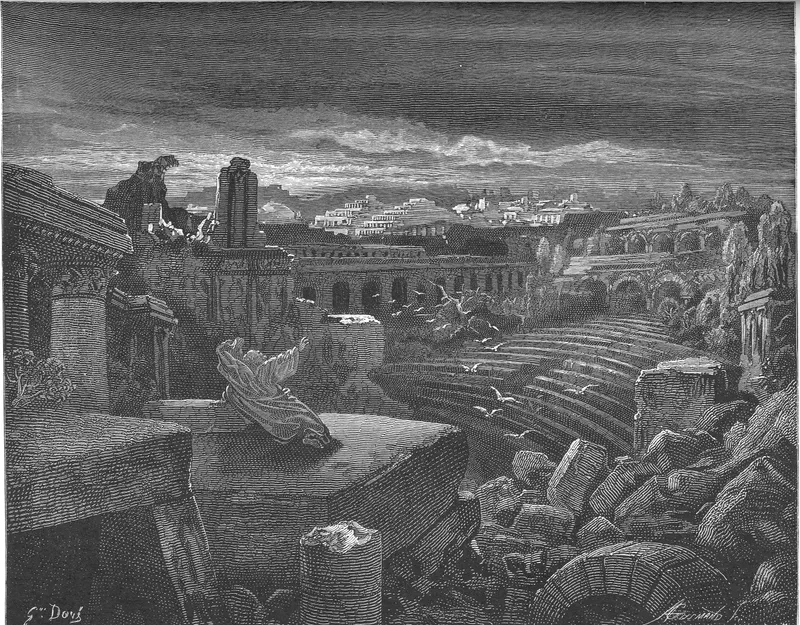
And then the climax: And Babylon, the glory of kingdoms, the beauty of the Chaldees' excellency, shall be as when God overthrew Sodom and Gomorrah (v. 19). Of all the comparisons Isaiah could have chosen, he reaches for Sodom - the byword of total, irreversible judgment, a place wiped from the earth so completely that it became a permanent warning. Babylon, the glory of kingdoms, the jewel of its age, will share Sodom's fate. What follows is a portrait of utter desolation: It shall never be inhabited… neither shall the Arabian pitch tent there; neither shall the shepherds make their fold there (v. 20).
No one will so much as camp on the spot. Even nomads, who pitch a tent anywhere, will pass it by. In place of people come the creatures of the wild and the waste: wild beasts of the desert shall lie there… owls shall dwell there… the wild beasts of the islands shall cry in their desolate houses, and dragons in their pleasant palaces (vv. 21-22). The contrast is the whole point. The pleasant palaces where kings once feasted become dens where wild animals howl in the dark.
The image is meant to lodge in the mind: the most magnificent achievement of human pride, left to the owls and the wild beasts. Her time is near to come, the chapter ends, and her days shall not be prolonged (v. 22) - the certainty of it pressed home one last time.
Research trail
Sources & further study
These references support the historical, linguistic, manuscript, and contextual notes in this chapter. Scripture remains the primary text; external sources are provided so readers can inspect the research directly.
- Isaiah 13 - Translators' NotesThe NET Bible's detailed footnotes on Isaiah 13 - the sense of burden in verse 1, the mustered host summoned from the end of heaven (vv. 3-5), the much-discussed cosmic imagery of verses 10 and 13, and the historical fall of the city to the Medes (vv. 17-22).
- Isaiah 13 ↔ Matthew 24 · Revelation 6 & 18 · Joel 2Traces the threads tying Isaiah 13 to the rest of Scripture - the darkened sun, moon, and stars of verse 10 read beside the Son of man's coming (Matt. 24:29) and the sixth seal (Rev. 6:12-13), and the fall of Babylon (vv. 19-22) read alongside the Babylon of the Revelation, fallen, is fallen (Rev. 18:1-2).
- Isaiah 13 · Hebrew + classical Jewish commentaryThe Hebrew text of Isaiah 13 with Rashi, Ibn Ezra, and other classical commentators side by side - useful for massa (v. 1, the “burden” or oracle the prophet bears), for the recurring yom YHWH (vv. 6, 9, “the day of the LORD”), and for the named instruments of judgment, the Medes (v. 17).
Where this echoes in Scripture
The Burden of Babylon
- Jeremiah 51:11the LORD hath raised up the spirit of the kings of the Medes: for his device is against Babylon, to destroy it.The same mustering as verses 3-4 - the LORD Himself stirring the armies that will bring Babylon down.
- Isaiah 10:5-7O Assyrian, the rod of mine anger... I will send him against an hypocritical nation... Howbeit he meaneth not so.The pattern of verse 5 - a nation that comes for its own ends is at the same time a rod in the LORD's hand.
- Daniel 2:21he removeth kings, and setteth up kings: he giveth wisdom unto the wise, and knowledge to them that know understanding.The conviction beneath the whole oracle - that the rise and fall of empires answers to God.
- Revelation 19:11-16in righteousness he doth judge and make war... KING OF KINGS, AND LORD OF LORDS.The LORD of hosts mustering the battle (v. 4) carried forward to the One who rides out to judge the nations.
- Psalm 46:9-10He maketh wars to cease unto the end of the earth... Be still, and know that I am God: I will be exalted among the heathen.The truth Isaiah presses - that the wars and powers of the nations are finally subject to the LORD.
The Day of the LORD Is at Hand
- Joel 2:31The sun shall be turned into darkness, and the moon into blood, before the great and the terrible day of the LORD come.The same darkened sun and moon as verse 10 - the cosmic signs of the day of the LORD.
- Matthew 24:29-30the sun be darkened, and the moon shall not give her light, and the stars shall fall from heaven... and they shall see the Son of man coming.Jesus takes up the very words of verses 9-10 to describe His own coming.
- Revelation 6:12-13the sun became black as sackcloth of hair, and the moon became as blood; and the stars of heaven fell unto the earth.The sixth seal opens with the darkened heavens of verse 10 - the day of the LORD again in view.
- Zephaniah 1:14-15The great day of the LORD is near... that day is a day of wrath, a day of trouble and distress.The same announcement as verse 6 - the day of the LORD at hand, a day of wrath against the proud.
- Isaiah 2:11-12the lofty looks of man shall be humbled... For the day of the LORD of hosts shall be upon every one that is proud and lofty.The purpose of verse 11 stated plainly - the day of the LORD comes to lay the proud low.
Babylon Falls · As When God Overthrew Sodom
- Revelation 18:1-2Babylon the great is fallen, is fallen, and is become the habitation of devils... and a cage of every unclean and hateful bird.The fall of verses 19-22 carried forward - the last great Babylon left a desolate haunt, fallen before God.
- Genesis 19:24-25the LORD rained upon Sodom and upon Gomorrah brimstone and fire... and he overthrew those cities.The very overthrow verse 19 invokes - Sodom as the byword for total, irreversible judgment.
- Jeremiah 51:8Babylon is suddenly fallen and destroyed: howl for her; take balm for her pain, if so she may be healed.The same sudden fall of the same city - Jeremiah's long oracle answering Isaiah's.
- Daniel 5:30-31In that night was Belshazzar the king of the Chaldeans slain. And Darius the Median took the kingdom.The fulfillment of verse 17 - the Medes, stirred up against Babylon, taking the kingdom in a night.
- Revelation 21:2-4I John saw the holy city, new Jerusalem, coming down from God out of heaven... And God shall wipe away all tears from their eyes.The city that comes after Babylon falls - the proud city undone, the city of God given in its place.