
- Starting price
- Free
- Free tier
- Yes
- Platforms
- iOS · Android · Web · Email
- Developer
- First15 / Hope Center (Craig Denison)
- Launched
- 2014
- Updated
- May 25, 2026
The verdict
First15 is the thoughtful person’s daily devotional - a free, donation-supported app and email built around a 15-minute structured quiet time of stillness, Scripture, and reflection. If you’ve outgrown a one-verse-a-day devotional but aren’t ready to commit to a full chapter study, this is the one to try first.
Try First15 ↗Opens first15.org
First15 has quietly become the favorite of Christians who want more depth than a five-minute devotional but don’t have the bandwidth for a full inductive Bible study every morning. Founded by Craig Denison out of the Hope Center in Dallas, it is built around a single, simple promise: give God the first fifteen minutes of your day, and the app will hand you a structured way to spend them. No streak gamification, no celebrity guides, no upsell to a premium tier. Just the same 15-minute rhythm, every morning, for as many years as you keep showing up.
It doesn’t try to be a Bible app. It doesn’t try to be a prayer app. It doesn’t try to be a community. First15 is a quiet-time companion - nothing more, nothing less - and the discipline of that narrow focus is exactly what its readers love about it. A theme runs through each week, a passage anchors each day, and the same three-part structure (stillness, Scripture, reflection) repeats so reliably that you stop having to decide how to spend the time and start actually spending it.
A note before we go further: First15 is not the same product as First 5, the well-known devotional from Proverbs 31 Ministries. The two are often confused because the names are nearly identical and both are free daily devotionals. They’re different ministries, different authors, different formats - First15 is Craig Denison’s 15-minute structured quiet time; First 5 is Proverbs 31’s five-minutes-first-thing women’s devotional through books of the Bible. If you came looking for the Proverbs 31 product, that review lives separately on this site. This one is about First15.
✓ The good
- Genuinely free - no premium tier, no paywalled content, no ads; the whole thing runs on donations
- Structured 15-minute rhythm - the stillness / Scripture / reflection split is the differentiator and it works
- Daily email + app + web parity - same content arrives in your inbox so you don’t even have to open an app
- Audio version of every devotional - read by a calm narrator, perfect for commuters or anyone who reads slowly
- Weekly theme arc - Monday through Friday explore one idea; Saturday is reflection, Sunday is rest
- Theologically broad - Denison’s writing leans on Scripture and a steady intimacy-with-God thesis, not denominational distinctives
- Worship-music links at the end of each entry - a small touch that closes the time well
✗ Watch out
- Single voice - it’s Craig Denison’s sensibility throughout, which is wonderful if it lands and limiting if it doesn’t
- No reading-plan choice - you get today’s entry, not a self-selected book or topical track
- Light on doctrine - this is devotional warmth, not exposition; pair it with something more rigorous if that’s what you want
- No social or community layer (yet) - no friends, no group plans, no shared highlights
- App polish trails the category leaders - it works fine, but YouVersion and Hallow feel more refined
- Same structure every day - the consistency is the feature, but some readers will find it repetitive over years
Best for
- Christians ready to graduate from a one-verse-a-day devotional
- Anyone who wants a structured quiet time but doesn’t know how to build one
- Email-first readers who don’t want another app on their phone
- Donors and skeptics who appreciate a free product with no paywall
Avoid if
- You want deep exegetical or original-language study
- You want denomination-specific framing (Catholic, LDS, Reformed, etc.)
- You want gamified streaks and social features
- You want to pick your own book of the Bible to walk through
What First15 is
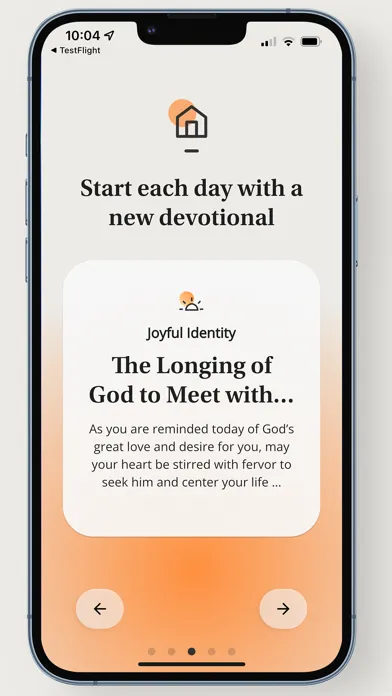
First15 is a free daily devotional delivered through three channels at once - a website, an iOS/Android app, and a daily email - each carrying the same fifteen-minute reading. Founded in 2014 by Craig Denison and produced under the Hope Center umbrella in Dallas, it is supported entirely by donations and has no premium tier. Every entry is written for a specific date and built around a weekly theme; the Monday entry sets up the theme, the next four days develop it, Saturday turns it into self-examination, and Sunday is a rest day.
The format itself is the product. Each devotional is divided into three timed sections - about five minutes of stillness, five minutes in a short Scripture passage, and five minutes of guided reflection and prayer - with the goal of producing a single fifteen-minute encounter rather than a tutorial. There is no quiz, no streak counter, no comments thread. You arrive, you read or listen, you close the app, and the next entry waits for tomorrow morning. That is the entire product.
Why everyday Christians prefer First15
The single biggest practical difference between First15 and almost every other devotional app is that First15 tells you how to spend the time. Most devotionals hand you a passage and a few paragraphs of commentary and trust you to figure out the rest. First15 hands you a passage, then a guided minute-by-minute structure that walks you from a settled posture into Scripture and out into prayer. This sounds like a small thing. In practice it’s transformative, especially for readers who have never been taught how to sit with the Bible for longer than a few seconds at a time.
The structure is also the reason First15 retains so many long-term users. A devotional that changes its format every day asks for a decision every day, and decisions are exactly what most people don’t want to make at six in the morning. First15 removes the decision. The shape of the time is fixed; only the content changes. Readers report sticking with it for years - not because the writing is the most beautiful in the category (Denison is good, but he’s not Tozer), but because the rhythm survives whatever season of life they’re in.
The 15-minute three-part structure: the differentiator
Every First15 devotional is split into three timed blocks that always appear in the same order. Stillness comes first - a short prompt to slow down, settle the body, and put attention on God before reading anything. Scripture comes second - a passage, usually four to ten verses, with a paragraph or two of devotional commentary that surfaces the main idea without trying to be a verse-by-verse exposition. Reflection comes third - a few prompts that turn the passage into prayer and self-examination, plus a closing thought and often a worship-song link to listen to as the time ends.
The reason this matters is that the structure does the work most readers can’t do for themselves. Slowing down is hard. Knowing what to do with a passage after you’ve read it is hard. Praying for fifteen minutes when you’ve never been taught how is hard. By splitting the time and handing you a small prompt for each block, First15 lowers the activation energy for a real quiet time from “I need to figure out my whole morning routine” to “I need to do what the screen says next.” The result is a devotional habit that survives bad weeks, travel, and seasons of burnout in a way that more ambitious reading plans usually don’t.
Daily email + audio: meeting readers where they already are
First15 was an email newsletter before it was an app, and the email is still arguably the better delivery mechanism. Subscribers get the full devotional in their inbox at five in the morning local time, complete text and audio link included - no separate app to open, no notification to ignore. For email-first readers, this is the closest thing to a frictionless quiet time the category has produced. You open your phone, you open Mail, the devotional is already there waiting, and you read it the same way you read any other email.
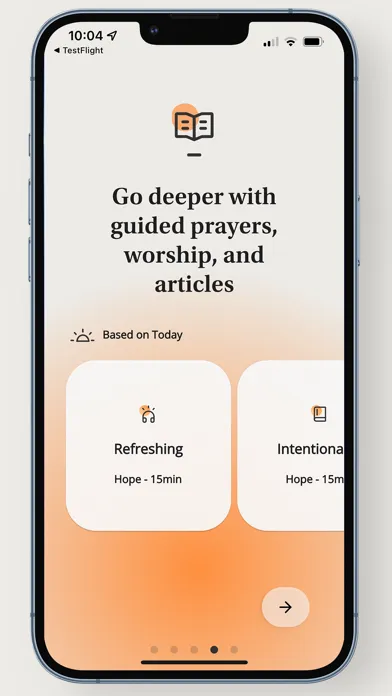
The audio is the other quiet superpower. Every devotional has a recorded version, narrated calmly and without overproduction, that runs roughly the same fifteen minutes the structure asks for. Commuters, parents wrangling small children, runners, and anyone who reads slowly or wakes up foggy can press play and let the same content arrive through their ears instead of their eyes. The audio doesn’t skip the stillness section - it pauses, gently, where the text pauses - which means the structure survives the format change. Most devotional apps treat audio as a bolt-on. First15 treats it as a first-class delivery channel.
Craig Denison’s intimacy-with-God thesis
Underneath the structure and the channels sits a single editorial thesis that runs through every entry: the Christian life is sustained by daily, unhurried intimacy with God, and most readers have never been taught how to actually practice that. Denison is the son of Jim Denison (the longtime pastor and writer behind the Denison Forum), and his theological background is broadly evangelical Protestant. The writing leans on Scripture, the cross, and the indwelling Spirit as the basis for relationship, and it stays away from denominational distinctives - you won’t find arguments about church government, the sacraments, or end-times timelines here.
Readers from a range of traditions report that First15 lands cleanly for them. The intimacy-with-God framing is at home in charismatic and Holy Spirit-emphasizing circles, but the structure and Scripture-anchored format also work for readers from more reserved traditions who would normally find devotional language too effusive. It is not, however, a tradition-specific product - Catholic readers looking for the liturgical year, Latter-day Saint readers looking for Restoration-aware framing, and Orthodox readers looking for the Church Fathers will all want a different primary devotional. As a supplement, though, First15 sits comfortably alongside almost any tradition’s daily practice.
Pricing
Free
$0
Full access to every daily devotional, audio, weekly themes, and the email subscription. Nothing is paywalled.
Donation
Pay-what-you-want
First15 is funded by reader gifts through the Hope Center. One-time and recurring donations are accepted on the site.
First15 is free. There is no premium tier. There is no “unlock the rest of the devotional” gate. There are no in-app purchases. The entire product - every daily entry, every audio version, the weekly themes, the email subscription, and the historical archive - is available the moment you download the app or sign up for the newsletter.
The funding model is donations, processed through the Hope Center in Dallas. The site asks gently and infrequently for support; the app itself does not push donation prompts at users. Recurring monthly gifts are the largest source of revenue, but one-time gifts are welcomed. If you read the devotional regularly and want to keep it free for everyone else, that’s the only ask.
For a free product, the editorial discipline is the surprise. Most things this committed to staying free either fade after a few years (the writer burns out) or quietly add a premium tier (the ministry has to make payroll). First15 has done neither for more than a decade. Whether you donate or not, that’s the model that respects your work.
Where First15 falls behind
No reading-plan picker. You get the daily entry First15 has scheduled, full stop. If you want to walk verse-by-verse through Romans this fall, or do a thirty-day plan on anxiety, or pick up where you left off in 1 Samuel, First15 is not the tool - use YouVersion or a study Bible alongside it.
No community or social layer. Other apps lean heavily on friends, group plans, and shared highlights to drive retention. First15 has none of that. For readers who genuinely want a private devotional time, this is a feature; for readers who want accountability or shared reading, it’s a gap.
Light on exposition. The Scripture commentary in each entry is devotional in mode, not expositional - it surfaces one idea, not the full argument of the passage. Pair First15 with a study Bible (the ESV Study Bible or the NIV Cultural Backgrounds Bible work well) if you want the historical and theological context.
No original-language or reference depth. There are no Greek/Hebrew tools, no cross-references, no commentary integration. First15 doesn’t pretend otherwise - it’s a devotional, not a study tool - but if you came expecting Logos-style depth, this isn’t that.
App polish trails YouVersion and Hallow. The First15 app does its job, but the design language feels a generation behind the category leaders. The web and email experiences are arguably the better way in.
First15 vs. First 5 vs. Our Daily Bread
These three are the most-asked-about overlapping products in the daily-devotional category, and they’re each solving different problems. First15, as we’ve covered, is a free 15-minute structured quiet time from Craig Denison - broad evangelical voice, daily Scripture passage, three-part stillness/Scripture/reflection rhythm, delivered by app or email with audio.
First 5, from Proverbs 31 Ministries (Lysa TerKeurst’s organization), is a five-minute first-thing-in-the-morning devotional that walks straight through books of the Bible chapter by chapter. The audience skews female, the voice is a rotating cast of Proverbs 31 teachers, and the design emphasis is on a fast, contained encounter with one chapter before the day begins. Different strengths. First 5 is better at moving you systematically through a book of the Bible in short daily bites. First15 is better at building a longer, structured quiet-time rhythm around shorter passages.
Our Daily Bread, from Our Daily Bread Ministries (formerly RBC), is the legacy product in this category - a short, story-driven daily devotional that’s been in print since 1956 and now also runs as a free app. The entries are around three to five minutes, often start with a personal anecdote, and aim at a single takeaway. It’s the gentlest of the three on-ramps and the most familiar to readers who grew up with the printed booklet. First15 is more structured and longer; First 5 is more book-by-book; Our Daily Bread is more story-led and short. All three are free. Most readers benefit from picking one as a primary and not stacking them.
The bottom line
First15 is the thoughtful person’s daily devotional, and a rare example of a free Christian app that has stayed both free and disciplined for more than a decade. The 15-minute three-part structure does the unsexy work that most readers can’t do for themselves - it tells you how to spend the time - and the email + app + audio parity means it meets you wherever you actually open things in the morning. It is not a study Bible, not a community, and not a reading-plan engine, and if those are what you need, you’ll need to pair it with something else. But as the structured quiet-time companion it sets out to be, very little in the category is doing it better.
Alternatives to First15
 First 5 by Proverbs 31Five-minute, book-by-book daily devotional from Proverbs 31 Ministries. Often confused with First15; aimed at a primarily female audience and walks straight through chapters of the Bible.
 Our Daily BreadThe legacy daily devotional, free and now also an app. Short, story-led entries; the gentlest on-ramp of the three big devotional names.
 She Reads TruthBeautifully designed reading-plan devotional aimed at women, with a sister product (He Reads Truth) for men. Stronger on community and design than First15; not free.
 GlorifyWorship- and prayer-forward daily devotional app with an audio-first format. More features than First15 and a premium tier; same general daily quiet-time job.
Frequently asked questions
Is First15 the same as First 5?
No. They’re two different products with confusingly similar names. First15 is Craig Denison’s 15-minute structured quiet time, supported by donations through the Hope Center in Dallas. First 5 is a five-minute book-by-book devotional from Proverbs 31 Ministries, the organization founded by Lysa TerKeurst. Different authors, different formats, different ministries. We review them separately.
Is First15 really completely free?
Yes. There is no premium tier, no paywalled content, and no ads. The app, the website, the daily email, and the audio versions are all free. The ministry is supported by reader donations through the Hope Center; donating is optional and unobtrusive.
What denomination or tradition does First15 come from?
Craig Denison and the Hope Center sit within broadly evangelical Protestantism. The writing focuses on Scripture and intimacy with God and stays away from denominational distinctives - you won’t find arguments about church government, the sacraments, or end-times timelines. Readers from many traditions use it as a supplement; readers wanting tradition-specific framing (Catholic, LDS, Orthodox, Reformed) will want a different primary devotional.
How long does First15 actually take?
About fifteen minutes if you follow the structure - roughly five minutes of stillness, five minutes in the Scripture passage and commentary, and five minutes in the reflection and prayer prompts. The audio version is also around fifteen minutes. You can move faster or slower; the structure is a guide, not a stopwatch.
Can I pick which book of the Bible to read?
No. First15 delivers the entry it has scheduled for that date, organized around a weekly theme. If you want to choose your own reading plan or walk verse-by-verse through a specific book, pair First15 with a Bible app like YouVersion or a study Bible.
Is there an audio version?
Yes - every daily devotional has a recorded version narrated calmly and without overproduction. The audio runs roughly the same fifteen minutes as the text and is included free in the app, the email, and on the website.
Who should not use First15?
If you want deep exegetical or original-language study, you want denomination-specific framing, you want gamified streaks and social features, or you want to pick your own book of the Bible to walk through, First15 is not the right primary tool. It’s a structured devotional companion - not a study suite, a community, or a reading-plan engine.
Sources & further reading
More Devotional Apps
 365 Christian Men365 Christian Men delivers short, memorable stories of faith and courage across history, now inside the broader 365 Christian Stories ministry—most useful as a free conversation starter when biography is sourced, contextualized and never confused with Scripture.
 Contagious Disciple MakingThe Contagious Disciple Making app gathers free stories, training, Scripture lists and community tools around Discovery Bible Study and DMM—useful as a doorway when coaching, local church accountability and participant safety remain larger than the app.
 ReflectReflect builds a calm two-minute rhythm from Scripture, a personalized AI reflection, prayer and one honest question, with strong privacy documentation and no ads—but intimate context still reaches cloud services, and generated theology needs human judgment.
 Overflow Quiet Time CompanionOverflow is a free iPhone companion for turning a Bible, devotional or Christian app into a five-minute quiet-time rhythm—but its thoughtful simplicity comes with a tiny public track record and few recent feature additions.
 Following JesusFollowing Jesus gives new believers a free pocket companion for seven Christian foundations, devotionals, Bible reading, worship and video—useful immediately, though its iOS build and privacy label lag the much newer Subsplash Android app.
 helloHOPEhelloHOPE offers free Scripture-centered encouragement, prayer, calming music and stories for families facing a child’s diagnosis—but advertising and cross-app tracking labels are a poor match for such a sensitive moment.