
- Starting price
- Free
- Free tier
- Yes
- Platforms
- iOS · Android · Roku · Apple TV · Fire TV · Web
- Developer
- Hope Channel International (Seventh-day Adventist Church)
- Launched
- 2003
- Updated
- May 24, 2026

The verdict
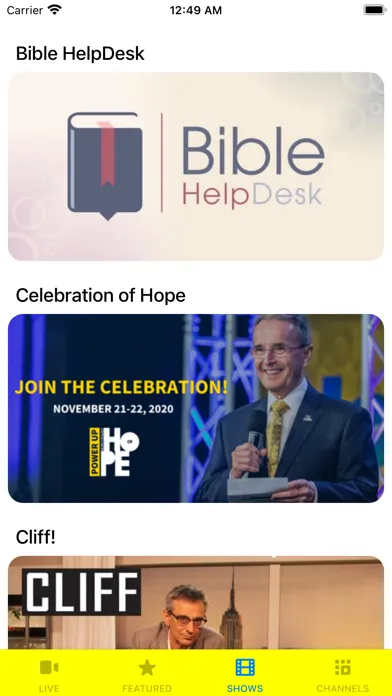
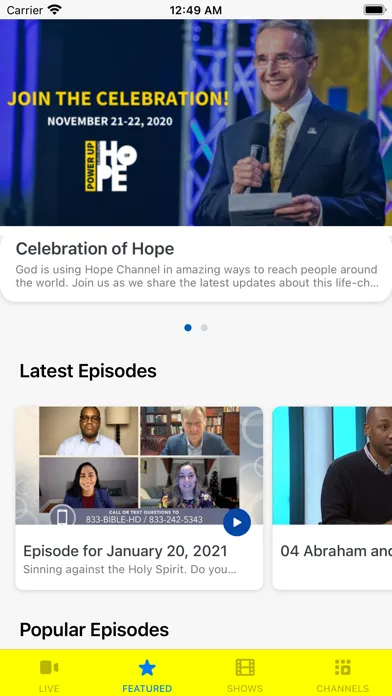
Hope Channel is the most polished free streaming app produced by any single global denomination - a 24/7 live network, deep on-demand library, and Sabbath-school content available in dozens of languages. It is unmistakably Adventist in tone and theology, and that is the whole point.
Try Hope Channel ↗Opens hopetv.org
Hope Channel has quietly become the default streaming home for the global Seventh-day Adventist community - and a curiosity stop for anyone outside that tradition who wants to understand what Adventists actually watch on Sabbath afternoon. The app aggregates the church’s worldwide television network (running since 2003) into a single free interface that works on phones, tablets, and every major living-room device. There is no paywall, no premium tier, and no “unlock the rest of the catalog” upsell. The whole library is open.
It is not a generic Christian streaming service. It does not try to compete with TBN+ on celebrity-pastor breadth. It does not chase the dramatic-fiction lane that Pure Flix owns. It does not pretend to be denominationally neutral. What it offers instead is a curated, theologically consistent slate of programming produced by and for a specific tradition - Sabbath-school lessons keyed to the global Adult Bible Study Guide, prophecy series rooted in the historicist reading Adventism has held since the 19th century, a health and lifestyle vertical that reflects the church’s long-running wellness emphasis, and youth and children’s programming with the same theological DNA.
The Learn of Christ team spent several weeks living inside the app across iOS, Apple TV, and the web player - sampling live channels in multiple regions, working through Sabbath-school cycles, watching the long-running prophecy series, and checking how the multilingual catalog actually behaves once you change the app language. What follows is a description of what Hope Channel is, who it serves best, where it falls behind a paid competitor like RightNow Media, and what a reader from another tradition should know going in.
✓ The good
- Completely free across every platform - no tiers, no “premium” catalog, no celebrity-pastor paywall
- Genuinely global - region-specific live channels and on-demand libraries in dozens of languages, not a token translation layer
- Deep Sabbath-school archive - the weekly Adult Bible Study Guide lessons are tracked on video with multiple teachers
- Strong prophecy and end-times catalog - a core Adventist emphasis, presented with the church’s historicist framing
- Health and lifestyle programming that competitors don’t touch - nutrition, mental health, addiction recovery, family
- Living-room apps actually work - Roku, Apple TV, and Fire TV builds are stable, fast, and Chromecast-friendly
- Children and youth verticals are theologically consistent with the adult catalog, which families inside the tradition appreciate
✗ Watch out
- Theology is explicitly Adventist - Saturday Sabbath, conditional immortality, and the prophetic role of Ellen G. White shape much of the catalog
- Search and discovery are weaker than the paid streamers - you browse rows, you don’t really query the library
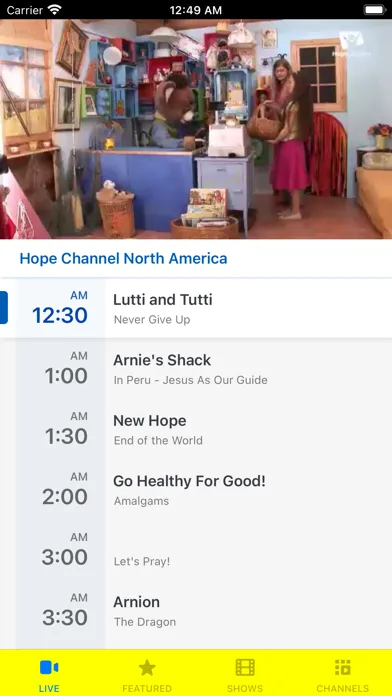
- Live-channel programming guides are inconsistent across regions - sometimes you get a full EPG, sometimes a placeholder
- No download-for-offline on most platforms (yet) - you stream or you don’t watch
- Production values vary wildly between flagship shows and locally produced regional content
- Casting and AirPlay work, but multi-device sync (resume where you left off across phone and TV) is hit or miss
Best for
- Seventh-day Adventist families wanting a single app for Sabbath viewing
- Adventist members traveling or living outside their home conference
- Non-Adventists curious about what the church actually teaches, in its own voice
- Multilingual households who want Christian programming in a non-English first language
Avoid if
- You want a denominationally neutral library of mainstream evangelical teachers
- You’re looking for Catholic, Orthodox, or LDS programming
- You want polished scripted Christian drama (try Pure Flix or The Chosen app)
- You need a curriculum platform for small groups (RightNow Media is the category leader)
What Hope Channel is
Hope Channel is the Seventh-day Adventist Church’s official global television and streaming network, packaged into a single free app available on iOS, Android, Roku, Apple TV, Fire TV, and the web. It launched as a satellite-TV ministry in 2003 (originally as the Adventist Television Network), grew into a federation of regional Hope Channels broadcasting in different languages, and consolidated its streaming presence under the hopetv.org umbrella. Today the app is the front door to that whole network - live linear channels in multiple languages, plus a deep on-demand library spanning Bible teaching, Sabbath-school lessons, health programming, family content, music, and youth shows.
The content is produced by Hope Channel International and its regional affiliates, with material also pulled in from sister Adventist ministries - It Is Written, Amazing Facts, the Adventist World Radio video catalog, and the church’s flagship Adult Bible Study Guide. Everything is curated by the denomination, which means the theological perspective is consistent in a way that aggregator apps like TBN+ are not. If you watch Hope Channel for a month, you will come away with a clear picture of how Seventh-day Adventism reads scripture, prophecy, the human person, and Christian living.
Why Adventists prefer Hope Channel
For a member of the Seventh-day Adventist Church, Hope Channel solves a problem the bigger Christian streamers can’t. The Saturday-Sabbath rhythm, the weekly Adult Bible Study Guide cycle, the health and temperance emphasis, the historicist prophetic reading - these are not afterthoughts squeezed into a denominationally neutral catalog. They are the spine of the schedule. A family can put the Sabbath morning service on the living-room Roku, switch to the week’s Sabbath-school lesson for an afternoon study, queue up a health series for the evening, and never leave the app.
The other reason Adventists prefer it is reach. The Seventh-day Adventist Church is one of the most genuinely global Protestant bodies in the world, with members concentrated in places where TBN+ and Pure Flix are essentially absent. Hope Channel meets that reality - the app surfaces region-specific feeds and language packs for Latin America, sub-Saharan Africa, India, the Philippines, Romania, Germany, and Brazil among others, rather than translating a US-centric library after the fact. For Adventist members living outside North America, this is the differentiator.
Live channels and the Sabbath-school on-demand archive: the everyday-Adventist core
Open the app on any platform and the top of the screen is a live linear feed - the global English Hope Channel by default, with a tap to switch to regional feeds (Hope Channel Deutsch, Hope Channel India, Esperanza TV in Spanish, and so on, depending on what is licensed in your geography). Underneath that, the largest single shelf is Sabbath-school: weekly studies keyed to the global Adult Bible Study Guide that the entire Seventh-day Adventist Church works through on a synchronized quarterly cycle. The app stores past quarters going back years, so a viewer can rewatch the previous lesson, prep the next one, or work through an entire quarter at their own pace.
This is the feature that makes Hope Channel a daily-use app rather than a Sabbath-only one. Adventist members typically already engage the Adult Bible Study Guide in printed or PDF form during the week, and the video lessons function as a companion - a different teacher every quarter, often a different one on the Hope Channel English feed than on the regional feeds, so a family can mix perspectives within the same denomination. The on-demand archive turns a normally local, in-person experience into something a homebound member or a traveler can keep up with from anywhere.
Prophecy and end-times programming: the Adventist emphasis
Prophetic interpretation has been central to Seventh-day Adventism since its 19th-century origins, and the Hope Channel catalog reflects that with a depth no general Christian streamer matches. There are full series walking through Daniel and Revelation chapter by chapter, multi-part presentations on the church’s historicist reading of the prophetic timeline, programming on the second coming and the millennium, and material on the church’s distinctive teachings around the sanctuary, the investigative judgment, and the great controversy framework. Flagship ministry partners - It Is Written, Amazing Facts, and others - contribute full series libraries here.
For viewers inside the tradition, this is bread-and-butter content presented in the church’s native theological vocabulary. For viewers outside it, this section is the clearest window into how Adventism reads prophecy differently from dispensationalist Protestants, Catholic and Orthodox amillennial readings, or LDS prophetic frameworks. The framing is consistent and unapologetic - historicist where most modern Protestants are futurist, with the soon return of Christ as a structural emphasis rather than a tagged-on doctrine. Knowing this going in is the difference between watching with understanding and watching with confusion.
Multi-language, multi-region global reach: the feature competitors can’t match
Change the app language and Hope Channel doesn’t just swap a UI - it surfaces a different catalog. The Spanish-language Esperanza TV feed, the Portuguese Novo Tempo content out of Brazil, Hope Channel Deutsch, Hope Channel India with multiple Indian languages, Romanian, Russian, Filipino, French, Korean, Arabic, and more all exist as distinct streams with their own programming, their own live schedules, and their own teachers. This is not a translation layer bolted onto a US library. It’s a federation of regional networks the app exposes through a single account.
For multilingual families - second-generation immigrants who want their parents to watch in a first language, missionaries living abroad, members of diaspora Adventist congregations - this is genuinely hard to replicate. TBN+ has some Spanish and Portuguese content but the rest of the language slate is thin. Pure Flix is English-only in any practical sense. RightNow Media has a translation initiative but still skews heavily Anglophone. Hope Channel’s global posture is structural, not aspirational, and it’s the single feature most likely to keep an Adventist household subscribed when other Christian streamers come and go.
Pricing
Hope Channel
Free
The entire app - live channels, on-demand library, Sabbath-school archive, kids and youth content, every language - at no cost on every supported platform. No account required to watch.
Free account (optional)
Free
Creating a free profile unlocks watch-history sync, a personal favorites list, and reminder notifications for upcoming live broadcasts. Useful but not required.
Donate to Hope Channel
Pay what you want
The network is funded by the Seventh-day Adventist Church and viewer donations. There is a donate flow in-app and on hopetv.org for viewers who want to support production - entirely optional, never gated.
The pricing story for Hope Channel is short - it’s free, everywhere, forever, with no premium tier and no content held back. The Seventh-day Adventist Church operates Hope Channel as a denominational ministry, funded primarily by the church and supplemented by viewer donations, so there is no subscription business model to defend. You can install the app on every device in the house and never see a payment prompt.
A free optional account adds a few nice-to-haves - favorites, watch history, broadcast reminders - and is worth creating if you plan to use the app on more than one device. Without an account everything still works; you just lose cross-device sync.
The donate flow inside the app is genuinely optional. It’s presented as a way to support production, not as a soft paywall, and you can use Hope Channel indefinitely without contributing. For viewers who want to support the network the in-app and web donation options accept both one-time and recurring gifts. Most users do not need to donate to get the full experience - but for Adventist members who already tithe to their local church, supporting Hope Channel directly is a natural extension.
Where Hope Channel falls behind
No serious search and discovery layer. You scroll shelves the way you did on cable, and the in-app search is keyword-based with weak metadata. If you remember the show name you’ll find it; if you’re trying to discover a specific topic across the catalog (every video on Sabbath, every video on Daniel 7), you’ll work harder than you should have to.
Limited offline downloads (yet). Most platforms stream only, which is a problem for international users on metered data and for anyone who wants Sabbath content on a plane. The mobile apps have added partial download support in some markets, but it’s nowhere near the offline experience YouVersion or Logos delivers.
Inconsistent regional EPGs. The live-channel grids are well-maintained for the flagship feeds (English global, Esperanza, Novo Tempo, Hope Channel Deutsch) but thinner for smaller regional channels. You sometimes get a full week’s schedule, sometimes a generic “live now” card with no upcoming list.
Production polish varies a lot. Flagship in-studio programs look broadcast-grade. Locally produced regional content can feel more like a parish broadcast, which is fine in context but jarring if you flip between the two in a single sitting.
No small-group curriculum tooling. Hope Channel is a streaming network, not a discipleship platform. If you want video curriculum with leader guides, participant questions, and licensing for church use, RightNow Media is built for that job and Hope Channel is not.
Hope Channel vs. TBN+ vs. Pure Flix
Different strengths, different lanes. Hope Channel is the official streaming network of a single global denomination - the Seventh-day Adventist Church - and the entire catalog reflects that. TBN+ is a broad evangelical aggregator pulling from many ministries and televangelists across the charismatic, Pentecostal, and non-denominational Protestant world, with a much wider but theologically looser lineup. Pure Flix is primarily a faith-and-family entertainment service - scripted films, kids’ shows, family dramas - with some teaching content layered on top.
Hope Channel is better at being one church’s home. The Sabbath-school archive, the prophecy series, the health programming, the regional language feeds - none of that exists with the same depth anywhere else. If you’re Adventist or want to understand Adventism, Hope Channel is the single best app for the job. TBN+ is better at breadth: more teachers, more denominations represented loosely under an evangelical umbrella, a much larger raw catalog. Pure Flix is better at entertainment: it’s the only one of the three you’d open looking for a movie night.
The honest framing for a reader trying to choose: pick by tradition and use case, not by feature list. An Adventist family will use Hope Channel daily and treat the other two as occasional add-ons. A non-denominational evangelical household will probably default to TBN+ for teaching and Pure Flix for family movie night, and only open Hope Channel when curious about Adventist perspective. Catholic, Orthodox, and LDS readers will find none of these three is built for them - they should look at Word on Fire, Ancient Faith, and Gospel Library respectively.
The bottom line
Hope Channel is the most polished free streaming app any single global denomination has built, and it does exactly what it sets out to do - give the Seventh-day Adventist Church a single home for live broadcasts, Sabbath-school content, prophecy teaching, health programming, and youth and family shows across dozens of languages. The catalog is unmistakably Adventist in theology and tone, which is a feature for members and a useful signal for outsiders. The gaps - weak search, thin offline, no curriculum tooling - are real, but they’re worth knowing about going in rather than dealbreakers. For Adventist households it’s essential; for everyone else it’s the clearest window into what the church actually teaches, in its own voice, for free.
Alternatives to Hope Channel
 TBN+The broad evangelical streaming aggregator - many ministries, many teachers, looser theology, much wider catalog. Free with a paid tier.
 Pure FlixFaith-and-family entertainment service - scripted films, family dramas, kids’ shows. Subscription-based, lighter on teaching content.
 The Chosen AppThe official home of the multi-season Chosen TV series on the life of Jesus, plus bonus content and behind-the-scenes material. Free.
 RightNow MediaThe Netflix-of-the-church for small-group curriculum and discipleship video - typically subscribed to by your local church and shared with members.
Frequently asked questions
Is Hope Channel really completely free?
Yes. There is no premium tier, no locked content, and no subscription on any platform. The Seventh-day Adventist Church funds Hope Channel as a denominational ministry, supplemented by viewer donations. You can install the app on every device in the house and use everything without ever paying.
Do I need to be Seventh-day Adventist to use Hope Channel?
No. Anyone can install and watch - many viewers from other Christian traditions, and from no tradition at all, use the app. Just know that the catalog is produced by and for the Adventist Church, so the theological perspective is consistent throughout. It’s not a denominationally neutral library.
What does “Adventist” actually mean in terms of content?
Practically, expect Saturday Sabbath observance treated as the biblical Sabbath, programming that emphasizes the soon return of Christ, a historicist reading of prophecy in Daniel and Revelation, a strong health and lifestyle vertical reflecting the church’s wellness tradition, and frequent reference to the writings of Ellen G. White, whom Seventh-day Adventists recognize as a prophet. None of this is hidden - it’s the spine of the schedule.
What platforms does the app run on?
iOS, Android, Apple TV, Roku, Amazon Fire TV, and any web browser via hopetv.org. Casting via Chromecast and AirPlay works on most platforms. The living-room apps are stable and well-maintained, which is unusual for a denominational app at this price point (free).
Can I watch Hope Channel in languages other than English?
Yes - extensively. Hope Channel operates as a federation of regional networks, so the app surfaces distinct live channels and on-demand libraries in Spanish (Esperanza TV), Portuguese (Novo Tempo), German, Romanian, Russian, multiple Indian languages, Filipino, French, Korean, Arabic, and more, depending on your region. Each language pack is its own catalog, not a translation layer.
Is there Sabbath-school content for kids?
Yes. Hope Channel has dedicated children and youth verticals with Sabbath-school lessons keyed to the age-appropriate Bible study guides the global church publishes. The content is theologically consistent with the adult catalog, which Adventist families specifically look for and which generic Christian kids’ apps don’t provide.
How is Hope Channel different from TBN+ or Pure Flix?
Hope Channel is one denomination’s official network - Seventh-day Adventist, consistent theology, deep but narrow. TBN+ is a broad evangelical aggregator with many ministries and looser theological boundaries. Pure Flix is mostly faith-and-family entertainment (films and shows) with some teaching layered on. Pick by what you actually want: a single church’s home, a broad evangelical buffet, or family movie night.
Sources & further reading
More Christian Streaming Apps
 Good Feed MediaGood Feed Media streams complete discipleship series, Bible study tools and all six volumes of 33 The Series without a subscription—an unusually generous library whose optional books, mature themes and Subsplash data layers need clear group leadership.
 Olive Christian RadioOlive Christian Radio offers a free stream of current worship, inspirational songs, timeless selections and short biblical encouragement with favorites and a sleep timer—but its app-store privacy label omits data the official policy describes.
 ZipWave TVA free live-channel bundle mixing faith, international news and family programming without a required iOS account—more convenient than channel-hopping, but neither ad-free nor uniformly child-safe.
 Every Man MinistriesEvery Man Ministries packages Kenny Luck’s evangelical men’s teaching, video studies, daily devotions, Bible plans, livestreams, prayer, and group discussion into a polished subscription app—but a narrowly gendered library, tiny store sample, identifier tracking, broad Vimeo-powered data collection, and a yearly plan that saves almost nothing deserve a clear-eyed trial.
 BCC MediaA Norwegian nonprofit streams polished, ad-free Bible animation, children’s series, studies, sermons, shorts, and interactive lessons across mobile, TV, and web—but the library represents Brunstad Christian Church’s teaching, account history is retained broadly, and families still need to preview.
 MyTRIBE.watchA homegrown, funny, chronological Bible-video subscription with printable family activities and real creative personality—promising for elementary-age engagement, but expensive and undermined by contradictory prices, age terms, and stale privacy documents.