- Starting price
- ~$50 hardcover
- Free tier
- No
- Platforms
- Print · Kindle
- Developer
- Baker Academic
- Launched
- 2011
- Updated
- May 31, 2026
The verdict
Beale's New Testament Biblical Theology is one of the most ambitious single-author works in the field - a thousand pages arguing that the entire New Testament unfolds the Old around one organizing idea, the already/not-yet new creation inaugurated at Christ's resurrection. It is a major reference, written from a Reformed evangelical vantage, and its single-framework method is debated among scholars. Know the scale and the lens going in, and it rewards every hour.
Try A New Testament Biblical Theology ↗Opens bakerpublishinggroup.com
G.K. Beale's A New Testament Biblical Theology has quietly become a fixture on the shelves of pastors, doctoral students, and serious lay readers who want to see how the whole New Testament hangs together rather than book by book. It landed in 2011 from Baker Academic, runs close to a thousand pages, and carries the subtitle that states its entire thesis: "The Unfolding of the Old Testament in the New." Beale's claim is that you cannot really read the New Testament until you read it as the continuation and climax of a story the Old Testament started.
It is not a survey. It does not march through Matthew to Revelation summarizing each book. It does not try to give equal time to every theme a New Testament scholar might care about. Instead Beale builds the whole book around a single organizing center - what he calls inaugurated eschatology, the conviction that the "latter days" the Old Testament prophets pointed to actually began with the life, death, and especially the resurrection of Jesus, even though they will not be completed until he returns.
What makes the book a landmark despite that narrow lane is the sheer accumulation. Beale traces one storyline - new creation and kingdom, launched and not yet finished - through resurrection, the Spirit, justification, the church, the law, and the Christian life, and he does it with a density of Old Testament cross-reference that few scholars working today can match. The phrase he repeats until it becomes a refrain is "already and not yet," and by the end of the book a reader who started skeptical of organizing the New Testament around one idea has at least seen, in exhaustive detail, what that organizing idea can do.
It is also, plainly, a hard book. It is long, it is technical, it assumes you can follow Greek and Hebrew transliteration, and it is priced like the academic monograph it is. This review is about who that trade is worth it for - and who should reach for something shorter first.
✓ The good
- The most thorough single-author attempt in print to read the whole New Testament as one unfolding story - the scope is genuinely rare and the payoff for a patient reader is real
- Old Testament cross-referencing is Beale's signature strength - almost every New Testament claim is traced back to its scriptural roots, and the index of allusions alone is a research tool
- The already/not-yet framework, once it clicks, reorganizes how you read dozens of passages - readers consistently describe it as the book that made the New Testament's use of the Old finally make sense
- Unusually integrated - resurrection, the Spirit, the church, the law, and the future are not separate chapters so much as facets of one argument, which is harder to write than a topic-by-topic survey
- A standard reference in the field - cited across evangelical biblical theology, assigned in seminary courses, and frequently the first book recommended for the discipline as a whole
- Pastorally usable in the hands of a trained reader - the storyline Beale traces preaches well, and many teachers mine it for sermon series on how the Testaments connect
- Beale states his commitments and method openly rather than smuggling them in - you always know what framework you are reading and can argue with it on its own terms
✗ Watch out
- Long and dense - close to a thousand pages of technical argument, with heavy transliterated Greek and Hebrew, footnotes, and repeated cross-reference that can wear down even motivated readers
- The single-framework approach is itself contested - some scholars argue that organizing the entire New Testament around one center (inaugurated eschatology) flattens themes that resist a single key
- Not for casual readers - this is written for pastors, students, and specialists; a reader new to the Bible or to the discipline will likely stall in the first hundred pages
- Expensive for an individual - around $50 for the hardcover, with no free tier, which is a real barrier for the lay reader the framework would actually benefit
- The repetition that makes the thesis land also makes the book feel long - "already and not yet" recurs so often that some readers find the back half slower going than the front
- Engagement with traditions outside Reformed evangelicalism is limited - readers from Catholic, Orthodox, Wesleyan, or Latter-day Saint backgrounds will find their own scholarship largely absent from the conversation
Best for
- Pastors who want to preach the New Testament as the climax of the Old
- Seminary and doctoral students studying biblical theology as a discipline
- Serious lay readers willing to commit to a long, technical book
- Anyone researching the New Testament use of the Old Testament
Avoid if
- You are new to the Bible and want a readable first overview
- You want a neutral survey that weighs every scholarly framework equally
- You prefer a short, devotional treatment over a thousand-page monograph
- You want a treatment grounded in a non-Reformed-evangelical tradition
What A New Testament Biblical Theology is
A New Testament Biblical Theology: The Unfolding of the Old Testament in the New is G.K. Beale's single-volume work of biblical theology, published by Baker Academic in 2011. It runs close to a thousand pages and sets out to answer one question across the whole New Testament: how does the New fulfill, develop, and complete the storyline the Old Testament began? Beale's organizing answer is inaugurated eschatology - the conviction that the end-time new creation and kingdom the prophets foresaw actually broke into history with Jesus, supremely at his resurrection, and is now being worked out until its completion at his return.
Beale is a New Testament scholar who taught for years at Wheaton College and then at Westminster Theological Seminary, and the book is written from a Reformed evangelical vantage. "Biblical theology" here names a scholarly method - reading scripture along the grain of its own unfolding storyline and categories, rather than organizing it by the topical headings of systematic theology. The book is widely treated as a standard reference for that discipline and is assigned in a number of seminary courses, while its single-center approach remains a live point of scholarly debate.
Why the already/not-yet framework is the whole point
The single biggest difference between Beale's book and most New Testament theologies is that it has one idea and follows it everywhere. Many works in the field are organized by author (Pauline theology, Johannine theology) or by topic (Christology, soteriology, the church), and the result reads like a set of related essays. Beale instead picks one master key - the already/not-yet new creation inaugurated at the resurrection - and uses it to unlock resurrection, the Spirit, justification, the people of God, the law, and the Christian life in turn. The claim is that these are not separate doctrines so much as different windows onto the same end-time reality that has begun and is not yet complete.
This sounds like a tidy organizing trick. In practice it is the source of both the book's power and its main criticism. For many readers it is genuinely clarifying: passages that once felt scattered - why Paul talks about believers already being raised with Christ, why the Spirit is called a "down payment," why the church is described as a temple under construction - suddenly line up as facets of one story. Other scholars push back that no single center can carry the whole New Testament without bending some themes to fit, and that inaugurated eschatology, however illuminating, is one framework among several rather than the framework. Both responses are worth taking seriously, and the book is strong enough to provoke them.
New creation as the storyline that ties the Testaments together
The spine of the book is the claim that the Bible's deepest organizing theme is new creation - that the story which opens in a garden in Genesis runs forward through Israel, breaks decisively into history at the resurrection of Jesus, and closes with a renewed heaven and earth in Revelation. Beale argues that the New Testament writers understood themselves to be living in the "already" of that new creation, with its consummation still ahead. He traces the thread through resurrection (the first installment of the new world), the gift of the Spirit (the present power of the age to come), and the church (the beachhead of new creation in the middle of the old).
What makes the treatment distinctive is the relentless grounding in the Old Testament. Beale does not assert the new-creation storyline and move on; he builds it out of Isaiah, Daniel, Ezekiel, the Psalms, and the Genesis narratives, showing where each New Testament move is reaching back. For a reader trained to follow it, this is the book's great gift - it models how to read the New Testament's use of the Old with care rather than proof-texting. For a reader who is not, the same density is the wall they hit, because following the argument means following the Old Testament substructure underneath nearly every page.
Resurrection and inaugurated eschatology as the engine
If new creation is the storyline, the resurrection of Jesus is the hinge on which Beale turns it. His argument is that the resurrection is not only the vindication of Jesus but the actual beginning of the end-time new creation - the first piece of the renewed world breaking into the present age. From there he develops the "already and not yet" structure that gives the book its rhythm: the decisive event has happened, the new age has been launched, and yet the old age overlaps with it until Christ returns and finishes what the resurrection began. This is what scholars mean by inaugurated eschatology, and Beale is one of its most thorough exponents.
The framework does real work across the book. It reframes justification as an already/not-yet verdict, the Spirit as the present down payment of a future inheritance, and the Christian life as life lived in the overlap of the ages. It is also, importantly, a framework with a history and a set of debates around it - it draws on a stream of twentieth-century scholarship, and the question of whether the whole New Testament can or should be read through it is genuinely contested in the field. Beale presents it as the controlling key; readers should weigh that claim rather than absorb it, which the book's openness about its own method makes possible.
The Old Testament allusion index and reference apparatus
Underneath the argument is a reference apparatus that has a life of its own. Because Beale grounds nearly every claim in specific Old Testament texts, the book accumulates an enormous web of cross-references, and the indexes - especially the index of scripture and allusions at the back - turn it into something closer to a research tool than a single continuous argument. A pastor or student tracking how the New Testament uses a particular passage of Isaiah or Daniel can work backward from the index to find Beale's discussion, much the way a reader uses a heavily indexed reference work.
This is also where the digital editions earn their place. In Logos or Accordance, every scripture reference becomes a link, the allusion index becomes searchable, and the book talks to the rest of a study library - which matters a great deal for a work whose value is so tied up in chasing cross-references. For the reader who is going to use Beale as a reference rather than read it cover to cover, the searchable edition is arguably the better buy, because the apparatus is half the point and a printed thousand-page index is slow to work by hand.
Pricing
Hardcover
~$50
The standard ~1,000-page Baker Academic hardcover. The reference copy most readers and libraries own.
Kindle / ebook
~$30
Same text, searchable, syncs across devices. The everyday-reading format given the book’s heft.
Logos / Accordance
~$45
Available in major Bible-software libraries, with scripture references and the allusion index linked and searchable. The serious-study format.
Used hardcover
~$30-$40
Widely available secondhand. The way many students acquire their first copy.
Beale's New Testament Biblical Theology is not cheap, and it is not free. The hardcover runs around $50 at most academic retailers - standard pricing for a thousand-page Baker Academic monograph, and a real barrier for exactly the lay reader the framework would most help. There is no free tier and no abridgement; the book exists at one length, and that length is long.
The Kindle and ebook editions land around $30 and are the everyday-reading format for most people, simply because the hardcover is a brick. Search works well, which matters more than usual for a book this cross-referenced, and highlights sync across devices. The trade-off is that the scripture-and-allusion index - one of the book's best features - is less pleasant to work on a small screen than the linked version in dedicated Bible software.
The Logos and Accordance editions sit around $45 and are the version serious students should consider. Every scripture reference becomes a tooltip in your preferred translation, the allusion index becomes fully searchable, and Beale cross-links into the rest of your library. For a work whose value is so tied to tracing Old Testament roots, that linking is not a luxury - it is close to the natural format for the book.
Used hardcovers turn up regularly in the $30-$40 range and are how many students acquire their first copy. Most readers do not need more than one format. Pick the print if you want a reference to mark up and keep; pick a digital edition if you will actually use the cross-references, which for this book most serious readers will.
Where A New Testament Biblical Theology falls behind
Accessibility. This is a specialist's book, and it does not pretend otherwise. The prose is technical, the transliterated Greek and Hebrew assume training, and the argument moves by accumulation of Old Testament detail rather than by gentle on-ramps. A reader new to the Bible, or new to biblical theology as a discipline, will almost certainly do better starting with a shorter introduction and coming to Beale later - the framework rewards readers who already know the terrain.
The single-center method. Organizing the entire New Testament around one controlling idea is Beale's great strength and his most-debated decision. Critics in the field argue that no single key - inaugurated eschatology included - can carry the whole canon without bending some themes to fit, and that biblical theology is better done with several organizing threads than one. The book is strong enough to make the case for its method; it does not settle the debate, and a careful reader should hold the framework as a proposal rather than a result.
Breadth of dialogue partners. Beale writes from a Reformed evangelical vantage and converses mostly within that stream and adjacent New Testament scholarship. Catholic, Eastern Orthodox, Wesleyan-Arminian, and Latter-day Saint scholarship on the same texts is largely outside the conversation. Readers in those traditions will find the exegesis useful but the dialogue partners narrow, and will need other works to hear their own tradition's reading of the same passages.
Length versus payoff for the general reader. The repetition that drives the thesis home - "already and not yet," returned to again and again - also makes the book feel its full thousand pages. A motivated lay reader can absolutely get through it, but the ratio of effort to insight is steep compared with a shorter overview, and many readers will get most of the framework's value from the first several hundred pages.
Beale vs. Vos vs. Kingdom through Covenant
These three sit on the same biblical-theology shelf and serve different readers. Different strengths. Beale is the most exhaustive and the most tightly organized around a single idea. Geerhardus Vos's Biblical Theology is the historic foundation - shorter, older, and the source much of the modern discipline grew from. Gentry and Wellum's Kingdom through Covenant is the most structurally argued, tracing the storyline through the biblical covenants in particular.
Vos's Biblical Theology (drawn from lectures, published in the mid-twentieth century) is the classic starting point: it lays out the idea that revelation unfolds progressively through redemptive history, and nearly every later work in the field, Beale's included, is downstream of it. It is far shorter and more readable than Beale, but also older and less comprehensive. Kingdom through Covenant (Peter Gentry and Stephen Wellum, 2012) organizes the same biblical-theological project around the sequence of covenants from Adam to Christ, and is the book to reach for if the covenant structure of scripture is your specific question. Both are written from broadly Reformed evangelical positions, as is Beale.
The honest summary: start with Vos if you want the shorter, foundational version of the discipline. Reach for Beale when you want the most thorough single-author synthesis and are ready for a thousand pages. Add Kingdom through Covenant when the covenants specifically are what you are working on. For a more accessible, popular-level entry into how the resurrection reframes Christian hope - a sliver of Beale's terrain written for a general audience - N.T. Wright's Surprised by Hope is the natural pairing. For traditions outside Reformed evangelicalism, these works are useful for their exegesis but will need to be read alongside scholarship from your own.
The bottom line
A New Testament Biblical Theology earns its standing as a landmark in the field not because it is short, easy, or tradition-neutral, but because no other single-author work traces the whole New Testament's fulfillment of the Old at this depth and with this much Old Testament cross-reference. Know what you are getting: a thousand technical pages built around one debated organizing idea, written from a Reformed evangelical vantage, priced for the academy. For pastors, students, and serious readers willing to commit, it is one of the most rewarding books in biblical theology. For everyone else, start shorter and come back to it.
Alternatives to A New Testament Biblical Theology
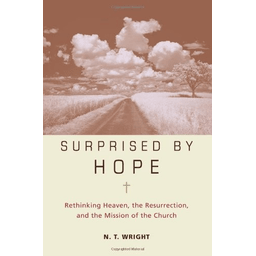 Surprised by HopeN.T. Wright’s accessible, popular-level treatment of resurrection and Christian hope - a general-audience window onto a sliver of the terrain Beale covers at scholarly length.
Frequently asked questions
Who is A New Testament Biblical Theology for?
Primarily pastors, seminary and doctoral students, and serious lay readers who want to see how the whole New Testament fulfills the Old. It is a technical, ~1,000-page work that assumes some background in the Bible and the discipline, so it is not the right first book for a reader new to either. Anyone researching the New Testament use of the Old Testament will find it especially valuable as a reference.
What is the book’s main argument?
That the entire New Testament is best understood as the unfolding and climax of the Old Testament’s storyline, organized around inaugurated eschatology - the idea that the end-time new creation and kingdom the prophets foresaw began with the life, death, and especially the resurrection of Jesus, even though they are not yet completed. Beale calls this the “already and not yet,” and uses it as the key to resurrection, the Spirit, justification, the church, the law, and the Christian life.
What does “inaugurated eschatology” or “already / not yet” mean?
It is the framework that the end-time realities the Old Testament looked forward to have already begun in Christ - the new creation was launched at his resurrection - but are not yet complete and await his return. So believers live in an overlap of two ages. It is the organizing idea of Beale’s book and a widely discussed framework in New Testament scholarship, though whether the whole New Testament should be read through it is debated among scholars.
What does “biblical theology” mean here - is it different from systematic theology?
In this context “biblical theology” is the name of a scholarly method, not a claim about which theology is correct. It reads scripture along the grain of its own unfolding storyline and categories - how revelation develops across redemptive history - rather than organizing it under the topical headings of systematic theology (the doctrine of God, of salvation, and so on). The two are complementary disciplines.
What is Beale’s perspective?
G.K. Beale is a New Testament scholar who taught at Wheaton College and Westminster Theological Seminary, and he writes from a Reformed evangelical vantage. He states his method and commitments openly in the book. Readers from other traditions can still use the exegesis profitably, but should be aware that the dialogue partners and conclusions reflect that perspective.
Is the book too hard for a non-specialist?
It is demanding. The argument is dense, the cross-referencing is heavy, and it uses transliterated Greek and Hebrew. A motivated lay reader can get through it, but most non-specialists do better starting with a shorter introduction - Vos’s Biblical Theology, or for the resurrection theme specifically N.T. Wright’s Surprised by Hope - and coming to Beale once the categories feel familiar.
Print, Kindle, or Bible software - which edition should I buy?
Hardcover (~$50) if you want a reference to mark up and keep, though it is physically heavy. Kindle (~$30) if you want to actually carry it and search the text. The Logos or Accordance edition (~$45) is the strongest for serious study, because it links every scripture reference and makes the Old Testament allusion index fully searchable - which matters a lot for a book this cross-referenced. Used hardcovers ($30-$40) are a common way for students to start.