- Starting price
- Free to use · donation-funded
- Free tier
- Yes
- Platforms
- Web · iOS · Android · in-person volunteer network
- Developer
- Samaritan's Purse (Franklin Graham, President & CEO)
- Launched
- 1970
- Updated
- May 24, 2026
The verdict
A hands-on, evangelical Christian relief organization that does big, visible, fast work - shoeboxes for kids, field hospitals for disaster zones, a cargo jet on standby. The ministry is impressive; the founder's political profile is part of the package, and donors should walk in knowing that.
Try Samaritan's Purse ↗Opens samaritanspurse.org
Samaritan's Purse has quietly become the default disaster-response charity for a huge chunk of American evangelicalism - the org Christians text-donate to when a hurricane hits, and the org whose orange shoeboxes show up in church foyers every November. Founded in 1970 by Bob Pierce and led since 1979 by Franklin Graham (son of evangelist Billy Graham), it sits at the intersection of three things American Christians keep funding: emergency relief, medical missions, and child-focused gospel outreach.
It doesn't run church planting on the scale of a denominational mission board. It doesn't do long-term child sponsorship like Compassion International. It doesn't focus on systemic poverty programs like World Vision. What it does, and does at a scale almost no peer matches, is show up fast - with a DC-8 cargo jet, prefab field hospitals, water filtration units, and crews of volunteers - in places that just had the worst week of their lives. Then it stays long enough to rebuild houses, hand out Bibles, and partner with local churches.
The flagship program for most donors, though, isn't disaster response at all. It's Operation Christmas Child - the shoebox-gift project that has shipped more than 200 million boxes to children in over 170 countries since 1993, making it almost certainly the largest single Christmas-gift distribution effort in human history. If you grew up in an evangelical church in the U.S., U.K., Canada, or Australia, you have almost certainly packed one.
✓ The good
- Genuinely fast disaster response - the DC-8 cargo jet, pre-staged supplies, and rapid-deploy field hospitals get them on the ground in days, not weeks
- Operation Christmas Child is a real on-ramp for kids and families - over 200M shoeboxes delivered, with a follow-up discipleship program (The Greatest Journey) attached to the gift
- Strong charity efficiency numbers - Charity Navigator consistently rates it in the top tier, with the large majority of donations going to program work rather than overhead
- Volunteer pipeline is unusually accessible - local church drop-off centers, processing centers, and deployment teams give ordinary Christians a way in, not just a donation page
- Medical work is serious - Emergency Field Hospital units with surgical capability have deployed for hurricanes, the Nepal earthquake, the Ebola outbreak, COVID-19 in NYC and Italy, and the war in Ukraine
- Clear, frank statement of faith - donors and volunteers know exactly what kind of Christian organization they are supporting; nothing is hidden
- Strong partnerships with local churches in disaster zones - the relief work hands off to indigenous congregations rather than building a parallel mission structure
✗ Watch out
- Franklin Graham's political profile is divisive - his public alignment with conservative U.S. politics, including vocal support for Donald Trump, has made some donors uncomfortable; others see it as a feature
- Evangelism and aid are intentionally bundled - the gospel message comes with the shoebox, the field hospital, the rebuilt house; that's the point, but it's not what every Christian donor wants
- Statement of faith is strictly evangelical Protestant - Catholic, Orthodox, and LDS donors may find some doctrinal language exclusionary even where the relief work itself crosses lines
- Operation Christmas Child has drawn legitimate critique about cultural appropriateness, shipping costs vs. local sourcing, and the gospel-message follow-up; the org has responded over the years but the conversation isn't over
- Heavy U.S.-evangelical institutional culture - the website, videos, and fundraising voice are tuned for that audience and can feel insular to outsiders
- Doesn't offer long-term one-to-one child sponsorship the way Compassion or World Vision do - if that's what you're looking for, this isn't the right org
Best for
- Donors who want fast, visible disaster relief from a Christian framework
- Churches looking for an all-ages mission project (shoebox packing) families can do together
- Medical professionals open to short-term deployment with a faith-based field hospital team
- Volunteers who want hands-on work - collection centers, build crews, processing - not just donating online
Avoid if
- You're uncomfortable with the gospel being explicitly attached to the aid
- Franklin Graham's political activity is a non-starter for you
- You want long-term child sponsorship rather than one-time relief or shoebox gifts
- You prefer Christian aid orgs that work without an evangelism component (e.g. Catholic Relief Services, traditional World Vision-style programming)
What Samaritan's Purse is
Samaritan's Purse is a U.S.-based international Christian relief and evangelism organization headquartered in Boone, North Carolina. It was founded in 1970 by Bob Pierce (who also founded World Vision) and has been led since 1979 by Franklin Graham. As of recent annual reports it operates in more than 100 countries with revenue typically over $1 billion a year, the majority from individual donors rather than government grants - which the org has deliberately limited because of strings sometimes attached to federal funding.
Its work clusters into four big buckets: emergency disaster relief (the DC-8 cargo jet, Emergency Field Hospitals, water and shelter teams), international development (clean water, agriculture, livelihoods), medical missions through its World Medical Mission division (placing physicians at mission hospitals worldwide), and Operation Christmas Child - the shoebox program plus its follow-up discipleship curriculum The Greatest Journey. Across all four, the model is the same: deliver tangible help in Jesus' name, explicitly, and partner with local churches to disciple anyone who responds.
Why disaster-response donors keep coming back
The single biggest practical difference between Samaritan's Purse and most peer relief orgs is speed. They own the logistics. A Boeing DC-8 cargo jet, a fleet of disaster-response trailers pre-staged with chainsaws and tarps and generators, prefab Emergency Field Hospital units that can be airlifted and standing within 48 hours, water-filtration units, and crews of trained volunteers who can be activated by region - all of it under one operational roof. When Hurricane Helene flattened Western North Carolina in 2024, the org was running operations out of its own backyard within hours. When the war in Ukraine started, the field hospital was on the Polish border in days.
The second difference is the volunteer architecture. Most international relief orgs are a website you donate to. Samaritan's Purse is a website you donate to, plus a shoebox collection point you drive to in November, plus a build site you can sign up for, plus a processing center your youth group can spend a Saturday at. That on-ramp matters more than it sounds - it turns donors into participants, which is the thoughtful Christian charity's killer feature.
Operation Christmas Child: the shoebox program that became the flagship
Operation Christmas Child launched in 1993 when Samaritan's Purse took over a small U.K. shoebox project. The model is deceptively simple: a family or church group fills an empty shoebox with toys, hygiene items, school supplies, and a handwritten note, drops it off during National Collection Week each November (the week before Thanksgiving), and the org ships it to a child somewhere in the world along with a gospel storybook in the local language. Over 200 million boxes have been delivered to children in more than 170 countries - the largest sustained gift-distribution effort of any Christian organization, and probably any charity, in history.
The piece most casual donors miss is the follow-up. Children who receive a shoebox are invited to enroll in The Greatest Journey, a 12-lesson discipleship course taught by local volunteers from partner churches. This is where the org's theology and its logistics meet: the shoebox isn't the point, the church-based discipleship pipeline is. Critics have raised real concerns over the years - cultural fit of U.S.-packed items, shipping cost vs. local sourcing, the implicit message of American abundance - and the org has tweaked guidelines (no liquids, no war-themed toys, encouragement of culturally neutral gifts) in response. It is, with all the caveats, the single biggest practical entry point American Christians have to short-term global mission.
Disaster relief and field hospitals: where the DC-8 earns its keep
Samaritan's Purse operates one of the most logistically capable Christian disaster-response operations in the world. The aircraft, an aging but well-maintained Boeing DC-8 cargo jet, is the visible piece - it lets them move medical units, water-filtration gear, and tarps to airfields that commercial freight won't service. Around it sits a network of pre-positioned disaster-response trailers, regional teams of trained volunteers, and Emergency Field Hospitals that can be airlifted to a disaster zone and stand up surgical capability within 48 hours. Field hospitals have deployed for the 2015 Nepal earthquake, the 2014 Ebola outbreak in Liberia, COVID-19 in Central Park and Cremona (Italy) in 2020, the war in Ukraine starting in 2022, and Hurricane Helene in Western North Carolina in 2024 - among many others.
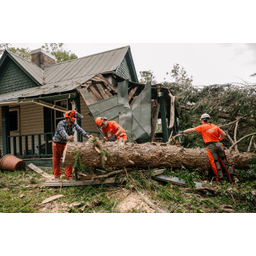
The domestic side runs in parallel. After hurricanes, tornadoes, wildfires, and floods inside the U.S., orange-shirted volunteers fan out to clear trees, tarp roofs, muck out flooded homes, and eventually rebuild. The work is overtly Christian - chaplains pray with homeowners, Bibles are offered - but the practical labor is the labor, and it is real labor; this is not a photo-op organization. For donors who want their giving to translate into chainsaws on the ground inside of a week, this is one of the few faith-based orgs operating at this scale and speed.
Ministry partnerships with local churches in disaster zones
One of the quieter but most important pieces of the Samaritan's Purse model is that it does not try to plant Samaritan's Purse churches. When the field hospital packs up and the rebuild crews go home, the discipleship work is handed off to local congregations - partner churches the org has often been working with for years before the crisis. Pastors and elders from those churches are invited into the relief work itself: handing out Bibles alongside hygiene kits, praying with hospital patients, following up with families who lost homes.
In Ukraine, the partnership has been with evangelical Baptist and Pentecostal congregations near the front lines and at the Polish border. In Western North Carolina after Helene, it was small-town Baptist and non-denominational churches. In Liberia during Ebola, Liberian evangelical churches. The pattern is the same: Samaritan's Purse brings the logistics and the cash flow; the local church brings the relationships, the language, and the long-term presence. This is the model that respects the local body - donors who care about avoiding the worst patterns of Western missions should know this is how the org actually operates on the ground, even if the U.S.-facing fundraising language is louder than the partnership story.
Pricing
Browse + Read
Free
The full samaritanspurse.org site - project pages, country reports, prayer requests, devotionals, news from the field, and the Operation Christmas Child collection-week resources - is open to anyone with no account required.
One-Time Gift
Any amount
Donate to a specific project (disaster relief, field hospitals, water filtration, refugee aid, Christmas Child shipping, etc.) or to the general fund. You can also fund individual items from the Christmas Catalog - goats, chickens, clean-water filters, Bibles.
Monthly Partner
From $25/mo (suggested)
Recurring donation that funds whichever crisis is active - the model most charity-efficiency advisors recommend because it lets the org pre-stage supplies rather than scrambling after each headline.
Shoebox Gift
Box + $10 shipping/processing
Pack a physical shoebox (toys, hygiene items, school supplies - guidelines on the site) and drop it at a local collection center during National Collection Week each November. Online "Build a Shoebox" option also available year-round.
Volunteer
Free (your time)
Short-term volunteer slots range from one-day shoebox processing center shifts to multi-week deployments on Disaster Assistance Response Teams. Medical professionals can apply to the World Medical Mission roster for field hospital deployments.
There is no cost to use the website or the resources on it. Project pages, country reports, prayer guides, devotionals from the field, and the full Operation Christmas Child collection-week materials are all free.
The cost is the giving. For most donors, that's a one-time gift to whichever crisis is in the news - and the org makes that path very smooth, with project-specific donation pages updated within hours of a disaster. The Christmas Catalog (gift a goat, fund a Bible, sponsor a water filter) is the same idea wrapped for the holiday season and works well as a gift-in-someone's-name option.
For donors who want their money to matter most, monthly partner giving is the better path. It lets the org pre-stage supplies and keep the field hospitals on standby rather than scrambling to fundraise after each headline. Suggested entry point is around $25/month but any amount works.
The shoebox path costs around the price of the items you pack plus $10 per box for shipping and processing. The online "Build a Shoebox" option, where you select items virtually and the org packs and ships, runs around $25-$30 per box all-in and is what most people end up doing as travel and collection logistics get harder.
Where Samaritan's Purse falls behind
Founder's political profile is part of the package. Franklin Graham has been an outspoken conservative voice in U.S. politics for years, including vocal support for Donald Trump in multiple elections and pointed public stances on a range of culture-war issues. For a meaningful slice of potential donors, that's the reason they choose Samaritan's Purse over peers; for another meaningful slice, it's the reason they pick World Vision or Compassion instead. Either way, donors should walk in clear-eyed: when you support Samaritan's Purse, the org's public voice is Franklin Graham's, and that voice is not politically neutral.
No long-term one-to-one child sponsorship. If what you want is to commit $40 a month to a single child for the next decade - letters, photos, the ongoing relationship - Compassion International and World Vision are the better fit. Samaritan's Purse does children's work (the shoebox program and The Greatest Journey discipleship follow-up), but that's a different model: a one-time gift plus a curriculum, not a sustained sponsorship relationship.
Statement of faith is strictly evangelical Protestant. Volunteers and full-time staff are required to affirm an evangelical doctrinal statement, and the public-facing gospel language is in that key. Catholic, Orthodox, and Latter-day Saint donors are welcome to give and the relief work itself reaches everyone regardless of background - but the institutional identity is firmly evangelical, and that shapes the volunteer pipeline.
Operation Christmas Child gets recurring critique. Some of it is dismissable ("any aid with a gospel attached is bad" is a worldview disagreement, not a critique). Some of it is legitimate - questions about whether shipping shoeboxes from the U.S. is the most cost-effective way to bless a child versus sourcing gifts locally, whether the items chosen are culturally appropriate, whether the gospel-message follow-up is age-appropriate. The org has adjusted guidelines over the years; the conversation continues.
U.S.-evangelical institutional culture is heavy throughout. The website voice, the fundraising videos, the volunteer training materials all assume a specific cultural background. If you didn't grow up in or near American evangelicalism, the tone can feel insular even when the underlying work is excellent.
Samaritan's Purse vs. World Vision vs. Compassion International
Different strengths. Samaritan's Purse is the fastest, most logistically muscular Christian disaster-response operation of the three - the DC-8, the field hospitals, the rapid-deploy trailers are unmatched. World Vision is the biggest by revenue and the broadest in programming (long-term development, child sponsorship, advocacy, emergency response, microfinance), but the disaster response is slower and the institutional voice is more politically moderate. Compassion International is the most focused - child sponsorship through local church partners is essentially the entire program, and they do it extremely well.
On evangelism intensity, Samaritan's Purse is the most explicit - the gospel is openly part of every project. Compassion is also explicitly Christian and church-based, but the model is discipleship through long-term sponsorship rather than crisis-moment evangelism. World Vision is the most muted in public-facing messaging; the staff and identity are Christian but the program emphasis is on holistic development, which suits some donors and frustrates others who want the faith more visible.
On the founder/leadership question: Samaritan's Purse is Franklin Graham, and that is both feature and bug depending on the donor. Compassion has a much lower-key institutional voice and a board-led governance structure. World Vision has been through public controversies of its own over the past decade (notably around hiring policies in 2014) but is also low-key in terms of celebrity leadership. If you want the relief work and don't want the cable-news personality attached, Compassion or World Vision will feel more comfortable. If you specifically appreciate the Graham family's voice in public Christianity, Samaritan's Purse is exactly aligned.
The bottom line
Samaritan's Purse is one of the most operationally capable Christian relief organizations in the world. The shoebox program is a real on-ramp into global mission for ordinary families, the disaster response is genuinely fast and well-equipped, and the partnership model with local churches is healthier than the U.S.-facing fundraising voice suggests. The friction point is Franklin Graham's public profile - his political alignment is part of the package, and donors should know that going in rather than discover it later. If that fits, this is one of the best places to put your relief giving. If it doesn't, Compassion and World Vision are excellent alternatives.
Alternatives to Samaritan's Purse
 World VisionThe largest Christian humanitarian org by revenue. Broader programming, long-term development focus, and a lower-key institutional voice - less explicit evangelism, more holistic development.
 Compassion InternationalThe gold standard for long-term one-to-one child sponsorship through local church partners. Extremely focused, extremely well-run, and the model donors who want a sustained relationship usually end up at.
 Open DoorsThe org for supporting the persecuted Church - Bibles, training, and emergency support in countries where Christian practice is restricted or dangerous. Different mission, but a natural neighbor on the donor list.
 Voice of the MartyrsAlso focused on the persecuted Church worldwide - publishes a long-running magazine, runs aid to imprisoned believers and their families, and supplies underground Bibles and broadcasts.
Frequently asked questions
Who runs Samaritan's Purse?
Franklin Graham, son of evangelist Billy Graham, has served as President and CEO since 1979. The organization was founded in 1970 by Bob Pierce (who also founded World Vision). Headquarters are in Boone, North Carolina.
What is Operation Christmas Child?
The flagship program: a shoebox-gift project where individuals, families, and churches pack shoeboxes with toys, hygiene items, school supplies, and a note, then drop them at collection centers during National Collection Week each November (the week before Thanksgiving in the U.S.). The boxes are shipped to children in over 170 countries, paired with a gospel storybook in the local language. Children who receive a shoebox are invited into The Greatest Journey, a 12-lesson discipleship course taught by partner local churches. Over 200 million shoeboxes have been delivered since 1993.
How does Samaritan’s Purse compare to World Vision and Compassion?
Different strengths. Samaritan's Purse is the fastest and most logistically equipped for emergency disaster response. World Vision is the biggest and broadest, with long-term development programming. Compassion International is the most focused - long-term one-to-one child sponsorship through local churches is essentially the whole program. Samaritan's Purse is also the most explicit about evangelism; the other two are Christian but more muted in public-facing messaging.
Is Samaritan's Purse a politically conservative organization?
Franklin Graham, the CEO, is publicly aligned with conservative U.S. politics and has been vocal in his support for Donald Trump across multiple election cycles, along with pointed stances on a range of culture-war issues. The organization itself is registered as a 501(c)(3) and the relief work is offered without political litmus tests, but the institutional voice in public is unambiguously in that key. Donors who are comfortable with that will appreciate the org; donors who aren't generally choose Compassion or World Vision instead.
What is the DC-8 cargo jet?
A Boeing DC-8 long-range cargo aircraft that Samaritan's Purse owns and operates. It lets the org move field hospitals, water-filtration units, medical supplies, and relief gear directly to airfields that commercial freight carriers won't service after a disaster. It is one of the visible pieces of why the org's disaster response is unusually fast.
What is the Emergency Field Hospital?
A prefabricated, airlifted mobile hospital with surgical, ICU, and outpatient capability that can be deployed to a disaster zone within 48 hours. Field hospital units have been deployed for the 2015 Nepal earthquake, the 2014 Ebola outbreak in Liberia, COVID-19 in Central Park (NYC) and Cremona (Italy) in 2020, the war in Ukraine starting in 2022, and Hurricane Helene in Western North Carolina in 2024, among others.
How much of my donation actually goes to the work?
Samaritan's Purse consistently rates in the top tier of independent charity evaluators like Charity Navigator, with the large majority of revenue going to program work rather than administrative overhead or fundraising. The exact percentage shifts year to year - check the most recent annual report on samaritanspurse.org for current numbers, or look at the org's profile on Charity Navigator or ECFA for an independent view.
Sources & further reading
More Church Directories
 Christian Tech JobsA focused two-sided market for technologists and mission-driven Christian employers, now combining free posts, premium career-page aggregation, talent search, and AI matching—with unusually clear privacy detail and real hiring caveats.Compassion InternationalCompassion International’s Financial Integrity page provides a route to annual accountability information and audited financial statements. We inspected that documentation route rather than a sponsorship experience.
 Christianbook.comThe family-owned warehouse that has quietly become the default storefront for serious Bible buyers, homeschool families, and pastors who actually care about binding quality - and still undercuts Amazon on most titles.
 CrosswayThe nonprofit publisher of the ESV Bible and the modern Reformed book canon - and the publisher-direct storefront, free article archive, and sermon resource library that sit on top of it.
 InterVarsity PressThe publishing arm of InterVarsity Christian Fellowship has quietly become the broadest evangelical Protestant academic catalog in print - and the spiritual formation imprint is the deepest in the category.
 Tool FinderA large productivity-software directory backed by hands-on editorial content, comparisons, and deals—useful discovery with commercial incentives worth seeing clearly.