
- Starting price
- Free to browse · $43/mo per sponsored child
- Free tier
- Yes
- Platforms
- Web · iOS · Android (My World Vision)
- Developer
- World Vision, Inc. (U.S.) · World Vision International
- Launched
- 1950
- Updated
- May 24, 2026
The verdict
World Vision is the closest thing the Christian aid world has to a full-stack provider - sponsorship, clean water at unmatched scale, disaster response, and policy advocacy under one roof. The scale is the point, and it is also the trade-off.
Try World Vision ↗Opens worldvision.org
World Vision is the organization most American Christians have heard of even if they have never written a check to it. The yellow logo, the child sponsorship packets, the celebrity-fronted clean-water campaigns, the 6K runs - all of it traces back to one Oregon-born evangelist named Bob Pierce, who in 1950 returned from postwar China and Korea convinced that the church needed an operational arm large enough to actually move resources to the children he had met. Seventy-five years later, that operational arm runs in roughly 100 countries, serves tens of millions of people a year, and is the single largest non-governmental provider of clean water in the developing world.
It is not a denomination. It is not a missions agency in the traditional sense. It does not exist to plant churches. It exists to do the unglamorous, infrastructure-level work of keeping children alive and helping their communities become self-sustaining - wells, latrines, classrooms, vaccinations, anti-trafficking programs, microfinance, disaster kits, advocacy on the Hill. The theology that animates it is broadly ecumenical Christian - Catholic, mainline Protestant, evangelical, Orthodox, and Latter-day Saint donors all show up here, and World Vision is comfortable serving all of them without picking a tribal flag.
That breadth is the source of both its reach and its periodic controversies. Going wide enough to coordinate U.S. government grants, U.N. partnerships, denominational donors, and field operations in Muslim-majority and Hindu-majority contexts means making policy choices that smaller, more theologically tight orgs do not have to make. The most visible one - a 2014 reversal on an employment policy change - is worth naming and we will. But the day-to-day of the organization is what 100 million people experience: water, food, education, protection, and a sponsor letter from Iowa.
✓ The good
- Operational scale unmatched in Christian aid - roughly 100 countries, ~37,000 staff, decades of field presence in places most orgs cannot enter
- Largest non-governmental clean-water provider in the developing world - reaches a new person with clean water roughly every ten seconds
- Child sponsorship at scale - more than 3 million children sponsored historically, with community-development methodology rather than direct cash transfer
- Disaster response infrastructure already in place when something hits - pre-positioned supplies, trained local staff, and the logistics to move at hour-one rather than week-two
- Strong financial transparency for an org this size - Charity Navigator, ECFA accreditation, audited financials posted publicly each year
- Advocacy arm in Washington that smaller relief orgs cannot afford - pushes on policy levers (clean water funding, anti-trafficking law, child welfare) that move more dollars than direct giving alone
- Genuinely ecumenical - works across Christian traditions and serves communities regardless of faith, which broadens the donor base and the reach
✗ Watch out
- The 2014 employment-policy episode left lasting trust damage with some evangelical donors - worth knowing about even if it is years in the past
- Overhead and program-ratio debates dog every large NGO - World Vision is not exempt, and the numbers are worth reading rather than taking on faith
- Sponsorship dollars go to community development, not directly to the child pictured - the messaging has tightened on this, but new donors are still sometimes surprised
- Theologically broad enough that donors looking for explicit evangelism-first work may prefer a narrower agency
- Bureaucracy of a billion-dollar operation - letter delivery, sponsor changes, and updates can move slowly compared with the small-team feel of newer relief orgs
- Some political-advocacy positions occasionally land on the left of the typical evangelical donor base, others on the right - neither side feels fully represented
Best for
- Donors who want one organization that covers sponsorship, water, disaster, and advocacy
- Churches looking for a vetted partner with the logistics to move at disaster speed
- Families wanting to give children a long-term sponsorship relationship with letters and photos
- Givers who care about clean-water specifically and want the largest operational footprint
Avoid if
- You want every dollar tied to direct evangelism and church planting
- You prefer a small, single-country org where you can know the field staff by name
- You are uncomfortable with broadly ecumenical Christian aid and want a narrower theological lane
- You want a no-overhead, all-pass-through giving model - that is not how this scale of operation works
What World Vision is
World Vision is a Christian humanitarian organization founded in 1950 by Bob Pierce, a young American evangelist who had been working with children in postwar Asia and could not square what he had seen with the church’s lack of operational response. The organization started small - one sponsored child, one supporter - and grew through the late twentieth century into a federated international structure: World Vision International as the global umbrella, with national offices (World Vision U.S., U.K., Canada, Australia, Korea, and dozens more) raising funds and implementing programs together.
Today the organization runs in roughly 100 countries, serves tens of millions of people a year, and operates across four broad lanes: child sponsorship and community development, clean water and sanitation, emergency disaster response, and advocacy. The annual operating budget runs over a billion dollars across the federation. Field staff are overwhelmingly local - somewhere around 95% of the ~37,000 employees work in their home countries, which is both an effectiveness story and a sustainability one.
Why churches and families choose World Vision
The single biggest practical difference between World Vision and a smaller Christian relief org is that World Vision is already on the ground before the disaster. When an earthquake hits Nepal or a typhoon hits the Philippines or a famine deepens in the Horn of Africa, the question is not "can we get a team in?" - the team is already there, the warehouses are already stocked, the local staff already know the village elders. That pre-positioning is what scale buys, and it is the reason institutional donors (governments, U.N. agencies, large foundations) route money through World Vision rather than standing up parallel operations.
For an individual sponsor or a midsize church, the appeal is different. It is the assurance that a $43 monthly gift is not just going to one child but is being pooled into community-wide development - a well that serves the whole village, a clinic that vaccinates the whole class, a school that educates the next cohort. The model respects the dignity of the community rather than singling out one family for a windfall. That methodology is the thoughtful donor’s sponsorship model, and it is what World Vision has been refining for forty years.
Clean water: the largest non-government provider in the developing world
The clean-water program is the work World Vision is most operationally proud of, and it is the easiest to put numbers around. Across the past decade-plus, World Vision has consistently reported reaching one new person with clean water roughly every ten seconds - a pace that makes it the single largest non-governmental provider of clean water in the developing world. The footprint includes drilled wells, mechanized boreholes, gravity-fed piped systems, household water filters, latrine programs, and hygiene education that ties the infrastructure to actual behavior change. The water work is often paired with sanitation and hygiene under the WASH umbrella, because a well without latrines and handwashing only solves part of the disease problem.
What makes the scale possible is the federated structure plus the long-term community-development model. World Vision is not parachuting in to drill one well and leave; it is typically working in an Area Program for 15 years, which means the water infrastructure is being installed alongside health, education, child protection, and economic-development programs in the same community. That patience compounds. By the time the org exits a community, the well is being maintained by a local water committee, the schools have running water, and the child-mortality numbers in the area have measurably moved. It is unsexy work and it is precisely the work that needs doing.
Child sponsorship: the model at the scale that built the org
Child sponsorship is the program most donors encounter first. The mechanics: you pick a child (or, in the Chosen program, the child picks you), commit to $43/month, and receive a packet with a photo, biographical info, and the option to write letters back and forth over the years. World Vision has facilitated more than three million sponsorships historically, and at any given time roughly one million children are actively sponsored worldwide. The relational frame - one sponsor, one child, one growing-up arc - is what keeps donors engaged for years longer than untethered general giving typically does.
The mechanics under the hood are a community-development model, not a direct cash transfer. Your monthly gift does not buy that specific child a pair of shoes; it funds the Area Program in that child’s community - wells, classrooms, healthcare, agricultural training, child-protection systems. The sponsored child is the relational anchor, but the work benefits everyone around her. World Vision has worked hard in recent years to make this explicit in its messaging, after years of donor confusion. It is a more honest model than the alternative, and it is the model that respects both the child and the community. Compassion International runs a closer one-to-one model (more dollars to the named child, less to community infrastructure) - neither is wrong, and the choice comes down to what you want your $43 to be doing.
Disaster response and advocacy: the parts donors do not see
When the news cycle turns to a humanitarian emergency - earthquake, flood, conflict displacement, famine - World Vision is one of a handful of organizations that can move at hour-one rather than week-two. The Disaster Management team runs pre-positioned warehouses in regional hubs, maintains relationships with shipping and logistics partners, and can deploy trained local responders before international flights even resume. In the past decade the organization has responded to hundreds of major emergencies, from the Syrian refugee crisis to the Türkiye-Syria earthquake to ongoing East Africa drought response. The capacity exists because the field offices already exist; it is the same staff who run the long-term Area Programs who pivot to emergency response when the ground shakes.
The advocacy arm is the part most donors never think about. World Vision maintains a Washington policy office, an EU office in Brussels, and U.N. representation in New York and Geneva, pushing on the legislative and regulatory levers that move billions in aid funding - clean water appropriations, anti-trafficking law, child-marriage prevention, refugee policy, child-welfare standards. A single piece of legislation that World Vision helped shepherd can unlock more dollars for children in poverty than a year of individual donor checks. The advocacy work is occasionally where the organization takes positions that land on one or the other side of the typical American donor - and it is worth knowing that this lane exists when you give. It is part of the operating model, not a side project.
Pricing
One-time gift
From $10
Any amount toward clean water, hunger, emergency response, or the area of greatest need. Tax-deductible. No sign-up beyond an email.
Child sponsorship
$43/mo
The flagship program. Sponsor a specific child by name and photo; the money funds community development in that child’s area - water, school, healthcare, protection.
Chosen sponsorship
$43/mo
A variant where the child picks you rather than the other way around - same monthly cost, different relational frame. Popular with families wanting a less catalog-like experience.
Matching gifts & corporate
Varies
Employer match program plus larger corporate and foundation partnerships. World Vision’s development team works directly with donors at this level.
Planned giving
Varies
Estate gifts, charitable gift annuities, donor-advised fund grants, and stock transfers. Handled through the Planned Giving office.
World Vision is free to browse and engage with online - the donation ask is everywhere, but there is no paywall on any of the content, stories, or reports. The flagship financial commitment is the $43/month child sponsorship, which has been the headline number for years and tracks roughly with what Compassion International and Holt and a few other sponsorship-model orgs charge. The price is set to cover the per-child share of the Area Program cost plus the sponsor-services infrastructure.
One-time gifts run from $10 on up and can be directed to clean water, hunger response, emergency relief, the Gift Catalog (the famous "buy a goat" model), or the area of greatest need. The Gift Catalog is genuinely useful around the holidays - most items are real, the descriptions are honest, and the giving model lets a family or Sunday-school class participate in a way pure cash gifts cannot.
For larger gifts, the planned-giving and major-donor channels exist with dedicated staff. Charitable gift annuities, donor-advised fund grants, stock transfers, and estate plans are handled professionally - this is one of the few Christian humanitarian orgs whose back-office is sophisticated enough to absorb seven-figure gifts without anything falling through the cracks. Corporate matching is supported through most major employer programs.
Financial transparency holds up to scrutiny. World Vision U.S. is accredited by the ECFA (Evangelical Council for Financial Accountability), rated by Charity Navigator, and publishes audited financial statements and annual impact reports on the public site. The program-to-overhead ratio sits in a healthy range for an organization of this size - and donors who want to dig deeper can read the full Form 990 rather than relying on summary infographics.
Where World Vision falls behind
No direct, one-to-one cash transfer to the sponsored child. Sponsorship dollars are pooled into community development, which is the more sustainable model but also the one new donors most often misunderstand. World Vision has tightened the messaging in recent years, and the website is now clearer about this, but the expectation gap still trips up some first-time sponsors.
The 2014 employment-policy episode. In March 2014, World Vision U.S. briefly changed an internal employment policy to permit hiring employees in same-sex marriages, then reversed the change within 48 hours after significant donor backlash. The episode cost the organization an estimated tens of thousands of sponsorships in the immediate fallout and damaged trust with a slice of its evangelical donor base that has not fully returned. It is the most cited controversy in the org’s history and worth naming honestly - the day-to-day work since then has continued at scale, and the organization has not revisited the policy.
Theological breadth as a feature is also a constraint. Donors who want explicit, evangelism-first work - gospel proclamation as the primary deliverable - will find World Vision more reserved about that than groups like Voice of the Martyrs or Samaritan’s Purse, both of which front-load the gospel message in different ways. World Vision’s lane is humanitarian work done by Christians, served to communities regardless of faith - that is its model, and it is not going to change.
Bureaucracy of scale. A federation with national offices in dozens of countries and a billion-dollar consolidated budget is going to feel slower than a five-person Kenyan orphanage you found through a friend. Sponsor-letter turnaround can stretch to months. Customer-service responses go through tiered teams. None of this is bad, exactly, but it is the trade-off for an organization that can move 200 tons of disaster supplies in 48 hours.
Advocacy positions occasionally land on different sides of the typical American donor base. The organization’s policy work covers child welfare, anti-trafficking, refugee policy, climate adaptation, and aid funding - and depending on the issue, the position will feel right-of-center or left-of-center to different donors. That is the reality of running a Washington office for an ecumenical aid org; the upside is the advocacy gets done.
World Vision vs. Compassion International vs. Samaritan’s Purse
These three are the household-name Christian humanitarian orgs in the U.S., and donors choosing between them are usually choosing on the basis of model, not mission. World Vision is the broadest of the three - sponsorship, clean water at unmatched scale, disaster response, and policy advocacy, with a theological frame that is comfortably ecumenical Christian. Compassion International is more focused: child sponsorship is the flagship and almost everything else is downstream of it, with a more explicit evangelical-Protestant frame and a one-to-one dollar model that puts more of each gift on the named child. Samaritan’s Purse, under Franklin Graham, is sharply focused on disaster response and explicit evangelism - Operation Christmas Child boxes, field hospitals deployed within hours of crises, and a more openly evangelistic posture on the ground.
Different strengths. World Vision is better at long-term community development at scale and at the kind of clean-water infrastructure that takes 15 years to compound. Compassion is better at the one-to-one sponsorship relationship and at being the org you give to if you want every gift dollar visibly tied to the specific child in the photo. Samaritan’s Purse is better at fast-strike disaster response and at the donor who wants the gospel message explicitly included in the aid package.
On the giving-experience level: all three are ECFA accredited, all three publish audited financials, and all three are responsible places to send money. World Vision is the one to choose if you want full-stack - sponsorship plus water plus disaster plus advocacy under one annual statement. Compassion is the one to choose if sponsorship is the whole story and you want it done with the tightest one-to-one model in the industry. Samaritan’s Purse is the one to choose if you want disaster response and openly evangelistic field work. These are real differences, but they are differences of model and emphasis, not of competence.
The bottom line
World Vision is the operational backbone of Christian humanitarian work in much of the developing world, and the fact that it is also the org your grandmother has been sponsoring a child through since 1986 should not obscure how serious the field operation is. The breadth that makes it occasionally controversial is the same breadth that makes it useful - wells, classrooms, disaster kits, and policy advocacy under one roof. The 2014 employment-policy episode is real and worth knowing about; the seven decades of work on either side of it are also real. For most donors who want one Christian humanitarian org to give to without thinking too hard, this is a defensible default and a sound use of $43 a month.
Alternatives to World Vision
 Compassion InternationalThe narrower-focus alternative - child sponsorship is the flagship, with a tighter one-to-one dollar model and an explicit evangelical-Protestant frame.
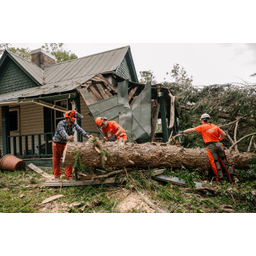 Samaritan’s PurseFranklin Graham’s relief org - known for Operation Christmas Child, fast-strike disaster response, and a more openly evangelistic field posture.
 Open DoorsFocused on persecuted Christians in restricted-access countries - publisher of the annual World Watch List and supplier of Bibles and pastoral training where it is dangerous to receive them.
 Voice of the MartyrsSmaller and narrower - exists specifically to serve persecuted Christians, with deep historical roots in Cold War-era underground church work and a newsletter that still arrives in a lot of mailboxes.
Frequently asked questions
How much of my sponsorship dollar actually reaches the child?
None of it goes directly to the named child as cash. The $43/month is pooled into the Area Program where that child lives - wells, schools, healthcare, child protection - and the sponsored child is the relational anchor, not the line-item beneficiary. Roughly 85% of total revenue across the organization goes to programs (the rest covers fundraising and administration), which is solid for an org of this size and is verifiable in the published audited financials.
Is World Vision the same as Compassion International?
No, though they are often confused. Both are large Christian sponsorship orgs founded mid-twentieth century. World Vision is broader (sponsorship plus clean water plus disaster response plus advocacy) and theologically more ecumenical. Compassion is narrower (sponsorship is the flagship), more explicitly evangelical-Protestant, and uses a one-to-one model where more of each dollar visibly goes to the named child.
What happened in 2014 with the employment-policy reversal?
In March 2014, World Vision U.S. announced an internal hiring-policy change that would permit employees in same-sex marriages, then reversed the change within 48 hours after significant donor backlash. The episode cost the org an estimated tens of thousands of sponsorships and damaged trust with part of its evangelical donor base. The policy has not been revisited. It is the most cited controversy in the organization’s history.
Can I write to and visit the child I sponsor?
Yes to both. Letter exchange is built into the sponsorship model and is encouraged - World Vision provides translation and routing. In-person sponsor visits are possible in many countries with advance coordination through the sponsor-services team, though logistics and safety considerations vary by region and are not available everywhere.
Is World Vision a Catholic, Protestant, or Mormon organization?
It is broadly ecumenical Christian. It was founded by an American Protestant evangelist (Bob Pierce) and the federation has historic Protestant roots, but the organization works across Christian traditions and serves communities of all faiths. Catholic, mainline Protestant, evangelical, Orthodox, and Latter-day Saint donors all support it without friction, and the published statements of faith reflect that breadth.
Is World Vision financially trustworthy?
By the standard markers, yes. It is accredited by the Evangelical Council for Financial Accountability (ECFA), rated by Charity Navigator, and publishes audited financial statements and IRS Form 990 annually. Program-to-overhead ratios sit in a healthy range for a billion-dollar federated humanitarian org. As with any large NGO, donors who want to dig deeper can read the full audited financials rather than relying on summary infographics.
What is the Gift Catalog and is it real?
The Gift Catalog is World Vision’s alternative-giving program - you "buy" a goat, a chicken, a well, schoolbooks, or any of about a hundred other items as a gift in someone’s name, and a card is sent to the honoree. The items are real, in the sense that the aggregate funds raised through the catalog go toward actual programs of that kind. World Vision has been transparent about the pooled-funding model, and the catalog is popular as a holiday and Sunday-school giving vehicle.
Sources & further reading
More Church Directories
 Christian Tech JobsA focused two-sided market for technologists and mission-driven Christian employers, now combining free posts, premium career-page aggregation, talent search, and AI matching—with unusually clear privacy detail and real hiring caveats.Compassion InternationalThe largest Christian child sponsorship organization in the world, built around a single radical idea - you sponsor one specific child, by name, through their local church.
 Christianbook.comThe family-owned warehouse that has quietly become the default storefront for serious Bible buyers, homeschool families, and pastors who actually care about binding quality - and still undercuts Amazon on most titles.
 CrosswayThe nonprofit publisher of the ESV Bible and the modern Reformed book canon - and the publisher-direct storefront, free article archive, and sermon resource library that sit on top of it.
 InterVarsity PressThe publishing arm of InterVarsity Christian Fellowship has quietly become the broadest evangelical Protestant academic catalog in print - and the spiritual formation imprint is the deepest in the category.
 Tool FinderA large productivity-software directory backed by hands-on editorial content, comparisons, and deals—useful discovery with commercial incentives worth seeing clearly.