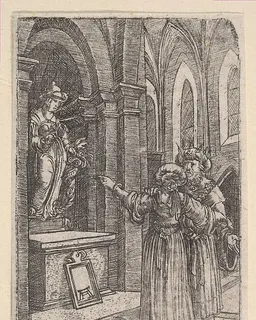
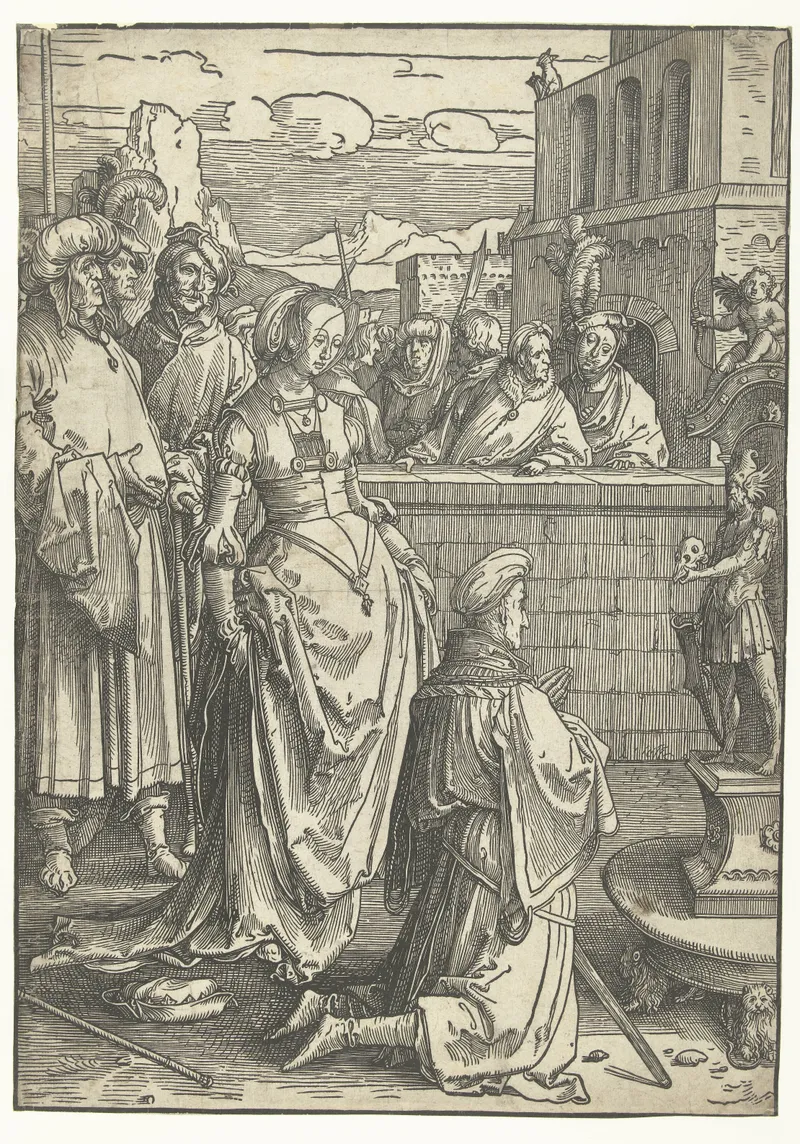
![Solomon's Idolatry [I Kings, 11:1-8] by Lucas van Leyden](https://uqcgieillyvefzmohzpn.supabase.co/storage/v1/object/public/art-thumbs/met-364675/256.webp)
1 Kings 11
People in this chapter
The wisest man who ever lived loses his heart one marriage at a time. Solomon built the temple. He prayed for understanding and got it in abundance. Now, when he is old, his wives turn him toward Ashtoreth and Chemosh and Molech, and the king who hosted the glory of God starts building shrines to gods who eat children.1 Nothing collapses overnight. It just slowly tilts.
Tap any highlighted phrase to jump to the commentary that unpacks it.
1 Kings 11:1-3The Strange Wives
1But king Solomon loved many strange women, together with the daughter of Pharaoh, women of the Moabites, Ammonites, Edomites, Zidonians, and Hittites; 2Of the nations concerning which the LORD said unto the children of Israel, Ye shall not go in to them, neither shall they come in unto you: for surely they will turn away your heart after their gods: Solomon clave unto these in love. 3And he had seven hundred wives, princesses, and three hundred concubines: and his wives turned away his heart.
One small word turns the whole story: But. After the splendor, the wisdom, the temple and the gold, a single conjunction swings the door the other way. Solomon loved many foreign women - from Moab and Ammon and Edom and Sidon, the very nations the LORD had warned about by name. And the warning was not vague. God had said it plainly, generations before: they will turn away your heart after their gods (1 Kings 11:2).
The outcome was foretold and written down. Solomon did not stumble into a surprise; he walked, eyes open, into the exact danger the LORD had named.123
The word "clave" (from the Hebrew דָּבַק, davaq) means to cleave, to stick fast, to hold firmly - the same verb Genesis uses for a man cleaving to his wife. Solomon held fast to these women. And the law had already drawn the line and named the result in the same breath: "Ye shall not go in to them ... for surely they will turn away your heart after their gods" (1 Kings 11:2; Deut. 7:3-4).
The consequence was not a mystery he discovered too late. It was prophesied, spelled out generations in advance, and Solomon - who knew the law better than any man alive - clave to them anyway.
Long before any king reigned, the law had drawn one bright line around the throne: he must not multiply wives, lest his heart be turned away (Deut. 17:17). The warning even names the exact danger Solomon would walk into. A thousand women in the household is a man burying the rule entirely. And every one of those marriages carried her own gods up the palace steps, until the king's devotion had a hundred claimants and no center.
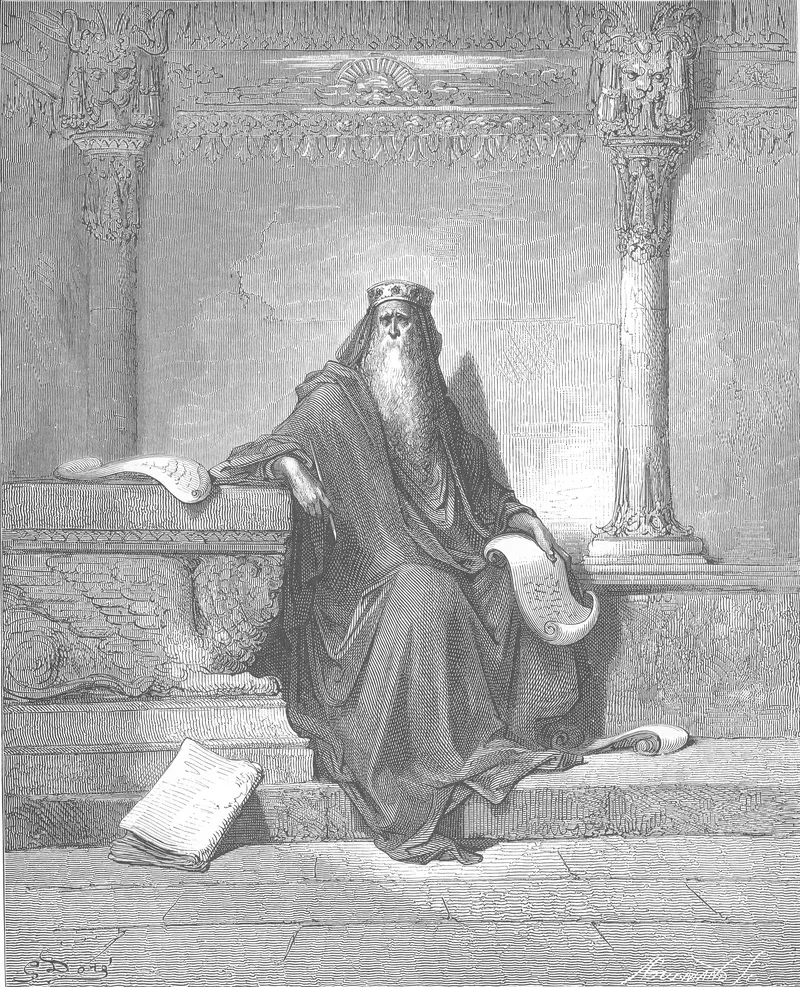
1 Kings 11:4-8His Heart Was Not Perfect
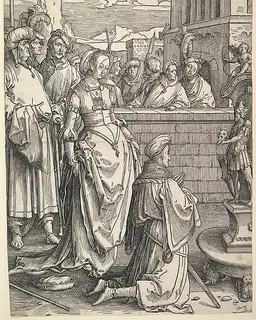
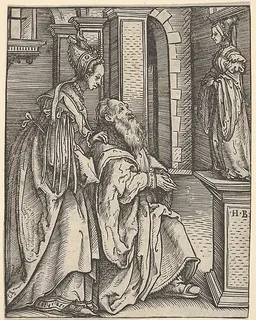
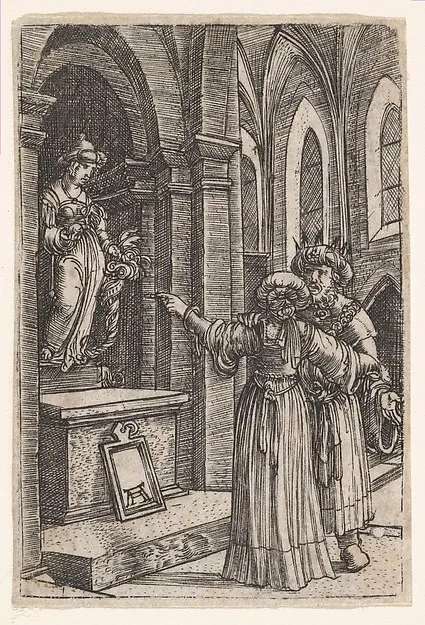
4For it came to pass, when Solomon was old, that his wives turned away his heart after other gods: and his heart was not perfect with the LORD his God, as was the heart of David his father. 5For Solomon went after Ashtoreth the goddess of the Zidonians, and after Milcom the abomination of the Ammonites. 6And Solomon did evil in the sight of the LORD, and went not fully after the LORD, as did David his father. 7Then did Solomon build an high place for Chemosh, the abomination of Moab, in the hill that is before Jerusalem, and for Molech, the abomination of the children of Ammon. 8And likewise did he for all his strange wives, which burnt incense and sacrificed unto their gods.
It happened in old age - the season you would expect a man to settle deeper into the faith of his youth, not drift out of it. The grammar is careful, almost gentle: his wives turned away his heart. The doing is laid at their feet. But a heart is not turned without consent. Years of small permissions had loosened every hinge, so that by the end the turning took almost nothing at all.
The comparison to David is devastating. David, who fell into grave sin with Bathsheba, whose hands were stained with blood - David's heart remained perfect, whole, oriented toward God. David repented. David returned. Solomon, the wisest man in the world, allowed his heart to become divided. He went "not fully after the Lord." He gave part of his allegiance to God and parts to the gods of his wives. And in doing so, he violated the very foundation of the covenant: "Thou shalt have no other gods before me."
Solomon had the law, the commandment, the explicit warning - and the LORD's own voice, twice. He weighed all of it against the wish to please the women he loved, and the women won. Building a hilltop shrine to Chemosh was a decision, made by the one man in Israel best equipped to know exactly what he was doing.
1 Kings 11:9-13The Judgment and the Promise
9And the LORD was angry with Solomon, because his heart was turned from the LORD God of Israel, which had appeared unto him twice, 10And had commanded him concerning this thing, that he should not go after other gods: but he kept not that which the LORD commanded. 11Wherefore the LORD said unto Solomon, Forasmuch as this is done of thee, and thou hast not kept my covenant and my statutes, which I have commanded thee, I will surely rend the kingdom from thee, and will give it to thy servant. 12Notwithstanding in thy days I will not do it for David thy father’s sake: but I will rend it out of the hand of thy son. 13Howbeit I will not rend away all the kingdom; but will give one tribe to thy son for David my servant’s sake, and for Jerusalem’s sake which I have chosen.
The Lord appears to Solomon twice - once in Gibeon to grant him wisdom (1 Kings 3), once at the dedication of the temple (1 Kings 9). Both times, He commanded Solomon not to follow other gods. Both times, Solomon heard the word of the Lord. And yet he kept it not. God's judgment is swift and irrevocable: "I will surely rend the kingdom from thee."
But notice what follows: not all is torn away. One tribe will remain to Solomon's son. Why? "For David my servant's sake, and for Jerusalem's sake which I have chosen." God tore the kingdom to judge apostasy - to show that turning from Him has consequences. But He preserved a remnant because of His covenant promise to David. The Davidic line would not end. The promise was not revoked. Even in judgment, mercy breaks through.
1 Kings 11:14-17Hadad Flees to Egypt
14And the LORD stirred up an adversary unto Solomon, Hadad the Edomite: he was of the king’s seed in Edom. 15For it came to pass, when David was in Edom, and Joab the captain of the host was gone up to bury the slain, after he had smitten every male in Edom; 16(For six months did Joab remain there with all Israel, until he had cut off every male in Edom:) 17That Hadad fled, he and certain Edomites of his father’s servants with him, to go into Egypt; Hadad being yet a little child.
The same verb keeps returning: the LORD raised up an adversary. The trouble that now closes in on Solomon is not bad luck or restless politics. It is sent.
1 Kings 11:18-21Hadad Finds Refuge in Egypt
18And they arose out of Midian, and came to Paran: and they took men with them out of Paran, and they came to Egypt, unto Pharaoh king of Egypt; which gave him an house, and appointed him victuals, and gave him land. 19And Hadad found great favour in the sight of Pharaoh, so that he gave him to wife the sister of his own wife, the sister of Tahpenes the queen. 20And the sister of Tahpenes bare him Genubath his son, whom Tahpenes weaned in Pharaoh’s house: and Genubath was in Pharaoh’s household among the sons of Pharaoh. 21And when Hadad heard in Egypt that David slept with his fathers, and that Joab the captain of the host was dead, Hadad said to Pharaoh, Let me depart, that I may go to mine own country.
Hadad was a child when David and Joab conquered Edom and killed every male in the land. He escaped with his father's servants to Egypt, where Pharaoh gave him shelter, a wife from the royal family, and honor. For years, Hadad lived in foreign comfort. But when he heard that David and Joab were dead, he asked to return to his homeland. Pharaoh was puzzled - why leave security for a conquered kingdom? But Hadad needed to go home.
The wound of conquest does not heal easily, and now, with the king who defeated him in the grave, Hadad saw his chance to reclaim what was lost.
1 Kings 11:22-25Rezon Rises in Damascus
22Then Pharaoh said unto him, But what hast thou lacked with me, that, behold, thou seekest to go to thine own country? And he answered, Nothing: howbeit let me go in any wise. 23And God stirred him up another adversary, Rezon the son of Eliadah, which fled from his lord Hadadezer king of Zobah: 24And he gathered men unto him, and became captain over a band, when David slew them of Zobah: and they went to Damascus, and dwelt therein, and reigned in Damascus. 25And he was an adversary to Israel all the days of Solomon, beside the mischief that Hadad did: and he abhorred Israel, and reigned over Syria.
The word the text reaches for is satan - adversary, the one who stands against. Hadad had been a small boy when David's army cut down every male in Edom, and he carried that memory through years of comfort in Pharaoh's court. A grievance can wait a long time. The moment David and Joab were in the grave, the child who fled came home a man with a score, and Solomon inherited a war his father had started.
1 Kings 11:26-27Jeroboam Lifts His Hand
26And Jeroboam the son of Nebat, an Ephrathite of Zereda, Solomon’s servant, whose mother’s name was Zeruah, a widow woman, even he lifted up his hand against the king. 27And this was the cause that he lifted up his hand against the king: Solomon built Millo, and repaired the breaches of the city of David his father.
Jeroboam was a capable man whom Solomon elevated to oversee the labor of the house of Joseph - one of the most important positions in the kingdom. Solomon promoted him, trusted him with power. And yet it was through this man that the kingdom would be torn.
1 Kings 11:28-30Ahijah Tears the Garment
28And the man Jeroboam was a mighty man of valour: and Solomon seeing the young man that he was industrious, he made him ruler over all the charge of the house of Joseph. 29And it came to pass at that time when Jeroboam went out of Jerusalem, that the prophet Ahijah the Shilonite found him in the way; and he had clad himself with a new garment; and they two were alone in the field: 30And Ahijah caught the new garment that was on him, and rent it in twelve pieces:
1 Kings 11:31-33Ten Pieces for Jeroboam
31And he said to Jeroboam, Take thee ten pieces: for thus saith the LORD, the God of Israel, Behold, I will rend the kingdom out of the hand of Solomon, and will give ten tribes to thee: 32(But he shall have one tribe for my servant David’s sake, and for Jerusalem’s sake, the city which I have chosen out of all the tribes of Israel:) 33Because that they have forsaken me, and have worshipped Ashtoreth the goddess of the Zidonians, Chemosh the god of the Moabites, and Milcom the god of the children of Ammon, and have not walked in my ways, to do that which is right in mine eyes, and to keep my statutes and my judgments, as did David his father.
A new cloak, torn to rags in a field - that is the whole prophecy, acted before it is spoken. Twelve strips for twelve tribes; ten handed to Jeroboam, one kept back. Notice the arithmetic of mercy. The kingdom that should have been forfeited entirely keeps a single tribe, and not on Solomon's account. It is held for David's sake and for Jerusalem. A broken covenant earns a broken kingdom - but the thread running to David's house is the one thread God refuses to cut.
1 Kings 11:34-36One Tribe Kept for David
34Howbeit I will not take the whole kingdom out of his hand: but I will make him prince all the days of his life for David my servant’s sake, whom I chose, because he kept my commandments and my statutes: 35But I will take the kingdom out of his son’s hand, and will give it unto thee, even ten tribes. 36And unto his son will I give one tribe, that David my servant may have a light alway before me in Jerusalem, the city which I have chosen me to put my name there.
1 Kings 11:37-39A Sure House, If You Hearken
37And I will take thee, and thou shalt reign according to all that thy soul desireth, and shalt be king over Israel. 38And it shall be, if thou wilt hearken unto all that I command thee, and wilt walk in my ways, and do that is right in my sight, to keep my statutes and my commandments, as David my servant did; that I will be with thee, and build thee a sure house, as I built for David, and will give Israel unto thee. 39And I will for this afflict the seed of David, but not for ever.
They are alone - no court, no army, no witnesses to stage it for. What looks like a private gesture in an empty field is in fact the most public verdict in the kingdom, because the One issuing it does not need a crowd. The split that is coming will look, to everyone who lives through it, like ordinary politics: taxes, tribes, a rival with ambition. Ahijah pulls the curtain back. Long before any of that plays out, the word has already been spoken, and the torn cloak makes it visible.
The charge is laid out without softening: Solomon has forsaken the LORD, bowed to the gods of the nations, and walked off the path his father held. And there is the name that haunts this whole chapter - David, the measuring rod against which Solomon is found short. It is a strange yardstick. David committed adultery and arranged a murder, sins darker than anything recorded against his son. Yet David is the standard of a whole heart and Solomon is the cautionary tale. The difference came down to which direction the heart was facing when it fell.
1 Kings 11:40-43The End of Solomon's Reign
40Solomon sought therefore to kill Jeroboam. And Jeroboam arose, and fled into Egypt, unto Shishak king of Egypt, and was in Egypt until the death of Solomon. 41And the rest of the acts of Solomon, and all that he did, and his wisdom, are they not written in the book of the acts of Solomon? 42And the time that Solomon reigned in Jerusalem over all Israel was forty years. 43And Solomon slept with his fathers, and was buried in the city of David his father: and Rehoboam his son reigned in his stead.
Told plainly what God has decided, Solomon does not repent. He reaches for a knife. The wisest man in the world spends his last political act hunting the one God has chosen, exactly as Saul once hunted David - and Jeroboam slips away to Egypt to wait him out. There is the whole tragedy in one line. All that wisdom, and at the end it could not so much as bend his own knee. Knowing the right thing was never Solomon's problem. Wanting God more than everything else was.
Research trail
Sources & further study
These references support the historical, linguistic, manuscript, and contextual notes in this chapter. Scripture remains the primary text; external sources are provided so readers can inspect the research directly.
- Solomon's Reign and TempleSolomon's ascension to the throne and his building of the first temple.
- Solomonic Period ArtifactsMuseum collection of objects from Solomon's era revealing 10th-century Iron Age culture.
- Archaeology of the Solomonic PeriodExcavation evidence for urban centers and building projects attributed to Solomon.