2 Maccabees 15
People in this chapter
The final chapter of 2 Maccabees gathers the whole book into a single decisive day. Nicanor, the general charged with destroying Judas, corners him in the region of Samaria and decides to attack on the sabbath, choosing the holy day on purpose to show his contempt for a God who would dare command rest. When the Jews in his own ranks plead with him to honor the day and to reverence the One who beholds all things, Nicanor sneers and asks whether there really is a mighty One in heaven who gave such a command.
Their reply is the heartbeat of the chapter: there is the living Lord himself in heaven, the mighty One. Everything that follows is a contest between that confession and the boast of a man who believes power on earth is the only power there is.
Tap any highlighted phrase to jump to the commentary that unpacks it.
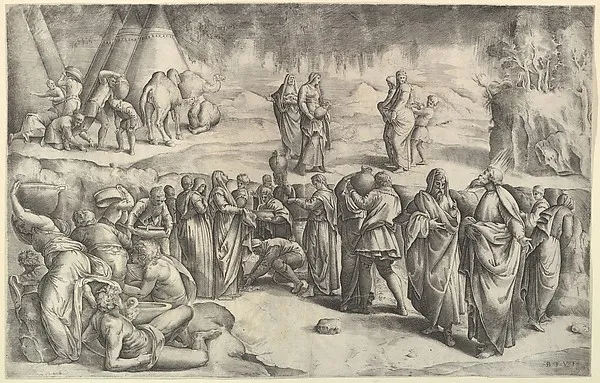
2 Maccabees 15:1-5There Is the Living Lord Himself in Heaven
1But when Nicanor understood that Judas was in the places of Samaria, he purposed to set upon him with all violence on the sabbath day. 2And when the Jews that were constrained to follow him, said: Do not act so fiercely and barbarously, but give honour to the day that is sanctified: and reverence him that beholdeth all things:
Nicanor chooses the sabbath deliberately. He could have struck on any day, but he aims at the holy day precisely because it is holy, calculating that the Jews will be least willing to fight when their God has commanded rest. It is the strategy of a man who treats reverence as weakness, who sees in another people's devotion only a soft place to push. The chapter opens, then, with a question already implied: is the day Nicanor mocks actually defended by anyone?
Is there a power behind the commandment, or only the scruples of people too pious to protect themselves?
Even the Jews pressed into Nicanor's own army cannot keep silent. They plead with him to honor the sanctified day and, more pointedly, to reverence the One "that beholdeth all things." This is the deep claim the whole scene turns on: nothing is hidden from God. The general who thinks he is choosing his moment unobserved is acting under the gaze of the One who sees everything. Their warning is an act of faith spoken from inside the enemy's camp, a reminder that the Lord who watches from heaven is the audience for every deed.
3That unhappy man asked, if there were a mighty One in heaven, that had commanded the sabbath day to be kept. 4And when they answered: There is the living Lord himself in heaven, the mighty One, that commanded the seventh day to be kept, 5Then he said: And I am mighty upon the earth, and I command to take arms, and to do the king’s business. Nevertheless he prevailed not to accomplish his design.
Nicanor frames the whole conflict with a sneer disguised as a question: is there really a mighty One in heaven who issued such a command? He means it as scorn, the dismissal of a man who cannot imagine an authority higher than the throne he serves. Yet by asking it aloud he sets the terms of his own undoing. The chapter will answer his question with a battlefield. He has demanded proof of a God in heaven, and the rest of the chapter is the proof.
The reply is one of the great confessions of the book, made by men with no freedom and no power of their own: "There is the living Lord himself in heaven, the mighty One." Against Nicanor's scorn they set a living God, a Lord who lives and reigns. The contrast in the next verse is total. Nicanor answers, "And I am mighty upon the earth," staking his claim on the only realm he believes is real.
The whole drama is now drawn in two lines: the might that is in heaven against the might that is on earth, and the chapter will leave no doubt which one endures.
The narrator allows himself one quiet sentence before the action resumes: "Nevertheless he prevailed not to accomplish his design." With a single phrase the outcome is foretold. Nicanor will boast, plan, and march, but he will not accomplish what he intends. The verse teaches the reader how to watch everything that follows. However loud the threat grows, however ranged the elephants and the horsemen, the end is already settled, because the One who beholds all things has not been mocked without answer.
2 Maccabees 15:6-16Armed With Hope, Not Shield and Spear
6So Nicanor being puffed up with exceeding great pride, thought to set up a public monument of his victory over Judas. 7But Machabeus ever trusted with all hope that God would help them.
Nicanor is so certain of victory that he plans the monument before the battle. Pride runs ahead of the facts and builds its trophy in advance, treating the outcome as a settled thing already owed to his greatness. The detail is almost comic, and it is meant to be. The reader, who has already been told he will not accomplish his design, watches a man erect a memorial to a triumph that will never come. Pride is forever rehearsing a victory it has not won.
Set against Nicanor's swagger is a single steady line about Judas: he "ever trusted with all hope that God would help them." Where the general leans on the certainty of his own strength, Judas leans on the help of God, and the difference is everything. His confidence rests in the character of his Lord. This is the posture the chapter commends, a hope so settled it does not flinch when the odds are read aloud, because it was never built on the odds in the first place.
8And he exhorted his people not to fear the coming of the nations, but to remember the help they had before received from heaven, and now to hope for victory from the Almighty. 9And speaking to them out of the law, and the prophets, and withal putting them in mind of the battles they had fought before, he made them more cheerful: 11So he armed every one of them, not with defence of shield and spear, but with very good speeches and exhortations, and told them a dream worthy to be believed, whereby he rejoiced them all.
Judas arms his people first with memory. "Remember the help they had before received from heaven," he tells them, turning their eyes backward so they can face forward. Fear shrinks the world to the threat directly in front of it; remembrance widens it again, setting the present danger beside every past rescue. This is how faith steadies itself in any age. The God who delivered before is the same God who stands over the battle now, and to recall His help is already to begin hoping for it.
The source of his courage is named: he speaks to them "out of the law, and the prophets." His encouragement is drawn from Scripture, the long record of how God has dealt with His people. He reminds them of the battles they had already fought and won, and the effect is that they grow "more cheerful." Here is a quiet lesson in where strength is found before a hard day. It is found in the word of God rehearsed aloud, the testimony of His faithfulness pressed into frightened hearts until fear gives way to courage.
The decisive sentence describes how Judas truly equips his men: "not with defence of shield and spear, but with very good speeches and exhortations." The armory that matters most is not made of bronze. He fortifies their hearts before he marshals their hands, knowing that an army convinced God is with it fights with a strength no weapon supplies. And he tells them a dream worthy of belief, a vision that lifts the whole company into joy on the eve of battle. The chapter insists that the real preparation for the fight happened in the soul.
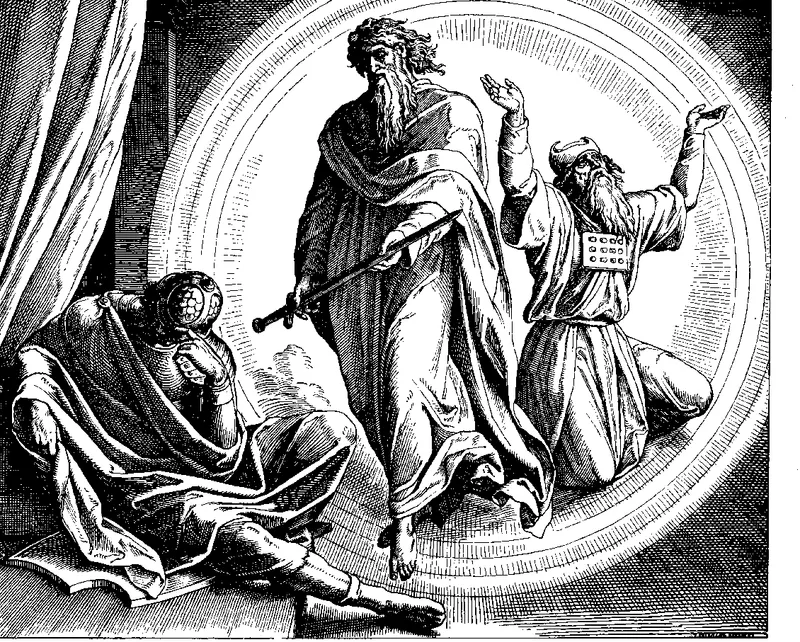
12Now the vision was in this manner: Onias who had been high priest, a good and virtuous man, modest in his looks, gentle in his manners, and graceful in his speech, and who from a child was exercised in virtues, holding up his hands, prayed for all the people of the Jews: 14Then Onias answering, Raid: This is a lover of his brethren, and of the people of Israel: this is he that prayeth much for the people, and for all the holy city, Jeremias the prophet of God. 16Take this holy sword a gift from God, wherewith thou shalt overthrow the adversaries of my people Israel.
The dream Judas recounts is tender and strange. He sees Onias, the former high priest, "a good and virtuous man," a figure of gentleness and lifelong devotion, standing with hands raised and praying for all the people of the Jews. Then a second figure appears, ringed with great glory and majesty, and Onias names him: Jeremiah, the prophet of God. The text presents this vision simply, as Judas told it, and lets it stand. What it shows plainly is two of Israel's great servants of God lifting their hands on behalf of the embattled people, the priest who served the temple and the prophet who wept over the city, both turned toward the welfare of those who remain.
Of Jeremiah the vision says, "this is he that prayeth much for the people, and for all the holy city." The image is of intercession, of one wholly given to praying for the welfare of God's people and the holy city he loved. Whatever else the dream conveys, it carries this comfort to soldiers about to risk everything: they are not facing the morning unaccompanied. The narrative offers them the picture of the faithful lifting hands toward heaven on their behalf.
The chapter holds the scene out as it was received, a vision worthy of belief that filled the people with joy.
In the vision Jeremiah stretches out his right hand and gives Judas a golden sword with the words, "Take this holy sword a gift from God, wherewith thou shalt overthrow the adversaries of my people Israel." The sword is called a gift from God, and its name is "holy." The point is unmistakable: the victory Judas is about to win is a thing handed to him from heaven. Even the instrument of battle is portrayed as given, so that when the day is won no one can claim it was wrested by human strength.
The weapon, like the rescue, comes down as a gift.
2 Maccabees 15:17-27They Fought With Their Hands and Prayed With Their Hearts
18For their concern was less for their wives, and children, and for their brethren, and kinsfolks: but their greatest and principal fear was for the holiness of the temple. 21Machabeus considering the coming of the multitude, and the divers preparations of armour, and the fierceness of the beasts, stretching out his hands to heaven, called upon the Lord, that worketh wonders, who giveth victory to them that are worthy, not according to the power of their arms, but according as it seemeth good to him.
The narrator pauses to weigh what the soldiers feared. They loved their wives and children and kin, yet "their greatest and principal fear was for the holiness of the temple." Their deepest anxiety was for the dwelling place of God among them, the holy house that Nicanor had threatened to defile. It is a striking ordering of loves. What they could least bear to lose was the place where heaven met earth, and that priority shapes the whole battle. They fight first for the honor of God.
With the enemy ranged before him and the war elephants in position, Judas does the thing he has done at every turn: he stretches out his hands to heaven and calls upon the Lord. His prayer names God as the One "that worketh wonders, who giveth victory... not according to the power of their arms, but according as it seemeth good to him." This is the theology of the entire chapter said plainly. Victory is granted by the will of God alone. Judas goes into battle with his hands lifted, confessing that the outcome belongs to heaven.
22And in his prayer he said after this manner: Thou, O Lord, who didst send thy angel in the time of Ezechias king of Juda, and didst kill a hundred and eighty-five thousand of the army of Sennacherib: 23Send now also, O Lord of heaven, thy good angel before us, for the fear and dread of the greatness of thy arm, 27So fighting with their hands, but praying to the Lord with their hearts, they slew no less than five and thirty thousand, being greatly cheered with the presence of God.
Judas reaches back into Scripture for the precedent he needs. He recalls the night in the days of Hezekiah when the Lord sent His angel and struck down the vast Assyrian army of Sennacherib, a deliverance recorded in the books of Kings and Isaiah. He prays, in effect, "do it again." This is faith reasoning from memory: the God who broke an empire's army in a single night without an Israelite lifting a sword can do the same now.
By grounding his plea in that ancient rescue, Judas asks for nothing God has not already done, and he names the Lord by His proven faithfulness.
"Send now also, O Lord of heaven, thy good angel before us." Judas asks for the same heavenly help that went before Israel in older days, a messenger of God sent ahead of the army to put the fear and dread of God's great arm into the enemy. He asks for the presence of God to go before them. The whole prayer leans entirely on heaven, calling on the help of the Lord of heaven, the One whose arm is the only strength that finally decides a battle.
The battle itself is described in one of the most memorable phrases of the book: "fighting with their hands, but praying to the Lord with their hearts." Here is the union the whole chapter has been building toward. They fight with everything they have and pray with everything they are, and the two move together in the same breath. The victory comes as they are "greatly cheered with the presence of God." Effort and dependence move together, the hands working while the heart leans wholly on the Lord.
2 Maccabees 15:28-40Blessed Be He That Hath Kept His Own Place Undefiled
28And when the battle was over, and they were returning with joy, they understood that Nicanor was slain in his armour. 29Then making a shout, and a great noise, they blessed the Almighty Lord in their own language.
The man who planned his monument before the battle is found dead in his armor when it is over. The boast of verse 5, "I am mighty upon the earth," ends in the dust of the field he chose. The narrator does not gloat; he simply records the reversal, and the reversal preaches. The might that is only upon the earth is a borrowed and brittle thing. The general who demanded to know whether there was a mighty One in heaven has his answer, and it is written in the silence where his boasting used to be.
The soldiers do not first congratulate themselves; they bless "the Almighty Lord in their own language." The instinct of the chapter, victorious at last, is worship. They had prayed with their hearts in the fighting, and now they praise with full voice in the deliverance, turning the whole triumph back toward its true author. This is the right shape of every rescue. The help came from heaven, and so the thanks return to heaven. Gratitude that names God as the giver is the proper end of a battle won by His hand.
34Then all blessed the Lord of heaven, saying: Blessed be he that hath kept his own place undefiled. 35And he hung up Nicanor’s head in the top of the castle, that it might be an evident and manifest sign of the help of God.
The blessing names exactly what was at stake all along: "Blessed be he that hath kept his own place undefiled." The deepest joy of the victory is that God has guarded His own dwelling. The people bless the Lord of heaven for keeping His place clean of the defilement Nicanor had threatened. The whole arc of the book, the struggle to keep the worship of God pure against every pressure to profane it, comes to rest in this single grateful line.
God has defended His own house.
The deliverance is marked publicly so that it will be remembered as "an evident and manifest sign of the help of God." The point of the memorial is the visible proof that God had helped His people. The community wants no one to forget where the victory came from. They make it a sign, a standing testimony, lest the rescue be quietly credited to human skill. In this they answer Nicanor's own failed monument: he meant to build a trophy to himself, and instead the day becomes a monument to the help of God.
36And they all ordained by a common decree, by no means to let this day pass without solemnity: 39Which if I have done well, and as it becometh the history, it is what I desired: but if not so perfectly, it must be pardoned me.
The people resolve "by no means to let this day pass without solemnity," appointing a yearly remembrance so the help of God would not fade from memory. This is how God's people across Scripture answer His great rescues: they build remembrance into time itself, marking a day so that the children who come after will ask what it means and be told the story of deliverance. Memory is a discipline of gratitude. By fixing the day, the community ensures that the goodness of God on this battlefield would still be spoken of long after the soldiers who saw it were gone.
The book closes with a wholly human voice. The author steps forward and asks pardon if his history has been told imperfectly, comparing a well-balanced narrative to wine mixed pleasantly with water. It is a humble and honest ending, the writer setting down his pen with a request for grace. There is something fitting in a book so full of God's help ending in modest dependence on the reader's kindness. The same spirit that prayed with lifted hands now lays the story down gently, content to have told it as well as he could.
Where this echoes in Scripture
There Is the Living Lord Himself in Heaven
- 2 Kings 19:16Lord, bow down thine ear, and hear: open, Lord, thine eyes, and see, and hear the words of Sennacherib, which hath sent him to reproach the living God.Hezekiah names the same living God that Nicanor mocks; the parallel is exact.
- Psalm 115:3But our God is in the heavens: he hath done whatsoever he hath pleased.The confession Nicanor scorns: there is indeed a mighty One in heaven.
- Hebrews 4:13Neither is there any creature that is not manifest in his sight: but all things are naked and opened unto the eyes of him.The God "that beholdeth all things" sees Nicanor's every plan.
Armed With Hope, Not Shield and Spear
- Psalm 20:7Some trust in chariots, and some in horses: but we will remember the name of the Lord our God.Judas arms his men with remembrance and the record of God's past help.
- Romans 15:4For whatsoever things were written aforetime were written for our learning, that we through patience and comfort of the scriptures might have hope.He speaks "out of the law, and the prophets" to give them hope, exactly this.
- Ephesians 6:17And take the helmet of salvation, and the sword of the Spirit, which is the word of God.The truest sword is a gift from God, as the vision names it.
They Fought With Their Hands and Prayed With Their Hearts
- Isaiah 37:36Then the angel of the Lord went forth, and smote in the camp of the Assyrians a hundred and fourscore and five thousand.The exact deliverance Judas prays God to repeat.
- Nehemiah 4:9Nevertheless we made our prayer unto our God, and set a watch against them day and night.The same union of prayer and effort: hands working, hearts praying.
- 1 Corinthians 15:57But thanks be to God, which giveth us the victory through our Lord Jesus Christ.Victory as a gift from God, the heart of Judas's prayer.
Blessed Be He That Hath Kept His Own Place Undefiled
- Exodus 12:14And this day shall be unto you for a memorial; and ye shall keep it a feast to the Lord throughout your generations.God's people answer great rescues by appointing a day to remember.
- Psalm 115:1Not unto us, O Lord, not unto us, but unto thy name give glory.They bless the Almighty Lord, refusing to claim the victory as their own.
- 1 Samuel 7:12Then Samuel took a stone... and called the name of it Ebenezer, saying, Hitherto hath the Lord helped us.A standing sign of the help of God, exactly what they raise here.