1 Samuel 7
People in this chapter
The ark of God is home from Philistine country, but it does not return to the tabernacle. It sits in a house on a hill at Kirjath-jearim for twenty years. The presence of God is near, parked on a hilltop, while the nation lives at a distance from Him. All the house of Israel lamented after the LORD (v. 2). Then Samuel speaks the word that breaks the long ache open: put away the strange gods… and serve him only.1
Tap any highlighted phrase to jump to the commentary that unpacks it.
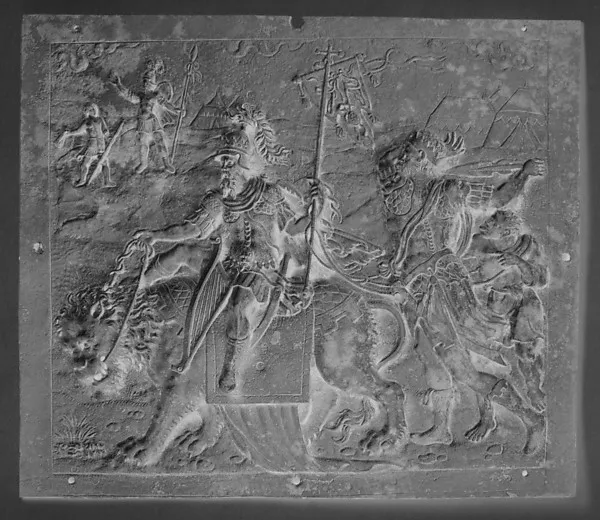
1 Samuel 7:1-4Return Unto the LORD · Serve Him Only
1And the men of Kirjathjearim came, and fetched up the ark of the LORD, and brought it into the house of Abinadab in the hill, and sanctified Eleazar his son to keep the ark of the LORD. 2And it came to pass, while the ark abode in Kirjathjearim, that the time was long; for it was twenty years: and all the house of Israel lamented after the LORD. 3And Samuel spake unto all the house of Israel, saying, If ye do return unto the LORD with all your hearts, then put away the strange gods and Ashtaroth from among you, and prepare your hearts unto the LORD, and serve him only: and he will deliver you out of the hand of the Philistines. 4Then the children of Israel did put away Baalim and Ashtaroth, and served the LORD only.
The chapter opens on a curious, unsettled scene. The ark of the LORD - the gold-covered chest that marked the very presence of God among His people - has been returned from the land of the Philistines, who had captured it and then could not bear to keep it. But it does not go back to the tabernacle. The men of Kirjath-jearim fetched up the ark and brought it into a private house on a hill, the house of Abinadab, and set apart his son Eleazar to keep it.
There it would stay, not for weeks but for decades. The detail matters: the symbol of God's nearness is present in the land, yet it is parked, sidelined, kept rather than honoured in worship. It is a picture of the whole nation's condition. God has not abandoned Israel - His presence is right there on the hill - but Israel is not living with Him. Something has to change before the ark, and the people, can move forward.1
The Baalim were the male storm-and-fertility gods of the surrounding nations; the Ashtaroth were their female counterparts. These were not abstract philosophical errors. They were the convenient, hedged-bet religion of the day - gods you could turn to for rain and harvest and children while still keeping the LORD on the side. For twenty years Israel had carried this divided heart, lamenting after the LORD on the one hand while quietly retaining the idols on the other.
Samuel will not allow the half-measure. Notice that he goes straight to an action: put away. Repentance here is not a private wave of regret but a concrete clearing-out - the idols physically removed from among the people. And the order of his words is telling: the strange gods come out, hearts are prepared, and only then can the people serve him only. You cannot serve the LORD only while still holding what competes with Him.
The clean-out has to come first.
1 Samuel 7:5-6Mizpeh: Poured Out and Confessed
5And Samuel said, Gather all Israel to Mizpeh, and I will pray for you unto the LORD. 6And they gathered together to Mizpeh, and drew water, and poured it out before the LORD, and fasted on that day, and said there, We have sinned against the LORD. And Samuel judged the children of Israel in Mizpeh.
Repentance, in Samuel's hands, does not stay private. He summons the whole nation: Gather all Israel to Mizpeh, and I will pray for you unto the LORD (v. 5). Mizpeh - the name means “watchtower” - was a high gathering-place, and it would become a recurring site of national assembly. The turning that began as individual hearts putting away their idols now becomes a corporate act: the covenant people, together, returning to their covenant God.
There is something important in this. Israel was never meant to relate to God merely as scattered individuals; they were a people, and their sin had been a people's sin, so their repentance is a people's repentance. And note where Samuel places himself - not above them as their deliverer, but among them as their intercessor: I will pray for you unto the LORD. Before a single thing happens against the Philistines, before any deliverance is in view, the prophet's first and central work is to pray.
He stands in the gap between the gathered people and the throne of God.
At Mizpeh Israel does three things, and the first is strange to modern eyes: they drew water, and poured it out before the LORD (v. 6). This is not a commanded sacrifice from the law; it is a spontaneous, eloquent gesture. Water poured out on the ground cannot be gathered back. It is gone, spent, surrendered. Later in the story of Israel the same act carries the same weight - when David's mighty men risk their lives to bring him water from the well of Bethlehem, he will not drink it but pours it out before the LORD, because it is too costly, too much like the blood of the men who fetched it (2 Sam. 23:16).
To pour out water before God is to say, in a sign the whole body can see: we are emptying ourselves before You; we are holding nothing back. Then comes the fasting - the appetite itself laid down - and then the words, spoken together as a nation: We have sinned against the LORD. That is confession in its purest form: the plain truth told aloud in God's hearing, without excuse or blame or bargaining. And on the heels of it, Samuel judged the children of Israel in Mizpeh - he set things right, brought the people's life back under God's order.
The poured-out water and the spoken confession together are the inner turning of verse 3 made visible.2
1 Samuel 7:7-11The Lamb, the Cry, and the Thunder
7And when the Philistines heard that the children of Israel were gathered together to Mizpeh, the lords of the Philistines went up against Israel. And when the children of Israel heard it, they were afraid of the Philistines. 8And the children of Israel said to Samuel, Cease not to cry unto the LORD our God for us, that he will save us out of the hand of the Philistines. 9And Samuel took a sucking lamb, and offered it for a burnt offering wholly unto the LORD: and Samuel cried unto the LORD for Israel; and the LORD heard him. 10And as Samuel was offering up the burnt offering, the Philistines drew near to battle against Israel: but the LORD thundered with a great thunder on that day upon the Philistines, and discomfited them; and they were smitten before Israel. 11And the men of Israel went out of Mizpeh, and pursued the Philistines, and smote them, until they came under Bethcar.
The timing is almost cruel. The very moment Israel gathers to repent - unarmed, undefended, on their knees before God - the lords of the Philistines went up against Israel (v. 7). It is a pattern worth recognising: turning back to God is not always met with immediate calm. Sometimes the act of repentance is exactly when the old enemy musters and comes. And Israel's response is honest fear: they were afraid of the Philistines. They have no army marshalled, no battle plan, no weapons in hand - only a prophet and a fresh confession.
The fear is not faithlessness; it is the plain recognition of how badly outmatched they are. But watch what they do with the fear. They do not scatter, and they do not reach for the old idols who promised protection. They turn the fear into a request directed at the only One who can actually save. That is the difference repentance has made: the same people who served Baal for rain now run to the LORD in danger.
Notice everything Israel understands in that one plea to Samuel. They know they cannot save themselves; they are outmatched and defenceless. They know Samuel is not their saviour either - they ask him to pray. And they know the LORD alone can deliver: that he will save us. What they want from Samuel is intercession - that he would stand in the gap and not stop. The phrase cease not is the striking part; it asks for prayer that refuses to give up, that keeps crying until the answer comes.
This is what it really means to ask someone to pray for you: not a polite nicety, but a plea for a mediator to keep standing before God on your behalf when you are too weak or too afraid to stand there yourself. Israel has learned where their help is. They run, not to a weapon, but to a man on his knees.
The deliverance comes in a way no one could mistake for human achievement. As Samuel was offering up the burnt offering - that is, with the lamb still on the altar and the cry still in the air - the LORD thundered with a great thunder on that day upon the Philistines, and discomfited them (v. 10). The Philistines were the superior force; they drew near to battle, advancing on a people with no army. And then God spoke from heaven.
Thunder in the Scriptures is often the voice of God in power, and here it falls not as a vague storm but as a weapon aimed: upon the Philistines. The word translated discomfited means to throw into confusion, to panic and rout. The mighty army that came up so confidently simply breaks and scatters - and only then do the men of Israel go out and pursue. The order is everything. Israel does not win the battle and then thank God; God wins the battle, and Israel chases down an enemy already defeated by a sound from the sky.
The victory is the LORD's answer to a lamb and a prayer. What the people contributed was repentance, a cry, and an offering; what God contributed was the deliverance itself.
1 Samuel 7:12-13Ebenezer · Hitherto Hath the LORD Helped Us
12Then Samuel took a stone, and set it between Mizpeh and Shen, and called the name of it Ebenezer, saying, Hitherto hath the LORD helped us. 13So the Philistines were subdued, and they came no more into the coast of Israel: and the hand of the LORD was against the Philistines all the days of Samuel.
Of all the things Samuel might have done to mark the day, he chooses a stone - the most permanent, least portable object there is. A stone does not move. It stays where it is set, year after year, until it becomes a fixed point on the land, a place a person can walk to and put a hand on. Throughout the Scriptures, stones are how God's people make memory physical: Jacob sets one up at Bethel where he met God; Joshua raises twelve out of the Jordan so that when your children ask… What mean ye by these stones? the story can be told again.
A stone keeps the past from slipping away - it makes one generation's deliverance available to the next. Samuel knows that Israel, having forgotten God for twenty years, is more than capable of forgetting this day too. So he plants a witness in the ground that will outlast the memory of the people who saw it.
The deliverance proves to be no passing reprieve. So the Philistines were subdued, and they came no more into the coast of Israel: and the hand of the LORD was against the Philistines all the days of Samuel (v. 13). The enemy that had captured the ark, that had dominated Israel for years, that had come up so boldly at Mizpeh, is now held in check - not for a season but for the whole span of Samuel's leadership.
And the text is careful to say why. It was not that Israel suddenly became a military power; it was that the hand of the LORD was against the Philistines. The same hand that thundered from heaven now rested, sustained, over the years that followed. What God does in answer to genuine repentance is not always fleeting. Here the fruit endures: the lost cities are restored, from Ekron even unto Gath; the borders are recovered; and there is even peace where there had been hostility.
A nation that had ached for twenty years now lives, for a generation, in the settled good of having returned to its God.
1 Samuel 7:14-17A Circuit of Faithfulness, an Altar at Home
14And the cities which the Philistines had taken from Israel were restored to Israel, from Ekron even unto Gath; and the coasts thereof did Israel deliver out of the hands of the Philistines. And there was peace between Israel and the Amorites. 15And Samuel judged Israel all the days of his life. 16And he went from year to year in circuit to Bethel, and Gilgal, and Mizpeh, and judged Israel in all those places. 17And his return was to Ramah; for there was his house; and there he judged Israel; and there he built an altar unto the LORD.
The chapter ends not with a throne but with a circuit. Samuel judged Israel all the days of his life. And he went from year to year in circuit to Bethel, and Gilgal, and Mizpeh, and judged Israel in all those places (vv. 15-16). This is a quiet but beautiful portrait of leadership. Samuel does not settle into a palace and summon the people to him; he goes to them, travelling a regular round, year after year, showing up at Bethel and Gilgal and Mizpeh to set things right and keep the people in the ways of God.
His authority lives in his faithfulness - the steady, unglamorous work of showing up and judging rightly, again and again, for decades. The great day of thunder and deliverance was a single day; the years that followed were filled with the ordinary labour of keeping a people faithful. And both belong to the same calling. The miracle did not exempt Samuel from the daily round; if anything, it is the daily round - the returning, the judging, the showing up - that keeps a delivered people delivered.
The very last detail is the altar. And his return was to Ramah; for there was his house; and there he judged Israel; and there he built an altar unto the LORD (v. 17). Wherever Samuel's circuit took him, his return was always to Ramah, to home - and at home he built an altar. The altar is where sacrifice is offered, where prayer ascends, where heaven and earth are brought together; and Samuel makes it the centre of his household.
It is fitting that the chapter which began with the people's repentance and turned on Samuel's intercession should end at his altar. The man who cried to the LORD for Israel at Mizpeh keeps an altar burning at his own door. His public ministry of judging and his private life of worship were a single whole: a life ordered toward the LORD, offered up, returning always to the place where God is met.
The intercessor's strength was never in himself; it was in the God to whom that altar pointed.
Research trail
Sources & further study
These references support the historical, linguistic, manuscript, and contextual notes in this chapter. Scripture remains the primary text; external sources are provided so readers can inspect the research directly.
- 1 Samuel 7 - Translators' NotesThe NET Bible's detailed footnotes on 1 Samuel 7 - the long lament of verse 2, the meaning of the poured-out water in verse 6, the sucking lamb offered wholly in verse 9, and the place-name Ebenezer with its explanation in verse 12.
- 1 Samuel 7 · Hebrew + classical Jewish commentaryThe Hebrew text of 1 Samuel 7 with Rashi, Radak, and other classical commentators side by side - useful for the verb shuv (v. 3, “return”), for the poured-out water and confession at Mizpeh (v. 6), and for the naming of the stone Even ha-ezer, “the stone of help” (v. 12).
- 1 Samuel 7 ↔ 1 Thessalonians 1 · Hebrews 7 · Philippians 1Traces the threads tying 1 Samuel 7 to the rest of Scripture - the turning from idols to serve the living and true God (1 Thess. 1:9) read beside Samuel's call to serve him only (v. 3), and the offered lamb and interceding cry (v. 9) read alongside the One who ever liveth to make intercession (Heb. 7:25).
Where this echoes in Scripture
Return Unto the LORD · Serve Him Only
- 1 Thessalonians 1:9ye turned to God from idols to serve the living and true God.The exact two motions of verse 3 - turning from idols, serving the living God only - named as the shape of conversion.
- Joshua 24:14-15put away the gods which your fathers served... choose you this day whom ye will serve.The same call to put away strange gods and serve the LORD only that Samuel renews in verses 3-4.
- Matthew 22:37Thou shalt love the Lord thy God with all thy heart, and with all thy soul, and with all thy mind.Samuel's with all your hearts (v. 3) lifted to its fullest height - the first and great commandment.
- Joel 2:12-13Turn ye even to me with all your heart... and rend your heart, and not your garments.The prophetic call to shuv - to return to the LORD with the whole heart, as in verse 3.
- Matthew 6:24No man can serve two masters... Ye cannot serve God and mammon.Why the idols must be put away before the heart can serve him only (vv. 3-4) - divided service is no service.
Mizpeh: Poured Out and Confessed
- 1 John 1:9If we confess our sins, he is faithful and just to forgive us our sins, and to cleanse us from all unrighteousness.The promise that meets Israel's confession in verse 6 - sin told plainly, mercy run out to meet it.
- Luke 15:18I will arise and go to my father, and will say unto him, Father, I have sinned against heaven, and before thee.The prodigal's turn home built on the very words Israel speaks at Mizpeh - We have sinned against the LORD.
- 2 Samuel 23:16David would not drink thereof, but poured it out unto the LORD.The same poured-out gesture as verse 6 - what is most costly surrendered wholly to God.
- Psalm 32:5I acknowledged my sin unto thee... and thou forgavest the iniquity of my sin.The pattern of Mizpeh - honest confession followed at once by forgiveness.
- Nehemiah 9:1-3the children of Israel were assembled with fasting... and confessed their sins.A later national gathering that mirrors Mizpeh - the whole people assembled to fast and confess together.
The Lamb, the Cry, and the Thunder
- John 1:29Behold the Lamb of God, which taketh away the sin of the world.The Lamb foreshadowed by the sucking lamb Samuel offers wholly in verse 9 - the offering by which deliverance comes.
- Hebrews 7:25he is able also to save them to the uttermost that come unto God by him, seeing he ever liveth to make intercession for them.The interceding cry of verse 9 carried to its fulfilment - the Mediator who never ceases to pray for His people.
- Isaiah 65:24Before they call, I will answer; and while they are yet speaking, I will hear.The God who heard Samuel even as the offering rose (vv. 9-10) - who answers the cry before it is finished.
- Exodus 14:13-14stand still, and see the salvation of the LORD... The LORD shall fight for you, and ye shall hold your peace.The pattern of the thunder in verse 10 - deliverance the LORD works while His people stand and watch.
- Psalm 18:13-14The LORD also thundered in the heavens... he sent out his arrows, and scattered them.The same voice from heaven as verse 10 - the LORD thundering to rout the enemies of His people.
A Circuit of Faithfulness, an Altar at Home
- Philippians 1:6being confident of this very thing, that he which hath begun a good work in you will perform it until the day of Jesus Christ.The hope that grows from hitherto (v. 12) - the God who has helped thus far will finish the work He began.
- Joshua 4:6-7that this may be a sign among you, that when your children ask... What mean ye by these stones?The same use of a stone memorial as verse 12 - a marker set up so the deliverance is told to the next generation.
- Psalm 121:1-2I will lift up mine eyes unto the hills... My help cometh from the LORD, which made heaven and earth.The confession behind the name Ebenezer (v. 12) - that help comes from the LORD, the stone of help.
- Hebrews 13:5I will never leave thee, nor forsake thee.Why hitherto grounds confidence for what is to come (v. 12) - the Helper does not abandon His own.
- 1 Samuel 12:24fear the LORD, and serve him in truth with all your heart: for consider how great things he hath done for you.Samuel's lifelong call (vv. 15-17) - to remember the great things God has done and serve Him only.