Isaiah 59
Isaiah 59 answers a question a beaten-down people are always tempted to ask: Has God lost the power to help, or stopped listening? The chapter's first words refuse that thought outright. Behold, the LORD's hand is not shortened, that it cannot save; neither his ear heavy, that it cannot hear (v. 1). The arm is not too short; the ear is not dull. The breakdown is on the other side: your iniquities have separated between you and your God, and your sins have hid his face from you, that he will not hear (v. 2).
What follows is a long, clear-eyed indictment - defiled hands, lying tongues, feet that run to evil, paths so crooked that whosoever goeth therein shall not know peace (vv. 3-8). The chapter names the wall and names who built it.1
Tap any highlighted phrase to jump to the commentary that unpacks it.
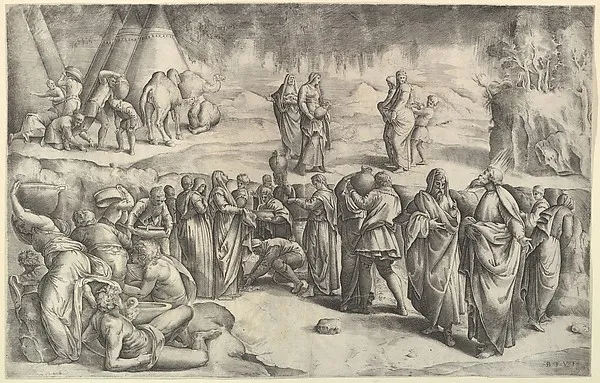
Isaiah 59:1-8Your Iniquities Have Separated
1Behold, the LORD’s hand is not shortened, that it cannot save; neither his ear heavy, that it cannot hear: 2But your iniquities have separated between you and your God, and your sins have hid his face from you, that he will not hear. 3For your hands are defiled with blood, and your fingers with iniquity; your lips have spoken lies, your tongue hath muttered perverseness. 4None calleth for justice, nor any pleadeth for truth: they trust in vanity, and speak lies; they conceive mischief, and bring forth iniquity. 5They hatch cockatrice’ eggs, and weave the spider’s web: he that eateth of their eggs dieth, and that which is crushed breaketh out into a viper. 6Their webs shall not become garments, neither shall they cover themselves with their works: their works are works of iniquity, and the act of violence is in their hands. 7Their feet run to evil, and they make haste to shed innocent blood: their thoughts are thoughts of iniquity; wasting and destruction are in their paths. 8The way of peace they know not; and there is no judgment in their goings: they have made them crooked paths: whosoever goeth therein shall not know peace.
The chapter opens by demolishing an excuse before anyone can hide behind it. A people long in trouble begin to wonder whether God has simply run out of power, or grown deaf to their prayers. Isaiah will not allow it: Behold, the LORD's hand is not shortened, that it cannot save; neither his ear heavy, that it cannot hear (v. 1). The two images are deliberate. A shortened hand is one that cannot reach far enough to rescue; a heavy ear is one too dull to catch a cry.
God's, says the prophet, is neither. The arm still reaches; the ear still hears. So if heaven seems shut, the cause must lie elsewhere - and verse 2 names it without flinching: your iniquities have separated between you and your God, and your sins have hid his face from you, that he will not hear. This is the hinge of the whole chapter. The distance the people feel is real, but it is not God withdrawing in weakness or indifference.
It is sin, doing what sin does - building a wall, hiding a face, breaking the line of communication from the human side. The diagnosis matters, because a wrong diagnosis sends you looking for the wrong cure.1
Having named sin as the wall, the chapter now shows exactly what that sin is, and the catalogue is unsparing. It moves over the body part by part, as if taking inventory of a life turned to harm: your hands are defiled with blood, and your fingers with iniquity; your lips have spoken lies, your tongue hath muttered perverseness (v. 3). Hands, fingers, lips, tongue - every instrument a person has is bent to violence and falsehood.
Then it widens to the public square: None calleth for justice, nor any pleadeth for truth (v. 4). No one will stand up for what is right; the courts and the streets have gone silent where they should cry out. And it is active production - they conceive mischief, and bring forth iniquity. The language is of pregnancy and birth: evil is being deliberately gestated and delivered. This is the honesty the chapter demands. The wrong is a settled, chosen pattern that touches hand and tongue, private conduct and public justice alike.
Only a people willing to see this clearly are in any position to be helped.
Verses 5 through 8 press the indictment with a pair of unforgettable images. First the people are likened to creatures breeding poison: They hatch cockatrice' eggs, and weave the spider's web: he that eateth of their eggs dieth, and that which is crushed breaketh out into a viper (v. 5). Whatever their schemes produce is deadly - touch it and it kills, crush it and something worse crawls out. Then the spider's web turns to a second point: Their webs shall not become garments, neither shall they cover themselves with their works (v. 6).
A spider's web is intricate and busy, but you cannot make a coat of it; it covers nothing. So with a life of works of iniquity - all that frantic effort produces nothing that can clothe or shelter the soul. The closing verses trace the path such a life walks: Their feet run to evil… wasting and destruction are in their paths. The way of peace they know not… whosoever goeth therein shall not know peace (vv. 7-8).
Note the last line especially. Crooked paths do not lead to peace by accident; they cannot. The road itself is bent away from it. A people walking that road will not stumble into shalom no matter how far they go.
Isaiah 59:9-15aTruth Is Fallen in the Street
9Therefore is judgment far from us, neither doth justice overtake us: we wait for light, but behold obscurity; for brightness, but we walk in darkness. 10We grope for the wall like the blind, and we grope as if we had no eyes: we stumble at noon day as in the night; we are in desolate places as dead men. 11We roar all like bears, and mourn sore like doves: we look for judgment, but there is none; for salvation, but it is far off from us. 12For our transgressions are multiplied before thee, and our sins testify against us: for our transgressions are with us; and as for our iniquities, we know them; 13In transgressing and lying against the LORD, and departing away from our God, speaking oppression and revolt, conceiving and uttering from the heart words of falsehood. 14And judgment is turned away backward, and justice standeth afar off: for truth is fallen in the street, and equity cannot enter. 15Yea, truth faileth; and he that departeth from evil maketh himself a prey: and the LORD saw it, and it displeased him that there was no judgment.
Now the voice changes. Through the first eight verses God has been speaking to the people about their sin; here the people begin to speak, and what they say is confession. They describe their condition from the inside, and it is a portrait of darkness. We wait for light, but behold obscurity; for brightness, but we walk in darkness (v. 9). They are not in the dark by surprise; they have waited and hoped for light and found none.
The next verse turns the image physical and almost unbearable: We grope for the wall like the blind… we stumble at noon day as in the night; we are in desolate places as dead men (v. 10). Stumbling at noon day - in the full blaze of midday - is the mark of a blindness that is not the world's fault but their own. The light is there; they cannot see it. And verse 11 catches the sheer noise of their distress: We roar all like bears, and mourn sore like doves - the low growl of frustration and the soft moan of grief together - we look for judgment, but there is none; for salvation, but it is far off from us. This is what it sounds like when a people finally feel the weight of the wall they built.
They are not yet rescued. But they have stopped pretending they are not in trouble.
The confession reaches its plainest point: For our transgressions are multiplied before thee, and our sins testify against us: for our transgressions are with us; and as for our iniquities, we know them (v. 12). Every word here is an admission. The sins are not hidden from God - they are before thee. They do not need a prosecutor - they testify against us on their own. And the people will not plead ignorance: we know them. Verse 13 spells the charge out, and notice that it is finally vertical before it is horizontal: transgressing and lying against the LORD, and departing away from our God, and only then speaking oppression and revolt… words of falsehood. The root of every wrong the chapter has catalogued is a turning away from God; the violence and lies are the fruit of that turning.
Then comes the verse that has echoed down through every age since: And judgment is turned away backward, and justice standeth afar off: for truth is fallen in the street, and equity cannot enter (v. 14). It is a haunting picture - truth personified, knocked flat in the public square, lying in the road where everyone walks; and equity, fairness itself, unable even to get in the door. Yea, truth faileth; and he that departeth from evil maketh himself a prey (v. 15a): in such a society, the one who refuses to do wrong becomes a target.
Honesty has been so inverted that goodness is now dangerous.
Isaiah 59:15b-21His Arm Brought Salvation · The Redeemer Shall Come
16And he saw that there was no man, and wondered that there was no intercessor: therefore his arm brought salvation unto him; and his righteousness, it sustained him. 17For he put on righteousness as a breastplate, and an helmet of salvation upon his head; and he put on the garments of vengeance for clothing, and was clad with zeal as a cloak. 18According to their deeds, accordingly he will repay, fury to his adversaries, recompence to his enemies; to the islands he will repay recompence. 19So shall they fear the name of the LORD from the west, and his glory from the rising of the sun. When the enemy shall come in like a flood, the Spirit of the LORD shall lift up a standard against him. 20And the Redeemer shall come to Zion, and unto them that turn from transgression in Jacob, saith the LORD. 21As for me, this is my covenant with them, saith the LORD; My spirit that is upon thee, and my words which I have put in thy mouth, shall not depart out of thy mouth, nor out of the mouth of thy seed, nor out of the mouth of thy seed’s seed, saith the LORD, from henceforth and for ever.
Everything in the chapter has been building to this turn, and it pivots on one stunning observation: And he saw that there was no man, and wondered that there was no intercessor: therefore his arm brought salvation unto him; and his righteousness, it sustained him (v. 16). Read it slowly. God surveys the wreckage of verses 1-15 - the blood, the lies, the fallen truth, the people groping in the dark - and looks for a deliverer among them.
He finds no man. He looks for someone to stand in the gap, to plead, to mediate between a holy God and a guilty people - an intercessor - and there is none. The text says God wondered at this, marked it as something astonishing: in all that crowd, not one able to bridge the separation that verse 2 had opened. And then the word that turns the whole chapter: therefore. Because no one else could, his arm brought salvation unto him. God did not respond to the absence of a savior by abandoning the rescue.
He responded by becoming the rescuer Himself. The arm that verse 1 insisted was not shortened now reaches down and works salvation where no human hand could. This is the heart of Isaiah 59: when the gulf was too wide for any of us to cross, God crossed it from His side.1
Verse 17 dresses the rescue in the most vivid image the chapter has yet used: God arming Himself like a warrior going out to battle. For he put on righteousness as a breastplate, and an helmet of salvation upon his head; and he put on the garments of vengeance for clothing, and was clad with zeal as a cloak. Each piece tells you something about how God saves. The breastplate that guards the heart is righteousness - His own rightness is what He goes to war in.
The helmet that guards the head is salvation - deliverance itself is His protection. He is wrapped in zeal, a burning, jealous love for His people, the way a soldier is wrapped in his cloak. This is God suited up and resolute. Verses 18-19 carry the warrior out to his work: he will repay… fury to his adversaries, and as a result they shall fear the name of the LORD from the west, and his glory from the rising of the sun - the reach of it runs from one horizon to the other, the whole inhabited world.
And the promise in the face of every overwhelming threat: When the enemy shall come in like a flood, the Spirit of the LORD shall lift up a standard against him. However high the flood rises, God raises a banner higher.
The chapter lands on its great promise and then seals it. And the Redeemer shall come to Zion, and unto them that turn from transgression in Jacob, saith the LORD (v. 20). The whole movement from verse 16 comes to rest here: the salvation God's own arm worked arrives in the form of a Redeemer - a kinsman who buys back what was lost - who comes to Zion. And note carefully to whom He comes: to them that turn from transgression, people still in the middle of turning, met by the Redeemer at the point of their return.
The same sin catalogued through the chapter is still the issue; what changes is that they turn from it, and the Redeemer meets exactly that turning. Then verse 21 adds a covenant that outlasts the moment: My spirit that is upon thee, and my words which I have put in thy mouth, shall not depart out of thy mouth, nor out of the mouth of thy seed, nor out of the mouth of thy seed's seed… from henceforth and for ever. The rescue is not a one-time intervention that fades.
God binds Himself to put His Spirit and His words in His people and to keep them there, generation after generation, forever. The chapter that began with a hidden face ends with an abiding presence.
Research trail
Sources & further study
These references support the historical, linguistic, manuscript, and contextual notes in this chapter. Scripture remains the primary text; external sources are provided so readers can inspect the research directly.
- Isaiah 59 - Translators' NotesThe NET Bible's detailed footnotes on Isaiah 59 - the courtroom flavor of the opening charge in verses 1-2, the imagery of cockatrice' eggs and spiders' webs in verse 5, the warrior who arms himself in verse 17, and the much-discussed turn in verse 16 where God finds no intercessor and acts alone.
- Isaiah 59 · Hebrew + classical Jewish commentaryThe Hebrew text of Isaiah 59 with Rashi, Ibn Ezra, and other classical commentators side by side - useful for the verb badal (v. 2, “separated,” the same word that divides light from darkness in Genesis 1) and for the rare participle maphgia (v. 16, the “intercessor” whom God looks for and does not find).
- Isaiah 59 ↔ Romans 11 · Ephesians 6 · 1 Timothy 2Traces the threads tying Isaiah 59 to the rest of Scripture - the Redeemer who comes to Zion (v. 20) read alongside the Deliverer… out of Sion (Rom. 11:26), the armor God puts on to save (v. 17) read beside the armor the believer is given in the breastplate of righteousness… the helmet of salvation (Eph. 6:14, 17), and the missing intercessor (v. 16) read with one mediator… the man Christ Jesus (1 Tim. 2:5).
Where this echoes in Scripture
Your Iniquities Have Separated
- Isaiah 50:2Is my hand shortened at all, that it cannot redeem? or have I no power to deliver?The same defense as verse 1 - the LORD's arm is not too short; the failure is never on His side.
- Ephesians 2:12-13without Christ... having no hope, and without God in the world... ye who sometimes were far off are made nigh by the blood of Christ.The separation of verse 2 named and answered - those once far off brought near.
- Romans 3:15-17Their feet are swift to shed blood: destruction and misery are in their ways: and the way of peace have they not known.Paul quotes verses 7-8 directly - the catalogue of Isaiah 59 taken up as a portrait of human sin.
- Genesis 1:4And God saw the light, that it was good: and God divided the light from the darkness.The verb badal of verse 2 - the same word that makes a real division, here between light and dark.
- Isaiah 1:15when ye spread forth your hands, I will hide mine eyes from you... your hands are full of blood.The hidden face and bloodstained hands of verses 2-3 sounded earlier in the same book.
Truth Is Fallen in the Street
- Amos 5:7Ye who turn judgment to wormwood, and leave off righteousness in the earth.The collapse of justice in verse 14 - judgment turned backward, righteousness abandoned in the public square.
- 1 John 1:8-9If we confess our sins, he is faithful and just to forgive us our sins... If we say that we have no sin, we deceive ourselves.The honesty of verse 12 - sins owned, not hidden - named as the doorway to forgiveness.
- Isaiah 9:2The people that walked in darkness have seen a great light: they that dwell in the land of the shadow of death, upon them hath the light shined.The darkness of verses 9-10 set against the light Isaiah promises will dawn on the very people groping in it.
- Psalm 38:4For mine iniquities are gone over mine head: as an heavy burden they are too heavy for me.The weight of multiplied transgressions confessed in verse 12 - sin felt as a burden too heavy to carry.
- Jeremiah 5:1seek... if there be any that executeth judgment, that seeketh the truth; and I will pardon it.The search of verse 15 - a society scoured for one who does justice, and the rarity of finding one.
His Arm Brought Salvation · The Redeemer Shall Come
- Romans 11:26-27There shall come out of Sion the Deliverer... for this is my covenant unto them, when I shall take away their sins.Paul quotes verses 20-21 directly - the Redeemer to Zion read as the Deliverer who takes sin away.
- 1 Timothy 2:5For there is one God, and one mediator between God and men, the man Christ Jesus.The intercessor missing in verse 16 - the one mediator who stands in the gap between God and us.
- Hebrews 7:25he is able also to save them to the uttermost that come unto God by him, seeing he ever liveth to make intercession for them.The vacancy of verse 16 filled - the living intercessor who saves to the uttermost.
- Ephesians 6:14-17the breastplate of righteousness... the helmet of salvation, and the sword of the Spirit, which is the word of God.The armor God puts on in verse 17 - given to the rescued to wear in Him.
- Isaiah 53:12he bare the sin of many, and made intercession for the transgressors.The office absent in verse 16 - the Servant who does make intercession, for the very transgressors of this chapter.