Amos 5
People in this chapter
A herdsman from Judah walks into the richest, most confident kingdom of his day and sings a funeral song over it. The virgin of Israel is fallen; she shall no more rise (v. 2). The party is still going; Amos stands at the graveside. Then, mid-dirge, a door no one expected swings open: Seek ye me, and ye shall live (v. 4). Even the funeral is not the end, if they will turn.1
Tap any highlighted phrase to jump to the commentary that unpacks it.
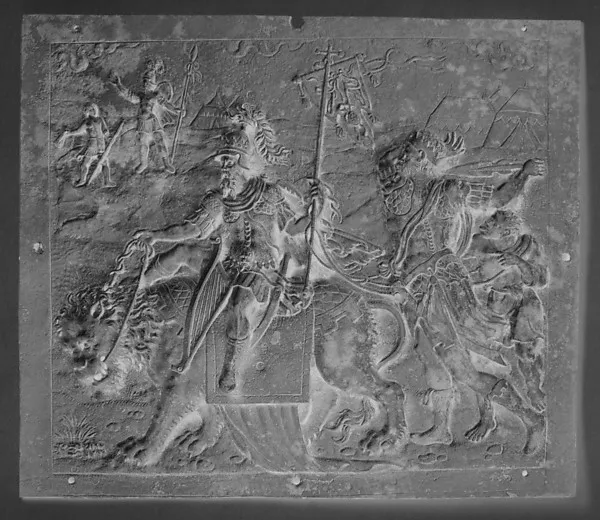
Amos 5:1-3The Virgin of Israel Is Fallen
1Hear ye this word which I take up against you, even a lamentation, O house of Israel. 2The virgin of Israel is fallen; she shall no more rise: she is forsaken upon her land; there is none to raise her up. 3For thus saith the Lord GOD; The city that went out by a thousand shall leave an hundred, and that which went forth by an hundred shall leave ten, to the house of Israel.
The word Amos takes up is a lamentation (v. 1) - a dirge, the wailing song chanted at a funeral, and the verse that follows even falls into the broken, limping rhythm Hebrew used to grieve the dead. He sings it over a kingdom at the peak of its prosperity, as though standing at its graveside while the party is still going. The virgin of Israel is fallen; she shall no more rise: she is forsaken upon her land; there is none to raise her up (v. 2).
The image is devastating - a young woman cut down before her time, sprawled on the ground with no one to lift her. The people would have heard themselves described as a corpse while they still felt strong, secure, and certain of God's favour. Then verse 3 puts numbers to the grief: the city that marched out a thousand strong will limp home with a hundred, and the hundred with ten. This is a sober reckoning of what is coming.
And yet the dirge is sung not to gloat over death but to wake the living before it is too late.
Amos 5:4-6Seek Ye Me, and Ye Shall Live
4For thus saith the LORD unto the house of Israel, Seek ye me, and ye shall live: 5But seek not Bethel, nor enter into Gilgal, and pass not to Beersheba: for Gilgal shall surely go into captivity, and Bethel shall come to nought. 6Seek the LORD, and ye shall live; lest he break out like fire in the house of Joseph, and devour it, and there be none to quench it in Bethel.
Into the funeral song breaks a word that should not be possible at a graveside - an offer of life (v. 4). The God who has just been chanting their dirge turns and holds out resurrection: a plain promise tied to a plain command. Seek me. Live. Then the next verse guards the offer against a fatal misunderstanding: But seek not Bethel, nor enter into Gilgal, and pass not to Beer-sheba (v. 5). These were the great religious centres, the busy shrines where Israel went to feel close to God.
Amos says: do not go there. Those places, for all their crowds and ceremony, are themselves headed for ruin - Gilgal shall surely go into captivity, and Bethel shall come to nought. The danger Amos names is one every religious people faces: mistaking the place and the ritual for the living God. So he says it again, stripped of every substitute: Seek the LORD, and ye shall live (v. 6). Seeking God is not the same thing as visiting His shrines.
A person can be endlessly religious and never once truly seek Him.
Amos 5:7-9The Maker of the Seven Stars and Orion
7Ye who turn judgment to wormwood, and leave off righteousness in the earth, 8Seek him that maketh the seven stars and Orion, and turneth the shadow of death into the morning, and maketh the day dark with night: that calleth for the waters of the sea, and poureth them out upon the face of the earth: The LORD is his name: 9That strengtheneth the spoiled against the strong, so that the spoiled shall come against the fortress.
Lest Israel imagine the God they are told to seek is small, local, or safely managed by their festivals, Amos lifts their eyes to the night sky: Seek him that maketh the seven stars and Orion, and turneth the shadow of death into the morning, and maketh the day dark with night: that calleth for the waters of the sea, and poureth them out upon the face of the earth: The LORD is his name (v. 8).
The God they are to seek is the Maker of the constellations - the One who hung the Pleiades and Orion in their places, who turns deep darkness into dawn and day back into night, who summons the waters of the sea and pours them out as rain over all the earth. This is no tribal deity confined to a shrine at Bethel; this is the Lord of the stars and the storms, whose name is the LORD. And the wonder of it is sharpened by what sits on either side.
Just before, Amos has named them Ye who turn judgment to wormwood, and leave off righteousness in the earth (v. 7) - people who poison justice and abandon what is right. Just after, he warns that this same God strengtheneth the spoiled against the strong (v. 9), bringing ruin on the mighty fortress. The Maker of Orion is also the Judge of the gate. To seek Him is to come under the gaze of the One who set the stars and weighs the heart.1
Amos 5:10-11They Hate Him That Rebuketh in the Gate
10They hate him that rebuketh in the gate, and they abhor him that speaketh uprightly. 11Forasmuch therefore as your treading is upon the poor, and ye take from him burdens of wheat: ye have built houses of hewn stone, but ye shall not dwell in them; ye have planted pleasant vineyards, but ye shall not drink wine of them.
Now Amos names the wound precisely, and it is located at the gate (v. 10). In an ancient town the gate was the courthouse and the town square at once - the open space just inside the wall where elders sat, cases were heard, and justice was meant to be done in full public view. To hate the man who rebuketh in the gate is to despise the honest voice that tells the truth in the very place where truth is supposed to rule.
These people could not bear to be corrected; the one who speaketh uprightly made them recoil. And the corruption fell on the bodies of the weak. Your treading is upon the poor, Amos says; you take from him burdens of wheat, squeezing the grain out of those who can least spare it (v. 11). With the plunder they built fine houses of hewn stone and planted pleasant vineyards - and the LORD's sentence is poetic and exact: ye shall not dwell in them… ye shall not drink wine of them. What is wrung from the poor by injustice will not, in the end, be enjoyed.
Amos 5:12-13They Turn Aside the Poor in the Gate
12For I know your manifold transgressions and your mighty sins: they afflict the just, they take a bribe, and they turn aside the poor in the gate from their right. 13Therefore the prudent shall keep silence in that time; for it is an evil time.
The LORD now says He has been keeping count: For I know your manifold transgressions and your mighty sins: they afflict the just, they take a bribe, and they turn aside the poor in the gate from their right (v. 12). Three crimes are named, and all three corrupt the place of justice. They afflict the just - they harass and crush the innocent who stand in the right. They take a bribe - the judges who should be blind to money have their verdicts bought.
And they turn aside the poor in the gate from their right - they push the powerless out of the very court that was supposed to defend them, denying them the justice that was their due. This is not random wickedness; it is a system rigged against the weak, with the law itself turned into a weapon of the strong. So thoroughly had injustice taken hold that Amos can add a bleak line: Therefore the prudent shall keep silence in that time; for it is an evil time (v. 13).
When the courts are bought and the honest are hated, even the wise fall silent, because speaking truth has become dangerous. It is a portrait of a society where evil has won the public square - exactly the world the prophet is sent to confront.
Amos 5:14-15Hate the Evil, and Love the Good
14Seek good, and not evil, that ye may live: and so the LORD, the God of hosts, shall be with you, as ye have spoken. 15Hate the evil, and love the good, and establish judgment in the gate: it may be that the LORD God of hosts will be gracious unto the remnant of Joseph.
Against that dark backdrop, Amos sets the road out - and it is strikingly concrete. A turning of the will toward good and away from evil: Seek good, and not evil, that ye may live: and so the LORD, the God of hosts, shall be with you, as ye have spoken (v. 14). They had been claiming God was with them; Amos tells them the claim only becomes true when they actually seek good. Then verse 15 sharpens it into three plain imperatives that touch the heart, the affections, and the public square together: Hate the evil, and love the good, and establish judgment in the gate. Notice the order.
It begins inside - a settled hatred of evil and love of good, the reordering of what a person actually wants - and it ends in the gate, where that changed heart shows itself by setting justice back on its feet in the public courts. Real repentance reaches all the way from the affections to the institutions. And the promise is held out with a tender restraint: it may be that the LORD God of hosts will be gracious unto the remnant of Joseph. The it may be is not God hedging on His mercy; it is the prophet refusing to let grace be presumed upon.
Turn, Amos says - and find the God of hosts gracious.
Amos 5:16-20Woe Unto You That Desire the Day of the LORD
16Therefore the LORD, the God of hosts, the LORD, saith thus; Wailing shall be in all streets; and they shall say in all the highways, Alas! alas! and they shall call the husbandman to mourning, and such as are skilful of lamentation to wailing. 17And in all vineyards shall be wailing: for I will pass through thee, saith the LORD. 18Woe unto you that desire the day of the LORD! to what end is it for you? the day of the LORD is darkness, and not light. 19As if a man did flee from a lion, and a bear met him; or went into the house, and leaned his hand on the wall, and a serpent bit him. 20Shall not the day of the LORD be darkness, and not light? even very dark, and no brightness in it?
The dirge that opened the chapter now spreads until it fills the whole land. Therefore the LORD, the God of hosts, the Lord, saith thus; Wailing shall be in all streets; and they shall say in all the highways, Alas! alas! (v. 16). The threefold naming of God - the LORD, the God of hosts, the Lord - piles up His authority before the sentence falls. And the sentence is universal grief: wailing in all streets, mourning in all highways, the bitter cry Alas! alas! rising from every corner.
So great will the mourning be that they will call the husbandman to mourning, and such as are skilful of lamentation to wailing - the farmers pulled from their fields to grieve, and the professional mourners, the ones trained to lead a funeral lament, hired in such numbers that there are not enough of them. Even in all vineyards shall be wailing (v. 17) - the very places of harvest joy turned to places of grief. And the reason is stated with chilling brevity: for I will pass through thee, saith the LORD. The phrase echoes the night the LORD passed through Egypt in judgment - but now it is Israel through whom He passes.
The people who counted on being spared because they were His are told that His passing through will not skip them.
Then Amos turns on a piece of false confidence so deep it is almost breathtaking: the people were actually longing for the day of the LORD. Woe unto you that desire the day of the LORD! to what end is it for you? the day of the LORD is darkness, and not light (v. 18). They imagined that “the day of the LORD” - the day God would act decisively in history - would be their vindication, the day He crushed their enemies and exalted His own people.
Amos says they have it exactly backwards. To what end is it for you? - what good do you think it will do you? For a people living in injustice, that day will not be light but darkness. He drives it home with a grimly comic picture of a man who cannot escape: As if a man did flee from a lion, and a bear met him; or went into the house, and leaned his hand on the wall, and a serpent bit him (v. 19).
He outruns the lion only to meet the bear; he reaches the safety of home and leans on the wall, and a snake hidden in the bricks strikes his hand. There is no door out. Then the question, repeated for the third time so it cannot be dodged: Shall not the day of the LORD be darkness, and not light? even very dark, and no brightness in it? (v. 20). The assurance they trusted was an illusion.
A day they thought would save them will instead expose them.
Amos 5:21-23I Hate, I Despise Your Feast Days
21I hate, I despise your feast days, and I will not smell in your solemn assemblies. 22Though ye offer me burnt offerings and your meat offerings, I will not accept them: neither will I regard the peace offerings of your fat beasts. 23Take thou away from me the noise of thy songs; for I will not hear the melody of thy viols.
Now comes the most startling thing in the whole chapter - God rejecting, in the first person and in the strongest words, the very worship He once commanded (v. 21). These were appointed festivals, prescribed in the law; the people were doing exactly what the rituals demanded. And the LORD says He hates them. Though ye offer me burnt offerings and your meat offerings, I will not accept them (v. 22) - the sacrifices ascend, and He turns His face away.
Even the music is unbearable to Him: Take thou away from me the noise of thy songs; for I will not hear the melody of thy viols (v. 23). What they heard as worship, He hears as noise. This is God refusing worship offered by hands that crush the poor and pervert the gate. The festivals were running full, the choirs were singing, the altars were smoking - and the courts were rigged and the weak were robbed.
Worship and injustice cannot occupy the same life; where they try, it is the worship that becomes an offense. The God who will not be bought at the gate will not be flattered at the altar either.
Amos 5:24Let Judgment Run Down as Waters
24But let judgment run down as waters, and righteousness as a mighty stream.
After all that He rejects comes the single thing He demands, and it lands like a thunderclap: But let judgment run down as waters, and righteousness as a mighty stream (v. 24). The little word But carries the weight of the chapter. Away with the feast days, the offerings, the songs - but this: justice and righteousness, pouring out without end. The image would have struck hard in a dry land. Most of the streams Israel knew were wadis - riverbeds that ran with water in the rainy season and lay cracked and empty the rest of the year.
The LORD will not have a justice like that: present at the festival, gone by the next week, dispensed when convenient and dried up when costly. He wants a mighty stream, a perennial river that flows in every season and cannot be dammed - justice that runs down over the whole of life, steady, abundant, unstoppable. This is the heart of true religion as the whole of Scripture states it: righteousness as the very thing worship was always meant to produce.
Hear how freeing that is for you. God is watching for the river - whether justice keeps flowing out of you on the gray Tuesday no one is applauding. The verse has outlasted Israel, Assyria, and every empire since, because it names something permanent about God: He cares more for a justly treated neighbour than for the finest song ever sung in His honour.2
Amos 5:25-27Into Captivity Beyond Damascus
25Have ye offered unto me sacrifices and offerings in the wilderness forty years, O house of Israel? 26But ye have borne the tabernacle of your Moloch and Chiun your images, the star of your god, which ye made to yourselves. 27Therefore will I cause you to go into captivity beyond Damascus, saith the LORD, whose name is The God of hosts.
The chapter ends by reaching back into Israel's own history and forward into its coming exile. Have ye offered unto me sacrifices and offerings in the wilderness forty years, O house of Israel? (v. 25) - a searching question that recalls the desert years, when the bond between the LORD and His people was not finally about the volume of offerings. But ye have borne the tabernacle of your Moloch and Chiun your images, the star of your god, which ye made to yourselves (v. 26).
Behind the busy worship of the LORD, Amos exposes a second devotion - idols carried alongside, gods they made to themselves. Their religion was unjust and divided, the LORD's altar sharing space with images of their own making. And so the sentence falls: Therefore will I cause you to go into captivity beyond Damascus, saith the LORD, whose name is The God of hosts (v. 27). The kingdom that sang so confidently will be marched away past Damascus, into the lands of empire.
The chapter that began with a funeral song over a fallen virgin ends with the road into exile - and yet the door it opened in the middle still stands: Seek the LORD, and ye shall live. Judgment is announced, but the call to seek and live was never withdrawn.
Research trail
Sources & further study
These references support the historical, linguistic, manuscript, and contextual notes in this chapter. Scripture remains the primary text; external sources are provided so readers can inspect the research directly.
- Amos 5 - Translators' NotesThe NET Bible's detailed footnotes on Amos 5 - the funeral-song form of verses 1-2, the shrines named in verse 5, the astronomical imagery of the Maker of the constellations in verse 8, and the much-discussed reference to Sikkuth and Kiyyun behind the KJV's “Moloch” and “Chiun” in verse 26.
- Amos 5 ↔ Micah 6 · Matthew 23 · John 4Traces the threads tying Amos 5 to the rest of Scripture - the demand for judgment and righteousness over ritual (v. 24) read alongside to do justly, and to love mercy (Mic. 6:8) and the weightier matters of the law (Matt. 23:23), and the call to seek the LORD and live (vv. 4-6) beside seek, and ye shall find (Matt. 7:7).
- Amos 5 · Hebrew + classical Jewish commentaryThe Hebrew text of Amos 5 with Rashi, Ibn Ezra, and other classical commentators side by side - useful for the repeated imperative dirshu (vv. 4, 6, “seek”), for the dirge-rhythm of the qinah over fallen Israel (vv. 1-2), and for the paired words mishpat and tzedaqah (v. 24, “judgment” and “righteousness”).
Where this echoes in Scripture
The Maker of the Seven Stars and Orion
- Jeremiah 29:13And ye shall seek me, and find me, when ye shall search for me with all your heart.The promise of verses 4-6 stated elsewhere - the LORD found by those who seek Him wholeheartedly.
- Matthew 7:7-8Ask, and it shall be given you; seek, and ye shall find... he that seeketh findeth.The threefold “seek and live” of this section taken up by the Son and made His own.
- Deuteronomy 4:29But if from thence thou shalt seek the LORD thy God, thou shalt find him, if thou seek him with all thy heart.The same offer as verse 4 - even from the brink of ruin, the LORD is found by the seeking heart.
- Job 9:9Which maketh Arcturus, Orion, and Pleiades, and the chambers of the south.The Maker of the constellations named in verse 8 - the God of the stars whom Israel is to seek.
- Isaiah 55:6Seek ye the LORD while he may be found, call ye upon him while he is near.The urgency under verses 4-6 - the call to seek the LORD now, before the door closes.
- John 14:6I am the way, the truth, and the life: no man cometh unto the Father, but by me.The seeking of verses 4-6 narrowed to a Person - the LORD who is Himself the life held out.
- John 10:10I am come that they might have life, and that they might have it more abundantly.The vichyu, “and live,” of verse 4 brought to its fullness - life held out by the Son.
- 1 John 5:12He that hath the Son hath life; and he that hath not the Son of God hath not life.Where “seek me, and live” (v. 4) finally lands - the life is found in the Son Himself.
Hate the Evil, and Love the Good
- Micah 6:8and what doth the LORD require of thee, but to do justly, and to love mercy, and to walk humbly with thy God?The same demand as verses 14-15 - that God requires justice and mercy of the heart, running deeper than ritual observance.
- Isaiah 1:17Learn to do well; seek judgment, relieve the oppressed, judge the fatherless, plead for the widow.The concrete justice of verse 15 spelled out - defending the very ones the powerful turn aside.
- Romans 12:9Let love be without dissimulation. Abhor that which is evil; cleave to that which is good.The inward command of verse 15 echoed - hating evil and loving good as the bent of the heart.
- Proverbs 17:15He that justifieth the wicked, and he that condemneth the just, even they both are abomination to the LORD.The crimes of verse 12 weighed - the bribed court that afflicts the just is hateful to God.
- Amos 5:4Seek ye me, and ye shall live.The same offer of life carried forward - here it becomes “seek good… that ye may live” (v. 14).
Woe Unto You That Desire the Day of the LORD
- Matthew 7:21-23Not every one that saith unto me, Lord, Lord... but he that doeth the will of my Father which is in heaven.The false assurance of verse 18 confronted again - a day that tests the life, not the religious claim.
- Joel 2:1-2for the day of the LORD cometh, for it is nigh at hand; a day of darkness and of gloominess.The day of verses 18-20 described elsewhere - darkness for the unprepared.
- Zephaniah 1:14-15The great day of the LORD is near... That day is a day of wrath, a day of trouble and distress.The same reversal as verse 18 - the longed-for day arriving as darkness for those who presumed on God's favor.
- Amos 9:1-4though they dig into hell, thence shall mine hand take them... I will set mine eyes upon them for evil, and not for good.The no-escape picture of verse 19 carried further - no hiding place from the day God passes through.
- 1 Thessalonians 5:2-4the day of the Lord so cometh as a thief in the night... But ye, brethren, are not in darkness.The light-and-darkness of verses 18-20 taken up - the same day, met by some as dark and by others as light.
- Matthew 7:24-25whosoever heareth these sayings of mine, and doeth them, I will liken him unto a wise man, which built his house upon a rock.The foundation the day of verses 18-20 will test - the house that the storm cannot shake.
Into Captivity Beyond Damascus
- Matthew 23:23ye... have omitted the weightier matters of the law, judgment, mercy, and faith.The charge of verses 21-24 taken up by the Son - ritual kept, justice and mercy abandoned.
- Isaiah 1:11-17To what purpose is the multitude of your sacrifices unto me?... cease to do evil; learn to do well; seek judgment.The same refusal as verses 21-24 - offerings rejected until justice is done.
- Hosea 6:6For I desired mercy, and not sacrifice; and the knowledge of God more than burnt offerings.The heart of verse 24 stated by a fellow prophet - mercy and righteousness over ritual.
- John 4:23-24the true worshippers shall worship the Father in spirit and in truth.Worship freed from the shrine, as verses 21-24 demand - in spirit and in truth.
- Acts 7:42-43O ye house of Israel... ye took up the tabernacle of Moloch, and the star of your god Remphan.Verses 25-27 quoted by Stephen - the divided worship that carried idols beside the LORD's altar.
- Matthew 9:13But go ye and learn what that meaneth, I will have mercy, and not sacrifice.The demand of verse 24 on the Son's lips - mercy weighed above ritual, twice over (also Matt. 12:7).
- Matthew 22:37-40Thou shalt love the Lord thy God... and thy neighbour as thyself. On these two... hang all the law.The justice of verse 24 traced to its root - the whole law gathered into love of God and neighbour.