Psalms 144
People in this chapter
Psalm 144 is headed simply as a psalm of David, and it reads like one - the prayer of a man who has spent his life with a sword in his hand and somehow never stopped being astonished that God would bother with him at all. It opens on the note you would expect from a warrior-king: Blessed be the LORD my strength, which teacheth my hands to war, and my fingers to fight (v. 1).
But notice the word that governs the whole sentence. Not gives me strength - teacheth. David does not present himself as a natural fighter who happens also to thank God; he presents the very skill of his hands as something learned at God's hand. The psalm is, from its first breath, a refusal to take credit. Everything that has kept him alive - his strength, his fortress, his shield, his deliverance - he names back to its source.1
Tap any highlighted phrase to jump to the commentary that unpacks it.
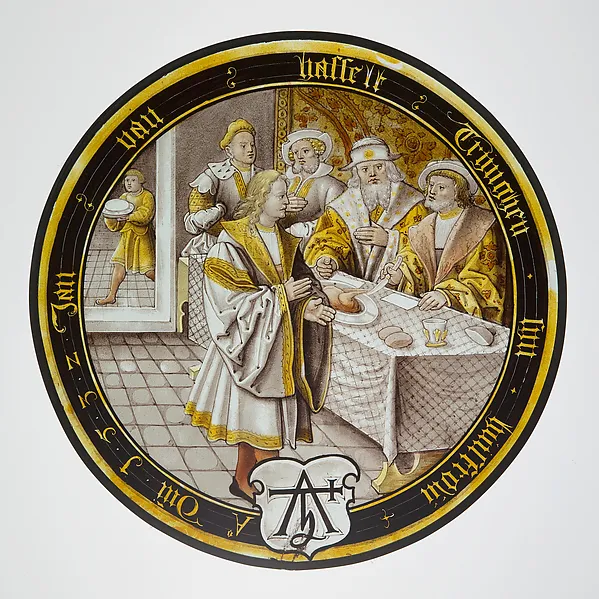
Psalm 144:1-4 · A Psalm of DavidMy Strength, and What Is Man
1Blessed be the LORD my strength, which teacheth my hands to war, and my fingers to fight: 2My goodness, and my fortress; my high tower, and my deliverer; my shield, and he in whom I trust; who subdueth my people under me. 3LORD, what is man, that thou takest knowledge of him! or the son of man, that thou makest account of him! 4Man is like to vanity: his days are as a shadow that passeth away.
The psalm opens with a word that quietly governs everything after it: Blessed be the LORD my strength, which teacheth my hands to war, and my fingers to fight. David is a soldier-king, a man whose survival has depended on what his hands could do - and the striking thing is that he does not claim the skill. He says it was taught to him. Not merely that God gave him strength, but that God instructed his very fingers, drilled the reflexes, shaped the competence he has spent his life relying on.
The phrasing keeps God close to the smallest, most practical thing about him. It would have been easy to thank God in general terms and keep the credit for the craft itself; David does the opposite, tracing even his hard-won expertise back to its real source. This is not a celebration of violence for its own sake - the rest of the psalm yearns openly for peace and flourishing. It is the confession of a man who has noticed that nothing he is good at originated with him.
The strength to stand, and the skill to use it, were both received.
After the cascade of titles - strength, fortress, high tower, deliverer, shield - the psalm wheels around to look at the one doing the praising, and the contrast is stark: Man is like to vanity: his days are as a shadow that passeth away (v. 4). The word rendered vanity means a breath, a vapour, the thing you cannot hold; and a shadow that passeth away is not even the solid object but the moving shade it throws, here and gone as the sun shifts.
David is not being morbid. He is setting his own fleetingness against the permanence of the God he has just named, and feeling the full weight of the question in verse 3. If man is this brief, this insubstantial, why would the eternal God take knowledge of him, account of him? The wonder of the psalm lives exactly in that gap - between a creature like a passing shadow and a God who bends the heavens to notice him.
It is a thought that could crush a person; in David's hands it becomes a reason to pray, because the same God who sees how small we are is the God who has chosen, astonishingly, to care.
Psalm 144:5-11Bow Thy Heavens, and Come Down
5Bow thy heavens, O LORD, and come down: touch the mountains, and they shall smoke. 6Cast forth lightning, and scatter them: shoot out thine arrows, and destroy them. 7Send thine hand from above; rid me, and deliver me out of great waters, from the hand of strange children; 8Whose mouth speaketh vanity, and their right hand is a right hand of falsehood. 9I will sing a new song unto thee, O God: upon a psaltery and an instrument of ten strings will I sing praises unto thee. 10It is he that giveth salvation unto kings: who delivereth David his servant from the hurtful sword. 11Rid me, and deliver me from the hand of strange children, whose mouth speaketh vanity, and their right hand is a right hand of falsehood:
The prayer for rescue is vivid and physical: Send thine hand from above; rid me, and deliver me out of great waters, from the hand of strange children (v. 7). Two pictures of danger stand side by side. There are the great waters - the deep, the flood, the chaos that swallows and drowns, the oldest image in Scripture for being utterly overwhelmed and beyond self-rescue. And there are the strange children, described in the next breath as those whose mouth speaketh vanity, and their right hand is a right hand of falsehood (v. 8).
The danger is not only the impersonal flood; it is people who lie - whose words are empty and whose solemn gestures, the lifted right hand of an oath, are perjury. David is hemmed in by both the overwhelming and the deceitful, and his prayer reaches above both: send thine hand from above. The hand he asks for is the only one strong enough to reach down into deep water and pull a drowning man out.
He has run out of the resources of his own hand, skilled as it is; what he needs now is the hand of God lowered into the flood.
Before the rescue has even come, David is already tuning his instrument: I will sing a new song unto thee, O God: upon a psaltery and an instrument of ten strings will I sing praises unto thee (v. 9). The vow of a new song is one of the recurring movements of the Psalms - a fresh deliverance calls for a fresh praise, because the God who rescues is never merely repeating Himself. And notice that the song is promised in the middle of the danger, not after it.
David is so sure of the God he has been naming - the rock, the deliverer, the goodness, the hand from above - that he prepares the music while the strange children are still pressing in. Verse 10 names the ground of that confidence plainly: It is he that giveth salvation unto kings: who delivereth David his servant from the hurtful sword. David has been delivered before; the sword that should have killed him did not, and he knows whose doing that was.
So the new song is not wishful thinking. It is the considered response of a man who has a long memory of being saved, and who reaches for his harp in the confidence that he will have reason to play it again.
Psalm 144:12-15Happy Is That People, Whose God Is the LORD
12That our sons may be as plants grown up in their youth; that our daughters may be as corner stones, polished after the similitude of a palace: 13That our garners may be full, affording all manner of store: that our sheep may bring forth thousands and ten thousands in our streets: 14That our oxen may be strong to labour; that there be no breaking in, nor going out; that there be no complaining in our streets. 15Happy is that people, that is in such a case: yea, happy is that people, whose God is the LORD.
The psalm that began on a battlefield ends with a picture of peace so domestic it is almost startling. The prayer is no longer for the scattering of enemies but for the quiet flourishing of a whole people, and it is built out of images of growth and beauty: That our sons may be as plants grown up in their youth; that our daughters may be as corner stones, polished after the similitude of a palace (v. 12).
The sons are plants - living, green, growing tall and strong, full of vigour and promise. The daughters are corner stones, and the comparison is high praise: the corner stone is the most carefully shaped and load-bearing stone in a building, here polished after the similitude of a palace, cut and finished with the elegance of a royal house. Both images carry dignity. The next two verses widen the picture - garners… full, flocks multiplying by the thousand, oxen strong to labour, and then the hush of true security: no breaking in, nor going out, no raiders at the wall, no exile from the gate, no complaining in our streets.
This is what the warrior was fighting for all along. Not conquest, but a settled, fruitful, peaceful common life - the kind of ordinary flourishing that only the deliverance of God can finally secure.
Research trail
Sources & further study
These references support the historical, linguistic, manuscript, and contextual notes in this chapter. Scripture remains the primary text; external sources are provided so readers can inspect the research directly.
- Psalm 144 - Translators' NotesThe NET Bible's detailed footnotes on Psalm 144 - the “rock” imagery behind “my strength” in verse 1, the meaning of “strange children” and their lying “right hand” in verses 7-8, and the agricultural pictures of flourishing in verses 12-14.
- Psalm 144 · Hebrew + classical Jewish commentaryThe Hebrew text of Psalm 144 with Rashi, Ibn Ezra, and other classical commentators side by side - useful for tsuri (v. 1, “my rock,” rendered “my strength”), for chasdi (v. 2, the steadfast love behind “my goodness”), and for the dependence of verses 3-4 on Psalm 8.
- Psalm 144 ↔ Psalm 8 · Hebrews 2 · John 1Traces the threads tying Psalm 144 to the rest of Scripture - the “what is man” of verses 3-4 drawn from Psalm 8 and taken up in Hebrews 2:6-9, and the cry for God to “come down” (v. 5) that the Gospels answer in the Word made flesh (John 1:14).
Where this echoes in Scripture
My Strength, and What Is Man
- Psalm 8:4What is man, that thou art mindful of him? and the son of man, that thou visitest him?The wonder David sings again in verses 3-4 - the smallness of man before the God who notices him.
- Hebrews 2:6-9What is man, that thou art mindful of him?... But we see Jesus... crowned with glory and honour.The unanswered question of verse 3 taken up and answered in the Son of man, crowned.
- Psalm 18:2The LORD is my rock, and my fortress, and my deliverer; my God, my strength, in whom I will trust.The same pile of refuge-names as verses 1-2 - God as the rock under every other title.
- 1 Corinthians 10:4they drank of that spiritual Rock that followed them: and that Rock was Christ.The rock behind “my strength” (v. 1) given a name in the One the apostles preached.
Bow Thy Heavens, and Come Down
- John 6:38For I came down from heaven, not to do mine own will, but the will of him that sent me.The plea of verse 5 - “come down” - answered in the One who said He had done exactly that.
- John 1:14And the Word was made flesh, and dwelt among us... full of grace and truth.The heavens bowed and God come down, not in fire on a mountain but in flesh among us.
- Psalm 18:9He bowed the heavens also, and came down: and darkness was under his feet.The same image David reaches for in verse 5 - God parting heaven to come where the trouble is.
- Psalm 69:1-2Save me, O God; for the waters are come in unto my soul... I am come into deep waters.The “great waters” of verse 7 - the oldest image for being overwhelmed beyond self-rescue.
- Psalm 40:3And he hath put a new song in my mouth, even praise unto our God.The “new song” David vows in verse 9 - fresh deliverance calling for fresh praise.
Happy Is That People, Whose God Is the LORD
- Psalm 33:12Blessed is the nation whose God is the LORD; and the people whom he hath chosen for his own inheritance.The same verdict as verse 15 - true blessing is to have the LORD for God.
- Matthew 5:3-6Blessed are the poor in spirit... Blessed are they which do hunger and thirst after righteousness: for they shall be filled.The relocation of happiness in verse 15, spoken again on the mountain - blessedness in God, not in the full storehouse.
- Psalm 128:1-3Blessed is every one that feareth the LORD... thy children like olive plants round about thy table.The flourishing household of verse 12 - sons and daughters as the fruit of a God-fearing people.
- Ephesians 2:20Jesus Christ himself being the chief corner stone.The “corner stone” image of verse 12 - the most carefully shaped, load-bearing stone, given a name.