Psalms 93
Psalm 93 belongs to a small cluster of psalms (93, and 95-99) that scholars call the enthronement psalms - songs whose opening note is the kingship of God. It is among the shortest in the whole book, just five verses, and it carries no superscription naming an author or an occasion. It does not need one. It begins the way a herald announces a coronation, with the news that everything else depends upon: The LORD reigneth, he is clothed with majesty. What follows is not argument but acclamation - a steady, rising hymn to the One whose throne no flood can shake.1
Tap any highlighted phrase to jump to the commentary that unpacks it.
Psalm 93:1-2The LORD Reigneth
1The LORD reigneth, he is clothed with majesty; the LORD is clothed with strength, wherewith he hath girded himself: the world also is stablished, that it cannot be moved. 2Thy throne is established of old: thou art from everlasting.
The psalm opens the way a herald opens a coronation, with the one piece of news everything else hangs upon: The LORD reigneth. It is a finished fact, not a hope or a forecast - not will reign, not may reign, but reigns, here and now.
And the very next thing the psalm tells us is what that reign looks like: he is clothed with majesty; the LORD is clothed with strength, wherewith he hath girded himself. The image is of a king robing for his throne. Majesty is the splendour He wears like a garment; strength is the belt with which He girds Himself, the way a worker or a warrior cinches up his robe to act.
Notice that this is not power held in reserve and hidden away - it is power worn, displayed, visible. He is robed and ready, dressed for rule, and His reign is something the eye of faith can actually see. Everything the psalm goes on to say - the world held firm, the floods overmastered, the holy house - flows from this one robed and reigning figure.1
Because the LORD reigns, the psalm can make an astonishing claim about the world itself: the world also is stablished, that it cannot be moved. The stability of creation is not an accident of physics or a lucky balance that might one day tip; it rests on the throne. The world stands firm because its King does.
This is worth pausing over, because it reverses the way we usually feel about things. When trouble comes we feel as though the ground is shifting and the throne is the doubtful thing - is anyone really in charge? The psalm insists on exactly the opposite order: the throne is the fixed point, and the world is steadied by it. The Hebrew underneath “stablished” here will reappear in the very next verse as the word for the “established” throne - one and the same verb binding the firmness of the world to the firmness of the One who rules it.
A reign that cannot be shaken upholds a creation that cannot be moved.
Psalm 93:3-5Mightier Than the Waves of the Sea
3The floods have lifted up, O LORD, the floods have lifted up their voice; the floods lift up their waves. 4The LORD on high is mightier than the noise of many waters, yea, than the mighty waves of the sea. 5Thy testimonies are very sure: holiness becometh thine house, O LORD, for ever.
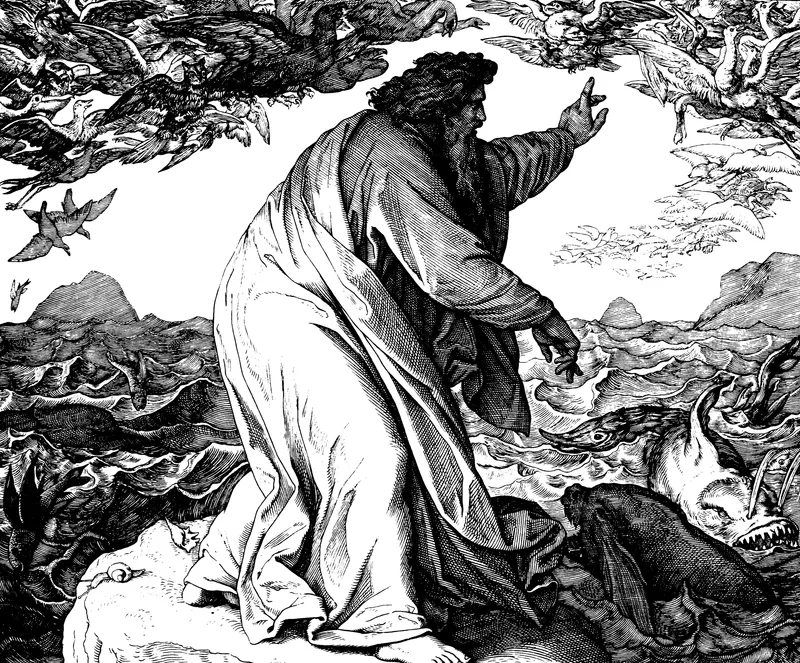
Now the psalm lets the threat speak, and it does so with mounting force. Three times in a single verse the waters rise: The floods have lifted up, O LORD, the floods have lifted up their voice; the floods lift up their waves. You can hear the swell building - first they lift up, then they lift up their voice, then their waves - each phrase a little higher than the last, like breakers rolling in.
In the imagination of the ancient world the roaring sea was the great emblem of chaos: the untamed, formless, dangerous power that resists all order and seems to answer to no one. The psalm does not pretend this power is small or imaginary. It grants the floods their full voice; it lets them roar.
That honesty is part of the psalm's strength. It does not steady the heart by shrinking the threat. The waters really do lift up, and lift up, and lift up - and the reader who has felt life's chaos rising knows the sound of it. The question the psalm presses is not whether the flood is loud, but who is louder.
Having silenced the flood, the psalm could have ended with a shout of triumph. Instead it turns, in its final line, toward something quieter and deeper: Thy testimonies are very sure: holiness becometh thine house, O LORD, for ever. Two things are set side by side here, and together they tell us what a reign like this is finally for.
First, His testimonies are very sure - His revealed words, His instruction, the things He has declared, are as firm and trustworthy as the throne itself. The same God whose rule cannot be moved has spoken words that cannot fail; the stability of the throne becomes the reliability of His word.
And second, holiness becometh thine house. The word “becometh” means “is fitting, is suitable, belongs to” - holiness is what suits the house of such a King, the way a robe suits a monarch. A reign this secure does not issue merely in the silencing of enemies; it issues in a holy dwelling, a place set apart for God, fitting for His presence, for ever. The psalm that began with the King robed in majesty ends with the King at home in a house clothed in holiness.
Power and purity are not in tension here; the same God who is mighty over the sea is holy in His house, and both, from first to last, are simply who He is.
Research trail
Sources & further study
These references support the historical, linguistic, manuscript, and contextual notes in this chapter. Scripture remains the primary text; external sources are provided so readers can inspect the research directly.
- Psalm 93 - Translators' NotesThe NET Bible's detailed footnotes on Psalm 93 - the enthronement force of The LORD reigneth, the imagery of the roaring “floods” as the sea of chaos lifting its voice, and the meaning of God's testimonies being very sure and holiness becoming His house.
- Psalm 93 · Hebrew + classical Jewish commentaryThe Hebrew text of Psalm 93 with Rashi, Ibn Ezra, and other classical commentators side by side - useful for malak (v. 1, “reigneth”), for the verb kun that ties the world that is “stablished” (v. 1) to the throne that is “established” (v. 2), and for the threefold rising of the neharot (v. 3, the “floods”) against the reign of God.
- Psalm 93 ↔ Hebrews 1 · Mark 4 · Revelation 11Traces the threads tying Psalm 93 to the New Testament - the everlasting throne of verse 2 addressed to the Son (Heb. 1:8), the LORD mightier than the… waves of the sea (v. 4) answered when Jesus stills the storm (Mark 4:39-41), and the cry The LORD reigneth (v. 1) echoed in the kingdoms of the world becoming the kingdom of the Lord (Rev. 11:15).
Where this echoes in Scripture
The LORD Reigneth
- Hebrews 1:8But unto the Son he saith, Thy throne, O God, is for ever and ever: a sceptre of righteousness is the sceptre of thy kingdom.The everlasting throne of verse 2 addressed directly to the Son.
- Psalm 96:10Say among the heathen that the LORD reigneth: the world also shall be established that it shall not be moved.A companion enthronement psalm with verse 1's exact words - the LORD reigns, the world cannot be moved.
- Psalm 45:6Thy throne, O God, is for ever and ever: the sceptre of thy kingdom is a right sceptre.The royal throne “for ever” that Hebrews 1:8 applies to the Son - the same hope as verse 2.
- Revelation 11:15The kingdoms of this world are become the kingdoms of our Lord, and of his Christ; and he shall reign for ever and ever.The cry “The LORD reigneth” (v. 1) carried to its end in the worship of heaven.
Mightier Than the Waves of the Sea
- Mark 4:39-41he arose, and rebuked the wind, and said unto the sea, Peace, be still... What manner of man is this, that even the wind and the sea obey him?The LORD “mightier than the… waves of the sea” (v. 4) stilling a real storm with a word.
- Psalm 29:3, 10The voice of the LORD is upon the waters... The LORD sitteth upon the flood; yea, the LORD sitteth King for ever.The LORD enthroned over the roaring waters - the same picture as the floods of verses 3-4.
- Psalm 65:7Which stilleth the noise of the seas, the noise of their waves, and the tumult of the people.God stilling the very “noise” of the sea that verse 4 says He is mightier than.
- Job 38:11Hitherto shalt thou come, but no further: and here shall thy proud waves be stayed.The Creator setting a bound for the proud waves - His mastery over the sea of verses 3-4.
- Revelation 21:27there shall in no wise enter into it any thing that defileth... but they which are written in the Lamb's book of life.The holiness that “becometh” God's house (v. 5) carried to the holy city at the end.