Psalms 94
Psalm 94 is the prayer you pray when the news is bad and stays bad - when the people doing the harm seem untouchable and the people being harmed seem forgotten. It opens not with a complaint to the world but with an appeal to heaven: O LORD God, to whom vengeance belongeth; O God, to whom vengeance belongeth, shew thyself (v. 1).
Notice the careful thing the psalmist does even in his anger. He does not pick up the sword himself. He hands it back to the One it belongs to, and asks the judge of the earth to rise.
This is the discipline of biblical lament: it refuses both silence and revenge, and chooses instead to lay the whole weight of injustice on the God who alone can carry it.1
Tap any highlighted phrase to jump to the commentary that unpacks it.
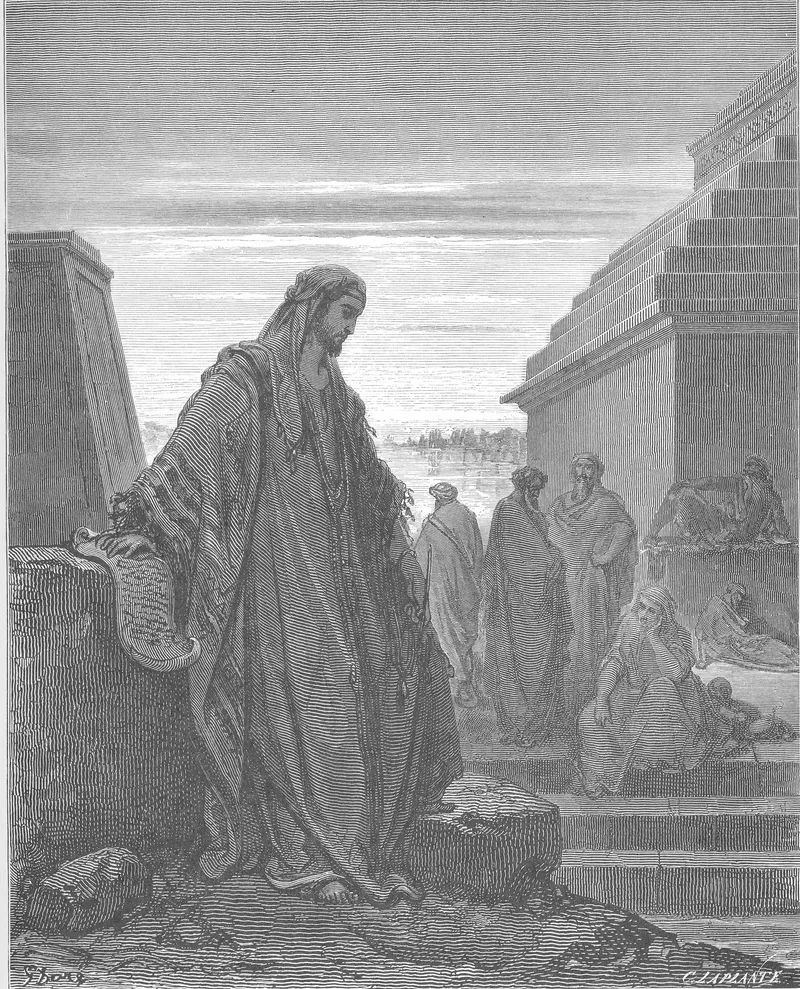
Psalm 94:1-7O LORD God, to Whom Vengeance Belongeth
1O Lord God, to whom vengeance belongeth; O God, to whom vengeance belongeth, shew thyself. 2Lift up thyself, thou judge of the earth: render a reward to the proud. 3LORD, how long shall the wicked, how long shall the wicked triumph? 4How long shall they utter and speak hard things? and all the workers of iniquity boast themselves? 5They break in pieces thy people, O LORD, and afflict thine heritage. 6They slay the widow and the stranger, and murder the fatherless. 7Yet they say, The LORD shall not see, neither shall the God of Jacob regard it.
The psalm opens with a title for God that we do not often dare to say aloud: O LORD God, to whom vengeance belongeth. It is repeated, as if to make sure we hear it - O God, to whom vengeance belongeth, shew thyself.
The word can frighten us, because we know what vengeance looks like in human hands: blind, excessive, feeding on itself. But that is exactly why the psalmist sets it where he does. Vengeance belongeth - it has an owner, and the owner is not us. The whole point of verse 1 is that the psalmist will not take redress into his own hands; he refers it upward, to the only One who can weigh a wrong perfectly and repay it justly.
And then the verb: shew thyself. The Hebrew is the language of light breaking out - shine forth, appear. The cry is not “let me get even” but “God, become visible; let the Judge of all the earth be seen to do right.”
This is what separates lament from bitterness. Bitterness clutches the wrong and nurses it. Lament hands the wrong to God and asks Him to act. The first is poison; the second is prayer.
Twice the question breaks out, and the repetition is the sound of an ache that will not be quieted: LORD, how long shall the wicked, how long shall the wicked triumph? (v. 3).
This is not idle impatience. It is the specific agony of watching evil not merely exist but triumph - succeed, prosper, swagger. The wicked utter and speak hard things and boast themselves (v. 4); they are not hiding, they are loud, and their loudness is part of the wound.
How long is one of the most honest prayers in Scripture, and it is striking how often the faithful pray it. It is not a failure of faith to ask it; it is faith refusing to call evil normal. The believer who prays how long has not stopped trusting God - the very form of the question is addressed to God, and assumes He both hears it and will one day answer it. To stop asking how long would be to make peace with the triumph of the wicked. The psalm will not do that, and neither should we.
The psalm now names exactly who is being hurt, and the list is deliberate: They break in pieces thy people, O LORD, and afflict thine heritage. They slay the widow and the stranger, and murder the fatherless (vv. 5-6).
The widow, the stranger, the fatherless - these three appear together again and again in the Law and the Prophets, because they were the people with no natural protector. No husband, no family network, no citizenship to appeal to. They were the test case of a society's justice, the ones whose treatment revealed what a people truly worshipped.
And the psalmist notices something theological in the violence done to them: the victims are thy people, God's own heritage. To strike them is not merely cruelty; it is an assault on what God has claimed as His. The God who repeatedly commanded His people to defend the widow and the fatherless does not look away when they are the ones bleeding. Their helplessness, far from putting them beneath God's notice, places them squarely at the centre of His concern.
Verse 7 lays bare the engine of the whole machine of injustice: Yet they say, The LORD shall not see, neither shall the God of Jacob regard it.
Here is the creed beneath the cruelty. The wicked are not, most of them, theoretical atheists; they are practical ones. They may grant that God exists in some distant way, but they live as though He has stopped paying attention - as though the cries from below never reach the ears above. Every act of hidden oppression rests on this assumption: no one is watching. It is the lie the powerful tell themselves in order to keep doing what they do.
And the psalmist has located it precisely, because he knows that to answer injustice you must answer its root, and its root is not merely bad behaviour but a false belief about God. If The LORD shall not see were true, the proud would be safe. The next verses exist to dismantle exactly that sentence - to insist, against every appearance, that the God of Jacob does regard it, has regarded it all along, and will not regard it forever in silence.
Psalm 94:8-11He That Planted the Ear, Shall He Not Hear?
8Understand, ye brutish among the people: and ye fools, when will ye be wise? 9He that planted the ear, shall he not hear? he that formed the eye, shall he not see? 10He that chastiseth the heathen, shall not he correct? he that teacheth man knowledge, shall not he know? 11The LORD knoweth the thoughts of man, that they are vanity.
Having exposed the lie - The LORD shall not see - the psalm turns and addresses the liars directly: Understand, ye brutish among the people: and ye fools, when will ye be wise? (v. 8).
The words are blunt. Brutish means beast-like, dull, reasoning no higher than an animal; fools is the Bible's word for those who have closed their minds to God. And notice the charge: their problem is not a lack of intelligence but a refusal to think things through. They have never followed their own assumption to its obvious conclusion. They imagine a God who made the world but cannot perceive it - who built the instrument and is somehow deafer than what He built.
The psalmist is about to force the thought they have refused to think, and he frames it as an appeal to reason itself: when will ye be wise? Wisdom, in the Bible, often begins not with new information but with finally drawing the right conclusion from what one already knows. The fool has all the evidence he needs; he has simply declined to reason from it.
Now comes the answer, and it is one of the most quietly devastating arguments in all of Scripture: He that planted the ear, shall he not hear? he that formed the eye, shall he not see? (v. 9).
The logic is impossible to escape. The One who designed the ear - who thought up the very idea of hearing, who fashioned that intricate instrument for catching sound - could He Himself be deaf? The One who formed the eye, who invented seeing, who built into a fold of tissue the power to gather light into sight - could He Himself be blind? It is absurd. A maker is not less than what he makes. The Giver of every faculty possesses, infinitely and originally, the very thing He gave.
Verse 10 presses the same point along two more lines: He that chastiseth the heathen, shall not he correct? he that teacheth man knowledge, shall not he know? The One who teaches the human race everything it knows is not Himself ignorant. The whole argument turns the wicked's confidence inside out. They counted on a God who could not perceive their deeds; the psalmist shows them a God from whose perception nothing whatever can hide, because perception itself is His invention and His gift.
The argument lands in a verdict: The LORD knoweth the thoughts of man, that they are vanity (v. 11).
Two things are said at once. First, the reach of God's knowing - He knows not merely our deeds but our thoughts, the secret machinery of the mind that no human eye can read. The proud assumed God could not see their actions; in fact He sees deeper than that, all the way down to the calculations behind them.
And second, the weight of those thoughts once God has weighed them: they are vanity - a breath, a vapour, empty. The schemes of the wicked, which loom so large and seem so unstoppable from below, are revealed for what they are when set before God: insubstantial, passing, already as good as gone. This is the great relief hidden in God's omniscience. The same knowing that strips the proud of their secrecy also strips their plots of their terror.
What feels invincible to the oppressed is, in God's sight, already vapour. The God who sees all also sees through all.
Psalm 94:12-19Blessed Is the Man Whom Thou Chastenest
12Blessed is the man whom thou chastenest, O LORD, and teachest him out of thy law; 13That thou mayest give him rest from the days of adversity, until the pit be digged for the wicked. 14For the LORD will not cast off his people, neither will he forsake his inheritance. 15But judgment shall return unto righteousness: and all the upright in heart shall follow it. 16Who will rise up for me against the evildoers? or who will stand up for me against the workers of iniquity? 17Unless the LORD had been my help, my soul had almost dwelt in silence. 18When I said, My foot slippeth; thy mercy, O LORD, held me up. 19In the multitude of my thoughts within me thy comforts delight my soul.
And now the psalm turns, and the turn is astonishing. We have been in a courtroom, crying for the Judge to rise against the proud - and suddenly the tone goes quiet and personal, and the word the psalmist reaches for is not wrath but blessed: Blessed is the man whom thou chastenest, O LORD, and teachest him out of thy law (v. 12).
The same God who will deal with the wicked is, right now, dealing with His own - but the dealing is utterly different in kind. To the proud He is a Judge; to His own He is a teacher. The word translated chasten is the language of a parent training a child - correction aimed not at destruction but at growth, paired immediately with teachest him out of thy law.
This is the discipline of love, and the psalmist calls the one who receives it blessed.
It reframes the whole psalm. The believer who has been crying how long is invited to see that the very hardship he endures may not be God's absence but God's schooling - that while the wicked rush unchecked toward the pit, the people of God are being patiently shaped, corrected, taught, and given (v. 13) a settled rest in the very middle of the days of adversity.
The reason the discipline can be received as blessing and not abandonment is given in the next line, and it is one of the great anchors of the psalm: For the LORD will not cast off his people, neither will he forsake his inheritance (v. 14).
Here is the bedrock under everything. Whatever the days of adversity look like, however long the wicked seem to triumph, one thing does not change: God does not let go of His own. He may correct them; He will not cast them off. He may let them pass through hardship; He will not forsake them in it. The two halves of the verse say the same thing twice, the way you repeat a promise to someone who is struggling to believe it.
His people… his inheritance - they belong to Him, and what belongs to God is not discarded. This is why verse 15 can look forward with confidence: judgment shall return unto righteousness. The present crookedness is not permanent; the scales that look so tilted now will swing back true. The God who will not abandon His people will also not abandon justice. Both will be vindicated together, and all the upright in heart shall follow it.
The psalm now drops from the general to the intensely personal, and admits how close the edge had been: Who will rise up for me against the evildoers? (v. 16) - the question of a man who has looked around for a human champion and found none.
And then the confession: Unless the LORD had been my help, my soul had almost dwelt in silence (v. 17). The phrase dwelt in silence is the language of the grave, of the place where voices stop. The psalmist is telling us how near he came to going under entirely - not almost discouraged, but almost silenced, almost finished.
This is one of the most honest moments in the Psalms. The man who has been arguing so confidently that God sees and hears now admits that he himself was, not long ago, at the very brink. Faith is not the absence of such moments; it is what catches us in them.
Notice the word that turns the sentence: Unless. The whole weight of his survival hangs on that one word and what follows it - not on his own strength, his own grip, his own resolve, but on the LORD having been my help. He did not hold on. He was held.
And here is how the holding happened: When I said, My foot slippeth; thy mercy, O LORD, held me up (v. 18).
The picture is precise and gentle. A foot losing its grip on a steep place; the lurch of going down; and then, at the exact moment of slipping, something underneath that catches and steadies. The psalmist does not say his own footing improved, or that he found a better hold. He says thy mercy… held me up. The catching was not his doing; it was God's mercy reaching in at the moment of the slip.
There is deep comfort in the timing of this verse. The help did not come before the danger, sparing him the slip altogether; it came in the slip, at the worst of it - when I said, My foot slippeth. Many believers can testify to exactly this: not that God kept them from every stumble, but that at the moment they were sure they were going down, something held. The hand that holds is mercy - not earned, not deserved, simply given. And it is enough. A slipping foot and an unfailing mercy are not an even match; the mercy wins.
The personal movement reaches its rest in verse 19, and it is one of the loveliest lines in the Psalter: In the multitude of my thoughts within me thy comforts delight my soul.
The phrase the multitude of my thoughts names something every anxious person knows - the crowding, swarming press of worries that fills the mind in the dark, thought tumbling over thought until there seems no room for anything else. The psalmist does not say God emptied his mind of them. He says that into that very crowd of anxious thoughts came God's comforts - and not merely to calm him, but to delight his soul.
This is more than relief; it is gladness arriving in the middle of the turmoil. The comforts of God do not wait for the worries to subside; they come in among them and outweigh them. Note the plural: comforts. Not one consolation but many - God's promises, His presence, His past faithfulness, the steady truths the psalm has been rehearsing - arriving together to a soul that thought it could only churn. The man who almost dwelt in silence is now a man whose soul is delighted, and nothing in his circumstances has been said to change.
What changed is that the comforts of God came in.
Psalm 94:20-23The LORD Is the Rock of My Refuge
20Shall the throne of iniquity have fellowship with thee, which frameth mischief by a law? 21They gather themselves together against the soul of the righteous, and condemn the innocent blood. 22But the LORD is my defence; and my God is the rock of my refuge. 23And he shall bring upon them their own iniquity, and shall cut them off in their own wickedness; yea, the LORD our God shall cut them off.
The psalm returns to the wicked one last time, but now with a sharper eye, and it names a particular kind of evil: Shall the throne of iniquity have fellowship with thee, which frameth mischief by a law? (v. 20).
This is not the violence of the mob but the violence of the magistrate - injustice dressed in the robes of authority, evil that frameth mischief by a law. It is the most dangerous kind, because it wears the very clothing meant to restrain it: the throne, the statute, the official seal.
The verse asks a question that answers itself. Can such a throne have fellowship with God - can corruption that hides behind legality claim Him as its partner? The unspoken answer is a thunderous no. God will not be made an accomplice to injustice merely because it has been made legal.
Verse 21 shows the machinery at work: they gather themselves together against the soul of the righteous, and condemn the innocent blood - the courts turned into weapons, the innocent condemned by due process. The psalm refuses to grant such a system God's blessing. A law that frames mischief is not thereby holy; it is iniquity with better paperwork, and God is no partner to it.
Against the throne of iniquity the psalmist sets his settled refuge: But the LORD is my defence; and my God is the rock of my refuge (v. 22).
The contrast is the whole psalm in miniature. There is a throne, and there is a Rock. The throne of iniquity has power for a while; the Rock has it forever. And the psalmist has chosen where to stand. He does not say the wicked are not dangerous; he says he has a stronger shelter than their danger.
Then the psalm closes by handing the outcome back to God, exactly where it began: And he shall bring upon them their own iniquity, and shall cut them off in their own wickedness; yea, the LORD our God shall cut them off (v. 23). Notice the justice in the wording. God brings upon them their own iniquity - their evil recoils onto themselves; the pit they dug for others (v. 13) becomes their own. This is not arbitrary vengeance but the moral order righting itself under God's hand.
And the psalm ends not with the psalmist striking a blow but with a triple naming of the One who will: the LORD our God shall cut them off. The cry of verse 1 - shew thyself - is answered here in confident faith. The God to whom vengeance belongs will repay; the God who is the Rock will shelter. The same hand does both.
Research trail
Sources & further study
These references support the historical, linguistic, manuscript, and contextual notes in this chapter. Scripture remains the primary text; external sources are provided so readers can inspect the research directly.
- Psalm 94 - Translators' NotesThe NET Bible's detailed footnotes on Psalm 94 - the legal force of “vengeance” as judicial redress rather than private revenge in verse 1, the rhetorical questions of verses 9-10, and the shift from public lament to personal comfort at verse 12.
- Psalm 94 · Hebrew + classical Jewish commentaryThe Hebrew text of Psalm 94 with Rashi, Ibn Ezra, and other classical commentators side by side - useful for neqamah (v. 1, “vengeance,” the redress that belongs to God), for yasar (v. 12, “chasten,” the discipline of a father), and for tsur (v. 22, the “rock” of refuge).
- Psalm 94 ↔ Romans 12 · 1 Corinthians 3 · Hebrews 12 · Revelation 6Traces the threads tying Psalm 94 to the rest of Scripture - the vengeance God keeps in His own hand (v. 1) reaffirmed in Romans 12:19 and Hebrews 10:30, the verdict on human thoughts (v. 11) quoted by Paul in 1 Corinthians 3:20, and the cry how long (v. 3) taken up by the martyrs in Revelation 6:10.
Where this echoes in Scripture
O LORD God, to Whom Vengeance Belongeth
- Romans 12:19avenge not yourselves... Vengeance is mine; I will repay, saith the Lord.The principle of verse 1 made a command - the believer leaves redress to the God to whom it belongs.
- Deuteronomy 32:35To me belongeth vengeance, and recompence... for the day of their calamity is at hand.The older text behind verse 1 - vengeance as God's own prerogative, later quoted by Paul and Hebrews.
- Revelation 6:10How long, O Lord, holy and true, dost thou not judge and avenge our blood?The cry of verse 3 - “how long” - taken up by the martyrs before God's throne.
- James 1:27Pure religion... is this, To visit the fatherless and widows in their affliction.The widow and fatherless of verses 5-6 - those God watches over, and calls His people to defend.
He That Planted the Ear, Shall He Not Hear?
- 1 Corinthians 3:19-20The Lord knoweth the thoughts of the wise, that they are vain.Verse 11 quoted by Paul - the schemes of the worldly-wise weighed by God and found to be vapour.
- Proverbs 20:12The hearing ear, and the seeing eye, the LORD hath made even both of them.The premise of verse 9 stated plainly - the senses are God's own handiwork.
- John 2:24-25he knew all men... he knew what was in man.The thought-reading knowledge of verse 11, met in the One who needed no testimony about man.
- Hebrews 4:13all things are naked and opened unto the eyes of him with whom we have to do.The reach of God's sight in verse 9 - nothing in creation is hidden from its Maker.
Blessed Is the Man Whom Thou Chastenest
- Hebrews 12:6-7whom the Lord loveth he chasteneth... God dealeth with you as with sons.The chastening of verse 12 read as the mark of a beloved child, not of rejection.
- John 10:28they shall never perish, neither shall any man pluck them out of my hand.The promise of verse 14 - God will not cast off His people - sealed in the hand that nothing can break.
- Psalm 73:2But as for me, my feet were almost gone; my steps had well nigh slipped.The slipping foot of verse 18 - the near-fall a sister psalm confesses in almost the same words.
- 2 Corinthians 1:3-4the God of all comfort; who comforteth us in all our tribulation.The comforts that delight the soul in verse 19 - the God who comes in among the troubled thoughts.
The LORD Is the Rock of My Refuge
- 1 Corinthians 10:4they drank of that spiritual Rock that followed them: and that Rock was Christ.The Rock of refuge in verse 22 - the shelter of God's people named by Paul as Christ.
- Psalm 18:2The LORD is my rock, and my fortress... my God, my strength, in whom I will trust.The same confession as verse 22 - God as the immovable rock the faithful hide in.
- Matthew 7:24-25a wise man, which built his house upon a rock... and it fell not.The instinct of verse 22 in a parable - the house founded on the Rock stands when the floods come.
- 2 Thessalonians 1:6-7it is a righteous thing with God to recompense tribulation to them that trouble you.The closing assurance of verse 23 - God will repay the oppressors and give rest to the troubled.