Painter of the Bible
Guido Reni
Guido Reni was the most celebrated Bolognese painter of the seventeenth century and one of the principal voices of the Italian Baroque.

Their faith
Why Guido Reni painted Christ
Guido Reni, a prominent figure of the Italian Baroque, was deeply influenced by his faith throughout his artistic career. Born in Bologna in 1575, Reni trained under the Flemish painter Denis Calvaert before immersing himself in the Carracci academy, where he learned to blend Northern European techniques with the grand themes of classical and biblical narratives. His commitment to sacred subjects is evident in his extensive body of work, which includes numerous devotional pieces that reflect the spiritual fervor of the Counter-Reformation. Reni's life was marked by a modest lifestyle, despite his significant earnings, as he dedicated much of his wealth to charitable causes, demonstrating a heart aligned with Christian values and service to others. His burial in the church of San Domenico in Bologna further signifies his deep-rooted connection to his faith and the community he cherished.
Reni's faith profoundly shaped his artistic output, as seen in masterpieces like the "Crucifixion of Saint Peter" and the "Massacre of the Innocents." These works not only showcase his technical prowess but also embody a deep reverence for biblical narratives and the human experience of suffering and redemption. His portrayal of Saint Michael Archangel, one of the most engraved religious images of the seventeenth century, exemplifies his ability to convey spiritual strength and divine protection. Through his art, Reni invites viewers to reflect on their faith and the divine, ensuring that his devotion continues to inspire and uplift all who encounter his work. His legacy as a master of sacred art endures, reminding us of the beauty and depth of Christian devotion captured on canvas.
Life & work
Guido Reni was the most celebrated Bolognese painter of the seventeenth century and one of the principal voices of the Italian Baroque. Born in Bologna in 1575, trained in the workshop of the Flemish painter Denis Calvaert before moving in his late teens to the Carracci academy founded by Ludovico, Annibale, and Agostino Carracci, he absorbed both Northern technical care and the Carracci program of restoring grand-manner figure painting on classical and biblical subjects. He worked extensively in Rome between 1601 and 1614, and then returned to Bologna where he ran the leading workshop in northern Italy until his death in 1642.
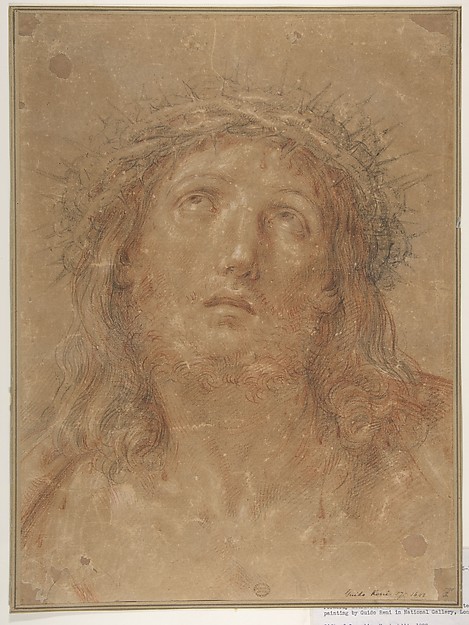
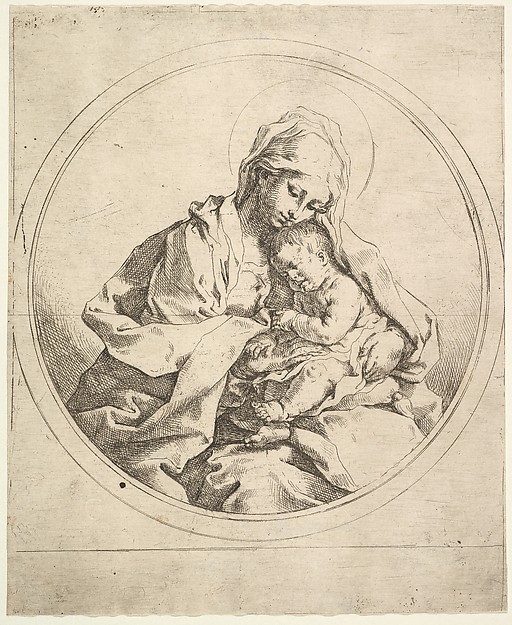
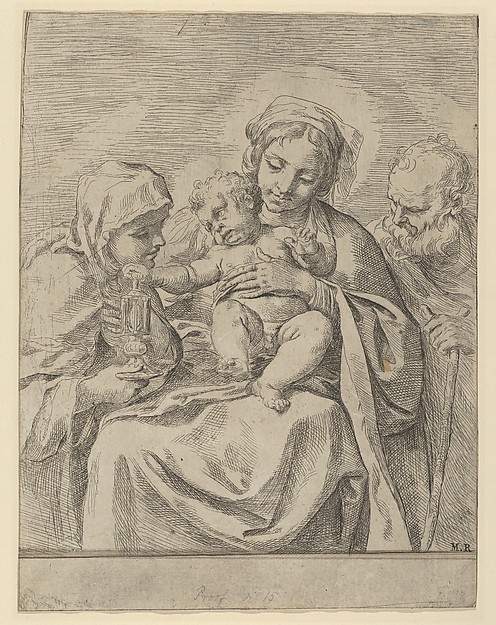
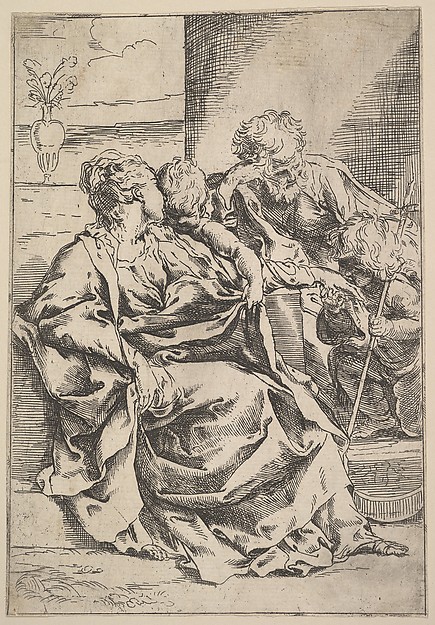
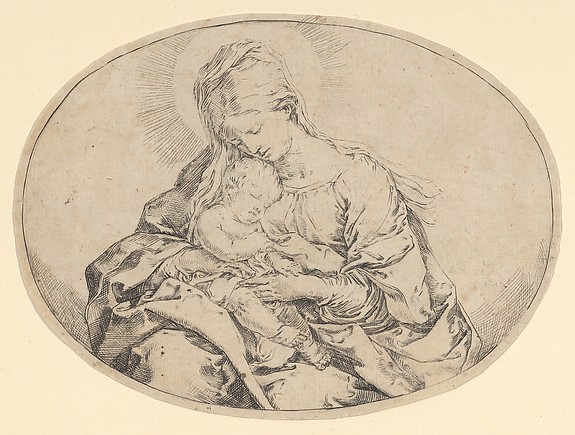
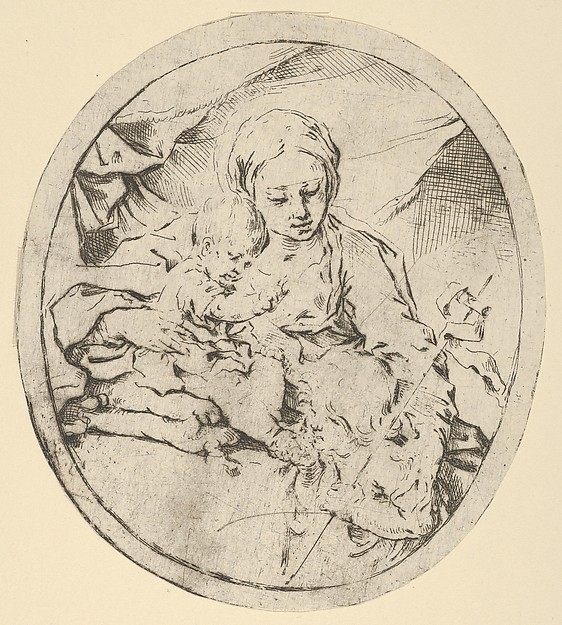
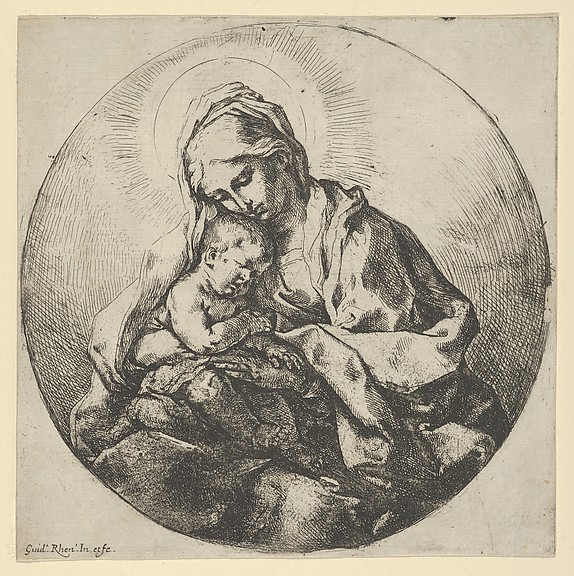
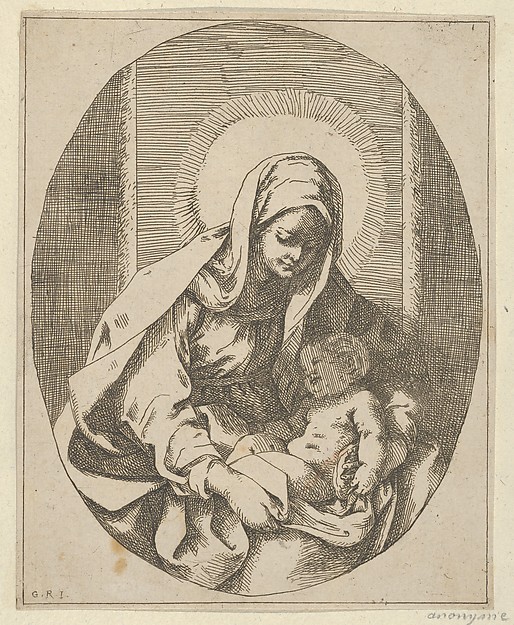
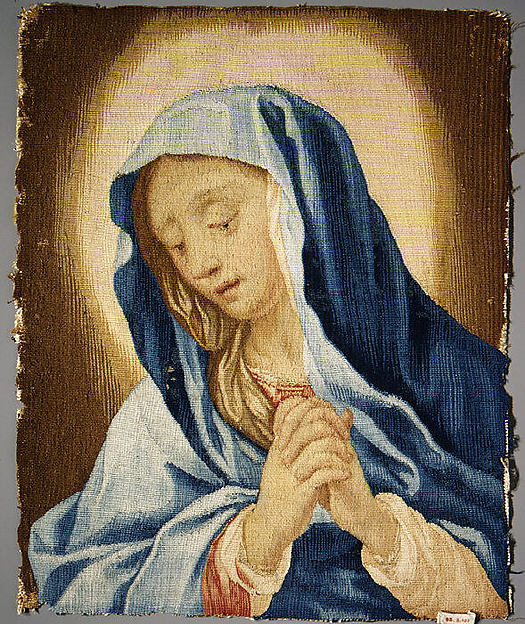
His Aurora ceiling fresco in the Casino dell'Aurora at the Palazzo Pallavicini-Rospigliosi in Rome (1614) made him famous across Europe. In Christian art his reputation rests on a long sequence of devotional and biblical pictures: the Crucifixion of Saint Peter (Vatican Pinacoteca, 1604–1605), the Massacre of the Innocents (Pinacoteca Nazionale di Bologna, 1611), the Atalanta and Hippomenes for a Neapolitan client and the related Saint Sebastian images now in Genoa, Madrid, and the Capitoline, and an entire corpus of Madonnas, Ecce Homos, Mater Dolorosas, and penitent Magdalenes that became, by repetition and engraving, the standard visual vocabulary of Italian Counter-Reformation devotion.
His late style — grayer, more spectral, the paint thinned almost to the gesso — was once treated as a sign of decline; today it is understood as a deliberate move toward an inward, almost spectral pictorial register that influenced eighteenth-century devotional painting from Naples to Vienna. His Saint Michael Archangel (Santa Maria della Concezione, Rome, 1635) is among the most engraved religious images of the entire seventeenth century.
He never married, lived modestly despite enormous earnings, and gave away most of his money — to gambling and to charity in roughly equal measure. He was buried in the church of San Domenico in Bologna.