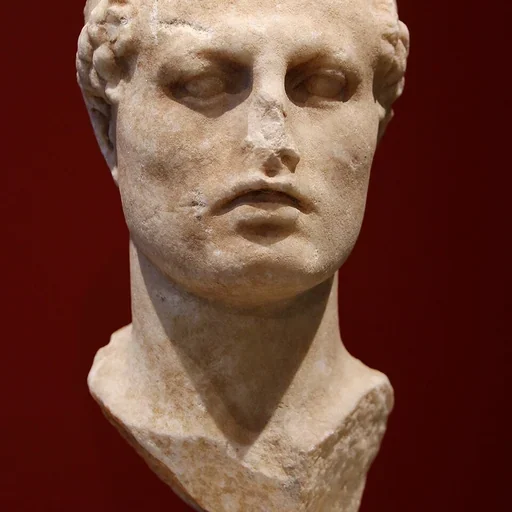
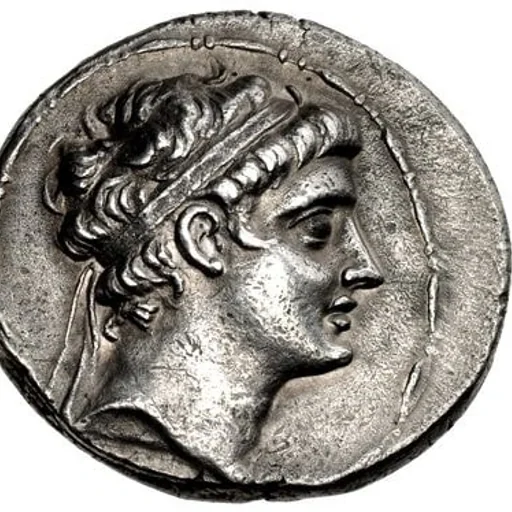
Who was Antiochus IV Epiphanes in the Bible?
Antiochus IV Epiphanes was a Greek king who outlawed the worship of the Lord and defiled the temple in Jerusalem, sparking the Maccabean revolt.
Seleucid king and persecutor
c. 215-164 BC
Antiochus IV Epiphanes was a Greek king who outlawed the worship of the Lord and defiled the temple in Jerusalem, sparking the Maccabean revolt.
Follow the reading trailBEYOND THE NAME
Antiochus IV ruled the Seleucid kingdom that descended from Alexander's empire and sought to force Greek religion and custom upon the Jewish people. He plundered the temple in Jerusalem, banned the law and circumcision, set up a pagan altar on the altar of the Lord, and killed those who clung to the covenant. His persecution provoked the uprising led by Mattathias and his sons, the Maccabees, who fought to restore the worship of the Lord.
Themes in the authored commentary
FOLLOW THE PASSAGES
These are chapter studies associated with this record. Their order follows the books and chapters, rather than a reconstructed timeline of the person’s life.
Seleucid king who plunders Jerusalem, forbids the law, and defiles the temple altar
1 Maccabees opens on a stage the size of the world. Alexander the Great pours out of Greece, shatters the Persian empire, marches to the ends of the earth, and then dies in the fullness of his power, leaving his kingdom to be torn apart by the generals who served him. Crowns multiply, wars multiply, and the writer says plainly that "evils were multiplied in the earth." Out of that long unraveling comes one man, Antiochus, called the Illustrious, whose pride will fall on the people of God like a hammer. The book is history, but it reads like a warning: empires rise and rise, and a small faithful people stands directly in their path.
Chapter overview from the authored study guide.sold the high priesthood to Jason and later accepted Menelaus's higher bid
There are chapters of Scripture that comfort, and there are chapters that warn, and this is one of the second kind. Second Maccabees 4 tells the story of how the high priesthood of Israel, the office set apart to stand before God on behalf of the whole people, was bought, sold, betrayed, and finally drenched in innocent blood. It opens with a faithful high priest, Onias, a man who defended his city and was zealous for the law of God, being repaid for his faithfulness with slander. It ends with that same good man murdered by a lie, mourned even by foreigners, while his murderer goes free and the men who told the truth are condemned to die.
Chapter overview from the authored study guide.Seleucid king whose impending persecution the author introduces to set the stage for the martyrdoms
The author distinguishes having an emotion from being ruled by it. Desire, anger, and malice may remain present, while disciplined reasoning resists their commands. David's thirst becomes the chapter's illustration.
Chapter overview from the authored study guide.tyrant who failed to break Eleazar and whom the author contrasts with the martyr's noble death
The old priest is already dead. Antiochus ordered Eleazar to eat defiling food; the man of ninety refused, and the torturers killed him for a mouthful. Now the author stops to praise him, and he reaches for the sea. Eleazar’s reason was a most skilful pilot steering the ship of piety through the storm - threats for the gale, tortures for the waves - and he never turned the rudder until he sailed into the haven of immortal victory (vv. 1-3).
Chapter overview from the authored study guide.king who attempts to persuade the youngest and last brother through their mother, then orders his death
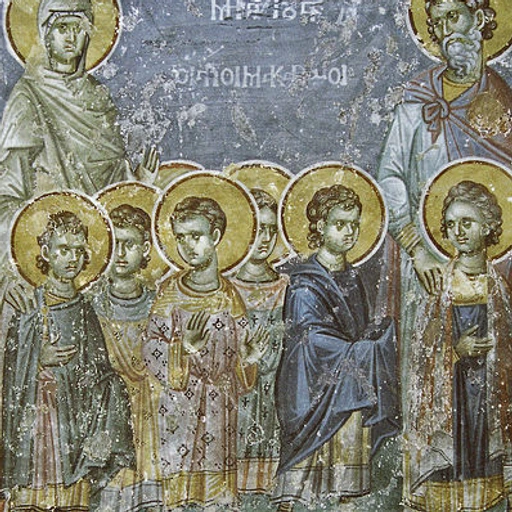
Six brothers are dead. The tyrant Antiochus has spent his whole arsenal on them - fire, the wheel, every cruelty he could invent - and not one broke. Now the seventh stands before him, the youngest of all, a boy already in chains. And the king changes tactics. He stops threatening and turns gentle: he felt strong compassion for this child… and tried to console him (vv. 2-3). The same demand as before - forsake your God - but wrapped now in kindness.
Chapter overview from the authored study guide.tyrant said to be pursued by divine justice while the martyrs are received into the chorus of the fathers
The seven sons are gone. Their mother is gone. The eulogy is finished. So the book turns one last time to the living - obey this law (v. 1) - and gives the mother a final word. She remembers her husband, who taught you the law and the prophets (v. 10), and names the stories he told: Abel, Isaac, Joseph, the three young men in the fire, Daniel in the den. The whole roll of those who trusted God when it cost them, set in a child’s memory long before the child would need it.
Chapter overview from the authored study guide.THE PEOPLE AROUND THE PERSON
Recorded children
Relationships follow the source graph. Some are interpretive or uncertain, and individual verse citations are not yet available for every connection.
STUDY & INTERPRETATION
Antiochus IV Epiphanes emerges in 1 Maccabees 1 as a sinful root sprung from the line of Alexander's successors, a king whose pride drove him to crush the faith of the Jewish people. He stripped the temple of its treasures, forbade the sacrifices and the sabbaths, compelled the people to forsake the law, and set up the abomination that desolates upon the holy altar, killing mothers who circumcised their sons and any who hid the sacred scrolls. His reign became the great test of faithfulness, distinguishing those who would die rather than profane the covenant from those who yielded to the king's decree. The endurance of the martyrs and the courage of the Maccabees who resisted him carry forward the conviction that no tyrant can finally extinguish the worship of the living God. The deliverance that followed, and the rededication of the temple it secured, kept alive the hope of a greater and lasting deliverance that the people of God awaited.
From the Learn of Christ person commentary. Read alongside the linked Scripture passages.KEEP SCRIPTURE CLOSE
23 authored chapter guides feature this person. This is guide coverage, not an exhaustive count of biblical mentions.
ASK A BETTER QUESTION
Identity, story, early-life sources, family, and where to read.
Antiochus IV Epiphanes was a Greek king who outlawed the worship of the Lord and defiled the temple in Jerusalem, sparking the Maccabean revolt.
Antiochus IV ruled the Seleucid kingdom that descended from Alexander's empire and sought to force Greek religion and custom upon the Jewish people. He plundered the temple in Jerusalem, banned the law and circumcision, set up a pagan altar on the altar of the Lord, and killed those who clung to the covenant. His persecution provoked the uprising led by Mattathias and his sons, the Maccabees, who fought to restore the worship of the Lord.
Our authored studies connect Antiochus IV Epiphanes with 1 Maccabees, 2 Maccabees, 4 Maccabees. The linked chapters provide reading context, not proof that an unnamed or inferred identity is explicitly named there. A verified, identity-specific verse index is not yet available for this record, so these chapter tags should not be treated as an exhaustive list of mentions.
A separate childhood account for Antiochus IV Epiphanes is not provided in our current authored profile sources. Begin with 1 Maccabees 1 and the passages linked here for the evidence that is available. The first indexed reference to a name is not a birth record. This profile does not establish a birth date, schooling, or childhood events beyond what its sources state.
Antiochus IV Epiphanes’s source record lists Antiochus V Eupator (child). These are source-graph relationships; legal family, uncertain identifications, and ancestral language require the cautions below. Individual verse evidence is not yet retained for every family edge.
Antiochus IV Epiphanes emerges in 1 Maccabees 1 as a sinful root sprung from the line of Alexander's successors, a king whose pride drove him to crush the faith of the Jewish people. He stripped the temple of its treasures, forbade the sacrifices and the sabbaths, compelled the people to forsake the law, and set up the abomination that desolates upon the holy altar, killing mothers who circumcised their sons and any who hid the sacred scrolls.
Answers draw on our existing authored biography and linked chapter studies. Where supplied, verse assignments come from the individualized STEP Bible index. Childhood answers distinguish documented events from gaps in the available sources.
YOUR OWN OBSERVATIONS
Notes, saved people, and study marks stay in this browser. They do not sync to your account.
KEEP EXPLORING
People featured in the same study guides. Sharing a chapter does not establish a family relationship.