2 Maccabees 7
People in this chapter
Some chapters of Scripture are hard to read because they are so violent, and this is one of them. A mother and her seven sons are arrested under the persecution of Antiochus and commanded to eat what the law of God forbids. The price of refusal is torture and death, and the king means them to watch one another die. Yet what the chapter records is a strange and unbreakable courage. Each brother, as he is dying, says something, and what he says again and again is that death is not the end of the story.
The King of the world will raise up those who die for His laws.
Tap any highlighted phrase to jump to the commentary that unpacks it.
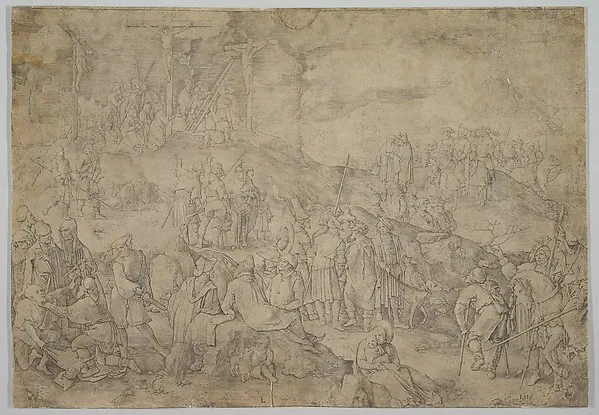
2 Maccabees 7:1-6Ready to Die Rather Than Transgress
1It came to pass also, that seven brethren, together with their mother, were apprehended, and compelled by the king to eat swine’s flesh against the law, for which end they were tormented with whips and scourges. 2But one of them, who was the eldest, said thus: What wouldst thou ask, or learn of us? we are ready to die rather than to transgress the laws of God, received from our fathers.
The scene opens without preamble. A family of eight is in the hands of a king who has decided that the way to break a people is to make them betray their God by their own mouths. To eat the forbidden food would be a small thing in the eyes of the world, a single bite to end the pain. That is exactly what makes the test so sharp. The king is asking them to do one act that says their God may be set aside when the cost of obeying Him grows high.
The whole chapter turns on whether faithfulness has a limit.
The eldest speaks for all of them, and his answer reframes everything. He tells the king there is nothing to negotiate. "We are ready to die rather than to transgress the laws of God." Notice what he treasures: the law "received from our fathers," the inheritance of belonging to God, worth far more to him than his own life. He has already decided, before the torture begins, that some things are worth more than survival. That settled conviction, formed before the crisis, is what carries the whole family through what follows.
6Saying: The Lord God will look upon the truth, and will take pleasure in us, as Moses declared in the profession of the canticle: And In his servants he will take pleasure.
As the first brother suffers, the others hold steady and encourage one another to die bravely, and they reach for Scripture to do it. They quote the song of Moses: God will look upon the truth and take pleasure in His servants. In the worst hour of their lives they are preaching to each other from the word of God, anchoring their courage in something older and surer than the moment. The conviction holding them is that God sees.
The king sees only bodies he can break; God sees the truth of who they are and is pleased with His faithful ones, and that gaze of God matters more to them than the rage of the king.
2 Maccabees 7:7-14The King of the World Will Raise Us Up
9And when he was at the last gasp, he said thus: Thou indeed, O most wicked man, destroyest us out of this present life: but the King of the world will raise us up, who die for his laws, in the resurrection of eternal life.
The second brother dies with one of the great sentences of Scripture on his lips. He grants the tyrant everything he can claim and nothing more: yes, you can destroy us out of this present life. But there is another King, the King of the world, and what He does undoes what you do. He will raise us up. The word the brother uses for the king's power, "destroy," is answered by God's power to "raise up."
This is the hope that makes their courage possible. They can lay down this life freely because they are convinced it will be given back in the full brightness of the resurrection of eternal life.
11And said with confidence: These have from heaven, but for the laws of God I now despise them: because I hope to receive them again from him.
The third brother is told to put out his tongue and stretch out his hands for mutilation, and he does it without flinching, saying something extraordinary as he does. These hands, this body, came to me from heaven as a gift. For the sake of God's laws I count them as nothing now, because I am sure I will receive them again from the One who gave them. He honors the body precisely as God's gift, and he can surrender it because he trusts the Giver to restore it.
His hope is concrete and bodily: the same hands laid down will be received back. The king and his court are left wondering at a young man who treats unbearable torment as if it were nothing.
14And when he was now ready to die, he spoke thus: It is better, being put to death by men, to look for hope from God, to be raised up again by him: for, as to thee thou shalt have no resurrection unto life.
The fourth brother draws the conclusion plainly: it is better to be killed by men while holding onto the hope of being raised by God than to save your life by abandoning Him. He weighs the two outcomes the way a clear-eyed person weighs a trade, and the math is not close. A short death with God on the far side of it is worth more than a long life purchased by betrayal. His final words to Antiochus are quietly sober: the resurrection unto life is for those who die in faith, and the one who tramples God's servants has no part in it.
He states plainly where each road ends.
2 Maccabees 7:15-23A Mother's Courage and the Creator Who Restores
20Now the mother was to be admired above measure, and worthy to be remembered by good men, who beheld seven sons slain in the space of one day, and bore it with a good courage, for the hope that she had in God: 21And she bravely exhorted every one of them in her own language, being filled with wisdom: and joining a man’s heart to a woman’s thought,
The chapter pauses to look at the mother, and the writer can hardly find words for her. She watches all seven of her sons killed in a single day, and she does not break. What holds her up is named directly: "the hope that she had in God." Any parent reading this feels the weight of it. Her grief is real and unimaginable, yet her hope is deeper than her grief, and she becomes their strength, able to give her children into God's hands.
She encourages each son in her own language, "filled with wisdom," joining a courage the ancient world expected of warriors to the tenderness of a mother. This is wisdom in its truest form: the strength to see past the unbearable present to the faithfulness of God, and to speak that vision into others when they need it most. She is anchored beneath what is happening, and her words to her sons point their eyes to the One who made them, the only place real strength to face death could possibly come from.
22She said to them: I know not how you were formed in my womb: for I neither gave you breath, nor soul, nor life, neither did I frame the limbs of every one of you. 23But the Creator of the world, that formed the nativity of man, and that found out the origin of all, he will restore to you again in his mercy, both breath and life, as now you despise yourselves for the sake of his laws.
Here is the heart of the mother's faith, and the high point of the chapter. She confesses a mystery: she does not know how her children came to be, how breath and soul and life were knit together in her womb. She gave birth to them, yet life itself came from somewhere beyond her. Then she draws the conclusion that turns the whole scene toward hope. The Creator who first gave them life will give it back.
The God who could form them out of what was not yet a child can surely restore them, "both breath and life," after death has done its worst. Her logic is simple and unshakable: the One who made you can remake you. Resurrection is the natural reach of the Creator's power and mercy, as plain to her as anything she has known.
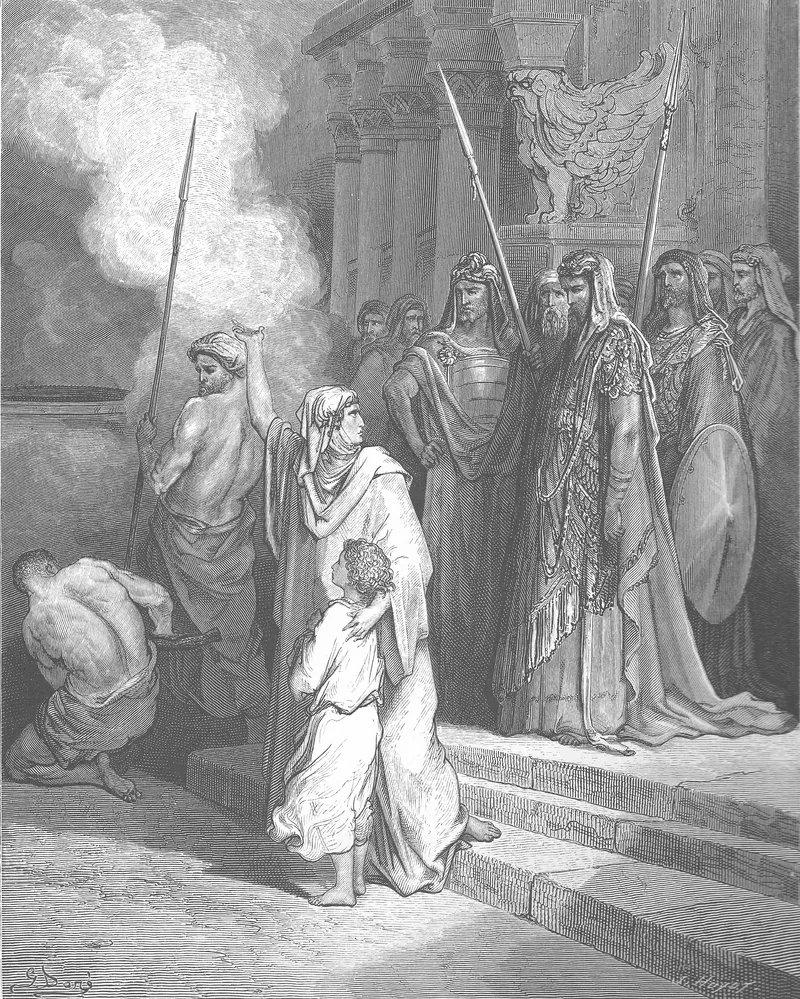
2 Maccabees 7:24-42The Youngest Son, and the Covenant of Eternal Life
30While she was yet speaking these words, the young man said: For whom do you stay? I will not obey the commandment of the king, but the commandment of the law, which was given us by Moses.
Only the youngest is left, and Antiochus, stung by the others, changes tactics. He offers the boy everything: riches, friendship, a place of honor, if he will only turn from the law of his fathers. He even asks the mother to talk her son into living. She agrees, then bends close and says in her own language the opposite of what the king expects, urging her son to be worthy of his brothers. The boy does not hesitate.
He cuts off the king's offer before the temptation can take root: I will not obey you; I will obey the law God gave through Moses. The bribe holds no power over him, because he is governed by an authority higher than the king who thinks he holds his life.
32For we suffer thus for our sins. 33And though the Lord our God is angry with us a little while for our chastisement and correction: yet he will be reconciled again to his servants.
The youngest son says something the others had touched on: the family understands their suffering as bound up with the sins of their people. They humble themselves under His hand, reading the nation's affliction as His correction of a people He loves. This is a striking refusal of self-pity. Even as they die faithfully, they hold themselves and their people accountable before God, which is its own kind of faith.
Yet the boy's reading of their suffering does not end in despair, because he knows the character of the God who corrects them. The Lord is "angry with us a little while," but only for chastisement and correction, and then "he will be reconciled again to his servants." This is the hope underneath the hope of resurrection: that God's anger is brief and aimed at restoration, while His mercy is the lasting thing.
He disciplines to bring His people home. The youngest son dies trusting not only that he will be raised, but that the God raising him is, at heart, a God who longs to be reconciled.
36For my brethren, having now undergone a short pain, are under the covenant of eternal life: but thou by the judgment of God shalt receive just punishment for thy pride. 40So this man also died undefiled, wholly trusting in the Lord.
The youngest gathers the meaning of the whole chapter into one phrase. His brothers, he says, having undergone "a short pain," are now "under the covenant of eternal life." The agony that looked to the world like total defeat was in truth a brief passage into something permanent. He weighs a short pain against eternal life and finds the trade overwhelmingly worth it. The word covenant matters: this is a bond God has made, a promise the brothers now rest within. They have exchanged a moment of suffering for a life that cannot be taken.
The youngest dies, and Antiochus, more enraged than ever at being defied, treats him more cruelly than all the rest. The chapter's verdict on him is quiet and final: "this man also died undefiled, wholly trusting in the Lord." That is the word that crowns the family: undefiled. The king set out to defile them, to make them betray their God with one act, and he failed seven times over. They kept faith to the end.
And then, last of all, after her sons, the mother also dies. She who gave them life followed them into death, and by the hope she had taught them, follows them also into the resurrection she trusted God to give.
Where this echoes in Scripture
Ready to Die Rather Than Transgress
- Daniel 3:17-18Our God whom we serve is able to deliver us... But if not, be it known unto thee, O king, that we will not serve thy gods.Three young men face a furnace with the same settled refusal: faithful whether rescued or not.
- Matthew 10:28And fear not them which kill the body, but are not able to kill the soul.Jesus names exactly the freedom the brothers had found from those who could only kill the body.
- Deuteronomy 32:36For the LORD shall judge his people, and repent himself for his servants.The song of Moses the brothers quote, where God looks with favor on His servants.
The King of the World Will Raise Us Up
- Daniel 12:2And many of them that sleep in the dust of the earth shall awake, some to everlasting life.The same hope of resurrection unto everlasting life, spoken in the same age of trial.
- John 5:28-29All that are in the graves shall hear his voice, and shall come forth; they that have done good, unto the resurrection of life.Jesus names the resurrection of life the brothers staked everything on.
- 1 Corinthians 15:42-43It is sown in corruption; it is raised in incorruption... it is sown in weakness; it is raised in power.The body laid down in weakness is received again in glory, the exact hope of these brothers.
A Mother's Courage and the Creator Who Restores
- Job 19:25-26For I know that my redeemer liveth... and though after my skin worms destroy this body, yet in my flesh shall I see God.Job reaches the same hope from inside suffering: the body destroyed, yet restored to see God.
- Romans 4:17God, who quickeneth the dead, and calleth those things which be not as though they were.The Creator who gives life and raises the dead, exactly the mother's ground of hope.
- Ezekiel 37:5-6Behold, I will cause breath to enter into you, and ye shall live.The God who restores breath and life to the dead, as the mother promises her sons.
The Youngest Son, and the Covenant of Eternal Life
- Hebrews 11:35Others were tortured, not accepting deliverance; that they might obtain a better resurrection.The New Testament remembers these very sufferers, who refused rescue for a better resurrection.
- John 11:25I am the resurrection, and the life: he that believeth in me, though he were dead, yet shall he live.Christ becomes in person the resurrection the brothers died trusting.
- Romans 8:18The sufferings of this present time are not worthy to be compared with the glory which shall be revealed in us.The very calculation the youngest made: a short pain set against eternal glory.