Who was Elihu in the Bible?
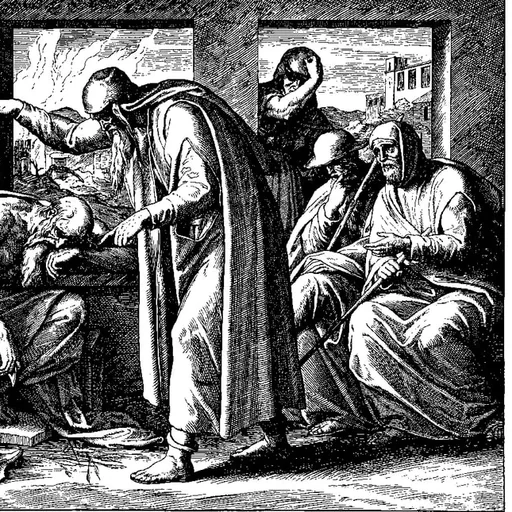
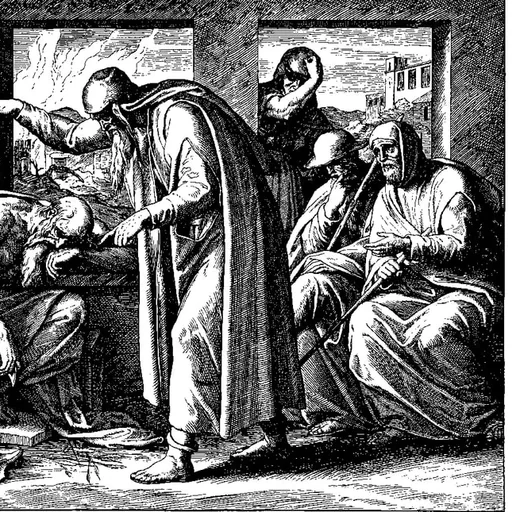
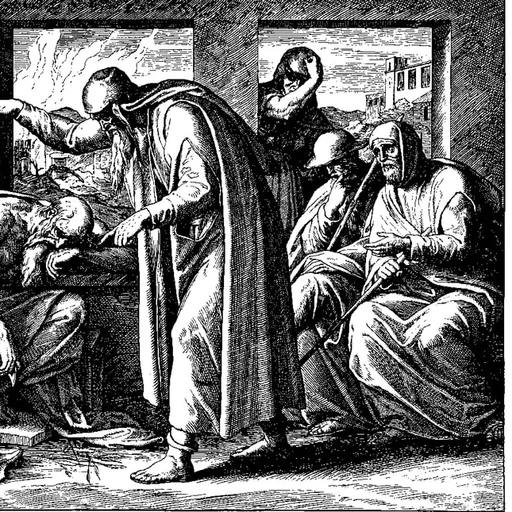
Elihu was a younger man who had listened to the long debate and spoke up to offer a different answer to Job’s suffering.
The Young Man Who Spoke Last Before God
Elihu was a younger man who had listened to the long debate and spoke up to offer a different answer to Job’s suffering.
Follow the reading trailBEYOND THE NAME
In Job 32, Elihu the son of Barachel enters the story, angry both at Job for justifying himself and at the three friends for failing to answer him. Having waited out of respect for their age, he now speaks at length, arguing that God uses suffering to teach, to warn, and to draw people back rather than only to punish. His speeches form a bridge between the friends’ failed arguments and the voice of God that follows.
Themes in the authored commentary
These are other entries using this name. Compare their source passages before treating them as the same or different historical people.
These entries connect the study to the source’s recorded family context. Read their cautions when the family records or identifications differ.
FOLLOW THE PASSAGES
These are chapter studies associated with this record. Their order follows the books and chapters, rather than a reconstructed timeline of the person’s life.
steps forward in anger after the three friends fall silent, asserting that the spirit gives him understanding
For thirty-one chapters the conversation has run between four men: Job and the three friends who came to comfort him and stayed to accuse him. Now, abruptly, a fifth voice breaks in. Then was kindled the wrath of Elihu the son of Barachel the Buzite. We were never told he was there. He has been standing at the edge of the circle the whole time - younger than everyone, holding his tongue because in the ancient world age had the first claim on speech - and listening to the whole exhausting debate grind to a halt. The three friends ceased to answer Job (v. 1) because they were beaten. And in that silence, the young man can hold back no longer.
Chapter overview from the authored study guide.directly addresses Job, arguing that God does speak through dreams and suffering to turn people from sin
After six chapters of holding his tongue out of respect for his elders, the young man Elihu finally turns - not to the three friends he has just rebuked, but to Job himself. And he does what none of the others did in all their speeches: he addresses Job by name and asks to be heard as an equal. Wherefore, Job, I pray thee, hear my speeches (v. 1). He grounds his right to speak in the simplest fact of all - that the same breath made them both: The spirit of God hath made me, and the breath of the Almighty hath given me life (v. 4). And he sets aside the one thing that had made heaven’s silence so unbearable to Job: terror.
Chapter overview from the authored study guide.argues that God cannot do wrong and that Job's complaint amounts to rebellion against divine justice
The three friends have fallen silent - they ceased to answer Job, because he was righteous in his own eyes (Job 32:1) - and into that silence steps the youngest voice in the book. Elihu has been listening all along, holding his peace out of deference to his elders, and now he can hold it no longer. In this, his second speech, he turns from Job to the bystanders and calls them together as a court: Hear my words, O ye wise men; and give ear unto me, ye that have knowledge… Let us choose to us judgment: let us know among ourselves what is good. He wants the matter weighed openly, as the ear tries words the way the mouth tastes meat.
Chapter overview from the authored study guide.rebukes Job for claiming righteousness before God and for saying his prayers go unanswered
Elihu turns to his sharpest argument, and he opens it by sharpening Job’s words into something Job never quite said: My righteousness is more than God’s (v. 2), and, What profit shall I have, if I be cleansed from my sin? (v. 3). It is an overstatement of Job’s complaint, but it sets up Elihu’s reply, and the reply is bracing. Look up, he says - behold the clouds which are higher than thou (v. 5). The God who lives above those clouds is not diminished by your sin or enriched by your obedience: if thou sinnest, what doest thou against him?... if thou be righteous, what givest thou him? (vv. 6-7).
Chapter overview from the authored study guide.continues his defense of God's justice, urging Job to beware of turning to iniquity under affliction
Elihu is not finished. Suffer me a little, he says, and I will shew thee that I have yet to speak on God’s behalf (v. 2) - and he claims a great deal for himself, promising to fetch [his] knowledge from afar and announcing that he that is perfect in knowledge is with thee (vv. 3-4). It is a striking boast. The young man who has waited through three rounds of debate now offers to settle the matter on God’s own behalf, as though he held the brief for heaven. There is something admirable in his zeal to ascribe righteousness to my Maker (v.
Chapter overview from the authored study guide.concludes his speech with a description of God's awe-inspiring power in storm and weather
Elihu’s speech ends the way a summer evening ends - with the light going strange and the first far-off rumble of thunder. At this also my heart trembleth, and is moved out of his place (v. 1). Something in the gathering storm has shaken him, and it is awe at what he believes the weather is. To Elihu the thunder is the noise of his voice, and the sound that goeth out of his mouth (v. 2) - God speaking in a tongue that needs no translation, rolling under the whole heaven, flinging His lightning unto the ends of the earth (v. 3). He is doing what he urged on Job in the chapter before: he has stopped arguing and started watching the sky.
Chapter overview from the authored study guide.THE PEOPLE AROUND THE PERSON
Relationships follow the source graph. Some are interpretive or uncertain, and individual verse citations are not yet available for every connection.
STUDY & INTERPRETATION
Elihu brings a fresh note into the debate, claiming that affliction can be God’s discipline and instruction rather than simple retribution, and that the Almighty speaks through dreams, pain, and even the wonders of creation. He rebukes Job for demanding an account from God yet also moves the discussion toward awe and trust. His words prepare the reader for the Lord’s own answer from the whirlwind, where God reveals His wisdom without explaining every sorrow. In the larger witness of Scripture, Elihu’s sense that suffering may refine and that God speaks to mediate between heaven and a struggling soul anticipates the fuller revelation of a true Mediator who would bear and redeem human suffering rather than merely interpret it.
From the Learn of Christ person commentary. Read alongside the linked Scripture passages.KEEP SCRIPTURE CLOSE
6 authored chapter guides feature this person. This is guide coverage, not an exhaustive count of biblical mentions.
ASK A BETTER QUESTION
Identity, story, early-life sources, family, and where to read.
Elihu was a younger man who had listened to the long debate and spoke up to offer a different answer to Job’s suffering.
In Job 32, Elihu the son of Barachel enters the story, angry both at Job for justifying himself and at the three friends for failing to answer him. Having waited out of respect for their age, he now speaks at length, arguing that God uses suffering to teach, to warn, and to draw people back rather than only to punish. His speeches form a bridge between the friends’ failed arguments and the voice of God that follows.
The individualized passage index associates this Elihu record with Job. There are 7 distinct indexed verse references in the 66-book Bible. Browse the book-by-book list below; it separates this identity from other people who share the name. Source assignments and textual identifications can require interpretation.
A separate childhood account for Elihu is not provided in our current authored profile sources. Begin with Job 32:2 and the passages linked here for the evidence that is available. The first indexed reference to a name is not a birth record. This profile does not establish a birth date, schooling, or childhood events beyond what its sources state.
The current source graph does not list immediate family for Elihu. That is a limit of this data, not evidence that Elihu had no relatives. Read the cited passages for the details they actually give.
Elihu brings a fresh note into the debate, claiming that affliction can be God’s discipline and instruction rather than simple retribution, and that the Almighty speaks through dreams, pain, and even the wonders of creation. He rebukes Job for demanding an account from God yet also moves the discussion toward awe and trust.
Answers draw on our existing authored biography and linked chapter studies. Where supplied, verse assignments come from the individualized STEP Bible index. Childhood answers distinguish documented events from gaps in the available sources.
FIND THE PERSON IN THE TEXT
7 distinct verse references in the source’s 66-book index. These are indexed name assignments, rather than every indirect allusion to this person. A name may also refer to descendants, a tribe, or a nation; read each passage to distinguish that usage from the individual.
“Then was kindled the wrath of Elihu the son of Barachel the Buzite, of the kindred of Ram: against Job was his wrath kindled, because he justified himself rather than God.”
Job 32:2 · King James Version
“When Elihu saw that there was no answer in the mouth of these three men, then his wrath was kindled.”
Job 32:5 · King James Version
“Furthermore Elihu answered and said,”
Job 34:1 · King James Version
“Elihu also proceeded, and said,”
Job 36:1 · King James Version
References are adapted from STEP Bible / Tyndale House TIPNR (CC BY 4.0). Deduplicated, matched to this identity, and checked against the bundled KJV’s verse bounds. Interpretive assignments and translation/versification differences may remain. This index is separate from evidence for individual family relationships.
YOUR OWN OBSERVATIONS
Notes, saved people, and study marks stay in this browser. They do not sync to your account.
KEEP EXPLORING
People featured in the same study guides. Sharing a chapter does not establish a family relationship.