

Who was Job in the Bible?
Job was a blameless and upright man who lost everything yet held on to his trust in God through terrible suffering.
The Suffering Righteous Man
Patriarchal age
Job was a blameless and upright man who lost everything yet held on to his trust in God through terrible suffering.
Follow the reading trailBEYOND THE NAME
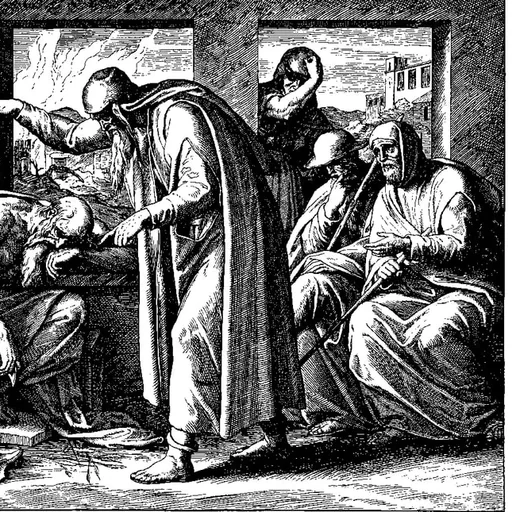
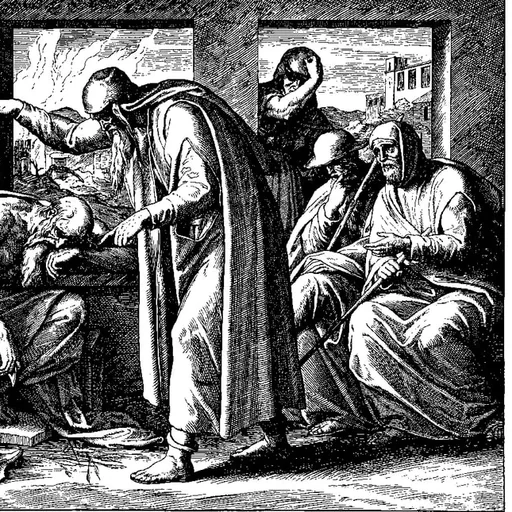
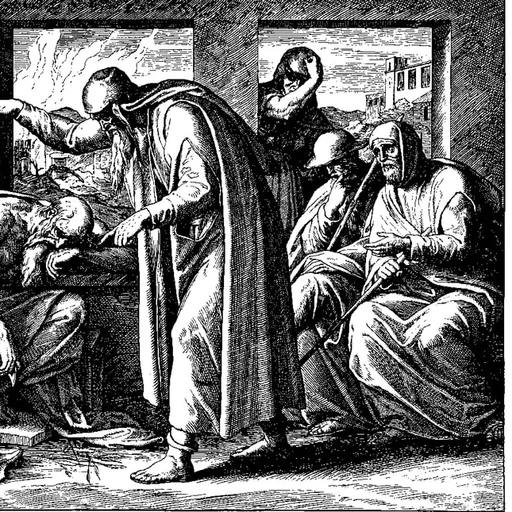
Job was a wealthy and righteous man whom God allowed to be stripped of his children, his possessions, and his health, while his integrity was tested. His friends insisted his suffering must be punishment for sin, but Job maintained his innocence and poured out his anguish and his questions to God directly. In the end God answered Job out of the whirlwind, Job humbled himself before the mystery of God, and the Lord restored him.
Themes in the authored commentary
FOLLOW THE PASSAGES
These are chapter studies associated with this record. Their order follows the books and chapters, rather than a reconstructed timeline of the person’s life.
righteous man whose integrity is tested when God permits adversity to befall him
The book of Job begins on earth - in the land of Uz, a place both real and symbolic, where a man named Job dwells. He is described in terms that seem almost superhuman: perfect, upright, fearing God, eschewing evil. He is blessed beyond measure - thousands of sheep and camels, great herds of oxen and asses, a household of servants, and ten children who feast and celebrate. By every measure of the ancient world, Job is the greatest of all the men of the East. He is, it seems, a man who has earned God’s favor.
Chapter overview from the authored study guide.continues his speech, pleading directly to God to reveal the charge against him
Job turns away from his friends. He has heard enough of their arguments, and he will speak now to God directly, with the unguarded cry of one whose pain has gone past pretense, past the careful and composed prayer of a man trying to say the right thing. My soul is weary of my life, he begins; I will leave my complaint upon myself; I will speak in the bitterness of my soul. And his opening plea is not an accusation but a request, almost a child’s request of a parent: Do not condemn me; shew me wherefore thou contendest with me. Tell me what I am charged with. Let me at least know why.
Chapter overview from the authored study guide.the target of Bildad’s portrait of the fate awaiting those who do not know God
Bildad the Shuhite rises to speak a second time, and whatever restraint he once had is gone. His first speech at least opened with a question and an argument; this one opens with irritation: How long will it be ere ye make an end of words? mark, and afterwards we will speak. He feels insulted - wherefore are we counted as beasts, and reputed vile in your sight? - and a man who feels insulted often stops trying to persuade and starts trying to wound.
Chapter overview from the authored study guide.meditates on the inaccessibility of wisdom, concluding that the fear of God is wisdom's beginning
Job 28 is one of the most quietly stunning chapters in the Old Testament. The dialogue cycles are over. Bildad has collapsed in six verses (ch. 25). Zophar never speaks again. Job has taken his oath of integrity (ch. 27). And before Elihu’s long interruption (chs. 32-37) and the LORD’s own arrival from the whirlwind (ch. 38), the book pauses for what reads like a hymn dropped into the middle of a courtroom drama.
Chapter overview from the authored study guide.warned not to let resentment lead him deeper into sin
Elihu is not finished. Suffer me a little, he says, and I will shew thee that I have yet to speak on God’s behalf (v. 2) - and he claims a great deal for himself, promising to fetch [his] knowledge from afar and announcing that he that is perfect in knowledge is with thee (vv. 3-4). It is a striking boast. The young man who has waited through three rounds of debate now offers to settle the matter on God’s own behalf, as though he held the brief for heaven. There is something admirable in his zeal to ascribe righteousness to my Maker (v.
Chapter overview from the authored study guide.cited as the example of steadfast endurance under suffering and the compassion of the Lord's outcome
James ends his letter the way he wrote the whole of it - bluntly, and with the poor squarely in view. He opens with a cry of judgment over the rich who have hoarded wealth and used it to crush the people beneath them: Go to now, ye rich men, weep and howl for your miseries that shall come upon you (v. 1). It is the language of a prophet announcing a reckoning.
Chapter overview from the authored study guide.THE PEOPLE AROUND THE PERSON
Recorded children
Relationships follow the source graph. Some are interpretive or uncertain, and individual verse citations are not yet available for every connection.
STUDY & INTERPRETATION
Job’s story confronts the hardest question of faith, why the righteous suffer, and refuses every easy answer his friends offer. He is not punished for hidden sin, and his honest lament, even his complaints, are finally vindicated by God over the tidy theology of his accusers. When God speaks from the whirlwind, He does not explain the suffering but reveals Himself, and that encounter is enough to bring Job to rest. In his cry for a mediator and a living redeemer who would stand upon the earth, Job reaches past his own circumstances toward the One who would enter human suffering, bear it, and turn it toward redemption.
From the Learn of Christ person commentary. Read alongside the linked Scripture passages.KEEP SCRIPTURE CLOSE
42 authored chapter guides feature this person. This is guide coverage, not an exhaustive count of biblical mentions.
ASK A BETTER QUESTION
Identity, story, early-life sources, family, and where to read.
Job was a blameless and upright man who lost everything yet held on to his trust in God through terrible suffering.
Job was a wealthy and righteous man whom God allowed to be stripped of his children, his possessions, and his health, while his integrity was tested. His friends insisted his suffering must be punishment for sin, but Job maintained his innocence and poured out his anguish and his questions to God directly. In the end God answered Job out of the whirlwind, Job humbled himself before the mystery of God, and the Lord restored him.
The individualized passage index associates this Job record with Job, Ezekiel, James. There are 53 distinct indexed verse references in the 66-book Bible. Browse the book-by-book list below; it separates this identity from other people who share the name. Source assignments and textual identifications can require interpretation.
A separate childhood account for Job is not provided in our current authored profile sources. Begin with Job 1:1 and the passages linked here for the evidence that is available. The first indexed reference to a name is not a birth record. This profile does not establish a birth date, schooling, or childhood events beyond what its sources state.
Job’s source record lists Jemimah (child), Keziah (child), Keren-happuch (child). These are source-graph relationships; legal family, uncertain identifications, and ancestral language require the cautions below. Individual verse evidence is not yet retained for every family edge.
Job’s story confronts the hardest question of faith, why the righteous suffer, and refuses every easy answer his friends offer. He is not punished for hidden sin, and his honest lament, even his complaints, are finally vindicated by God over the tidy theology of his accusers.
Answers draw on our existing authored biography and linked chapter studies. Where supplied, verse assignments come from the individualized STEP Bible index. Childhood answers distinguish documented events from gaps in the available sources.
FIND THE PERSON IN THE TEXT
53 distinct verse references in the source’s 66-book index. These are indexed name assignments, rather than every indirect allusion to this person. A name may also refer to descendants, a tribe, or a nation; read each passage to distinguish that usage from the individual.
“There was a man in the land of Uz, whose name was Job; and that man was perfect and upright, and one that feared God, and eschewed evil.”
Job 1:1 · King James Version
“Then Job answered and said,”
Job 19:1 · King James Version
“Therefore doth Job open his mouth in vain; he multiplieth words without knowledge.”
Job 35:16 · King James Version
“Behold, we count them happy which endure. Ye have heard of the patience of Job, and have seen the end of the Lord; that the Lord is very pitiful, and of tender mercy.”
James 5:11 · King James Version
References are adapted from STEP Bible / Tyndale House TIPNR (CC BY 4.0). Deduplicated, matched to this identity, and checked against the bundled KJV’s verse bounds. Interpretive assignments and translation/versification differences may remain. This index is separate from evidence for individual family relationships.
YOUR OWN OBSERVATIONS
Notes, saved people, and study marks stay in this browser. They do not sync to your account.
KEEP EXPLORING
People featured in the same study guides. Sharing a chapter does not establish a family relationship.