Job 33
People in this chapter
After six chapters of holding his tongue out of respect for his elders, the young man Elihu finally turns - not to the three friends he has just rebuked, but to Job himself. And he does what none of the others did in all their speeches: he addresses Job by name and asks to be heard as an equal. Wherefore, Job, I pray thee, hear my speeches (v. 1). He grounds his right to speak in the simplest fact of all - that the same breath made them both: The spirit of God hath made me, and the breath of the Almighty hath given me life (v. 4).
And he sets aside the one thing that had made heaven's silence so unbearable to Job: terror. Behold, my terror shall not make thee afraid... I also am formed out of the clay (vv. 6-7). Before he argues a single point, Elihu repeats Job's own complaint back to him accurately, which is more than the friends ever bothered to do.
Tap any highlighted phrase to jump to the commentary that unpacks it.
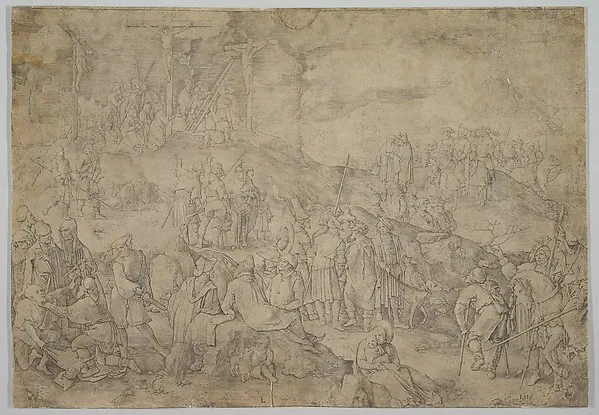
Job 33:1-11I Also Am Formed Out of the Clay
1Wherefore, Job, I pray thee, hear my speeches, and hearken to all my words. 2Behold, now I have opened my mouth, my tongue hath spoken in my mouth. 3My words shall be of the uprightness of my heart: and my lips shall utter knowledge clearly. 4The spirit of God hath made me, and the breath of the Almighty hath given me life. 5If thou canst answer me, set thy words in order before me, stand up. 6Behold, I am according to thy wish in God’s stead: I also am formed out of the clay.
Elihu opens not with authority but with friendship. After six chapters of deferring to his elders, the youngest man in the circle finally speaks - and the first thing he does is set Job at ease. He will not pull rank: the only credential he claims is the one he shares with Job, that the spirit of God hath made me, and the breath of the Almighty hath given me life (v. 4). The same breath that animated the dust of Job animated his.
He even invites Job to answer back - set thy words in order before me, stand up (v. 5) - the posture of a fair debate, not a sentence handed down. After three friends who lectured Job from a height, here at last is someone who steps down to the same ground.
7Behold, my terror shall not make thee afraid, neither shall my hand be heavy upon thee. 8Surely thou hast spoken in mine hearing, and I have heard the voice of thy words, saying, 9I am clean without transgression, I am innocent; neither is there iniquity in me. 10Behold, he findeth occasions against me, he counteth me for his enemy, 11He putteth my feet in the stocks, he marketh all my paths.
Notice what Elihu does before he argues a single point: he repeats Job's case back to him, in Job's own words, fairly. I am clean without transgression... he counteth me for his enemy... he putteth my feet in the stocks (vv. 9-11). These are real quotations of Job's laments (cf. 13:24; 16:9; 19:11), faithfully reported. The three friends had spent chapter after chapter answering a Job of their own invention - a secret sinner who must be hiding something.
Elihu answers the actual Job, the one who insists he has done nothing to deserve this. You cannot truly reply to a person until you can state their position so accurately that they would recognize it. Elihu earns the right to disagree by first proving he has listened.1
Job 33:12-22God Speaketh Once, Yea Twice
12Behold, in this thou art not just: I will answer thee, that God is greater than man. 13Why dost thou strive against him? for he giveth not account of any of his matters. 14For God speaketh once, yea twice, yet man perceiveth it not. 15In a dream, in a vision of the night, when deep sleep falleth upon men, in slumberings upon the bed; 16Then he openeth the ears of men, and sealeth their instruction,
Here is the heart of Elihu's answer to the cry of chapter 30. Job had said heaven was shut: I cry unto thee, and thou dost not hear me (30:20). Elihu turns the complaint around. The silence is not on God's side. God speaketh once, yea twice, yet man perceiveth it not (v. 14). God is speaking constantly; we are simply not tuned to the frequency. And so God reaches us where our arguments cannot follow - in sleep, in a dream, in a vision of the night, when the defenses we keep up all day finally come down and the ear can be opened (vv. 15-16).
It is a striking claim: that the God who seems most absent may in fact be the God speaking so quietly, and so close, that we mistake His voice for our own dreams.
17That he may withdraw man from his purpose, and hide pride from man. 18He keepeth back his soul from the pit, and his life from perishing by the sword. 19He is chastened also with pain upon his bed, and the multitude of his bones with strong pain: 20So that his life abhorreth bread, and his soul dainty meat. 21His flesh is consumed away, that it cannot be seen; and his bones that were not seen stick out. 22Yea, his soul draweth near unto the grave, and his life to the destroyers.
God's second voice, Elihu says, is the harder one to hear: pain. When the dream does not wake a man, the sickbed may - the bones in strong pain, the appetite gone, the flesh wasting until it cannot be seen, the soul drawing near the grave (vv. 19-22). But notice the purpose Elihu assigns to it all: to withdraw man from his purpose, and hide pride from man... He keepeth back his soul from the pit (vv. 17-18).
In this reading suffering is the hand on the shoulder that stops a man at the edge of the cliff. Here we have to read with great care. What Elihu says is true in general - God really does use affliction to humble and to save, and many a person can testify that the worst season of life was the one that turned them around. Yet the book has shown us, in scenes Elihu never witnessed, that this particular suffering was never a punishment for Job's pride at all.
Elihu's principle is sound; his diagnosis of Job is mistaken. Both things can be true, and the chapter asks us to hold them together without collapsing one into the other.
Job 33:23-33I Have Found a Ransom
23If there be a messenger with him, an interpreter, one among a thousand, to shew unto man his uprightness: 24Then he is gracious unto him, and saith, Deliver him from going down to the pit: I have found a ransom. 25His flesh shall be fresher than a child’s: he shall return to the days of his youth: 26He shall pray unto God, and he will be favourable unto him: and he shall see his face with joy: for he will render unto man his righteousness.
This is the summit of Elihu's speech, and of the whole long debate. Out of the wasting and the silence he lifts a figure no one in the book has dared to name so plainly: a messenger... an interpreter, one among a thousand. Three descriptions, one person - a messenger sent from God, an interpreter who can make sense of God to a bewildered man, a rare one found scarcely once in a thousand. And this mediator does not merely explain; he acts. He speaks a verdict that overrules the grave: Deliver him from going down to the pit: I have found a ransom (v. 24).
The moment that word is pronounced, the entire descending arc of the chapter reverses - the consumed flesh grows fresher than a child's, the man shall see his face with joy (vv. 25-26). The very face of God that seemed turned away in chapter 30 is seen again, and seen with joy, all because a mediator stepped in and found a ransom.
27He looketh upon men, and if any say, I have sinned, and perverted that which was right, and it profited me not; 28He will deliver his soul from going into the pit, and his life shall see the light. 29Lo, all these things worketh God oftentimes with man, 30To bring back his soul from the pit, to be enlightened with the light of the living.
The rescue completes itself in two movements. First the man speaks: I have sinned, and perverted that which was right, and it profited me not (v. 27). It is not a groveling speech but a clear-eyed one - the honest admission that he went the wrong way and gained nothing by it. And then God acts: He will deliver his soul from going into the pit, and his life shall see the light (v. 28).
Elihu widens the lens in the last lines - this is not a one-time mercy but God's settled way of working: all these things worketh God oftentimes with man, to bring back his soul from the pit, to be enlightened with the light of the living (vv. 29-30). The whole chapter has traced a single arc: from the brink of the dark pit, through the mediator and the ransom he finds, up into the light.
It is the oldest sketch of salvation in the Bible, drawn before any of the words for it had been invented.
31Mark well, O Job, hearken unto me: hold thy peace, and I will speak. 32If thou hast anything to say, answer me: speak, for I desire to justify thee. 33If not, hearken unto me: hold thy peace, and I shall teach thee wisdom.
Elihu closes on a note that is easy to miss and worth lingering over. Having pressed his argument, he stops and offers Job the floor once more - If thou hast any thing to say, answer me - and then says something none of the three friends ever said: I desire to justify thee (v. 32). He wants Job cleared. Whatever we finally make of Elihu - and the book lets him talk at length and then has God answer Job out of the whirlwind without ever naming him, neither endorsing nor rebuking him - this last wish points beyond himself.
The desire to justify the sufferer, to long for his vindication, is the desire that finds its true home in the One who came not to condemn the world; but that the world through him might be saved (John 3:17), and who ever liveth to make intercession for those who come to God by him (Heb. 7:25).
Research trail
Sources & further study
These references support the historical, linguistic, manuscript, and contextual notes in this chapter. Scripture remains the primary text; external sources are provided so readers can inspect the research directly.
- Job - open-access scholarly overviewA peer-reviewed Society of Biblical Literature essay on the book's wrestling with theodicy - the very question Elihu raises here when he reframes suffering as God's instruction aimed at turning a soul.
- Job 33 · Hebrew + Jewish commentaryThe Hebrew text of Job 33 with Rashi, Ibn Ezra, and Ramban side by side - useful for the musar (the “instruction” of v. 16), the shachat (the “pit” that recurs five times), the melitz (the “interpreter” of v. 23), and the kofer (the “ransom” of v. 24) on which the whole chapter turns.
- Job 33 ↔ 1 Timothy 2 · Psalm 16 · Hebrews 1Traces the verbal threads tying Job 33's mediator and ransom to the one Mediator of 1 Timothy 2:5-6, the pit that does not see corruption in Psalm 16:10, and the God who at last speaks “by his Son” in Hebrews 1:1-2.
Where this echoes in Scripture
I Also Am Formed Out of the Clay
- Job 9:33Neither is there any daysman betwixt us, that might lay his hand upon us both.The mediator Job cried for and despaired of - answered in v. 6.
- Genesis 2:7The LORD God formed man of the dust of the ground, and breathed into his nostrils the breath of life.Elihu's claim (v. 4) - the same breath that made Job made him.
- 1 Timothy 2:5There is one God, and one mediator between God and men, the man Christ Jesus.The daysman of clay (v. 6), named at last.
- Hebrews 4:15We have not an high priest which cannot be touched with the feeling of our infirmities.A mediator with no terror in his hand (v. 7) - one who feels what we feel.
God Speaketh Once, Yea Twice
- Hebrews 1:1-2God, who... spake in time past unto the fathers by the prophets, hath in these last days spoken unto us by his Son.The God who speaks “once, yea twice” (v. 14) - and finally by a Son.
- Hebrews 12:6For whom the Lord loveth he chasteneth, and scourgeth every son whom he receiveth.Elihu's reframe (vv. 16-19) - the pain that teaches is the mark of a son.
- 1 Samuel 3:3-4Ere the lamp of God went out... the LORD called Samuel: and he answered, Here am I.God opening the ear in the night (vv. 15-16).
- Psalm 16:10Thou wilt not leave my soul in hell; neither wilt thou suffer thine Holy One to see corruption.The pit (shachat) of v. 18 - the very word for what one Man would not see.
I Have Found a Ransom
- 1 Timothy 2:5-6One mediator between God and men, the man Christ Jesus; who gave himself a ransom for all.The interpreter and the ransom of vv. 23-24, named together.
- Mark 10:45The Son of man came... to give his life a ransom for many.“I have found a ransom” (v. 24) - found, and paid.
- Acts 2:31His soul was not left in hell, neither his flesh did see corruption.The pit (shachat) of vv. 28, 30 - entered and not seen.
- John 3:17God sent not his Son into the world to condemn the world; but that the world through him might be saved.Elihu's desire to justify (v. 32) - the Mediator's own heart.