Job 36
People in this chapter
Elihu is not finished. Suffer me a little, he says, and I will shew thee that I have yet to speak on God's behalf (v. 2) - and he claims a great deal for himself, promising to fetch [his] knowledge from afar and announcing that he that is perfect in knowledge is with thee (vv. 3-4). It is a striking boast. The young man who has waited through three rounds of debate now offers to settle the matter on God's own behalf, as though he held the brief for heaven.
There is something admirable in his zeal to ascribe righteousness to my Maker (v. 3), and something precarious in it too, for the God he means to defend is about to arrive in person and need no defender.
Tap any highlighted phrase to jump to the commentary that unpacks it.
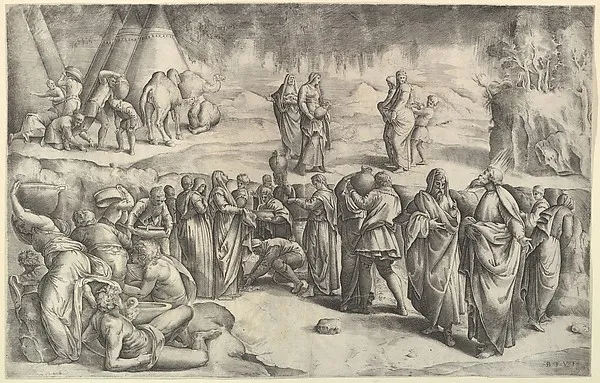
Job 36:1-15He Openeth Their Ear in Affliction
1Elihu also proceeded, and said, 2Suffer me a little, and I will shew thee that I have yet to speak on God’s behalf. 3I will fetch my knowledge from afar, and will ascribe righteousness to my Maker. 4For truly my words shall not be false: he that is perfect in knowledge is with thee.
The opening is all confidence. Elihu asks for a little more patience and promises words that shall not be false, spoken on God's behalf by one who is - he says - perfect in knowledge (vv. 2-4). The phrase is worth marking, because it is almost exactly the language God will use of Himself when He answers from the whirlwind, and the same words that will sound like reverence in God's mouth sound like overreach in Elihu's.
Still, his aim is not contemptible: he wants to ascribe righteousness to [his] Maker, to insist that God is just even when life looks unjust. That instinct is sound. It is the conclusions he draws from it that will go wrong.1
5Behold, God is mighty, and despiseth not any: he is mighty in strength and wisdom. 6He preserveth not the life of the wicked: but giveth right to the poor. 7He withdraweth not his eyes from the righteous: but with kings are they on the throne; yea, he doth establish them for ever, and they are exalted.
Here is a line worth slowing down over: God is mighty, and despiseth not any (v. 5). Almighty power that despises no one - not the poor, not the prisoner, not the man on the ash heap. Elihu pairs God's strength with His attention: He giveth right to the poor and withdraweth not his eyes from the righteous (vv. 6-7). The God he describes is not too great to notice the small. That much is true, and gloriously so.
The trouble is what Elihu does with it next - he assumes that because God notices, every reversal must be a sentence, and every sufferer must have earned his suffering.
8And if they be bound in fetters, and be holden in cords of affliction; 9Then he sheweth them their work, and their transgressions that they have exceeded. 10He openeth also their ear to discipline, and commandeth that they return from iniquity. 11If they obey and serve him, they shall spend their days in prosperity, and their years in pleasures.
This is the heart of Elihu's argument, and its best moment. Picture someone bound in fetters, holden in cords of affliction - and then, in that bound place, God openeth also their ear (vv. 8-10). Affliction becomes a kind of hearing aid. When the noise of an easy life is stripped away, a person can finally hear what they had been talking over for years. There is real wisdom here that the whole Bible affirms: suffering is rarely wasted; God can use the cords that bind us to turn us, and the silence of loss to make us listen.
Elihu is right that God speaks in the dark. He is wrong only in thinking he can read, from the outside, exactly what God is saying to Job.
12But if they obey not, they shall perish by the sword, and they shall die without knowledge. 13But the hypocrites in heart heap up wrath: they cry not when he bindeth them. 14They die in youth, and their life is among the unclean. 15He delivereth the poor in his affliction, and openeth their ears in oppression.
Now the insight hardens into a formula. Elihu sets two roads side by side: obey and spend their days in prosperity; refuse and perish by the sword, die without knowledge, die in youth (vv. 11-14). On its face it sounds like wisdom, and parts of it echo the Proverbs. But laid against Job it turns cruel, because it implies that Job's ruin is the wages of Job's rebellion - the very charge the friends have pressed for thirty chapters, now restated by a younger man.
The reader knows what Elihu does not: that the man he is warning is the one God called perfect and upright (Job 1:8). Verse 15 almost rescues the speech - He delivereth the poor in his affliction, and openeth their ears in oppression - a beautiful sentence about a God who rescues through the affliction rather than only out of it. Elihu keeps brushing against the truth. He simply cannot stop turning it into a verdict.
Job 36:16-25Out of the Strait Into a Broad Place
16Even so would he have removed thee out of the strait into a broad place, where there is no straitness; and that which should be set on thy table should be full of fatness. 17But thou hast fulfilled the judgment of the wicked: judgment and justice take hold on thee. 18Because there is wrath, beware lest he take thee away with his stroke: then a great ransom cannot deliver thee. 19Will he esteem thy riches? no, not gold, nor all the forces of strength. 20Desire not the night, when people are cut off in their place.
For a moment Elihu paints something lovely. God, he says, would have drawn Job out of the strait into a broad place, where there is no straitness, and set his table full of fatness (v. 16) - the cramped, choking confinement of suffering opening out into room and abundance. It is one of the Bible's recurring pictures of salvation: rescue as enlargement, the walls falling back, the lungs filling. But notice the tense and the turn.
Elihu means it as the road not taken - the deliverance Job would have had if only he had submitted - and in the next breath he forecloses it: thou hast fulfilled the judgment of the wicked (v. 17). The offer becomes an indictment. The broad place is dangled and then yanked away as a thing Job has forfeited by his complaining.
Then the warning sharpens to a point. Because there is wrath, beware lest he take thee away with his stroke (v. 18) - Elihu tells Job he is one blow from the edge, and that when that blow falls, nothing will buy it back: a great ransom cannot deliver thee, for God will not esteem thy riches... not gold, nor all the forces of strength (vv. 18-19). The point, stripped of its menace, is true and even profound: there is a deliverance that money cannot purchase and muscle cannot force.
No fortune is large enough to ransom a life from death. Elihu wields it as a threat; the rest of Scripture will turn it into the setup for good news - that the ransom no gold could pay would one day be paid in another currency entirely.
21Take heed, regard not iniquity: for this hast thou chosen rather than affliction. 22Behold, God exalteth by his power: who teacheth like him? 23Who hath enjoined him his way? or who can say, Thou hast wrought iniquity? 24Remember that thou magnify his work, which men behold. 25Every man may see it; man may behold it afar off.
Elihu's tone lifts as he turns from warning to wonder. Behold, God exalteth by his power: who teacheth like him? (v. 22). It is a genuine question, and a good one - is there any teacher like God, who instructs not only with words but with the whole turning world? Who hath enjoined him his way? - no one assigns God His path or audits His justice (v. 23). And so Elihu calls Job to stop litigating and start looking: Remember that thou magnify his work, which men behold (v. 24).
The invitation is exactly right, even if the man giving it has misjudged his patient. Lift your eyes from the courtroom of your own case to the vast work of God that every man may see - and in the next verses Elihu does just that, lifting his own eyes to the sky.
Job 36:26-33God Is Great, and We Know Him Not
26Behold, God is great, and we know him not, neither can the number of his years be searched out. 27For he maketh small the drops of water: they pour down rain according to the vapour thereof: 28Which the clouds do drop and distil upon man abundantly.
With v. 26 the speech changes register entirely, and for the first time Elihu stops accusing and starts adoring: Behold, God is great, and we know him not, neither can the number of his years be searched out. It is the truest sentence he speaks. A greatness that outruns the mind on principle, a God whose years cannot be counted because they have no edge. Strikingly, Elihu has spent the whole chapter explaining God's ways with great confidence, and now confesses that those ways exceed him.
The confession is the beginning of wisdom. It is also the doorway into the storm: having said we know him not, Elihu turns to the one place the unknowable God can be watched at work - the weather.
These verses are a small marvel - one of the Bible's first nature poems, and an oddly tender one. God maketh small the drops of water: the rain does not fall as a single crushing sheet but is divided into countless individual drops, each one sized and released. The clouds distil upon man abundantly (v. 28) - the same sky that can terrify with thunder also feeds the fields that feed the world. Elihu is making an argument by wonder: if God attends to the formation of a single raindrop, managing the unsearchable machinery of evaporation and cloud and downpour that no one can understand (v. 29), then perhaps the care of one man's grief is not beyond Him either.
The God who is too great to be known still sends rain on the dust.
29Also can any understand the spreadings of the clouds, or the noise of his tabernacle? 30Behold, he spreadeth his light upon it, and covereth the bottom of the sea. 31For by them judgeth he the people; he giveth meat in abundance. 32With clouds he covereth the light; and commandeth it not to shine by the cloud that cometh betwixt. 33The noise thereof sheweth concerning it, the cattle also concerning the vapour.
The storm is fully overhead now. The thunder is the noise of his tabernacle (v. 29) - as if the clouds were the tent God dwells in and the thunder the sound of His moving within it. The lightning is His: he spreadeth his light upon it, He covereth the light and uncovers it at will (vv. 30, 32), and the same storm serves two ends at once - by them judgeth he the people; he giveth meat in abundance (v. 31).
The bolt that terrifies and the rain that feeds come from one hand. Even the cattle feel it coming and grow restless before the storm breaks (v. 33). It is no accident that Elihu's speech ends here, staring up into a gathering storm, unable to finish the thought - because in the very next movement of the book, the LORD answered Job out of the whirlwind (Job 38:1). Elihu points at the cloud and runs out of words.
Then the cloud speaks.
Research trail
Sources & further study
These references support the historical, linguistic, manuscript, and contextual notes in this chapter. Scripture remains the primary text; external sources are provided so readers can inspect the research directly.
- Job - SBL OverviewOpen-access essay from the Society of Biblical Literature on the historical and literary setting of Job - including how the book stages, and then dismantles, the friends' (and Elihu's) theology of retribution.
- Job 36 · Hebrew + Jewish commentaryThe Hebrew text of Job 36 with Rashi, Ibn Ezra, and other classical commentators side by side - useful for the idiom of v. 10 (God “uncovers the ear”), the merchav (“broad place”) of v. 16, and the rare word ed (“vapour,” v. 27) that the Torah uses only of the mist of Eden.
- Job 36 ↔ Isaiah 50 · Psalm 40 · Hebrews 5Traces the verbal threads tying Job 36's “opened ear” and incomparable Teacher to the Servant whose ear the Lord GOD opened (Isa. 50:5), the opened ear of Psalm 40:6, and the Son who learned obedience through suffering (Heb. 5:8).
Where this echoes in Scripture
He Openeth Their Ear in Affliction
- Isaiah 50:5The Lord GOD hath opened mine ear, and I was not rebellious, neither turned away back.The opened ear of Job 36:10, 15 - answered in the Servant's willing obedience.
- 1 Samuel 9:15Now the LORD had told Samuel in his ear a day before Saul came...The same Hebrew idiom (v. 10): God “uncovers the ear” to reveal.
- Hebrews 5:8Though he were a Son, yet learned he obedience by the things which he suffered.Affliction opening into obedience - lived from the inside by the Son.
- Job 42:7Ye have not spoken of me the thing that is right, as my servant Job hath.Why Elihu's formula (vv. 11-12) cannot be the book's last word.
Out of the Strait Into a Broad Place
- Psalm 18:19He brought me forth also into a large place; he delivered me, because he delighted in me.The merchav of Job 36:16 - salvation as room to breathe.
- 1 Peter 1:18-19Ye were not redeemed with corruptible things, as silver and gold... but with the precious blood of Christ.The ransom no gold could pay (vv. 18-19) - paid in another currency entirely.
- John 7:46Never man spake like this man.The answer to Elihu's “who teacheth like him?” (v. 22).
God Is Great, and We Know Him Not
- John 1:18No man hath seen God at any time; the only begotten Son, which is in the bosom of the Father, he hath declared him.Elihu's “we know him not” (v. 26) - answered in the Son who declares the Father.
- Genesis 2:6There went up a mist from the earth, and watered the whole face of the ground.The only other ed (“vapour,” v. 27) in Scripture - the mist of Eden.
- Job 38:1Then the LORD answered Job out of the whirlwind, and said,The storm Elihu points at (vv. 29-33) - out of which God finally speaks.
- Mark 4:39He arose, and rebuked the wind... Peace, be still. And the wind ceased, and there was a great calm.The voice in the storm, given a face.