Who was Eliphaz the Temanite in the Bible?
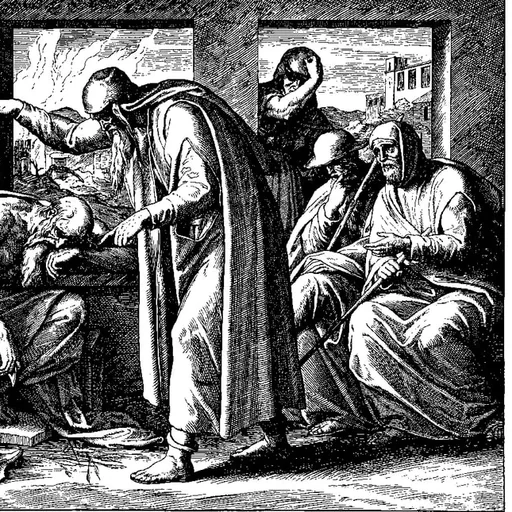
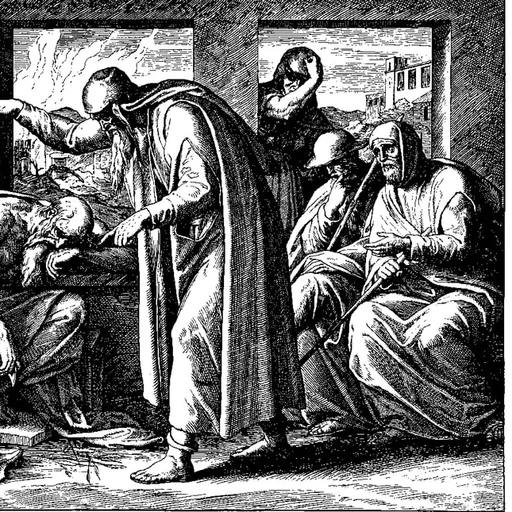
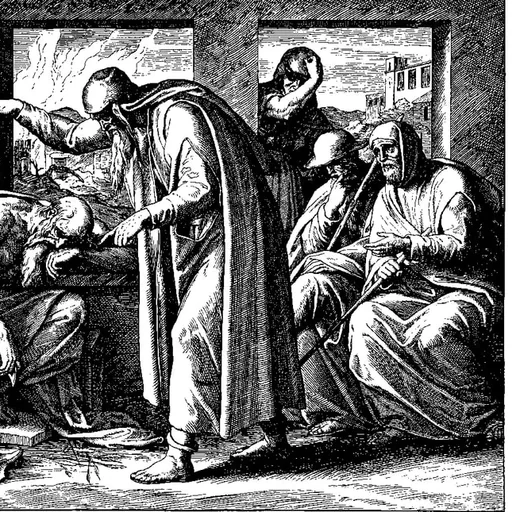
Eliphaz the Temanite was the first of Job’s three friends to come and comfort him, and the first to argue that Job must have sinned.
The First of Job’s Three Friends
Eliphaz the Temanite was the first of Job’s three friends to come and comfort him, and the first to argue that Job must have sinned.
Follow the reading trailBEYOND THE NAME
Introduced in Job 2 as one of the three friends who came to mourn with Job, Eliphaz becomes the leading speaker in the long debate that follows. He appeals to a vision and to his own experience, insisting that the innocent do not perish and that Job’s suffering must point to hidden wrongdoing. Though he begins with sincere sympathy, his counsel hardens into the claim that affliction is always the wage of sin.
Themes in the authored commentary
These entries connect the study to the source’s recorded family context. Read their cautions when the family records or identifications differ.
FOLLOW THE PASSAGES
These are chapter studies associated with this record. Their order follows the books and chapters, rather than a reconstructed timeline of the person’s life.
arrives with two friends to mourn with Job and sits in silence for seven days
The curtain lifts on heaven a second time, almost word for word like the first: Again there was a day when the sons of God came to present themselves before the LORD, and Satan came also among them. And again the LORD points to His servant - only now with a line that was not there before: still he holdeth fast his integrity, although thou movedst me against him, to destroy him without cause (v. 3). The first round of loss has not broken Job, and the LORD says so. But Satan has a new wager, colder than the last: Skin for skin, yea, all that a man hath will he give for his life.
Chapter overview from the authored study guide.continues his first speech, urging Job to seek God who wounds and then heals
Eliphaz brings his first long answer to Job to its close, and he closes it the way the wise of the ancient world closed an argument - by appealing to what everyone supposedly knows. He opens with a challenge: Call now, if there be any that will answer thee; and to which of the saints wilt thou turn? No one will take Job’s side, he implies; heaven itself is against him. Then he lays down what he takes to be a law of the world - that wrath killeth the foolish man, and envy slayeth the silly one, that the fool takes root only to be suddenly cursed. Suffering, in his account, is never random; it grows from a cause, and the cause is sin.
Chapter overview from the authored study guide.rebuked by Job for offering empty comfort when genuine help was needed
Eliphaz has spoken, and now Job replies. But he does not take up the argument point by point. He answers from a deeper place - the sheer, crushing weight of his grief. O that my grief were throughly weighed, and my calamity laid in the balances together! For now it would be heavier than the sand of the sea. He is asking for the impossible: put my sorrow on one pan of a scale and the sand of the sea on the other, and watch the sand fly up. His pain cannot be measured or compared. And because it overwhelms him, my words are swallowed up - even speech buckles under it.
Chapter overview from the authored study guide.delivers his second speech, accusing Job of undermining piety and claiming Job’s own words condemn him
Job 15 opens the second cycle of the great dialogue between Job and his friends. Eliphaz spoke first in chapters 4-5, and his tone then was grandfatherly - concerned, paternal, urging Job to accept the chastening of God. Across chapters 6-14, Job has heard all three friends complete their opening speeches and has answered each in turn. The conversation has not gone the way the friends expected. Job has rejected their counsel, called them physicians of no value (13:4), and demanded a hearing in God’s court. Now Eliphaz speaks again, and the grandfather is gone.
Chapter overview from the authored study guide.delivers his third speech, directly accusing Job of specific social sins and calling him to repent and be restored
Eliphaz the Temanite rises a third and final time, and something has shifted in him. When he first spoke, back in chapter 4, he was courteous, almost reluctant - he inferred Job’s guilt from the fact of his ruin and dressed the accusation as comfort. Round after round, Job has refused to confess a sin he did not commit, and that refusal has driven Eliphaz to the end of his patience. So here he stops inferring and begins inventing. He names the faults outright, as though he had watched Job commit them: Is not thy wickedness great? and thine iniquities infinite?
Chapter overview from the authored study guide.rebuked by God for not speaking rightly and commanded to offer burnt offerings through Job's intercession
Every voice in the book has now spoken - Job’s anguish, the friends’ arguments, young Elihu’s correction, and finally the LORD Himself out of the whirlwind, two chapters of questions about the sea and the stars, the wild ox and the war-horse, Behemoth and Leviathan. Job had longed for his day in court; he had wanted to order his cause before God and be answered. The answer came as an encounter, and chapter 42 is what a man says when the trial he demanded actually convenes and he finds himself standing before the living God. He does not get the one thing he asked for, the why. He gets something he had not known to ask for: he sees.
Chapter overview from the authored study guide.THE PEOPLE AROUND THE PERSON
Relationships follow the source graph. Some are interpretive or uncertain, and individual verse citations are not yet available for every connection.
STUDY & INTERPRETATION
Eliphaz speaks for a tidy theology in which the righteous prosper and the guilty suffer, a view that cannot account for Job’s innocent agony. His words contain real truths about God’s greatness and human frailty, yet he misapplies them, accusing a man God Himself had called blameless. By the book’s end the Lord rebukes Eliphaz and his companions for not speaking rightly, and only Job’s intercession spares them. His failure shows how confident religious explanations can wound rather than heal, and it leaves open the longing for a Mediator who understands suffering from within and who pleads truly for those who have erred.
From the Learn of Christ person commentary. Read alongside the linked Scripture passages.KEEP SCRIPTURE CLOSE
9 authored chapter guides feature this person. This is guide coverage, not an exhaustive count of biblical mentions.
ASK A BETTER QUESTION
Identity, story, early-life sources, family, and where to read.
Names and spellings in the source: Eliphaz the Temanite · Eliphaz
Eliphaz the Temanite was the first of Job’s three friends to come and comfort him, and the first to argue that Job must have sinned.
Introduced in Job 2 as one of the three friends who came to mourn with Job, Eliphaz becomes the leading speaker in the long debate that follows. He appeals to a vision and to his own experience, insisting that the innocent do not perish and that Job’s suffering must point to hidden wrongdoing. Though he begins with sincere sympathy, his counsel hardens into the claim that affliction is always the wage of sin.
The individualized passage index associates this Eliphaz the Temanite record with Job. There are 6 distinct indexed verse references in the 66-book Bible. Browse the book-by-book list below; it separates this identity from other people who share the name. Source assignments and textual identifications can require interpretation.
A separate childhood account for Eliphaz the Temanite is not provided in our current authored profile sources. Begin with Job 2:11 and the passages linked here for the evidence that is available. The first indexed reference to a name is not a birth record. This profile does not establish a birth date, schooling, or childhood events beyond what its sources state.
The current source graph does not list immediate family for Eliphaz the Temanite. That is a limit of this data, not evidence that Eliphaz the Temanite had no relatives. Read the cited passages for the details they actually give.
Eliphaz speaks for a tidy theology in which the righteous prosper and the guilty suffer, a view that cannot account for Job’s innocent agony. His words contain real truths about God’s greatness and human frailty, yet he misapplies them, accusing a man God Himself had called blameless.
Answers draw on our existing authored biography and linked chapter studies. Where supplied, verse assignments come from the individualized STEP Bible index. Childhood answers distinguish documented events from gaps in the available sources.
FIND THE PERSON IN THE TEXT
6 distinct verse references in the source’s 66-book index. These are indexed name assignments, rather than every indirect allusion to this person. A name may also refer to descendants, a tribe, or a nation; read each passage to distinguish that usage from the individual.
“Now when Job’s three friends heard of all this evil that was come upon him, they came every one from his own place; Eliphaz the Temanite, and Bildad the Shuhite, and Zophar the Naamathite: for they had made an appointment together to come to mourn with him and to comfort him.”
Job 2:11 · King James Version
“Then answered Eliphaz the Temanite, and said,”
Job 15:1 · King James Version
“Then Eliphaz the Temanite answered and said,”
Job 22:1 · King James Version
“So Eliphaz the Temanite and Bildad the Shuhite and Zophar the Naamathite went, and did according as the LORD commanded them: the LORD also accepted Job.”
Job 42:9 · King James Version
References are adapted from STEP Bible / Tyndale House TIPNR (CC BY 4.0). Deduplicated, matched to this identity, and checked against the bundled KJV’s verse bounds. Interpretive assignments and translation/versification differences may remain. This index is separate from evidence for individual family relationships.
YOUR OWN OBSERVATIONS
Notes, saved people, and study marks stay in this browser. They do not sync to your account.
KEEP EXPLORING
People featured in the same study guides. Sharing a chapter does not establish a family relationship.