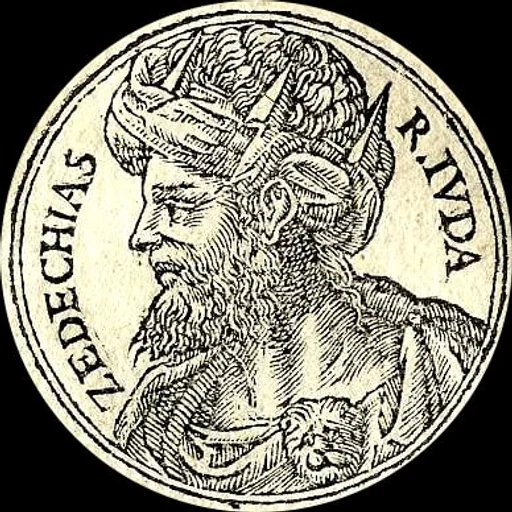
Who was Nebuzaradan in the Bible?
Nebuzaradan was the Babylonian commander who burned the temple and Jerusalem and carried the people into exile.
Babylonian Captain of the Guard
c. 586 BC
Nebuzaradan was the Babylonian commander who burned the temple and Jerusalem and carried the people into exile.
Follow the reading trailBEYOND THE NAME
Nebuzaradan was the captain of the guard sent by the king of Babylon to Jerusalem after the city was taken. He burned the temple, the palace, and the houses of the city, broke down its walls, and carried the bulk of the people away into captivity. Yet he left the poorest of the land to tend the vineyards and fields, so that the land was not wholly emptied.
Themes in the authored commentary
FOLLOW THE PASSAGES
These are chapter studies associated with this record. Their order follows the books and chapters, rather than a reconstructed timeline of the person’s life.
Babylonian captain of the guard who burned the temple and deported the people
Babylon’s army rings Jerusalem and waits. For a year and a half the siege tightens, until there was no bread for the people of the land (v. 3) and the wall breaks. Zedekiah runs in the dark and is overtaken on the plains of Jericho. They kill his sons before his eyes, then put out his eyes, so their slaughter is the last thing he sees. The temple burns, the walls come down, the people are marched east. So Judah was carried away out of their land (v. 21). A covenant long abandoned, come due at last in fire.
Chapter overview from the authored study guide.captain of the guard who oversees the release of Jeremiah from prison
For roughly four decades Jeremiah had carried one message to a city that did not want to hear it: Jerusalem would fall under the weight of its own refusal, and the only path through was surrender to the judgment God had announced. He was mocked for it, imprisoned for it, lowered into a miry cistern to die for it (Jer. 38). Now, in this chapter, the word becomes history. The siege that began in Zedekiah’s ninth year grinds on until, in his eleventh, the city was broken up (v. 2).
Chapter overview from the authored study guide.captain of the guard who releases Jeremiah with provisions and freedom to go where he wishes
Jerusalem has fallen. The walls are breached, the temple is burned, and the survivors are being driven into exile. In the previous chapter Jeremiah had been pulled from the miry dungeon and committed to the court of the prison; now, in the confusion of the deportation, he is somehow swept up with the others and found bound in chains among all that were carried away captive (v. 1) at Ramah, the staging-point where the long column of prisoners was assembled before the march to Babylon. It is the lowest the prophet has been brought - the man who told the truth about the disaster now wears the disaster’s chains.
Chapter overview from the authored study guide.Nebuchadnezzar's captain of the guard who burns Jerusalem and deports its people
Jeremiah 52 is the final chapter of the book, and it does not read like the rest of it. There are no oracles here, no thus saith the LORD, no weeping prophet pleading with a stubborn people. It is a chronicle - a sober historical appendix that retells, almost word for word with the close of 2 Kings, the fall of Jerusalem in 587 BC. Everything Jeremiah had announced for forty years now becomes dated, documented history: the siege under Nebuchadrezzar (vv. 4-5), the famine and the breach (vv. 6-7), the flight and capture of Zedekiah (vv. 8-9), the slaughter of his sons and the putting out of his eyes (vv. 10-11).
Chapter overview from the authored study guide.THE PEOPLE AROUND THE PERSON
Relationships follow the source graph. Some are interpretive or uncertain, and individual verse citations are not yet available for every connection.
STUDY & INTERPRETATION
Nebuzaradan carries out the destruction of Jerusalem in 2 Kings 25, and Scripture presents him as the instrument by which the long-warned judgment finally falls upon temple, city, and people. The burning of the house of God is the lowest point of Israel’s story to that moment, the loss of the very place where heaven and earth had met in worship. Even so, his sparing of the poorest to keep the land remembers that God’s judgments are never without a remnant, and that the land itself was held in trust for a return. The grief of this hour, voiced in Lamentations, becomes part of the hope Scripture carries forward, that the God who allowed His house to be torn down would in time restore a meeting place between Himself and His people, fulfilled when His own Son tabernacles among them.
From the Learn of Christ person commentary. Read alongside the linked Scripture passages.KEEP SCRIPTURE CLOSE
4 authored chapter guides feature this person. This is guide coverage, not an exhaustive count of biblical mentions.
ASK A BETTER QUESTION
Identity, story, early-life sources, family, and where to read.
Nebuzaradan was the Babylonian commander who burned the temple and Jerusalem and carried the people into exile.
Nebuzaradan was the captain of the guard sent by the king of Babylon to Jerusalem after the city was taken. He burned the temple, the palace, and the houses of the city, broke down its walls, and carried the bulk of the people away into captivity. Yet he left the poorest of the land to tend the vineyards and fields, so that the land was not wholly emptied.
The individualized passage index associates this Nebuzaradan record with 2 Kings, Jeremiah. There are 15 distinct indexed verse references in the 66-book Bible. Browse the book-by-book list below; it separates this identity from other people who share the name. Source assignments and textual identifications can require interpretation.
A separate childhood account for Nebuzaradan is not provided in our current authored profile sources. Begin with 2 Kings 25:8 and the passages linked here for the evidence that is available. The first indexed reference to a name is not a birth record. This profile does not establish a birth date, schooling, or childhood events beyond what its sources state.
The current source graph does not list immediate family for Nebuzaradan. That is a limit of this data, not evidence that Nebuzaradan had no relatives. Read the cited passages for the details they actually give.
Nebuzaradan carries out the destruction of Jerusalem in 2 Kings 25, and Scripture presents him as the instrument by which the long-warned judgment finally falls upon temple, city, and people. The burning of the house of God is the lowest point of Israel’s story to that moment, the loss of the very place where heaven and earth had met in worship.
Answers draw on our existing authored biography and linked chapter studies. Where supplied, verse assignments come from the individualized STEP Bible index. Childhood answers distinguish documented events from gaps in the available sources.
FIND THE PERSON IN THE TEXT
15 distinct verse references in the source’s 66-book index. These are indexed name assignments, rather than every indirect allusion to this person. A name may also refer to descendants, a tribe, or a nation; read each passage to distinguish that usage from the individual.
“And in the fifth month, on the seventh day of the month, which is the nineteenth year of king Nebuchadnezzar king of Babylon, came Nebuzaradan, captain of the guard, a servant of the king of Babylon, unto Jerusalem:”
2 Kings 25:8 · King James Version
“Now Nebuchadrezzar king of Babylon gave charge concerning Jeremiah to Nebuzaradan the captain of the guard, saying,”
Jeremiah 39:11 · King James Version
“Even men, and women, and children, and the king’s daughters, and every person that Nebuzaradan the captain of the guard had left with Gedaliah the son of Ahikam the son of Shaphan, and Jeremiah the prophet, and Baruch the son of Neriah.”
Jeremiah 43:6 · King James Version
“In the three and twentieth year of Nebuchadrezzar Nebuzaradan the captain of the guard carried away captive of the Jews seven hundred forty and five persons: all the persons were four thousand and six hundred.”
Jeremiah 52:30 · King James Version
References are adapted from STEP Bible / Tyndale House TIPNR (CC BY 4.0). Deduplicated, matched to this identity, and checked against the bundled KJV’s verse bounds. Interpretive assignments and translation/versification differences may remain. This index is separate from evidence for individual family relationships.
YOUR OWN OBSERVATIONS
Notes, saved people, and study marks stay in this browser. They do not sync to your account.
KEEP EXPLORING
People featured in the same study guides. Sharing a chapter does not establish a family relationship.