Who was Nebuchadnezzar in the Bible?
Nebuchadnezzar was the powerful king of Babylon who conquered Jerusalem and carried its people into exile.
King of Babylon
c. 605-562 BC
Nebuchadnezzar was the powerful king of Babylon who conquered Jerusalem and carried its people into exile.
Follow the reading trailBEYOND THE NAME
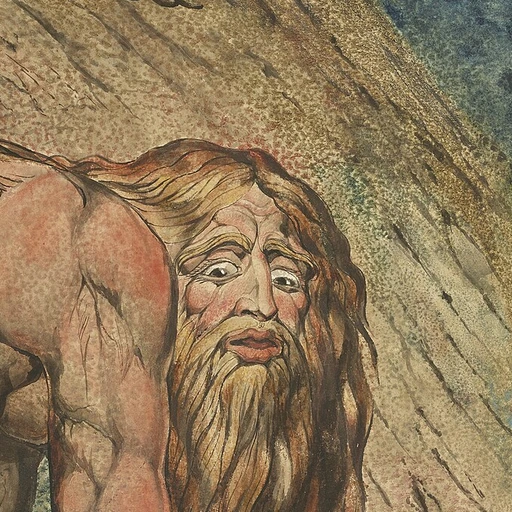
Nebuchadnezzar ruled Babylon at the height of its empire and besieged Jerusalem, eventually destroying the temple and deporting many of God’s people. The accounts in Kings, Chronicles, and the opening of First Esdras describe his role in ending the kingdom of Judah, while the book of Daniel records his dreams, his pride, and his humbling before the God of heaven.
Themes in the authored commentary
These are other entries using this name. Compare their source passages before treating them as the same or different historical people.
FOLLOW THE PASSAGES
Selected passages and introductions help you read this person’s story in context.
king whose troubling dream drives him to demand both its content and interpretation
Nebuchadnezzar demands that his advisers tell him both his dream and its interpretation. Daniel attributes the answer to God and describes a succession of kingdoms. The encounter introduces a recurring theme: royal power remains subject to God.
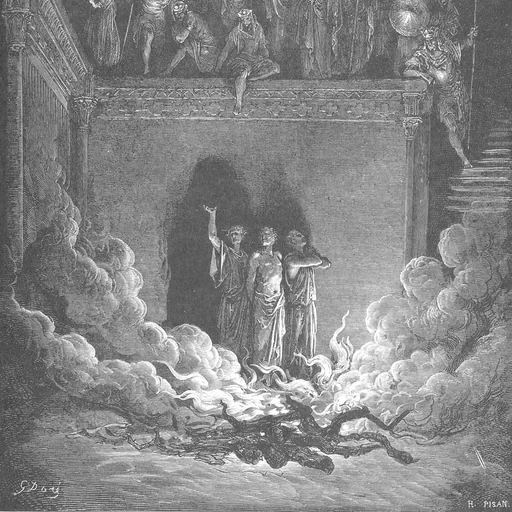
commands all to bow to his golden image and orders the three into the furnace
The king’s golden image and command to worship it bring Shadrach, Meshach, and Abednego into conflict with royal authority. Their refusal leads to the furnace. Daniel is not named among the three participants in this episode.
receives a dream of a great tree, is struck with madness, and is restored after acknowledging God's sovereignty
The chapter presents the king’s account of a warning dream, a period of humiliation, and the restoration of his understanding. His concluding praise brings the earlier question of power into a personal story of pride and dependence.
Babylonian king whose army besieged and destroyed Jerusalem
The destruction of Jerusalem and its temple places Nebuchadnezzar within Judah’s history of conquest and exile. Read this account alongside Daniel: one describes the devastation of a kingdom, while the other follows life within the conquering empire.
THE PEOPLE AROUND THE PERSON
Daniel 5:2, 11, 18, and 22 uses father-and-son language for Nebuchadnezzar and Belshazzar. This source relationship should not be treated as proof of direct biological parentage.
Recorded children
Relationships follow the source graph. Some are interpretive or uncertain, and individual verse citations are not yet available for every connection.
STUDY & INTERPRETATION
Nebuchadnezzar stands as the towering instrument of judgment that brought Judah’s long disobedience to its appointed end, fulfilling the warnings the prophets had spoken for generations. Yet even this mightiest of kings is shown to be under a greater rule: in Daniel he learns, through madness and restoration, that the Most High governs the kingdoms of men and gives them to whom He will. His story sets the stage for exile and the hope of return, reminding readers that empires rise and fall within a larger purpose. The God who could bend Babylon to His ends would also, in time, send a King whose kingdom would never be shaken.
From the Learn of Christ person commentary. Read alongside the linked Scripture passages.KEEP SCRIPTURE CLOSE
26 authored chapter guides feature this person. This is guide coverage, not an exhaustive count of biblical mentions.
ASK A BETTER QUESTION
Identity, story, early-life sources, family, and where to read.
Names and spellings in the source: Nebuchadnezzar · Nebuchadrezzar
Nebuchadnezzar was the powerful king of Babylon who conquered Jerusalem and carried its people into exile.
Nebuchadnezzar ruled Babylon at the height of its empire and besieged Jerusalem, eventually destroying the temple and deporting many of God’s people. The accounts in Kings, Chronicles, and the opening of First Esdras describe his role in ending the kingdom of Judah, while the book of Daniel records his dreams, his pride, and his humbling before the God of heaven.
The individualized passage index associates this Nebuchadnezzar record with Ezra, Jeremiah, Ezekiel, Daniel. There are 60 distinct indexed verse references in the 66-book Bible. Browse the book-by-book list below; it separates this identity from other people who share the name. Source assignments and textual identifications can require interpretation.
The biblical passages linked here describe Nebuchadnezzar as Babylon’s king during the conquest of Judah and in the court narratives of Daniel. They do not supply an account of his childhood, schooling, or birth date. Historical reconstructions should be identified separately from what these passages record.
Nebuchadnezzar’s source record lists Belshazzar (child). These are source-graph relationships; legal family, uncertain identifications, and ancestral language require the cautions below. Individual verse evidence is not yet retained for every family edge.
Nebuchadnezzar stands as the towering instrument of judgment that brought Judah’s long disobedience to its appointed end, fulfilling the warnings the prophets had spoken for generations. Yet even this mightiest of kings is shown to be under a greater rule: in Daniel he learns, through madness and restoration, that the Most High governs the kingdoms of men and gives them to whom He will.
Answers draw on our existing authored biography and linked chapter studies. Where supplied, verse assignments come from the individualized STEP Bible index. Childhood answers distinguish documented events from gaps in the available sources.
Nebuchadnezzar@2Ki.24.1-Dan
FIND THE PERSON IN THE TEXT
60 distinct verse references in the source’s 66-book index. These are indexed name assignments, rather than every indirect allusion to this person. A name may also refer to descendants, a tribe, or a nation; read each passage to distinguish that usage from the individual.
“Now these are the children of the province that went up out of the captivity, of those which had been carried away, whom Nebuchadnezzar the king of Babylon had carried away unto Babylon, and came again unto Jerusalem and Judah, every one unto his city;”
Ezra 2:1 · King James Version
“The word that the LORD spake to Jeremiah the prophet, how Nebuchadrezzar king of Babylon should come and smite the land of Egypt.”
Jeremiah 46:13 · King James Version
“That at what time ye hear the sound of the cornet, flute, harp, sackbut, psaltery, dulcimer, and all kinds of musick, ye fall down and worship the golden image that Nebuchadnezzar the king hath set up:”
Daniel 3:5 · King James Version
“O thou king, the most high God gave Nebuchadnezzar thy father a kingdom, and majesty, and glory, and honour:”
Daniel 5:18 · King James Version
References are adapted from STEP Bible / Tyndale House TIPNR (CC BY 4.0). Deduplicated, matched to this identity, and checked against the bundled KJV’s verse bounds. Interpretive assignments and translation/versification differences may remain. This index is separate from evidence for individual family relationships.
YOUR OWN OBSERVATIONS
Notes, saved people, and study marks stay in this browser. They do not sync to your account.
KEEP EXPLORING
People featured in the same study guides. Sharing a chapter does not establish a family relationship.