Who was Ezekiel in the Bible?
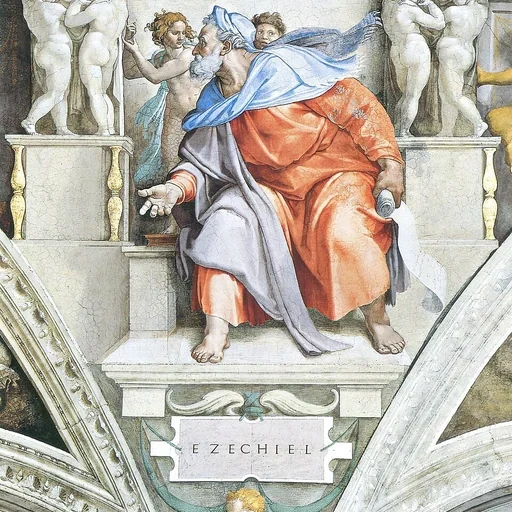
Ezekiel was a priest taken captive to Babylon who became a prophet after seeing a great vision of God’s glory.
Prophet of the Exile
6th century BC
Ezekiel was a priest taken captive to Babylon who became a prophet after seeing a great vision of God’s glory.
Follow the reading trailBEYOND THE NAME
Ezekiel was among the exiles carried to Babylon, and by the river Chebar he saw an overwhelming vision of God’s glory and was called to be a prophet to a rebellious people. Through vivid signs, parables, and visions he warned Judah of coming judgment, then later comforted the exiles with promises of restoration. He saw the glory depart from the temple and, at the end of his book, saw it return to a renewed temple, alongside the vision of dry bones brought back to life.
Themes in the authored commentary
FOLLOW THE PASSAGES
These are chapter studies associated with this record. Their order follows the books and chapters, rather than a reconstructed timeline of the person’s life.
priest-prophet among the exiles who receives the overwhelming vision of God's glory by the Chebar canal
The book of Ezekiel opens not in a temple or a palace but in a refugee camp. Now it came to pass… as I was among the captives by the river of Chebar, that the heavens were opened, and I saw visions of God (v. 1). Ezekiel is a priest in exile - carried off to Babylon with King Jehoiachin, far from the altar he was born to serve, in the land of a people who worshipped other gods. The heavens open over the Chebar, not over Zion. Whatever this book is about to say about judgment and ruin, it begins by insisting that God is not confined to the holy land He is about to let fall. He comes to His prophet in the place of loss.
Chapter overview from the authored study guide.sees twenty-five leaders in the east gate and is commanded to prophesy against them
The great vision that began in Ezekiel 8 - the prophet carried in spirit to Jerusalem to see the secret idolatry in the temple and the glory beginning to withdraw - now comes to its sharp turn. The Spirit lifts Ezekiel to the east gate of the LORD’s house, where twenty-five men stand giving counsel to the city. Their confidence has hardened into a proverb: this city is the caldron, and we be the flesh (v. 3). The walls of Jerusalem are a cooking-pot; they are the meat safe inside it; the danger is somewhere else.
Chapter overview from the authored study guide.recounts Israel's repeated rebellions in Egypt and the wilderness as elders come to inquire of him
It opens with a date and a delegation. Certain of the elders of Israel came to enquire of the LORD, and sat before me (v. 1). They are exiles in Babylon, and they have come to the prophet for a word from God. The answer is a refusal: Are ye come to enquire of me? As I live, saith the Lord GOD, I will not be enquired of by you (v. 3). But the refusal is not silence. In place of the oracle they wanted, God gives them their own past. Cause them to know the abominations of their fathers (v. 4).
Chapter overview from the authored study guide.prophet who proclaims judgment on Egypt and announces the breaking of Pharaoh's arm
Ezekiel 30 is the third of the oracles against Egypt, and it begins where grief begins - with a cry. Son of man, prophesy and say, Thus saith the Lord GOD; Howl ye, Woe worth the day! (v. 2). The prophet is told to wail the judgment, to raise the sound of mourning over a doom already on its way. And the reason is given at once: For the day is near, even the day of the LORD is near, a cloudy day; it shall be the time of the heathen (v. 3). That phrase - the day of the LORD - is one of the great recurring notes of prophecy, the day when God settles accounts with the proud.
Chapter overview from the authored study guide.prophet commanded to continue the oracle against Gog and to call the birds and beasts to God's sacrificial feast
The oracle that began in Ezekiel 38 finishes here, and it finishes fast. The great northern host under Gog has been drawn up against the restored land - and on the mountains of Israel it falls. There is no contest. The LORD Himself disarms the enemy: I will smite thy bow out of thy left hand, and will cause thine arrows to fall out of thy right hand (v. 3). The mighty army becomes carrion for the ravenous birds of every sort, and… the beasts of the field (v. 4), and the weapons it brought to plunder a peaceful people are gathered up by that people and burned as fuel seven years (v. 9).
Chapter overview from the authored study guide.celebrated for revealing the vision of God's glory and the chariot throne
How do you measure a life once it is over? Sirach 49 answers by reading off a roll of names, and the standard it uses is simple and searching: did this person hold fast to God? The chapter opens with Josiah, who became king as a boy and turned a whole nation back from idols, and his memory is called sweet as incense, sweet as honey in the mouth. Then comes a startling verdict. Apart from David, Hezekiah, and Josiah, the kings of Judah all sinned, forsook the law of the Most High, and so lost the kingdom and saw the holy city burned. The writer is teaching that a throne guarantees nothing.
Chapter overview from the authored study guide.THE PEOPLE AROUND THE PERSON
Recorded parents
Recorded spouses
Relationships follow the source graph. Some are interpretive or uncertain, and individual verse citations are not yet available for every connection.
STUDY & INTERPRETATION
Ezekiel ministers in the wreckage of exile, where the unthinkable has happened and Jerusalem and its temple are lost, and his task is to make sense of God’s holiness in the ruins. His visions move from glory departing a defiled temple to a valley of dry bones raised by the breath of God to a new temple from which living water flows to heal the land. Through him God promises a new heart and a new spirit, and a shepherd from David’s line who will gather the scattered flock. These promises of resurrection, a cleansed heart, living water, and the true Shepherd open toward their fulfillment in the One who is the good Shepherd and the source of living water, in whom God dwells with His people forever.
From the Learn of Christ person commentary. Read alongside the linked Scripture passages.KEEP SCRIPTURE CLOSE
49 authored chapter guides feature this person. This is guide coverage, not an exhaustive count of biblical mentions.
ASK A BETTER QUESTION
Identity, story, early-life sources, family, and where to read.
Ezekiel was a priest taken captive to Babylon who became a prophet after seeing a great vision of God’s glory.
Ezekiel was among the exiles carried to Babylon, and by the river Chebar he saw an overwhelming vision of God’s glory and was called to be a prophet to a rebellious people. Through vivid signs, parables, and visions he warned Judah of coming judgment, then later comforted the exiles with promises of restoration. He saw the glory depart from the temple and, at the end of his book, saw it return to a renewed temple, alongside the vision of dry bones brought back to life.
The individualized passage index associates this Ezekiel record with Ezekiel. There are 2 distinct indexed verse references in the 66-book Bible. Browse the book-by-book list below; it separates this identity from other people who share the name. Source assignments and textual identifications can require interpretation.
A separate childhood account for Ezekiel is not provided in our current authored profile sources. Begin with Ezekiel 1:3 and the passages linked here for the evidence that is available. The first indexed reference to a name is not a birth record. This profile does not establish a birth date, schooling, or childhood events beyond what its sources state.
Ezekiel’s source record lists Buzi (father), one of Ezekiel’s wives (spouse). These are source-graph relationships; legal family, uncertain identifications, and ancestral language require the cautions below. Individual verse evidence is not yet retained for every family edge.
Ezekiel ministers in the wreckage of exile, where the unthinkable has happened and Jerusalem and its temple are lost, and his task is to make sense of God’s holiness in the ruins. His visions move from glory departing a defiled temple to a valley of dry bones raised by the breath of God to a new temple from which living water flows to heal the land.
Answers draw on our existing authored biography and linked chapter studies. Where supplied, verse assignments come from the individualized STEP Bible index. Childhood answers distinguish documented events from gaps in the available sources.
FIND THE PERSON IN THE TEXT
2 distinct verse references in the source’s 66-book index. These are indexed name assignments, rather than every indirect allusion to this person. A name may also refer to descendants, a tribe, or a nation; read each passage to distinguish that usage from the individual.
“The word of the LORD came expressly unto Ezekiel the priest, the son of Buzi, in the land of the Chaldeans by the river Chebar; and the hand of the LORD was there upon him.”
Ezekiel 1:3 · King James Version
“Thus Ezekiel is unto you a sign: according to all that he hath done shall ye do: and when this cometh, ye shall know that I am the Lord GOD.”
Ezekiel 24:24 · King James Version
References are adapted from STEP Bible / Tyndale House TIPNR (CC BY 4.0). Deduplicated, matched to this identity, and checked against the bundled KJV’s verse bounds. Interpretive assignments and translation/versification differences may remain. This index is separate from evidence for individual family relationships.
YOUR OWN OBSERVATIONS
Notes, saved people, and study marks stay in this browser. They do not sync to your account.
KEEP EXPLORING
People featured in the same study guides. Sharing a chapter does not establish a family relationship.