Ezekiel 29
People in this chapter
After the long judgment on Tyre, Ezekiel turns south to the other great power on Judah's horizon - Egypt, the ancient empire that had been by turns Israel's house of bondage, her tempting ally, and her false hope. The chapter is dated and direct: Son of man, set thy face against Pharaoh king of Egypt, and prophesy against him, and against all Egypt (v. 2). At the center stands an unforgettable image. Pharaoh is the great dragon that lieth in the midst of his rivers - the huge river-creature, the crocodile of the Nile, sprawled in the water and boasting the words that name the whole problem: My river is mine own, and I have made it for myself (v. 3).
Egypt's wealth flowed from the Nile's yearly flood, and Pharaoh had come to speak of it as a thing he owned and even made. The LORD answers that boast with the rest of the chapter.1
Tap any highlighted phrase to jump to the commentary that unpacks it.
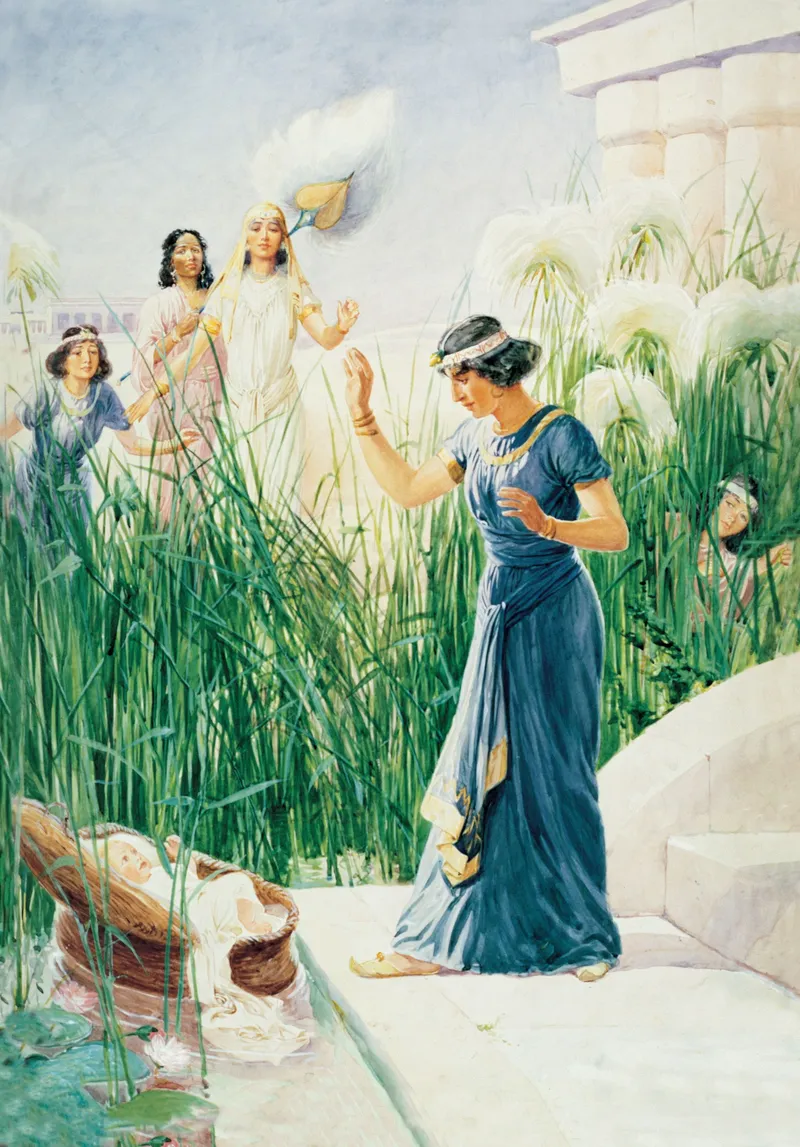
Ezekiel 29:1-7My River Is Mine Own
1In the tenth year, in the tenth month, in the twelfth day of the month, the word of the LORD came unto me, saying, 2Son of man, set thy face against Pharaoh king of Egypt, and prophesy against him, and against all Egypt: 3Speak, and say, Thus saith the Lord GOD; Behold, I am against thee, Pharaoh king of Egypt, the great dragon that lieth in the midst of his rivers, which hath said, My river is mine own, and I have made it for myself. 4But I will put hooks in thy jaws, and I will cause the fish of thy rivers to stick unto thy scales, and I will bring thee up out of the midst of thy rivers, and all the fish of thy rivers shall stick unto thy scales. 5And I will leave thee thrown into the wilderness, thee and all the fish of thy rivers: thou shalt fall upon the open fields; thou shalt not be brought together, nor gathered: I have given thee for meat to the beasts of the field and to the fowls of the heaven. 6And all the inhabitants of Egypt shall know that I am the LORD, because they have been a staff of reed to the house of Israel. 7When they took hold of thee by thy hand, thou didst break, and rend all their shoulder: and when they leaned upon thee, thou brakest, and madest all their loins to be at a stand.
The oracle is carefully dated - In the tenth year, in the tenth month, in the twelfth day of the month (v. 1) - the way Ezekiel dates all his great messages, anchoring the word of God to a real moment in a real exile. Then comes the commission: Son of man, set thy face against Pharaoh king of Egypt, and prophesy against him, and against all Egypt (v. 2). To set the face against someone is to turn toward them with fixed, deliberate intent; it is the posture of one who has made a judgment and will not be turned aside.
And the target is named without flinching: not some petty chieftain but Pharaoh king of Egypt, ruler of the oldest and proudest empire the prophet's world knew. Egypt had been many things to Israel - the land of slavery they were brought out of, and, again and again, the tempting ally they ran back to whenever Babylon loomed. Judah's kings kept hoping Egypt's chariots would save them. So this word lands on a nation Israel was prone to fear and prone to trust at the same time, and the LORD aims His prophet straight at it.
The portrait that follows is vivid and deliberate: Behold, I am against thee, Pharaoh king of Egypt, the great dragon that lieth in the midst of his rivers (v. 3). Pharaoh is drawn as a huge river-creature - the crocodile of the Nile, the monster sprawled in the water - lying at ease in the rivers that made Egypt rich. And from that creature comes the sentence the whole chapter is built to answer: My river is mine own, and I have made it for myself. Sit with how staggering that claim is.
The Nile's yearly flood, which Egypt did nothing to cause and could not control, is spoken of as a personal possession - and more, as a personal achievement: I have made it for myself. Pharaoh has confused the gift with the giver, the stream with its source, and finally claims to be the source himself. It is the purest statement of the self-made boast: I own what flows to me, and I produced it by my own hand.
Against exactly that boast the LORD says, in the first words of the oracle, Behold, I am against thee. The dragon's great mistake is not merely arrogance; it is forgetting that the river was ever a gift.2
The judgment fits the boast with a terrible precision: But I will put hooks in thy jaws, and I will cause the fish of thy rivers to stick unto thy scales, and I will bring thee up out of the midst of thy rivers (v. 4). The very rivers Pharaoh called his own become the place he is hauled out of, like a crocodile dragged from the water on a hook, helpless, the fish that clung to him hauled up with him.
Then: I will leave thee thrown into the wilderness… thou shalt fall upon the open fields; thou shalt not be brought together, nor gathered: I have given thee for meat to the beasts of the field and to the fowls of the heaven (v. 5). Out of the water that gave him life and pride, the great dragon is flung into the desert, where a river-creature cannot survive, and left exposed - not even granted the dignity of burial, but given as carrion to beast and bird.
The picture is meant to shock. The one who said I have made it for myself cannot, in the end, keep himself alive for a single hour outside the gift he claimed to own. Strip away what was given, and nothing of his own is left to stand on. And running underneath it is the refrain that governs the whole oracle: this happens so that they shall know that I am the LORD (v. 6).1
The oracle now names the second charge, and it shifts the camera from Egypt's pride to Israel's misplaced trust: Egypt has been a staff of reed to the house of Israel. When they took hold of thee by thy hand, thou didst break, and rend all their shoulder: and when they leaned upon thee, thou brakest, and madest all their loins to be at a stand (vv. 6-7). The image is exact and painful.
A reed is the hollow cane that grows along the Nile; from a distance it looks like a walking-staff, something to lean your weight on. But the moment real weight comes onto it, it does not merely fail - it splinters, and the jagged broken end drives into the hand that gripped it, tearing the shoulder, leaving the leaning man worse off than if he had trusted nothing at all. That is what Egypt had been to Judah.
Every time God's people leaned on Egypt's chariots, turning from the LORD, the support collapsed and wounded them in the collapsing. The charge is twofold, then: Egypt is judged for her own boast (My river is mine own), and judged for having been a treacherous prop to a people who should have leaned elsewhere. The reed that breaks in the hand is one of Scripture's sharpest pictures of what it costs to trust the wrong thing.
Ezekiel 29:8-12Utterly Waste and Desolate
8Therefore thus saith the Lord GOD; Behold, I will bring a sword upon thee, and cut off man and beast out of thee. 9And the land of Egypt shall be desolate and waste; and they shall know that I am the LORD: because he hath said, The river is mine, and I have made it. 10Behold, therefore I am against thee, and against thy rivers, and I will make the land of Egypt utterly waste and desolate, from the tower of Syene even unto the border of Ethiopia. 11No foot of man shall pass through it, nor foot of beast shall pass through it, neither shall it be inhabited forty years. 12And I will make the land of Egypt desolate in the midst of the countries that are desolate, and her cities among the cities that are laid waste shall be desolate forty years: and I will scatter the Egyptians among the nations, and will disperse them through the countries.
Now the LORD names the charge a second time, and the repetition is the point: And the land of Egypt shall be desolate and waste; and they shall know that I am the LORD: because he hath said, The river is mine, and I have made it (v. 9). The whole devastation that follows is hung on that one clause - because he hath said. It was a sentence that brought the empire down. Not a battle lost, not a treaty broken, but a boast: the claim to own and to have made what was only ever a gift.
Scripture takes the words of the proud with great seriousness; what a heart says about itself and about God turns out to matter enormously. And notice the exact shape of the judgment's purpose: they shall know that I am the LORD. Pharaoh had said, in effect, I am the maker; the river is mine - and the judgment is calibrated to teach the one truth that boast denied, that the LORD is God and the river was always His.
The aim is the correction of a lie. Where a nation has built its whole self-understanding on I made it for myself, only the stripping away of everything can finally teach it otherwise.
The sentence is sweeping in space and in time. In space: I will make the land of Egypt utterly waste and desolate, from the tower of Syene even unto the border of Ethiopia (v. 10). Syene lay at Egypt's far southern frontier; the phrase reaches from one end of the long Nile country to the other - the whole land, top to bottom, with nothing left out. No foot of man shall pass through it, nor foot of beast shall pass through it (v. 11): an emptiness so complete that neither traveller nor grazing animal moves across it.
And in time the measure is given: forty years (vv. 11-12). Forty years is a weighted number in Scripture - the span Israel wandered in the wilderness, a full generation, long enough for the people who knew the old proud Egypt to pass from the scene. The same God who set the bounds of Egypt's pride now sets the bounds of her desolation: it is severe, it is total, but it is measured. It has a southern edge and a northern edge, a beginning and an end.
Even the judgment of the great dragon is held within limits the LORD has fixed, which is itself a quiet mercy buried in the sentence.1
A further turn of the screw comes in verse 12: Egypt will be made desolate in the midst of the countries that are desolate, and her cities among the cities that are laid waste. Egypt, who had looked down on the smaller nations and counted herself their superior, is now numbered among the ruined - one waste land among other waste lands, one fallen city among the rubble of others. The proud have been brought into the common heap.
And then the people themselves are dealt with: I will scatter the Egyptians among the nations, and will disperse them through the countries. The very thing that had happened to Judah - exile, dispersal, life as strangers in foreign lands - now falls on Egypt. There is a hard justice in it: the power that scattered and oppressed others is itself scattered. But the scattering, terrible as it is, is not framed as the end. As with the forty years, it is bounded; the next section will speak of a gathering.
Here the lesson stands stark and plain: no empire is too old, too rich, or too sure of itself to be brought low, and the nation that says I have made it for myself can find itself one ruin among many, its people blown across the earth.
Ezekiel 29:13-16No More the Confidence of the House of Israel
13Yet thus saith the Lord GOD; At the end of forty years will I gather the Egyptians from the people whither they were scattered: 14And I will bring again the captivity of Egypt, and will cause them to return into the land of Pathros, into the land of their habitation; and they shall be there a base kingdom. 15It shall be the basest of the kingdoms; neither shall it exalt itself any more above the nations: for I will diminish them, that they shall no more rule over the nations. 16And it shall be no more the confidence of the house of Israel, which bringeth their iniquity to remembrance, when they shall look after them: but they shall know that I am the Lord GOD.
The section opens with one of the most important words in the chapter: Yet. Yet thus saith the Lord GOD; At the end of forty years will I gather the Egyptians from the people whither they were scattered (v. 13). After the sword, after the emptied land, after the dispersal - yet. The same God who scattered will gather. The forty years run their course and then the LORD brings the Egyptians home, into the land of Pathros, into the land of their habitation (v. 14).
This is a startling mercy in an oracle of judgment: even Egypt, the proud oppressor, is not consigned to extinction. The judgment was real but bounded; on its far side there is a regathering. And yet the restoration is carefully limited. They return only to be a base kingdom - a lowly, humbled realm. Egypt will exist again, but never again as she was. The point is precise. The LORD's aim was never to wipe Egypt off the earth; it was to break the boast of the dragon.
Once the pride is broken, the people may come home - but they come home small, and that smallness is itself the mercy, for it is the only condition on which a nation that said I made it for myself can safely exist.
Verse 15 presses the humbling as far as it will go: It shall be the basest of the kingdoms; neither shall it exalt itself any more above the nations: for I will diminish them, that they shall no more rule over the nations. Three times over the same truth is driven home - the basest of kingdoms, never again exalting itself, no more ruling the nations. The empire that had towered over the ancient world, that had enslaved Israel and dictated to its neighbours, is permanently reduced.
Notice the verb I will diminish them. The shrinking is not an accident of history or the mere fortunes of war; it is the deliberate act of God, who lowers the proud on purpose. And there is a deep wisdom in the form the judgment finally takes. The LORD does not destroy Egypt; He diminishes her - He leaves her standing, but small, so that her continued existence becomes a standing lesson. Every later glance at a reduced Egypt would tell the same story: this is what becomes of the kingdom that said its river was its own.
The reduction is mercy and warning at once - mercy that the people survive, warning written across the face of a once-great land now humbled among the nations.
The reason for all this reaches its climax in verse 16, and it turns out to be about Israel as much as Egypt: the diminished Egypt shall be no more the confidence of the house of Israel, which bringeth their iniquity to remembrance, when they shall look after them. Here is the deepest purpose of the whole oracle. Egypt is humbled so that God's people will stop running to her. As long as a strong Egypt sat to the south, Judah was tempted to look after them - to glance over the shoulder toward Egypt's chariots whenever danger loomed, turning her eyes from the LORD.
And every such glance, the verse says, bringeth their iniquity to remembrance: the very act of trusting Egypt was a sin that called their guilt to mind, because it was a refusal to trust God. So the LORD removes the temptation by removing Egypt's greatness. With no mighty Egypt left to lean on, Israel might at last learn to lean where she always should have. The chapter that began with one nation's false boast (My river is mine own) ends by exposing another nation's false confidence (the confidence of the house of Israel) - and both are healed by the same medicine: knowing that I am the Lord GOD.
Ezekiel 29:17-21The Horn of Israel Shall Bud
17And it came to pass in the seven and twentieth year, in the first month, in the first day of the month, the word of the LORD came unto me, saying, 18Son of man, Nebuchadrezzar king of Babylon caused his army to serve a great service against Tyrus: every head was made bald, and every shoulder was peeled: yet had he no wages, nor his army, for Tyrus, for the service that he had served against it: 19Therefore thus saith the Lord GOD; Behold, I will give the land of Egypt unto Nebuchadrezzar king of Babylon; and he shall take her multitude, and take her spoil, and take her prey; and it shall be the wages for his army. 20I have given him the land of Egypt for his labour wherewith he served against it, because they wrought for me, saith the Lord GOD. 21In that day will I cause the horn of the house of Israel to bud forth, and I will give thee the opening of the mouth in the midst of them; and they shall know that I am the LORD.
The chapter closes with a separate, later word - dated to the seven and twentieth year (v. 17), the very last dated oracle in the book - and it makes a remarkable point about how God governs the nations. Nebuchadrezzar had thrown his whole army against Tyre in a years-long siege so brutal that every head was made bald, and every shoulder was peeled from the labour of it (v. 18) - heads rubbed raw under helmets, shoulders chafed bare from hauling siege-works.
And after all that toil, yet had he no wages, nor his army: the island-city held out, or its wealth slipped away by sea, and Babylon's vast effort went unpaid. So the LORD says, I will give the land of Egypt unto Nebuchadrezzar king of Babylon… and it shall be the wages for his army (v. 19). Egypt becomes the unpaid labourer's wage. What is striking is the sovereignty assumed here. The pagan emperor who imagines himself master of his own campaigns is, all the while, a workman in the hand of God - they wrought for me, saith the Lord GOD (v. 20).
Even Babylon's wars serve purposes Babylon never guessed. The God who is against the dragon of the Nile is also the God who quietly sees to it that no labour in His world, even a tyrant's, goes finally unrequited.
And then, in the very last line, after chapter upon chapter of judgment on the nations, a single bright shoot pushes up through the rubble: In that day will I cause the horn of the house of Israel to bud forth, and I will give thee the opening of the mouth in the midst of them; and they shall know that I am the LORD (v. 21). The horn in Scripture is the picture of strength - the strength of the ox or the ram, the symbol of power and dignity and royal might.
To say the horn will bud forth joins that image of strength to the gentlest of pictures, a plant putting out its first green growth: the strength of Israel, long cut down, will begin again, quietly, like a shoot from an old stump. It is the smallest of promises set against the vast oracles of doom - not a restored empire, just a budding - and that is exactly its beauty. While Egypt is diminished and Tyre is spoiled and Babylon marches as God's unwitting workman, the LORD is tending one small green thing: the renewed strength of His own people.
And He grants His prophet the opening of the mouth in the midst of them - vindicated speech, the freedom to speak the word that the unfolding events now prove true. The chapter that opened with a boast (I have made it for myself) ends with a gift (I will cause the horn… to bud): one strength claimed by a man and brought to nothing, one strength given by God and quietly made to grow.
Research trail
Sources & further study
These references support the historical, linguistic, manuscript, and contextual notes in this chapter. Scripture remains the primary text; external sources are provided so readers can inspect the research directly.
- Ezekiel 29 - Translators' NotesThe NET Bible's detailed footnotes on Ezekiel 29 - the imagery of Pharaoh as the river-dragon and the hooks in his jaws (vv. 3-4), the geography of the tower of Syene even unto the border of Ethiopia (v. 10), the forty years of desolation (vv. 11-13), and the historical question of Egypt as Nebuchadrezzar's wages for the siege of Tyre (vv. 17-20).
- Ezekiel 29 · Hebrew + classical Jewish commentaryThe Hebrew text of Ezekiel 29 with Rashi, Radak, and other classical commentators side by side - useful for tannin (v. 3, the “great dragon” or river-monster of the Nile), for the verb behind which hath said, My river is mine own (v. 3), and for mish'enet qaneh (v. 6, the “staff of reed” that breaks in the hand).
- Ezekiel 29 ↔ Isaiah 36 · Isaiah 42 · Acts 17 · 1 Corinthians 4Traces the threads tying Ezekiel 29 to the rest of Scripture - the broken reed of Egypt (vv. 6-7) read beside Isaiah's staff of this broken reed… it will go into his hand, and pierce it (Isa. 36:6) and beside the Servant who a bruised reed shall he not break (Isa. 42:3; Matt. 12:20), and Pharaoh's boast I have made it for myself (v. 3) read against what hast thou that thou didst not receive? (1 Cor. 4:7).
Where this echoes in Scripture
My River Is Mine Own
- Isaiah 36:6Thou trustest upon the staff of this broken reed, on Egypt; whereon if a man lean, it will go into his hand, and pierce it.The same figure as verses 6-7 - Egypt the reed that breaks in the hand of all who lean on it.
- Acts 17:28For in him we live, and move, and have our being.The direct answer to Pharaoh's boast in verse 3 - not I made it for myself, but life and breath received from God.
- 1 Corinthians 4:7What hast thou that thou didst not receive? now if thou didst receive it, why dost thou glory, as if thou hadst not received it?The dismantling of the self-made boast of verse 3 - everything is received, nothing self-produced.
- Ezekiel 32:2Thou art as a whale in the seas: and thou camest forth with thy rivers, and troubledst the waters with thy feet.The later Egypt oracle returns to the same dragon-in-the-rivers image of verse 3.
- Psalm 24:1The earth is the LORD's, and the fulness thereof; the world, and they that dwell therein.The truth Pharaoh denied in verse 3 - the river, and all things, belong to the LORD.
Utterly Waste and Desolate
- Proverbs 16:18Pride goeth before destruction, and an haughty spirit before a fall.The pattern of the whole oracle - the boast of verse 9 leading straight to the desolation of verse 10.
- Isaiah 19:1Behold, the LORD rideth upon a swift cloud, and shall come into Egypt... and the heart of Egypt shall melt in the midst of it.Another prophet's word against Egypt - the same LORD who is against thy rivers in verse 10.
- Jeremiah 46:13The word that the LORD spake to Jeremiah the prophet, how Nebuchadrezzar king of Babylon should come and smite the land of Egypt.The sword on Egypt of verse 8, named in a parallel prophecy by Jeremiah.
- Daniel 4:30-32Is not this great Babylon, that I have built... The kingdom is departed from thee... till thou know that the most High ruleth.The same boast and the same lesson as verse 9 - a king who said I have built, brought low till he knew God rules.
- Matthew 12:20A bruised reed shall he not break, and smoking flax shall he not quench, till he send forth judgment unto victory.The Servant set over against the reed that breaks and pierces in verses 6-7 - the One who will not break the bruised.
No More the Confidence of the House of Israel
- Psalm 20:7Some trust in chariots, and some in horses: but we will remember the name of the LORD our God.The very choice of verse 16 - the chariots of Egypt set against confidence in the LORD.
- Isaiah 31:1Woe to them that go down to Egypt for help... but they look not unto the Holy One of Israel, neither seek the LORD!The misplaced confidence verse 16 means to cure - leaning on Egypt, forsaking God.
- Psalm 118:8It is better to trust in the LORD than to put confidence in man.The lesson Egypt's diminishing was meant to teach Israel in verse 16.
- Jeremiah 17:5-7Cursed be the man that trusteth in man... Blessed is the man that trusteth in the LORD, and whose hope the LORD is.The two confidences of verse 16 - the cursed reed of human help, the blessed trust in the LORD.
- Philippians 3:3Worship God in the spirit, and rejoice in Christ Jesus, and have no confidence in the flesh.Where the New Testament relocates the confidence Egypt could never bear (v. 16) - in Christ.
The Horn of Israel Shall Bud
- Psalm 132:17There will I make the horn of David to bud: I have ordained a lamp for mine anointed.The budding horn of verse 21 traced to the house of David - the strength God causes to grow.
- Luke 1:68-69Blessed be the Lord God of Israel... And hath raised up an horn of salvation for us in the house of his servant David.The horn of verse 21 named at last - a horn of salvation raised up by God.
- Jeremiah 33:15In those days, and at that time, will I cause the Branch of righteousness to grow up unto David.The same image as verse 21 - strength caused by God to bud and grow for His people.
- Proverbs 21:1The king's heart is in the hand of the LORD, as the rivers of water: he turneth it whithersoever he will.The truth behind verses 19-20 - even Nebuchadrezzar wrought, unknowing, for the LORD.
- Isaiah 11:1And there shall come forth a rod out of the stem of Jesse, and a Branch shall grow out of his roots.The budding strength of verse 21 carried to its end - the green shoot out of a felled people.