Isaiah 19
Egypt was the ancient world's great power and Israel's oldest adversary - the civilization of the Nile, the empire of Pharaoh, the land of the bondage their entire national memory was shaped against. So the heading The burden of Egypt (v. 1) sets a hearer of Isaiah leaning toward judgment, and the chapter's first half meets that expectation without flinching. The LORD comes riding upon a swift cloud, and at His approach the idols of Egypt are moved and the heart of Egypt shall melt in the midst of it. Civil strife tears the land, the Nile fails and takes the whole economy down with it, and Egypt's celebrated sages - the wise men of Zoan and Noph - are exposed as fools.1
Tap any highlighted phrase to jump to the commentary that unpacks it.
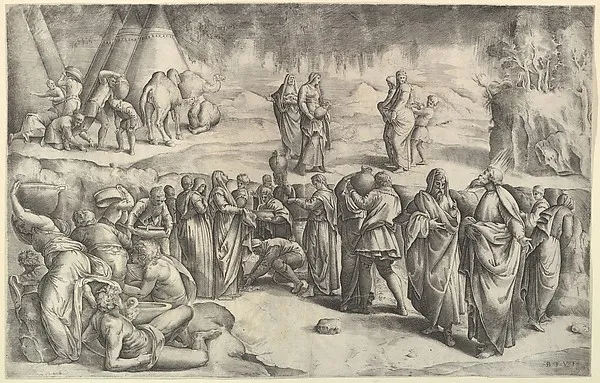
Isaiah 19:1-4The LORD Rideth Upon a Swift Cloud
1The burden of Egypt. Behold, the LORD rideth upon a swift cloud, and shall come into Egypt: and the idols of Egypt shall be moved at his presence, and the heart of Egypt shall melt in the midst of it. 2And I will set the Egyptians against the Egyptians: and they shall fight every one against his brother, and every one against his neighbour; city against city, and kingdom against kingdom. 3And the spirit of Egypt shall fail in the midst thereof; and I will destroy the counsel thereof: and they shall seek to the idols, and to the charmers, and to them that have familiar spirits, and to the wizards. 4And the Egyptians will I give over into the hand of a cruel lord; and a fierce king shall rule over them, saith the Lord, the LORD of hosts.
The chapter opens with a single weighted word: The burden of Egypt (v. 1). A burden in the prophets is a heavy oracle, a word of judgment so weighty it presses down on the one who must carry it. And no name in Israel's memory carried more freight than Egypt. This was the empire of the long bondage, the house of slaves their whole national story was an exodus out of, the great power on the Nile that had loomed over the region for a thousand years.
To announce a burden against Egypt was to announce that the unshakeable was about to be shaken. And the first line tells how: Behold, the LORD rideth upon a swift cloud, and shall come into Egypt. This is no mere shift in the balance of nations. It is the LORD Himself coming - riding the cloud as He does in the Psalms when He comes in power - and at His coming two things happen at once.
The idols of Egypt shall be moved at his presence, and the heart of Egypt shall melt in the midst of it. The gods that Egypt trusted shake before the living God, and the courage of the people drains away. The whole proud edifice of Egyptian confidence - its deities, its nerve - cannot stand when the LORD draws near.1
The judgment works inward, dismantling Egypt from the soul outward. First the social fabric tears: I will set the Egyptians against the Egyptians: and they shall fight every one against his brother… city against city, and kingdom against kingdom (v. 2). The bonds that hold a civilization together - brother to brother, city to city - come undone, and Egypt turns its strength against itself. Then the mind of the nation fails: the spirit of Egypt shall fail in the midst thereof; and I will destroy the counsel thereof (v. 3).
Egypt was famed for its wisdom, its counsel, its long memory of how to govern; the LORD empties it out. And here is the telling thing about where a frightened people turn when their own wisdom fails them: they shall seek to the idols, and to the charmers, and to them that have familiar spirits, and to the wizards. Stripped of counsel, Egypt reaches deeper into the very idols and occult arts that cannot save, away from the God who is shaking them.
It is the reflex of the heart that will look anywhere except up. And so they are handed over: the Egyptians will I give over into the hand of a cruel lord; and a fierce king shall rule over them (v. 4). A people that will not be ruled by the LORD ends up ruled by a tyrant.
Isaiah 19:5-10The River Shall Be Wasted and Dried Up
5And the waters shall fail from the sea, and the river shall be wasted and dried up. 6And they shall turn the rivers far away; and the brooks of defence shall be emptied and dried up: the reeds and flags shall wither. 7The paper reeds by the brooks, by the mouth of the brooks, and every thing sown by the brooks, shall wither, be driven away, and be no more. 8The fishers also shall mourn, and all they that cast angle into the brooks shall lament, and they that spread nets upon the waters shall languish. 9Moreover they that work in fine flax, and they that weave networks, shall be confounded. 10And they shall be broken in the purposes thereof, all that make sluices and ponds for fish.
The judgment now strikes Egypt at the one place it could least imagine failing: the Nile. The waters shall fail from the sea, and the river shall be wasted and dried up (v. 5). To grasp the weight of this, one has to feel how total Egypt's dependence on that river was. Egypt is a desert nation; without the Nile's yearly flood there are no crops, no drinking water, no life at all.
The Egyptians worshipped the river as a god and built their entire civilization on its reliability. So when the prophet says the river will be wasted and dried up, he is announcing the unthinkable - the failure of the thing Egypt was most certain could never fail. And the poem traces the ruin downstream with terrible precision, watching it ripple through every layer of the economy. The reeds and flags wither (v. 6); the paper reeds - the papyrus that was Egypt's writing material and a major export - are driven away, and be no more (v. 7).
The fishers mourn, for there is no water to fish (v. 8). Those who work in fine flax and weave networks - the great linen trade Egypt was renowned for - are confounded (v. 9). Every trade tied to the water is broken in the purposes thereof (v. 10). When the source fails, everything built on it fails together.
Isaiah 19:11-15The Princes of Zoan Are Fools
11Surely the princes of Zoan are fools, the counsel of the wise counsellors of Pharaoh is become brutish: how say ye unto Pharaoh, I am the son of the wise, the son of ancient kings? 12Where are they? where are thy wise men? and let them tell thee now, and let them know what the LORD of hosts hath purposed upon Egypt. 13The princes of Zoan are become fools, the princes of Noph are deceived; they have also seduced Egypt, even they that are the stay of the tribes thereof. 14The LORD hath mingled a perverse spirit in the midst thereof: and they have caused Egypt to err in every work thereof, as a drunken man staggereth in his vomit. 15Neither shall there be any work for Egypt, which the head or tail, branch or rush, may do.
Egypt's great boast was its wisdom. For centuries the world looked to Egypt for learning, for counsel, for the accumulated knowledge of ancient kings. So the prophet aims his sharpest blow precisely there: Surely the princes of Zoan are fools, the counsel of the wise counsellors of Pharaoh is become brutish (v. 11). Zoan and Noph (v. 13) were ancient centers of Egyptian power and learning, and their counsellors prided themselves on their pedigree - I am the son of the wise, the son of ancient kings. The prophet turns the boast into a taunt.
Where are they? where are thy wise men? (v. 12). If they are so wise, let them tell Pharaoh what the LORD of hosts hath purposed upon Egypt - and of course they cannot, because the wisdom of the world cannot read the purposes of God. Worse than useless, these sages have actively misled the nation: they have also seduced Egypt, the very men who were the stay of the tribes (v. 13). The pillars of the people have become the ones who topple them.
There is a recurring truth here that runs all through Scripture: human wisdom, however ancient and admired, is helpless before God and even dangerous when it sets itself up in His place. The cleverest counsel in the world is folly the moment it tries to outflank the LORD.
The cause of Egypt's confusion is traced, startlingly, to God Himself: The LORD hath mingled a perverse spirit in the midst thereof: and they have caused Egypt to err in every work thereof, as a drunken man staggereth in his vomit (v. 14). The image is grim and unforgettable. A nation that has refused the living God and trusted its own cleverness is given over to a confusion it cannot think its way out of - reeling like a drunk man, fouled in his own sickness, unable to walk a straight line.
This is one of the ways Scripture describes judgment: being handed over to the consequences of one's own chosen folly, left to stagger. And the section ends by sealing the helplessness: Neither shall there be any work for Egypt, which the head or tail, branch or rush, may do (v. 15). Head and tail, branch and rush is a way of saying everyone, top to bottom - the highest official and the lowest laborer alike.
No one in the whole land, from Pharaoh down, can do anything to mend it. The proud civilization that trusted its own wisdom is reduced to total paralysis. This is the bottom of the burden - and it is exactly here, at the lowest point, that the chapter is about to turn.
Isaiah 19:16-25Blessed Be Egypt My People
16In that day shall Egypt be like unto women: and it shall be afraid and fear because of the shaking of the hand of the LORD of hosts, which he shaketh over it. 17And the land of Judah shall be a terror unto Egypt, every one that maketh mention thereof shall be afraid in himself, because of the counsel of the LORD of hosts, which he hath determined against it. 18In that day shall five cities in the land of Egypt speak the language of Canaan, and swear to the LORD of hosts; one shall be called, The city of destruction. 19In that day shall there be an altar to the LORD in the midst of the land of Egypt, and a pillar at the border thereof to the LORD. 20And it shall be for a sign and for a witness unto the LORD of hosts in the land of Egypt: for they shall cry unto the LORD because of the oppressors, and he shall send them a saviour, and a great one, and he shall deliver them.
At verse 16 the burden begins to turn, and the hinge is a phrase that will now sound six times like a bell - In that day. At first the turn is still wrapped in fear: Egypt trembles before the shaking of the hand of the LORD of hosts, and even the land of Judah shall be a terror unto Egypt (vv. 16-17). The little despised nation Egypt once held in contempt now makes the great empire afraid, because everyone can see whose hand is moving.
And then fear gives way to something no hearer expected. In that day shall five cities in the land of Egypt speak the language of Canaan, and swear to the LORD of hosts (v. 18). To speak the language of Canaan is to speak the language of the covenant people - the tongue of those who worship the LORD; to swear to the LORD of hosts is to pledge allegiance to Him. Egyptian cities, in other words, will convert.
They will take the words of faith into their own mouths and bind themselves to the God they once defied. The reach is concrete - five cities, real places on the map of Egypt, actual towns turning to the living God. The judgment was clearing the ground for this.
Now comes a sentence that would have stopped an Israelite reader cold: In that day shall there be an altar to the LORD in the midst of the land of Egypt, and a pillar at the border thereof to the LORD (v. 19). An altar - the place of sacrifice, the very center of the worship of the true God - standing in the midst of Egypt. The land that had been the heartland of idolatry, packed with the shrines of its many gods, will hold at its center an altar to the LORD.
And a pillar at the border, a standing monument, marks the whole territory as belonging to Him. The altar shall be for a sign and for a witness (v. 20) - visible proof that the LORD is known and worshipped in Egypt. And the reason given is tender: they shall cry unto the LORD because of the oppressors, and he shall send them a saviour, and a great one, and he shall deliver them. This is the exact language once used of Israel in Egypt - a people crying out under oppression, and the LORD hearing and sending deliverance.
Now it is the Egyptians who cry, and the LORD who answers them as He once answered Israel. The God of the exodus turns out to be the God of all who cry to Him. The old categories of insider and outsider are dissolving before the reader's eyes.
21And the LORD shall be known to Egypt, and the Egyptians shall know the LORD in that day, and shall do sacrifice and oblation; yea, they shall vow a vow unto the LORD, and perform it. 22And the LORD shall smite Egypt: he shall smite and heal it: and they shall return even to the LORD, and he shall be intreated of them, and shall heal them. 23In that day shall there be a highway out of Egypt to Assyria, and the Assyrian shall come into Egypt, and the Egyptian into Assyria, and the Egyptians shall serve with the Assyrians. 24In that day shall Israel be the third with Egypt and with Assyria, even a blessing in the midst of the land: 25Whom the LORD of hosts shall bless, saying, Blessed be Egypt my people, and Assyria the work of my hands, and Israel mine inheritance.
The promise deepens from worship to knowing: And the LORD shall be known to Egypt, and the Egyptians shall know the LORD in that day (v. 21). This is the language of covenant intimacy - not merely that Egypt will fear the LORD, but that they will know Him, the way a people in covenant know their God. They will do sacrifice and oblation and even vow a vow unto the LORD, and perform it - the full life of devotion, freely offered and faithfully kept.
Then verse 22 gathers the whole chapter into a single line: And the LORD shall smite Egypt: he shall smite and heal it: and they shall return even to the LORD, and he shall be intreated of them, and shall heal them. Here the burden and the blessing are held together in one breath. The smiting of the first half and the healing of the second are one story. The LORD smites in order to heal - the wound was always meant to drive Egypt home.
And the response He longs for is simply that they shall return, and find Him intreated, ready to be entreated, eager to heal. This is the heart of God laid bare: even His judgment on His ancient enemy is bent, in the end, toward their healing and their return.
The vision now opens to its widest horizon: In that day shall there be a highway out of Egypt to Assyria, and the Assyrian shall come into Egypt, and the Egyptian into Assyria, and the Egyptians shall serve with the Assyrians (v. 23). To feel the force of this, hold the two names together. Egypt was Israel's ancient oppressor to the south; Assyria was the brutal empire to the north that would devour the northern kingdom.
These were the two great terrors of Israel's world, and they were enemies of each other besides - the powers between whom Israel was forever caught and crushed. And the prophet sees a highway built between them: an open way for the two old enemies to travel freely and worship the LORD together. They serve side by side, fellow worshippers. Then the most unexpected placement of all: In that day shall Israel be the third with Egypt and with Assyria (v. 24).
Israel is the third, one of three, joined with them - even a blessing in the midst of the land. The nation through whom blessing was always promised to flow now stands among the gathered peoples as that very blessing. The walls that divided the nations are simply gone.2
Research trail
Sources & further study
These references support the historical, linguistic, manuscript, and contextual notes in this chapter. Scripture remains the primary text; external sources are provided so readers can inspect the research directly.
- Isaiah 19 - Translators' NotesThe NET Bible's detailed footnotes on Isaiah 19 - the LORD riding the swift cloud in judgment (v. 1), the failing of the Nile and the collapse it triggers (vv. 5-10), the much-discussed “city of destruction” in verse 18, and the language of the great turn in verses 19-25.
- Isaiah 19 ↔ Ephesians 2 · Acts · Zechariah 8Traces the threads tying Isaiah 19 to the rest of Scripture - the altar in Egypt and the highway to Assyria (vv. 19-25) read alongside the breaking of the middle wall of partition so that Christ hath made both one (Eph. 2:14), the gospel reaching the nations in Acts, and the gathering of many peoples to the LORD in Zechariah 8:20-23.
- Isaiah 19 · Hebrew + classical Jewish commentaryThe Hebrew text of Isaiah 19 with Rashi, Ibn Ezra, and other classical commentators side by side - useful for mizbeach (v. 19, the “altar” in the midst of Egypt), for yada (v. 21, “the Egyptians shall know the LORD”), and for the threefold titles of verse 25 - my people (ammi), the work of my hands (maaseh yaday), and mine inheritance (nachalathi).
Where this echoes in Scripture
The LORD Rideth Upon a Swift Cloud
- Psalm 104:3who maketh the clouds his chariot: who walketh upon the wings of the wind.The LORD riding the cloud in verse 1 - the imagery of God coming in sovereign power.
- Exodus 12:12against all the gods of Egypt I will execute judgment: I am the LORD.The idols moved at His presence (v. 1) - the LORD's judgment on Egypt's gods, as at the first exodus.
- Jeremiah 2:13they have forsaken me the fountain of living waters, and hewed them out cisterns... that can hold no water.Egypt seeking idols and charmers (v. 3) - the heart turning away from the God who is shaking them, toward what cannot save.
- 1 John 4:14the Father sent the Son to be the Saviour of the world.The saviour sent in verse 20 - a deliverer for the nations, not for Israel alone.
The River Shall Be Wasted and Dried Up
- Ezekiel 29:3the great dragon that lieth in the midst of his rivers, which hath said, My river is mine own, and I have made it for myself.Egypt's pride in the Nile (vv. 5-10) - the river it claimed as its own, which the LORD can dry up.
- Jeremiah 17:5-6Cursed be the man that trusteth in man... he shall be like the heath in the desert.The failure that follows misplaced trust (vv. 5-10) - security built on what cannot finally hold.
- Psalm 146:3-4Put not your trust in princes... his breath goeth forth... in that very day his thoughts perish.The lesson of the drying Nile - even the most reliable-seeming source is not the LORD.
- Matthew 6:19-21Lay not up for yourselves treasures upon earth, where moth and rust doth corrupt.The carry of this section - where the treasure is laid determines what fails when the river fails.
The Princes of Zoan Are Fools
- 1 Corinthians 1:19-20I will destroy the wisdom of the wise... Where is the wise? where is the disputer of this world?The taunt of verse 12 echoed - the wisdom of the world shown empty before God.
- Isaiah 29:14the wisdom of their wise men shall perish, and the understanding of their prudent men shall be hid.The same judgment on human wisdom as verses 11-14 - the counsel of the wise turned to folly.
- Romans 1:21-22Professing themselves to be wise, they became fools.The princes of Zoan become fools (v. 11) - the self-acclaimed wise undone by their own pride.
- Job 12:24-25He taketh away the heart of the chief of the people... they grope in the dark without light, and he maketh them to stagger like a drunken man.The staggering of verse 14 - counsel taken away, a people left to grope and reel.
Blessed Be Egypt My People
- Ephesians 2:14For he is our peace, who hath made both one, and hath broken down the middle wall of partition between us.The highway joining the nations (v. 23) and the threefold blessing (v. 25) fulfilled - the dividing wall removed in Christ.
- Zechariah 8:22-23many people and strong nations shall come to seek the LORD of hosts in Jerusalem... We will go with you: for we have heard that God is with you.The same vision as verses 18-25 - the nations gathered to worship the LORD together.
- Acts 11:18Then hath God also to the Gentiles granted repentance unto life.The promise of an altar in Egypt and Egypt knowing the LORD (vv. 19, 21) - realized as the gospel reaches the nations.
- Psalm 87:4I will make mention of Rahab and Babylon to them that know me: behold Philistia, and Tyre, with Ethiopia; this man was born there.The former enemies named among God's people - the same gathering as verses 24-25.
- Genesis 12:3in thee shall all families of the earth be blessed.Israel as a blessing in the midst of the nations (v. 24) - the ancient promise that blessing would flow through them to all peoples.