Ezekiel 39
People in this chapter
The oracle that began in Ezekiel 38 finishes here, and it finishes fast. The great northern host under Gog has been drawn up against the restored land - and on the mountains of Israel it falls. There is no contest. The LORD Himself disarms the enemy: I will smite thy bow out of thy left hand, and will cause thine arrows to fall out of thy right hand (v. 3). The mighty army becomes carrion for the ravenous birds of every sort, and… the beasts of the field (v. 4), and the weapons it brought to plunder a peaceful people are gathered up by that people and burned as fuel seven years (v. 9).
The picture is deliberately overwhelming: the threat that seemed unstoppable is now so utterly spent that its swords and spears are good for nothing but kindling.1
Tap any highlighted phrase to jump to the commentary that unpacks it.
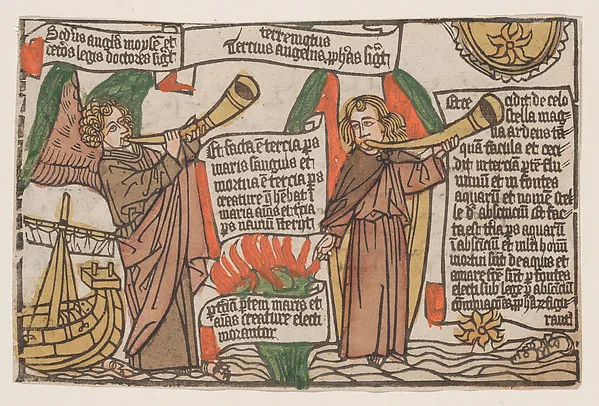
Ezekiel 39:1-10I Will Smite Thy Bow Out of Thy Hand
1Therefore, thou son of man, prophesy against Gog, and say, Thus saith the Lord GOD; Behold, I am against thee, O Gog, the chief prince of Meshech and Tubal: 2And I will turn thee back, and leave but the sixth part of thee, and will cause thee to come up from the north parts, and will bring thee upon the mountains of Israel: 3And I will smite thy bow out of thy left hand, and will cause thine arrows to fall out of thy right hand. 4Thou shalt fall upon the mountains of Israel, thou, and all thy bands, and the people that is with thee: I will give thee unto the ravenous birds of every sort, and to the beasts of the field to be devoured. 5Thou shalt fall upon the open field: for I have spoken it, saith the Lord GOD. 6And I will send a fire on Magog, and among them that dwell carelessly in the isles: and they shall know that I am the LORD. 7So will I make my holy name known in the midst of my people Israel; and I will not let them pollute my holy name any more: and the heathen shall know that I am the LORD, the Holy One in Israel. 8Behold, it is come, and it is done, saith the Lord GOD; this is the day whereof I have spoken. 9And they that dwell in the cities of Israel shall go forth, and shall set on fire and burn the weapons, both the shields and the bucklers, the bows and the arrows, and the handstaves, and the spears, and they shall burn them with fire seven years: 10So that they shall take no wood out of the field, neither cut down any out of the forests; for they shall burn the weapons with fire: and they shall spoil those that spoiled them, and rob those that robbed them, saith the Lord GOD.
The oracle picks up exactly where chapter 38 left off, with the same words of confrontation: Behold, I am against thee, O Gog, the chief prince of Meshech and Tubal (v. 1). What follows is striking: there is no battle. The LORD simply acts upon Gog: I will turn thee back… and will bring thee upon the mountains of Israel (v. 2) - the enemy is brought up to the place of his fall by the very God he means to defy.
The whole movement of the invasion, which looked in chapter 38 like Gog's own ambition, is here revealed as something held in a larger hand. This is the great theme sounding under the carnage: the most formidable threat imaginable is, before God, no threat at all. He turns it, brings it where He wills, and ends it. The reader who has followed Ezekiel through chapter upon chapter of judgment is meant to feel the shift - the same sovereign hand that gave the city over now stands openly against its last great enemy.1
The defeat is pictured with a single, vivid gesture: I will smite thy bow out of thy left hand, and will cause thine arrows to fall out of thy right hand (v. 3). The bow was the great weapon of the northern armies, the instrument of their reach and their terror. The LORD simply strikes it from the hand that holds it and lets the arrows drop from the fingers. It is the image of an enemy rendered helpless before he can do a thing - disarmed outright, without a contest.
Thou shalt fall upon the mountains of Israel… Thou shalt fall upon the open field (vv. 4-5): the verb fall tolls through these verses, and what falls is the whole apparatus of menace. Note where it happens. Gog came for the mountains of Israel to plunder them; he falls on those same mountains instead. The place he chose for conquest becomes the place of his undoing. And the LORD seals it with His own word: for I have spoken it, saith the Lord GOD (v. 5).
What God has spoken against an enemy is as good as done.
The language now turns grim, and it should be read with gravity: I will give thee unto the ravenous birds of every sort, and to the beasts of the field to be devoured (v. 4). To be left unburied, exposed to scavengers, was in the ancient world the deepest disgrace a body could suffer - the final stripping-away of all honour. The boast of the invader, the one who came to take a defenseless people's wealth, ends with his own corpse abandoned on the open field.
There is a terrible justice in the reversal, but the text states it plainly and moves on. This is the visible measure of how completely the threat has been undone - so completely that nothing is left of the mighty host but what the birds and beasts will take. The image will return, harder still, in verses 17-20, where the LORD Himself summons those scavengers to a feast. For now it stands as the first sign that this enemy will trouble God's people no more.
Underneath the defeat runs a purpose larger than the rescue of one people: So will I make my holy name known in the midst of my people Israel… and the heathen shall know that I am the LORD, the Holy One in Israel (vv. 6-7). The fall of Gog is, in the end, about the LORD being known - for who He is, in His holiness, to His own people and to all the nations.
This phrase, that they may know that I am the LORD, has rung out across the whole book like a refrain, sounding in judgment and now in deliverance alike. There is also a quiet promise tucked inside: I will not let them pollute my holy name any more. The long story of a people who dragged the name of their God through the mire of their own faithlessness is coming to an end. From here on His name will be honoured among them.
And the LORD sets His seal on the whole oracle: Behold, it is come, and it is done… this is the day whereof I have spoken (v. 8). What He decreed long before is now declared accomplished, as though already past - the certainty of God's word spoken as fact.
The completeness of the victory is measured in an unforgettable picture: the people of Israel shall set on fire and burn the weapons… the shields and the bucklers, the bows and the arrows, and the handstaves, and the spears… seven years (v. 9). The arsenal that was gathered to plunder a quiet land becomes that same land's firewood. So much weaponry is left behind that it fuels their fires for seven years - seven, the number of fullness, telling not a literal arithmetic so much as a total sufficiency.
They need cut no wood from field or forest; the enemy's own instruments of war keep them warm (v. 10). And there is a final reversal: they shall spoil those that spoiled them, and rob those that robbed them. The plunderer is plundered; the one who came to take is the one whose goods are taken. The deeper note, easy to miss, is what the burning means. These weapons are destroyed. The vision looks toward a settled peace so secure that the tools of violence have no future use at all - only the fire.
Ezekiel 39:11-16The Valley of Hamon-gog
11And it shall come to pass in that day, that I will give unto Gog a place there of graves in Israel, the valley of the passengers on the east of the sea: and it shall stop the noses of the passengers: and there shall they bury Gog and all his multitude: and they shall call it The valley of Hamongog. 12And seven months shall the house of Israel be burying of them, that they may cleanse the land. 13Yea, all the people of the land shall bury them; and it shall be to them a renown the day that I shall be glorified, saith the Lord GOD. 14And they shall sever out men of continual employment, passing through the land to bury with the passengers those that remain upon the face of the earth, to cleanse it: after the end of seven months shall they search. 15And the passengers that pass through the land, when any seeth a man’s bone, then shall he set up a sign by it, till the buriers have buried it in the valley of Hamongog. 16And also the name of the city shall be Hamonah. Thus shall they cleanse the land.
After the swiftness of the fall comes the slowness of the aftermath. The dead must be buried, and the chapter dwells on it without hurry: I will give unto Gog a place there of graves in Israel, the valley of the passengers on the east of the sea… and there shall they bury Gog and all his multitude (v. 11). The enemy who came to seize the land is given, in the end, only a grave in it.
There is a grim realism here that refuses to romanticize a great slaughter. The valley lay along a traveled road, and the heaps of the slain stop the noses of the passengers - the stench of so many bodies halts the travelers who pass that way. Scripture does not look away from what the fall of a vast army actually is. And the place takes the enemy's own name: they shall call it The valley of Hamon-gog, the valley of the multitude of Gog.
The horde that meant to make a name for itself by conquest gets a name, but it is the name on a mass grave. What was meant for glory is remembered as a burial ground.2
The burial is not only a practical necessity; it is an act of cleansing. Seven months shall the house of Israel be burying of them, that they may cleanse the land (v. 12). In Israel's law, contact with the dead defiled, and a corpse left in the open polluted the ground around it. So the great work after the victory is to purge the land of every trace of death and lay it to rest.
The labour is enormous - seven months, with all the people of the land taking part (v. 13), and then a corps of men set apart for continual employment, going methodically through the country to find and bury whatever remains (v. 14). The detail in verse 15 is almost tender in its care: anyone who finds even a man's bone sets up a marker beside it, so that the buriers can come and inter it properly.
Nothing is left exposed; nothing of death is allowed to linger on the surface of the holy land. The point is more than hygiene. The land where the LORD will dwell among His people must be clean, swept utterly free of the defilement that war and death leave behind. Victory is not the end of the work; the patient cleansing of the ground is.
Threaded through this sober labour is a surprising word: it shall be to them a renown the day that I shall be glorified, saith the Lord GOD (v. 13). The day of burial - the day the land is finally purged - becomes a day of honour for the people and of glory for their God. And a city is established to oversee the work, named for the very horde now laid in the ground: the name of the city shall be Hamonah, the city of the Multitude (v. 16).
A standing settlement, a place on the map, will carry the memory of this cleansing. Notice how the whole passage refuses to let the victory be casual or quickly forgotten. There is a valley named, a city named, a corps of men appointed, markers set beside scattered bones, seven months of labour. The deliverance of God's people and the purging of His land are a thorough, costly, deliberate work - and one that ends, the text insists, in His glory.
Thus shall they cleanse the land (v. 16): the final clause is quiet and complete. The work is finished; the ground is clean.
Ezekiel 39:17-24Gather Yourselves to My Sacrifice
17And, thou son of man, thus saith the Lord GOD; Speak unto every feathered fowl, and to every beast of the field, Assemble yourselves, and come; gather yourselves on every side to my sacrifice that I do sacrifice for you, even a great sacrifice upon the mountains of Israel, that ye may eat flesh, and drink blood. 18Ye shall eat the flesh of the mighty, and drink the blood of the princes of the earth, of rams, of lambs, and of goats, of bullocks, all of them fatlings of Bashan. 19And ye shall eat fat till ye be full, and drink blood till ye be drunken, of my sacrifice which I have sacrificed for you. 20Thus ye shall be filled at my table with horses and chariots, with mighty men, and with all men of war, saith the Lord GOD. 21And I will set my glory among the heathen, and all the heathen shall see my judgment that I have executed, and my hand that I have laid upon them. 22So the house of Israel shall know that I am the LORD their God from that day and forward. 23And the heathen shall know that the house of Israel went into captivity for their iniquity: because they trespassed against me, therefore hid I my face from them, and gave them into the hand of their enemies: so fell they all by the sword. 24According to their uncleanness and according to their transgressions have I done unto them, and hid my face from them.
The chapter now turns to its most disturbing image, and it must be read soberly. The LORD summons the scavengers of the earth in the formal language of an invitation to a feast: Speak unto every feathered fowl, and to every beast of the field, Assemble yourselves, and come… to my sacrifice that I do sacrifice for you, even a great sacrifice upon the mountains of Israel (v. 17). The startling word is sacrifice. In Israel, a sacrifice was followed by a meal in which the worshippers ate; here the LORD spreads a sacrificial table, but the guests are the birds and beasts, and the flesh on it is the fallen army of Gog.
Ye shall eat the flesh of the mighty, and drink the blood of the princes of the earth (v. 18). The warriors and rulers who came in their pride are described with the language of sacrificial animals - rams… lambs… goats… bullocks… fatlings of Bashan - the choice, well-fed beasts of the best pastures. It is a deliberately terrible inversion: the mighty become the offering. The image is meant to stagger, not to entertain. It says, in the harshest figure available, that the day of this enemy is utterly and finally over.
The feast-language is pressed almost past bearing: ye shall eat fat till ye be full, and drink blood till ye be drunken… Thus ye shall be filled at my table with horses and chariots, with mighty men, and with all men of war (vv. 19-20). It is grotesque on purpose. The horror is the point - this is what the end of a great rebellion against God looks like when it is laid bare, stripped of every illusion of glory.
There is no triumphal music here, no spoils paraded; there is a field of the slain and the birds gorging on it. The text neither softens this nor savours it. It holds the carnage up plainly so that no one can mistake the cost or the finality of what has happened. And it should be felt as a warning as much as a comfort. The same God who is a refuge to His people is not to be defied with impunity; the host that set itself against Him ends as carrion on the mountains.
The reader is meant to come away sobered - grateful to stand on the side of mercy, and solemn before the seriousness of standing against it.
Out of the grim scene the LORD draws His purpose, and it lifts the eyes above the battlefield: And I will set my glory among the heathen, and all the heathen shall see my judgment that I have executed, and my hand that I have laid upon them (v. 21). The whole event is, finally, a revelation - of God's glory, made visible to the nations in His judgment. And it works two ways. To Israel it brings settled assurance: So the house of Israel shall know that I am the LORD their God from that day and forward (v. 22).
No more wondering whether their God has abandoned them; from that day on they know Him as theirs, unmistakably and for good. To the nations it brings understanding of what they had misread. They had seen Israel carried off and assumed her God was weak, unable to defend His own. Now they learn the truth: the house of Israel went into captivity for their iniquity (v. 23). The exile was never a defeat of the LORD; it was His own act of judgment upon His people's sin.
The nations had drawn exactly the wrong conclusion, and the fall of Gog corrects it. Israel's God was never beaten. He was holy - and now all the earth will see it.
And then comes the most important sentence in the chapter so far, the one the whole book has been circling: because they trespassed against me, therefore hid I my face from them, and gave them into the hand of their enemies… According to their uncleanness and according to their transgressions have I done unto them, and hid my face from them (vv. 23-24). Here, at last, is the plain naming of what the exile really was.
Behind the armies and the sieges and the long years in a strange land lay one thing: the LORD had hid his face. That is the deepest wound a people can suffer - the sense that God has turned away, that His countenance no longer rests upon them. Ezekiel does not soften it. The catastrophe was God's own withdrawal, His face hidden because of sin. And yet the very fact that this is now spoken openly is itself the beginning of hope.
A hidden face can be turned back. By naming the true cause of the sorrow - His own turning away - the LORD is preparing to announce the one thing that can heal it. The whole grief of the book is gathered into these two verses, so that the next four can undo it.
Ezekiel 39:25-29Neither Will I Hide My Face Any More
25Therefore thus saith the Lord GOD; Now will I bring again the captivity of Jacob, and have mercy upon the whole house of Israel, and will be jealous for my holy name; 26After that they have borne their shame, and all their trespasses whereby they have trespassed against me, when they dwelt safely in their land, and none made them afraid. 27When I have brought them again from the people, and gathered them out of their enemies’ lands, and am sanctified in them in the sight of many nations; 28Then shall they know that I am the LORD their God, which caused them to be led into captivity among the heathen: but I have gathered them unto their own land, and have left none of them any more there. 29Neither will I hide my face any more from them: for I have poured out my spirit upon the house of Israel, saith the Lord GOD.
On the word Therefore the whole oracle pivots. Having named the exile as His own hiding of the face, the LORD now announces its end: Now will I bring again the captivity of Jacob, and have mercy upon the whole house of Israel, and will be jealous for my holy name (v. 25). Three things stand together in that sentence and reveal the heart behind the rescue. There is restoration - He will bring again the captivity, reverse the scattering, gather them home.
There is mercy, poured on the whole house of Israel. And there is the LORD's jealousy for my holy name - the deep, burning concern for His own honour that will not leave His people in disgrace among the nations forever. Notice that the restoration flows from God's mercy and His care for His name. It comes after that they have borne their shame (v. 26), but shame is what it follows, not what earns it.
This is the same God who hid His face in judgment, now moving in mercy to gather His people back - He is who He is, and that is enough.
The LORD describes the homecoming in terms that leave nothing out: When I have brought them again from the people, and gathered them out of their enemies' lands… I have gathered them unto their own land, and have left none of them any more there (vv. 27-28). The completeness is the comfort. He will leave none of them any more in the lands of exile. The shepherd brings the whole flock home. And He says the homecoming itself will teach them who He is: Then shall they know that I am the LORD their God, which caused them to be led into captivity… but I have gathered them. They will look back and see one hand in both the scattering and the gathering - the same LORD who disciplined them is the one who restores them.
There is also the picture of safety regained: they will dwell in their land and none made them afraid (v. 26). After the long years of fear in foreign lands, after even the threat of Gog, they will live unafraid - their God has set His face toward them again, and there is no safer place to be.
And then the book's great closing word, the sentence toward which all the rest has been straining: Neither will I hide my face any more from them: for I have poured out my spirit upon the house of Israel, saith the Lord GOD (v. 29). Every thread of the chapter ties off here. The enemy that fell, the land that was cleansed, the people gathered home - all of it leads to this: the face that was hidden will be hidden no more, and the reason given is the outpoured Spirit of God.
The two halves of the verse belong together. The hidden face turned back is fellowship restored; the poured-out Spirit is that fellowship made permanent, written into the people from within. This is no longer the old arrangement, where the presence of God might be withdrawn again at the next failure. The Spirit poured out - lavishly, without measure - is the pledge that the estrangement is over for good. After fifty-eight chapters of judgment and grief and exile, the book of Ezekiel comes to rest on a God who promises never to look away again.
The deepest human ache, the fear that God has turned His face from us, is answered with a divine vow: never again. And the answer is His own Spirit, given to dwell in His people and keep them His forever.
Research trail
Sources & further study
These references support the historical, linguistic, manuscript, and contextual notes in this chapter. Scripture remains the primary text; external sources are provided so readers can inspect the research directly.
- Ezekiel 39 - Translators' NotesThe NET Bible's detailed footnotes on Ezekiel 39 - the disarming of Gog in verses 3-4, the burning of the weapons for seven years (vv. 9-10), the burial place and its naming (vv. 11-16), and the much-discussed sacrificial-feast imagery of verses 17-20.
- Ezekiel 39 · Hebrew + classical Jewish commentaryThe Hebrew text of Ezekiel 39 with Rashi, Radak, and other classical commentators side by side - useful for hamon (vv. 11, 15, 16, the “multitude” that names the valley and the city) and for the idiom of the hidden face, hester panim (vv. 23-24, 29), the LORD hiding and then no longer hiding His face from His people.
- Ezekiel 39 ↔ Revelation 19 · Joel 2 · Acts 2Traces the threads tying Ezekiel 39 to the rest of Scripture - the summons of the birds to a great sacrifice (vv. 17-20) read beside the supper of the great God (Rev. 19:17-18), and the poured-out Spirit of verse 29 read alongside Joel's I will pour out my spirit upon all flesh (Joel 2:28) and its declared fulfillment at Pentecost (Acts 2:16-18).
Where this echoes in Scripture
I Will Smite Thy Bow Out of Thy Hand
- 1 Corinthians 15:25-26For he must reign, till he hath put all enemies under his feet. The last enemy that shall be destroyed is death.The total victory the fall of Gog (vv. 3-5) anticipates - every enemy at last put under His feet.
- Colossians 2:15And having spoiled principalities and powers, he made a shew of them openly, triumphing over them in it.The disarming of the enemy in verse 3 - the hostile power stripped and shown to be helpless.
- Psalm 46:9He maketh wars to cease unto the end of the earth; he breaketh the bow, and cutteth the spear in sunder; he burneth the chariot in the fire.The same picture as verses 9-10 - the weapons of war broken and burned by the hand of God.
- Ezekiel 38:18-22my fury shall come up in my face... I will plead against him with pestilence and with blood.The judgment on Gog that this chapter completes - the same enemy, now fallen on the mountains.
- Isaiah 2:4they shall beat their swords into plowshares... nation shall not lift up sword against nation, neither shall they learn war any more.The settled peace verses 9-10 envision - the instruments of war put permanently out of use.
The Valley of Hamon-gog
- Revelation 21:4And God shall wipe away all tears from their eyes; and there shall be no more death, neither sorrow, nor crying.The cleansing of verses 12-16 carried to its end - a creation finally purged of death itself.
- Numbers 19:16And whosoever toucheth one that is slain with a sword in the open fields... shall be unclean seven days.The law behind the burying of verse 12 - why the slain must be interred to cleanse the land.
- Ezekiel 37:25-28I will... set my sanctuary in the midst of them for evermore... and the heathen shall know that I the LORD do sanctify Israel.Why the land must be made clean (vv. 12-16) - so the LORD may dwell among His people.
- Hebrews 9:14purge your conscience from dead works to serve the living God.The cleansing of verse 16 reaching inward - the deeper purging God works in His people.
- Joel 3:2I will also gather all nations... and will plead with them there for my people.A like gathering of the nations to judgment in a valley - the scene verses 11-16 leave behind.
Gather Yourselves to My Sacrifice
- Revelation 19:17-18Come and gather yourselves together unto the supper of the great God; that ye may eat the flesh of kings... and the flesh of mighty men.The same summons as verses 17-18 - the birds called to the feast at the end of all war against the Lamb.
- Numbers 6:25-26The LORD make his face shine upon thee, and be gracious unto thee: the LORD lift up his countenance upon thee.The blessing of the shining face - the opposite of the hidden face of verses 23-24.
- Deuteronomy 31:17I will forsake them, and I will hide my face from them... because our God is not among us.The warning long beforehand of the hidden face that verses 23-24 say came to pass.
- Isaiah 59:2your iniquities have separated between you and your God, and your sins have hid his face from you.The cause named in verse 24 - sin, not weakness, hiding the face of God.
- Zephaniah 1:7the LORD hath prepared a sacrifice, he hath bid his guests.The same figure as verse 17 - the LORD's judgment pictured as a sacrifice He has prepared.
Neither Will I Hide My Face Any More
- Joel 2:28-29I will pour out my spirit upon all flesh... and also upon the servants and upon the handmaids in those days will I pour out my spirit.The promise of verse 29 set in its fullest terms - the Spirit poured out on all flesh.
- Acts 2:16-18this is that which was spoken by the prophet Joel... I will pour out of my Spirit upon all flesh.The pouring out of verse 29 declared fulfilled - the Spirit given at Pentecost.
- 2 Corinthians 4:6God... hath shined in our hearts, to give the light of the knowledge of the glory of God in the face of Jesus Christ.The hidden face of verses 23-24 reversed in full - the glory of God shining in the face of Christ.
- Revelation 22:4And they shall see his face; and his name shall be in their foreheads.The promise of verse 29 brought to its end - the face turned back and seen forever.
- Ezekiel 36:26-27A new heart also will I give you... and I will put my spirit within you.The same gift as verse 29 - the Spirit poured out and set within the house of Israel.