
- Starting price
- Free
- Free tier
- Yes
- Platforms
- Web
- Developer
- Stephen Smith
- Launched
- 2006
- Updated
- May 24, 2026
The verdict
OpenBible.info is the data-nerd corner of the Bible web - a free reference whose Topical Bible is the most-cited "what does the Bible say about X" tool on the internet, and whose geocoded maps and AI Labs experiments do things no other Bible site bothers to try.
Try OpenBible.info ↗Opens openbible.info
OpenBible.info has quietly become the source behind a lot of work you have already read. When a blog ranks the top verses on anxiety, when a pastor pulls a map of Paul’s missionary journeys, when a study Bible lists the most-cross-referenced passages on grace - there is a good chance the underlying data came from here. The site has been online since 2006, run largely by a single developer, and it has spent two decades doing something almost no one else does on the Bible web: treating scripture as a queryable dataset.
It is not a reading app. It does not gamify streaks. It does not push devotionals at you or sell a premium tier. It is a research surface - a place to look up which verses other readers think best answer a topic, to see every place name in the Bible plotted on a real map, to follow 340,000+ cross-references between passages, and to poke at experimental tools in the AI Labs section that try to visualize scripture in ways the big publishers have not gotten around to.
The rating below reflects what the site is, not what it is not. As a daily reading home it is mediocre. As the reference layer behind a serious study session - or the answer to a topical search that Bible Gateway and YouVersion handle poorly - it is one of the most useful free Bible resources on the web.
✓ The good
- Topical Bible is the web’s reference for "verses about X" - community-voted ranking across 1,800+ topics means the top results actually answer the question
- Bible geocoding is genuinely unique - every place name in scripture mapped to real latitude/longitude with an interactive viewer
- 340,000+ cross-references - the largest free cross-reference dataset on the open web, downloadable for your own projects
- Completely free with no account required - no signup wall, no premium tier, no upsell
- AI Labs section is a working playground - experimental verse generation, visualization, and search tools you will not find elsewhere
- Data exports are public - the cross-references and place data are available for download, which is why so many other Bible tools cite it
- The "weather of biblical places" tool is the kind of curious little feature that makes the site memorable
✗ Watch out
- Design is dated - the site looks like a research project from 2010 because, in many ways, that is what it is
- No reading plans, devotionals, or audio - this is not a daily reading home and never tries to be
- Translation selection is limited compared to Bible Gateway - you will not find every modern version here
- AI Labs tools are experimental - some are genuinely useful, others feel like prototypes that were shipped and forgotten
- No mobile app - the site is responsive but there is no companion app, no offline mode, no notifications
- Topic ranking can be quirky - popular topics are well-curated, long-tail topics sometimes surface odd verses near the top
Best for
- Writers and bloggers researching "what the Bible says about X"
- Pastors and teachers building topical sermons or studies
- Bible-geography buffs who want to see the text on a real map
- Developers and researchers who need free scripture data
Avoid if
- You want a polished daily reading app
- You need audio Bible, reading plans, or devotionals
- You want every modern translation in one place
- You expect a clean, modern UI on every page
What OpenBible.info is
OpenBible.info is a free, ad-light Bible reference site built around datasets rather than reading experiences. Its core surfaces are the Topical Bible (1,800+ topics with verses ranked by community vote), Bible geocoding (every place name in scripture mapped to coordinates with an interactive map viewer), a cross-reference engine drawing on 340,000+ inter-passage links, and an AI Labs section experimenting with verse generation, similarity search, and visualization.
It is the work of Stephen Smith, who launched the site in 2006 and has run it largely as a single-developer project ever since. There is no subscription, no app, no email funnel - the whole site is free, and a surprising amount of its underlying data is downloadable for anyone who wants to build on top of it. That openness is the reason so much of the rest of the Bible web quietly depends on it.
Why study writers and pastors use OpenBible.info
The single biggest practical difference between OpenBible.info and the major Bible sites is that it treats scripture as data first and reading material second. Bible Gateway and YouVersion are organized around verses-as-text - pick a translation, read a chapter, save a highlight. OpenBible is organized around verses-as-rows-in-a-database - rank them by relevance to a topic, plot them on a map, count cross-references, expose the dataset for download.
For anyone whose job involves producing study material - sermon writers, curriculum authors, bloggers, devotional writers, study Bible editors - that orientation is transformative. Need the top 25 verses on forgiveness, ranked by what other readers actually find most useful? OpenBible answers in one query, where Bible Gateway gives you a keyword search and a long scroll. Need to show where Antioch is relative to Tarsus and Jerusalem on the same screen? OpenBible has the geocoded data. Need cross-references for a passage that goes beyond the cramped center column of your print Bible? The Treasury of Scripture Knowledge data lives here, indexed and searchable.
Topical Bible: the community-ranked verse list for 1,800+ topics
The Topical Bible is the feature that made OpenBible.info famous and is still the reason most people land on the site. It covers 1,800+ topics - from broad themes like "love," "faith," and "grace" down to long-tail searches like "managing money in marriage" or "the role of elders" - and for each topic it surfaces the top 100 verses ranked by community vote. Every visitor can upvote or downvote whether a verse actually addresses the topic, and the ranking adjusts. After two decades of voting, the popular topics have settled into something close to a consensus list of the verses readers find most useful.
This sounds like a small thing. In practice it is the reason OpenBible.info is the most-cited "what does the Bible say about X" reference on the open web. Search engines have learned that its topic pages actually answer the question - not because an algorithm guessed, but because thousands of readers have voted on which verses fit. If you write Bible content, you have probably copied a verse list from here without realizing it. The pages are plain HTML, the verses link out to readable text in multiple translations, and the whole thing loads in a fraction of a second because there is almost nothing on the page that is not the answer.
Bible geocoding: every place in scripture on a real map
OpenBible.info’s Bible Geocoding project takes every place name mentioned in scripture - cities, regions, rivers, mountains, ancient kingdoms - and maps it to a modern latitude and longitude. There are KML files, Google Earth overlays, an interactive map viewer, and per-place pages that list every verse where the location appears. You can pull up Capernaum and see every gospel passage set there. You can switch to a wider view and watch the Exodus route, the divided kingdom, and the Roman provincial map appear over the actual eastern Mediterranean.
Other Bible tools have static maps in the back matter. A few apps have interactive maps locked behind premium tiers. OpenBible has a free, public, downloadable geocoded dataset - which is why a lot of those other tools are quietly built on top of it. For anyone teaching the historical-geographical side of the Bible - the missionary journeys, the wilderness wanderings, the layout of the Decapolis - this is the single best free resource on the web. The maps will not win design awards, but the data is correct, complete, and yours to use.
AI Labs: the experimental corner most Bible sites do not have
AI Labs is OpenBible.info’s newest surface and the most clearly in-progress. It is a small set of experimental tools - verse generation that tries to predict the next passage given a few starting words, similarity search that finds verses semantically close to a query rather than just keyword matches, and a handful of visualization experiments that turn cross-reference data into network graphs and heatmaps. None of it is polished. All of it is interesting.
The reason it matters is that nobody else in the Bible-tools space is shipping experiments like these. The big publishers move slowly and tend to wrap AI features in subscriptions. OpenBible.info ships small, weird, free things and lets you click around. Some of the tools are genuinely useful as study aids - the semantic similarity search in particular catches connections a keyword concordance misses. Others feel like prototypes that were posted and never iterated. Either way, it is a window into what a small developer can do with the same dataset that the big platforms guard, and it is worth bookmarking just to see what shows up next.
Pricing
Free
$0
Full access to Topical Bible, maps, cross-references, AI Labs, and all data downloads. No account required.
OpenBible.info is completely free. There is no premium tier, no account requirement, and no donation wall blocking access to anything. The site runs on light ads and on the goodwill of a single long-tenured developer.
Most users do not need to do anything beyond bookmark the pages they care about. The Topical Bible, the cross-reference index, the maps, and the AI Labs tools are all open on first visit.
For developers and researchers, the more interesting "pricing" is the data licensing. The cross-reference dataset and the geocoded places data are publicly downloadable under permissive terms - which is part of why so many other Bible tools and study sites cite OpenBible as a source even when they do not link to it. If you are building a Bible app or running a Bible blog and you need place coordinates or cross-reference graphs, start here before you pay for a commercial dataset.
There is no upsell path. Whatever you find on the free site is what the site is.
Where OpenBible.info falls behind
No reading experience. There is no daily reading plan, no streak system, no devotional, no audio Bible, no notifications, no friends list. If your goal is to read scripture every day in a cared-for environment, this is not the site - YouVersion, Dwell, and Bible Gateway all do that part better.
No first-party original-language tools. You can search for a topic and find verses, but there is no parsed Greek or Hebrew interlinear, no lexicon, no morphological tagging. Blue Letter Bible and STEPBible cover that ground; OpenBible does not try.
Dated design on most pages. The site looks like a research project that has been running since 2006 - because it has. Some surfaces are modern; others are plain HTML with limited styling. It is fast and functional, but if visual polish matters to you, set expectations.
No mobile app. Pages are responsive enough on a phone, but there is no companion app, no offline mode, no widget, no Apple Watch integration. This is a desktop-first reference site.
AI Labs is genuinely experimental. Some tools are useful daily; others were shipped and have not been touched in a while. Treat AI Labs as a curiosity surface, not a stable product, and you will not be disappointed.
OpenBible.info vs. Bible Hub vs. Blue Letter Bible
These three sites get lumped together as "the free Bible reference web," but they are pointed at different jobs. OpenBible.info is built around topical questions and Bible data - ranked verse lists, geocoded places, cross-reference graphs, and an AI Labs corner that does things the others do not. Bible Hub is the comprehensive verse-by-verse encyclopedia - every verse on its own page with interlinear, commentaries, lexicons, and translations stacked vertically. Blue Letter Bible is the Reformed-leaning study site whose original-language tools and sermon library are its core strength.
Different strengths. OpenBible is better at "what does the Bible say about X" and at any question that benefits from data - maps, cross-references, topic rankings. Bible Hub is broader for verse-level study (Greek, Hebrew, parallels, commentaries on a single page). Blue Letter Bible is better for original-language word studies and for users who want classic Protestant commentary integrated with the text.
For most readers, the honest answer is that you will end up using more than one. A topical question goes to OpenBible. A verse-level deep dive goes to Bible Hub. A Greek word study goes to Blue Letter Bible. None of them charges you, and the three of them together cover most of what a free study workflow needs - real gaps, but they are worth knowing about going in rather than dealbreakers.
The bottom line
OpenBible.info is not the right choice for everyone, and it is not pretending to be. It is the data-and-visualization corner of the Bible web - the place to go for topical verse lists that actually answer the question, for geocoded maps of every biblical place, for cross-reference data you can download, and for the small experimental AI tools no one else is shipping. It will not replace your reading app, and it will not feel like a polished publisher product. But for serious topical study and for anyone whose work involves producing Bible content, it is one of the most quietly indispensable free resources on the web - and the price is right.
Alternatives to OpenBible.info
 Bible HubThe verse-by-verse free reference encyclopedia - interlinear, lexicons, commentaries, and parallels stacked on every verse’s page.
 Blue Letter BibleFree study site with strong original-language tools and a large sermon library, leaning Reformed in its commentary set.
 Bible GatewayThe web’s most comprehensive translation library, plus reading plans, devotionals, and a clean reading experience.
 Enduring WordDavid Guzik’s free verse-by-verse commentary on the whole Bible - the most-used free commentary on the open web.
Frequently asked questions
Is OpenBible.info free?
Yes - completely. There is no premium tier, no account requirement, and no paywall on any feature. The site runs on light ads. Even the underlying data (cross-references, geocoded places) is downloadable for free under permissive terms.
How does the Topical Bible rank verses?
Every verse on every topic page can be upvoted or downvoted by visitors. The ranking surfaces verses that readers collectively think best address the topic. After nearly two decades of voting, the popular topics have settled into something close to a consensus list, which is why the pages perform so well in search.
Is the Bible geocoding data accurate?
It is the most complete free public dataset of biblical place names with modern coordinates. Like any ancient-geography dataset, some sites are debated by scholars, but the data is well-sourced, includes confidence notes where appropriate, and is widely used by other Bible tools and publishers.
What is in OpenBible.info’s AI Labs?
A rotating set of experimental tools - verse generation that predicts likely next passages, semantic similarity search that finds verses close in meaning rather than just words, and visualization experiments built on the cross-reference dataset. It is explicitly a labs surface, so expect prototypes alongside polished tools.
Can I download the cross-reference data?
Yes. The 340,000+ cross-reference dataset is publicly downloadable, and it is one of the reasons OpenBible.info is so widely cited - a lot of other Bible apps and study tools are built on top of this data. Check the site for the current license terms.
Is there a mobile app?
No. The site is responsive enough on a phone, but there is no companion app, no offline mode, and no notifications. OpenBible.info is built as a desktop-first reference site.
Should I use OpenBible.info instead of Bible Gateway or YouVersion?
No - use it alongside them. OpenBible.info is a reference and data layer, not a daily reading home. Most readers will keep a reading app (YouVersion, Dwell, or Bible Gateway) for everyday scripture and reach for OpenBible.info when they need topical verse lists, maps, or cross-references.
Sources & further reading
More Bible Reading Websites
 route.bibleA free, open-spec routing layer that turns a Bible reference into one stable link or QR code and lets each reader choose a preferred Bible destination—an elegant solution for slides, print, websites, and AI output, provided publishers test reference parsing, redirects, tracking tags, accessibility, and long-term fallback.
 SefariaA Jewish nonprofit quietly rebuilt the entire rabbinic library online - and serious Christian students of the Hebrew Bible keep showing up to use it.
 BibleLinkA polished way to make Bible references readable without sending visitors away—but its noncommercial license and hosted-service dependency deserve attention before installation.
 fetch(bible)Gracious Tech’s free, open-source Scripture platform combines 1,404 translations, a compressed global CDN, developer libraries, and an embeddable reader—exceptionally generous infrastructure whose translation licenses still require your own diligence.
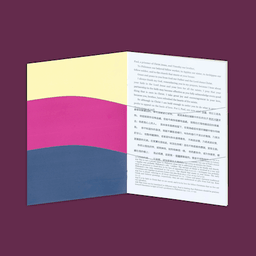 Paper BibleA delightful free generator that turns a chosen Scripture portion into a configurable PDF or folded booklet in hundreds of languages, with presets for reading, study, and notes—but every print project still depends on translation permissions, PDF inspection, and the limits of a remotely generated document.
 Sparks Chinese BibleA rich Chinese-language Bible platform joining many translations, original-language study, courses, media, and community—especially compelling for serious learners who can audit its AI and privacy choices.