
- Starting price
- Free
- Free tier
- Yes
- Platforms
- Web · iOS · Android
- Developer
- Sefaria (nonprofit)
- Launched
- 2011
- Updated
- May 24, 2026
The verdict
Sefaria is an explicitly Jewish digital library - built by Jews, for Jews - and it is also, almost by accident, the single most valuable free resource on the internet for any Christian who wants to read the Hebrew Bible and understand the rabbinic world the New Testament walked into. Free, open, deep, and astonishingly well-built.
Try Sefaria ↗Opens sefaria.org
Sefaria has quietly become the favorite back-channel resource of Christian seminary students, pastors who actually open BibleWorks on their day off, and anyone whose Bible study has crossed from devotional reading into something more serious. It was not built for them. It was built by a Jewish nonprofit, in 2011, with the explicit goal of putting the entire Jewish canon - Tanakh, Talmud, Mishnah, Midrash, Halakhah, Kabbalah, prayer texts, medieval philosophy, modern responsa - online for free, in Hebrew and in English, linked verse by verse, and released under open licenses so anyone in the world can build on it.
They did it. The whole library is there. The William Davidson Talmud - the first complete English translation of the Babylonian Talmud, a project that used to cost over fifteen hundred dollars in print and was effectively inaccessible to the average reader - sits on Sefaria.org for free, fully searchable, with the Hebrew and Aramaic original on one side and Rabbi Adin Steinsaltz’s English on the other. It does not require an account. It does not have ads. It does not have a paywall.
For Christian readers the orientation matters. Sefaria is not a Christian Bible site. There is no New Testament. There is no commentary from the church fathers, no Calvin, no Wesley, no John MacArthur. What you will find instead is the Hebrew Bible in its native textual world - the same scriptures Jesus quoted, read alongside the rabbinic conversation that grew up around them. For studying Genesis, the Psalms, Isaiah, or the Second Temple background of the Gospels, that is an extraordinary thing to have free access to.
✓ The good
- Entire Tanakh in Hebrew and multiple English translations - JPS, the open-licensed Sefaria Community Translation, the Koren Jerusalem Bible, and more, with one-click swapping between them
- The complete William Davidson Talmud - every page of the Babylonian Talmud, free, in Hebrew, Aramaic, and English, with click-through on every cited verse and commentary
- Linked everywhere - click any verse and the sidebar shows every Midrash, Talmud passage, Rashi gloss, Ibn Ezra note, or modern commentary that references it
- Genuinely free - no ads, no account required for reading, no premium tier, supported by donors and grants
- Open licensing - most texts are public domain or CC-licensed, so quoting and reusing is straightforward for sermons, blog posts, and academic work
- Excellent mobile app on iOS and Android with offline downloads of any tractate, book, or commentary you choose
- Source-sheet builder that lets you assemble a multi-text study packet and share it with a link - used by teachers worldwide
✗ Watch out
- No New Testament and no Christian commentary - by design, and unlikely ever to change
- No Greek tools - the rabbinic lens is Hebrew and Aramaic; for Septuagint or Greek NT work you need a different site
- The interface assumes you know what a Mishnah is - the on-ramp for total beginners is steeper than Bible Hub or Blue Letter Bible
- Translations vary in tone and date - the older JPS reads stiffer than modern Christian translations, and the Community Translation is uneven in places
- Search returns rabbinic results first - a query for a Christian phrase will surface Talmudic and Midrashic uses, not sermon illustrations
- Some specialty texts (Zohar in full English, certain medieval commentaries) are still partial translations - the original Hebrew/Aramaic is there but English coverage is in progress
Best for
- Christian seminary students studying the Hebrew Bible
- Pastors preparing sermons on Genesis, Psalms, Isaiah, or the Prophets
- Anyone studying the Jewish world of Jesus and the apostles
- Bible teachers who want to quote Mishnah, Talmud, or Midrash accurately
Avoid if
- You want a Christian devotional app
- You need Greek New Testament tools
- You want commentary written from a Christian theological frame
- You are looking for a beginner’s first Bible app
What Sefaria is
Sefaria is the digital library of Jewish texts - a free, open-source website and mobile app that hosts the entire traditional Jewish canon online with original-language source text, multiple English translations, cross-references, and commentary all linked together. The project was founded in 2011 by Brett Lockspeiser, a former Google product manager, and Joshua Foer, the author of Moonwalking with Einstein, with the goal of building a Wikipedia-grade open library for Jewish learning.
Today it holds the Tanakh (the Hebrew Bible - what Christians call the Old Testament, organized in the traditional Jewish order of Torah, Nevi’im, Ketuvim), the entire Babylonian Talmud in the William Davidson edition, the Mishnah, the major Midrash collections, Maimonides’ Mishneh Torah, the Shulchan Arukh, the Zohar, the prayer book, and thousands of medieval and modern commentaries. The catalog crosses two million sources. The site is in continuous development by a small staff and a large volunteer translation community.
Why serious Bible students keep ending up on Sefaria
The single biggest practical difference between Sefaria and every Christian Bible website is that Sefaria treats the text as a network instead of a column. Open Genesis 1:1 on Bible Hub and you get the verse, a few translations, and a list of commentaries underneath. Open Genesis 1:1 on Sefaria and you get the verse - and a sidebar showing every place in the Talmud, Midrash Rabbah, Rashi, Ibn Ezra, Ramban, Sforno, the Zohar, and Maimonides that quotes or alludes to it. Click any of those and you jump into that text, with its own sidebar showing its own network. The whole library is hyperlinked at the verse level.
This sounds like a small thing. In practice it is transformative. If you are preaching on Genesis 22 (the binding of Isaac) and want to know how the first-century Jewish world heard that story, Sefaria will hand you the Mishnah, the Talmud, the Targum, and a dozen Midrashim in three clicks. You are reading the text in conversation with the people who shaped how Paul and the Gospel writers thought about it. No Christian site comes close to that depth of rabbinic linkage, because no Christian site is built on the rabbinic canon.
The full Tanakh in Hebrew and English - the way the Hebrew Bible actually wants to be read
Every book of the Hebrew Bible is on Sefaria in pointed Hebrew (with vowels and cantillation marks), in transliteration, and in multiple English translations you can swap between with a dropdown. The default is the open-licensed Sefaria Community Translation or the 1985 JPS Tanakh; you can also pull up the Koren Jerusalem Bible, Robert Alter’s translation (where licensing allows), and others. Hebrew and English render side by side on desktop, stacked on mobile, with verse numbers aligned so you can read either column and stay oriented.
For Christian readers the value is twofold. First, you get the Tanakh in its native Jewish order - Torah, then Prophets, then Writings, with Chronicles closing the canon instead of Malachi - which is how Jesus and the apostles knew their Bible (Luke 24:44 references Moses, Prophets, and Psalms in exactly this structure). Second, every verse is one click away from how the rabbinic tradition read it, which is the closest thing we have to the interpretive air of first-century Judea. For preaching, teaching, or just deepening your own reading of the Old Testament, that context is hard to overstate.
The William Davidson Talmud - the killer feature, and it used to cost fifteen hundred dollars
The Babylonian Talmud is roughly 2,711 double-sided folio pages of Hebrew and Aramaic legal and narrative discussion, compiled between the third and sixth centuries - the foundational text of rabbinic Judaism after the destruction of the Second Temple. Until 2017 there was no complete, accessible English translation in the public domain. The standard scholarly edition (Steinsaltz in Hebrew, ArtScroll in English) ran well over a thousand dollars for the full set in print, and the digital editions were locked behind expensive proprietary apps. Then the Davidson family funded Rabbi Adin Steinsaltz’s English translation, Sefaria hosted it, and the whole thing went free.
For a Christian student of the New Testament this is a quietly enormous gift. The Talmud is not Christian scripture, and it postdates the New Testament - most of it was compiled after the fourth century - but it preserves the interpretive traditions, legal debates, and reading practices of the rabbinic world that grew out of the same Second Temple Judaism Jesus, Paul, and the early church belonged to. When Jesus says "you have heard it said" in the Sermon on the Mount, the categories he is engaging are categories the Talmud later codified. Being able to look up a tractate like Berakhot (on blessings and prayer) or Sanhedrin (on courts and capital cases - including the only ancient Jewish discussion of the trial proceedings against Jesus) in free English, with the Hebrew right there, is a research resource that did not exist for most of church history.
Mishnah, Midrash, and the rabbinic context for New Testament background
Beyond the Talmud, Sefaria hosts the Mishnah (the older third-century legal code that the Talmud comments on), the major Midrash collections (Rabbah, Tanchuma, Mekhilta, Sifra, Sifre), the targums (Aramaic translations of the Hebrew Bible used in synagogue), and the medieval commentators - Rashi, Ibn Ezra, Ramban, Sforno, Radak - all linked to the verses they discuss. For each, you get the original-language text and an English translation, with the same hyperlinked sidebar showing how every other text in the library engages it.
If you have ever read a New Testament commentary that says "the Mishnah teaches X" or "Rabbi Hillel argued Y," Sefaria is where you go to verify the citation and read the surrounding context yourself instead of trusting the secondary source. For New Testament background - Sabbath controversies, ritual purity, divorce, oaths, parables, the structure of synagogue prayer - this primary-source access is the difference between repeating something you read in a study Bible footnote and actually knowing what the text says. Used carefully (these materials reflect the rabbinic tradition, not Christian theology) it deepens almost any serious Bible study.
Pricing
Sefaria (free)
Free
Everything. The full library - Tanakh, Talmud, Mishnah, Midrash, Halakhah, Kabbalah, Liturgy, philosophy, modern responsa - in Hebrew and English, on web and mobile, with no account required and no advertising.
Optional donation
Any amount
Sefaria is a 501(c)(3) nonprofit funded by donations and foundation grants. You can give once or set up recurring support at sefaria.org/donate. Donations are not required for any feature.
Sefaria is free. Genuinely, completely, no-asterisk free. Every book in the library, the mobile apps on iOS and Android, the source-sheet builder, the search, the offline downloads - all of it is available without an account, without a subscription, and without advertising.
It runs as a 501(c)(3) nonprofit funded by individual donors and foundation grants. You can give at sefaria.org/donate if you want to support the work, and they make the case openly, but nothing in the user experience pushes you toward a wallet. There is no premium tier to unlock. There is no commentary locked behind a paywall.
A free account (still free) gets you a few extras: you can save texts to a personal library, build and save source sheets to share with students or a study group, follow other users, and sync your reading position across devices. None of it changes what texts you can read.
For comparison: the comparable Christian deep-study tool - Logos Bible Software - starts at roughly three hundred dollars one-time for an entry library and scales into the thousands. Sefaria is doing for the Jewish canon what Logos charges serious money for in the Christian canon, and giving it away. Most users do not need to pay anything, ever.
Where Sefaria falls behind
No New Testament. This is the most important thing to say plainly. Sefaria is a Jewish library and does not host the Christian New Testament, Apocrypha, or any patristic, medieval, or modern Christian commentary. If your study question is about Romans, Hebrews, or Revelation, Sefaria can help with the Old Testament texts those books quote, but you will need Bible Hub, STEPBible, Blue Letter Bible, or a Christian study tool for the New Testament itself.
No Greek. The rabbinic tradition works in Hebrew and Aramaic, and Sefaria’s original-language tools are excellent for those languages. For Septuagint study, Greek New Testament parsing, or anything involving koine Greek lexicons, you need STEPBible or Bible Hub. Sefaria does not pretend to compete here.
The beginner on-ramp is steep. The interface assumes you know roughly what the Mishnah is, that Rashi is a commentator and not a tractate, and that the Talmud has two layers (Mishnah and Gemara). For a Christian reader brand new to rabbinic literature, the navigation can feel disorienting at first. The site has good introductory pages - read Sefaria’s "What is the Talmud?" before diving in - but expect a learning curve.
Translations vary in tone. The 1985 JPS Tanakh, which is one of the default English options, is a careful scholarly translation but reads stiffer than modern Christian translations like the ESV or NIV. The Sefaria Community Translation is openly licensed and improving, but some books are more polished than others. For devotional reading you may still prefer a Christian translation; Sefaria is at its strongest as a study and reference tool, not as a daily-reading replacement.
Search is rabbinically weighted. A search for a phrase like "kingdom of heaven" will surface Talmudic and Midrashic uses of malkhut shamayim, not sermon results. This is correct behavior for what Sefaria is, but it is not what a Christian user might first expect.
Sefaria vs. Bible Hub vs. STEPBible (for Hebrew Bible study)
All three are free and all three are excellent, and a serious Hebrew Bible student will probably have tabs open on all three at once. They do different things well.
Different strengths. Bible Hub is broadest - every English translation you can think of, parallel verse views, Strong’s concordance, Greek and Hebrew lexicons, and a thick layer of older Protestant commentary (Matthew Henry, Pulpit Commentary, Geneva Notes) all stitched together. STEPBible is the language scholar’s tool - built by Tyndale House Cambridge, it gives you the cleanest Hebrew and Greek interlinear, the best lexical tagging, and a careful, academically rigorous presentation of original-language data. Sefaria is the rabbinic-context tool - the Hebrew Bible read inside the rabbinic conversation it generated, with the Talmud, Mishnah, and Midrash hyperlinked at the verse level.
For a passage like Genesis 22 (the binding of Isaac), here is what each does best. Bible Hub will give you fifty English translations and the Strong’s numbers for every Hebrew word. STEPBible will give you the cleanest parsing of those Hebrew words and a careful lexical breakdown. Sefaria will give you Rashi, the Talmud (Sanhedrin and Berakhot both discuss the Akedah), the Midrash Rabbah, and the Targum Pseudo-Jonathan all on the same page, in Hebrew and English. None of these replaces the others. If you can only use one, pick the one that matches the question you are asking - Bible Hub for translation comparison, STEPBible for language work, Sefaria for rabbinic and historical context.
The bottom line
Sefaria is a Jewish library, built by a Jewish nonprofit for Jewish learning, and it is also one of the most generous free gifts the internet has handed to serious Christian Bible students. The full Tanakh in Hebrew and English, the entire Davidson Talmud, the Mishnah, the Midrash, the medieval commentators - all linked at the verse level, all free, all without ads or accounts or premium tiers. It will not be your devotional app and it does not pretend to be Christian. But if you preach, teach, or study the Old Testament with any seriousness, or if you want to understand the Jewish world the New Testament was born inside, Sefaria belongs in your tab bar permanently. Extraordinary resource.
Alternatives to Sefaria
 Bible HubBroadest free Bible study site - every English translation, Strong’s, lexicons, and a thick layer of older Protestant commentary stitched together.
 Blue Letter BibleFree Bible study suite with strong Hebrew and Greek lexicon tools, audio Bibles, and a generation of evangelical commentary integrated cleanly.
 STEPBibleTyndale House Cambridge’s free original-language tool - the cleanest free Hebrew and Greek interlinear and the most academically rigorous lexical tagging.
 Biblical Archaeology SocietyLong-form articles on archaeology, geography, and historical context for the Hebrew Bible and New Testament - the complement to Sefaria’s textual depth.
 Aleph BetaPolished Jewish Torah videos, podcasts, lectures, transcripts, and guides that add an original close-reading curriculum beside Sefaria’s primary-text library.
Frequently asked questions
Is Sefaria a Christian site?
No. Sefaria is an explicitly Jewish nonprofit and the library is the Jewish canon - Tanakh, Talmud, Mishnah, Midrash, Halakhah, Kabbalah, liturgy, and rabbinic philosophy. There is no New Testament and no Christian commentary. Many Christian students use it because the Hebrew Bible and rabbinic literature are invaluable for studying the Old Testament and the Jewish background of the New Testament, but the site itself is built for Jewish learning.
Is Sefaria really completely free?
Yes. The full library, the web interface, and the iOS and Android apps are free with no advertising and no premium tier. Reading does not even require an account. Sefaria is a 501(c)(3) nonprofit funded by donations and foundation grants. A free account adds personal library, source sheets, and cross-device sync, but no content is gated.
What is the William Davidson Talmud?
It is the first complete English translation of the Babylonian Talmud released under an open license, funded by the William Davidson Foundation and translated by Rabbi Adin Steinsaltz. Sefaria hosts the entire text - every page of the Talmud, in Hebrew, Aramaic, and English, side by side and free. Print editions of the Talmud have historically cost well over a thousand dollars; this version costs nothing.
Should I use Sefaria instead of Bible Hub or STEPBible?
Use them together - they answer different questions. Bible Hub is best for comparing English translations and quick lexicon lookups. STEPBible is the cleanest free original-language tool. Sefaria is the depth resource for rabbinic context, the full Hebrew Bible read inside its native tradition, and the Talmud and Midrash. A serious Old Testament study session will benefit from all three.
Can I trust the translations?
The English translations on Sefaria are scholarly and reliable - they include the 1985 JPS Tanakh (a major Jewish translation), the openly licensed Sefaria Community Translation, the Koren Jerusalem Bible, and Steinsaltz’s Talmud translation. As with any translation, they reflect interpretive choices; for the Tanakh specifically the JPS reflects modern Jewish scholarship. Many readers cross-check against a Christian translation like the ESV or NIV when reading the Old Testament for devotional use.
Is the mobile app any good?
Yes. The Sefaria app on iOS and Android mirrors the website, supports offline downloads of any tractate or book you choose, and handles Hebrew right-to-left text correctly. It is one of the better-built free religious study apps on either platform, and like the website it has no advertising and no premium tier.
How do Christians actually use Sefaria in practice?
Most commonly: looking up rabbinic background when preaching or teaching from the Old Testament, checking primary sources when a commentary cites "the Mishnah" or "the Talmud," reading the Hebrew Bible in its Jewish canonical order, and studying the Jewish world of the Gospels. Seminary students use it for paper research. Pastors use it for sermon prep on Genesis, Psalms, and the Prophets. It is also widely used by Christians learning biblical Hebrew, since the pointed Hebrew text is high quality and free.
Sources & further reading
More Bible Reading Websites
 route.bibleA free, open-spec routing layer that turns a Bible reference into one stable link or QR code and lets each reader choose a preferred Bible destination—an elegant solution for slides, print, websites, and AI output, provided publishers test reference parsing, redirects, tracking tags, accessibility, and long-term fallback.
 BibleLinkA polished way to make Bible references readable without sending visitors away—but its noncommercial license and hosted-service dependency deserve attention before installation.
 fetch(bible)Gracious Tech’s free, open-source Scripture platform combines 1,404 translations, a compressed global CDN, developer libraries, and an embeddable reader—exceptionally generous infrastructure whose translation licenses still require your own diligence.
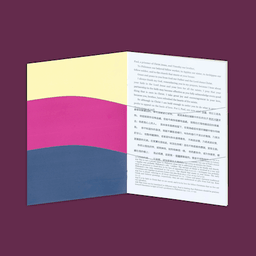 Paper BibleA delightful free generator that turns a chosen Scripture portion into a configurable PDF or folded booklet in hundreds of languages, with presets for reading, study, and notes—but every print project still depends on translation permissions, PDF inspection, and the limits of a remotely generated document.
 Sparks Chinese BibleA rich Chinese-language Bible platform joining many translations, original-language study, courses, media, and community—especially compelling for serious learners who can audit its AI and privacy choices.
 Bible.isA free Bible website and app with Scripture in more than 2,600 languages and roughly 1,800 audio recordings - the most ambitious audio Bible project ever attempted.