
- Starting price
- Free
- Free tier
- Yes
- Platforms
- Web
- Developer
- Practicing the Way
- Launched
- 2024
- Updated
- Aug 16, 2026
The verdict
Practicing the Way’s Spiritual Health Reflection helps a Christian consider patterns related to being with Jesus, becoming like him, and doing as he did, then filter results, choose a focus area, share it with someone trusted, and repeat later to observe change. The tool is free and the ministry reports more than one hundred thousand completions. Its best use is humble, voluntary reflection within relationship. A score cannot measure God’s favor, salvation, maturity, mental health, or another person’s fitness for leadership. The public privacy policy predates this specific experience and does not clearly explain reflection answers, derived scores, church visibility, sharing permissions, research use, or exact retention. Users should avoid entering more sensitive detail than the tool actually needs.
Try Spiritual Health Reflection ↗Opens practicingtheway.org
Spiritual Health Reflection is a self-assessment inside Practicing the Way’s wider formation platform. It asks users to reflect on habits and experience across three stated aims: being with Jesus, becoming like him, and doing as he did. Results are meant to help identify an area for intentional practice rather than produce a grade.
After answering, a person can explore the results through filters, choose a focus, share with a trusted friend, and return after a period of months. Practicing the Way connects this reflection to courses and practices that churches, small groups, and individuals can use together.
The tool is free because the ministry is donor-supported. An account may be needed to preserve a result or track change. That creates a durable record of responses and inferences about spiritual life, even though the public privacy notice discusses general account, contact, device, location, cookie, analytics, email, and user-content data more clearly than assessment data.
We reviewed the public tool explanation, platform, annual reporting, privacy policy, terms, and faith.tools listing without submitting a completed personal assessment. We did not validate the questionnaire psychometrically, inspect scoring logic, view an organization dashboard, or determine how a church deployment configures administrator access.
✓ The good
- Clear formation frame - three memorable aims keep the reflection connected to a broader discipleship vision
- Action-oriented - users choose a focus and next practice rather than merely receive a score
- Relational prompt - sharing with a trusted person encourages conversation and accountability
- Repeatable - returning after months can reveal perceived change and prompt a fresh priority
- Free access - individuals and churches can begin without a licensing budget
- Integrated resources - courses and practices give a person somewhere constructive to go next
- Meaningful adoption - reported completion volume suggests the tool has been used at real scale
✗ Watch out
- Self-report limits - mood, interpretation, aspiration, shame, culture, and recent events affect answers
- Score overreach - users or leaders may mistake a reflection output for objective spiritual maturity
- Privacy gap - the general policy does not specifically explain answers, scores, visibility, sharing, or research use
- Potential coercion - employees, volunteers, members, spouses, or students may feel pressured to complete or disclose results
- Tradition-specific frame - the categories and practices reflect Practicing the Way’s formation model, not every church tradition
- Not clinical - spiritual-health language can blur into mental, relational, trauma, or medical concerns the tool cannot assess
- Progress ambiguity - changing scores may reflect interpretation or circumstance rather than measured spiritual change
Best for
- Adults seeking a structured private conversation about spiritual practices and current formation priorities
- Small groups that keep completion voluntary and let each participant control whether anything is shared
- Pastors using aggregate themes or opt-in conversation without ranking people or making eligibility decisions
- Users willing to interpret results humbly within Scripture, prayer, community, tradition, and broader life context
Avoid if
- A church wants to use scores for employment, membership, discipline, ordination, leadership selection, or spiritual comparison
- Participation or disclosure cannot be freely declined without social, pastoral, academic, marital, or workplace consequences
- You need mental-health screening, diagnosis, crisis assessment, treatment, or evidence of abuse and safety risk
- The organization cannot verify who sees answers, derived scores, sharing links, history, exports, analytics, and deletion
What Spiritual Health Reflection is
Spiritual Health Reflection is a guided self-report formation exercise. It is not a test of salvation, holiness, worth, God’s approval, doctrinal agreement, leadership fitness, clinical health, trauma, abuse, risk, disability, or a scientifically objective measure of spiritual growth.
A result belongs first to the participant. Sharing should be specific, revocable where possible, and limited to a trusted person chosen without pressure. Pastors and organizations should not assume permission to view, store, compare, or act on an individual’s responses.
Why choosing one practice can matter more than improving a score
Broad reflection can expose where a person feels drawn, resistant, depleted, hurried, isolated, or ready to act. Choosing one modest focus prevents an assessment from becoming another overwhelming list of spiritual expectations.
The meaningful evidence is lived fruit over time: attention to God, love of neighbor, integrity, reconciliation, generosity, rest, courage, and teachability in community. A chart can prompt that conversation but cannot certify it.
Three-aim reflection: coherent and interpretive
Questions are organized around being with Jesus, becoming like him, and doing as he did. The resulting profile helps users notice patterns and filter areas that may deserve attention.
Read every item as the ministry defines it, note uncertainty, and resist answering as the ideal person you wish to be. Churches should explain that other traditions may group formation differently without making the exercise invalid.
Focus and resource pathway: turn insight into a bounded experiment
Users select a focus area and can connect it to a practice or Practicing the Way course. This closes the common gap between assessment insight and a next step.
Choose a small practice for a defined period, identify support and limits, and review its fruit. Practices involving fasting, sleep, trauma, compulsions, finances, disability, or health should be adapted with appropriate pastoral and professional advice.
Sharing and repeat history: relationship with privacy consequences
The tool encourages users to share a chosen area with someone trusted and repeat the reflection later, allowing the platform to visualize perceived change.
Share only what is helpful. Ask whether links expire, recipients need accounts, history can be deleted, churches see completion or answers, exports exist, and old results remain after account closure. Never require screenshots as proof of discipleship.
Pricing
Individual reflection
Free
Complete the reflection and choose a formation focus without a paid assessment fee.
Practicing the Way resources
Free
Core courses, practices, and church materials are broadly donor-supported and offered without a standard subscription.
Church implementation
Staff time
Facilitation, consent, support, privacy review, pastoral follow-up, and licensed-care referrals remain local responsibilities.
Donations
Optional
Practicing the Way accepts donations to support free global access; giving is separate from completing the reflection.
The Spiritual Health Reflection is offered free, and the wider ministry emphasizes free resources for individuals and churches.
An account and personal data still have a cost in attention and privacy. Free should not be interpreted as anonymous or data-free.
Churches may incur staff, facilitation, training, accessibility, translation, safeguarding, and follow-up costs even without a software invoice.
Optional donations support the ministry but should remain separate from results, access, pastoral status, or pressure during a church-led experience.
Where Spiritual Health Reflection falls behind
Publish a reflection-specific privacy notice describing every answer and derived score, purposes, visibility, sharing, research, analytics, retention, export, deletion, and organization access.
State clearly whether churches or group leaders can see completion, raw answers, scores, trends, names, or only information a participant deliberately shares.
Describe questionnaire development, scoring, versions, limitations, accessibility, translations, and what a change over time can and cannot mean.
Add church implementation guidance for voluntary consent, non-retaliation, minors, employment boundaries, pastoral confidentiality, crisis disclosures, and licensed-care referral.
Update and date the general privacy policy, correct contact inconsistencies, name major analytics and advertising partners, and give exact retention periods.
Spiritual Health Reflection vs. Rule of Life Builder vs. pastoral conversation
The Reflection diagnoses no condition; it helps a person notice and select a formation priority. Practicing the Way’s Rule of Life Builder turns intentions into a personalized schedule and set of practices. A pastoral or spiritual-direction conversation adds relationship, context, discernment, and accountability.
Use the Reflection when you need a starting prompt, the Builder when priorities are clear enough to form a rhythm, and a trusted human when interpretation, resistance, grief, conflict, safety, or adaptation needs careful attention. None should become a compliance score.
The strongest workflow is voluntary and participant-led: reflect privately, choose what to disclose, shape one practice with wise support, and revisit the outcome without comparing it to another person’s chart.
The bottom line
Spiritual Health Reflection can help Christians slow down, name a formation priority, and invite a trusted person into a constructive next step. Its three-part framework is coherent and its free access is generous. The danger is not the questionnaire itself but the authority people may give its output and the privacy assumptions around a church rollout. Keep participation voluntary, scores humble, sharing participant-controlled, and clinical needs outside the tool’s scope. Practicing the Way should publish a much more specific assessment-data notice before leaders use it at scale.
Alternatives to Spiritual Health Reflection
 Rule of Life BuilderPracticing the Way’s companion tool for turning formation priorities into a sustainable personal rhythm.
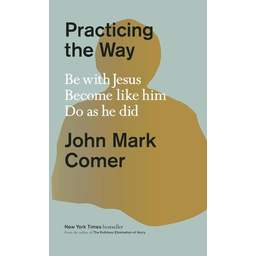 Practicing the WayThe wider book and formation framework behind the tool’s language and practices.Local pastor or spiritual directorRelational discernment with context, tradition, confidentiality, and accountable care.
 RenovaréA broad Christian spiritual-formation tradition with practices, books, and community resources.Licensed therapistThe appropriate route for clinical symptoms, trauma, risk, diagnosis, or treatment.
Frequently asked questions
Is Spiritual Health Reflection free?
Yes. Practicing the Way offers the reflection without a paid assessment fee and supports its resources through donors.
What does it measure?
It organizes self-reported reflection around being with Jesus, becoming like him, and doing as he did. It is not an objective or clinical measurement.
Do I need an account?
An account may be needed to save, track, or revisit results. Review the current prompts and privacy notice before entering personal information.
Can my church see my answers?
The public materials do not explain organizational visibility specifically enough. Ask the church and Practicing the Way before joining any coordinated rollout.
Should leaders require everyone to complete it?
No. Participation and disclosure should be voluntary, with no consequence for declining and no use in employment, membership, discipline, or eligibility decisions.
Is it a mental-health assessment?
No. It cannot diagnose, assess crisis risk, or replace licensed care. Seek appropriate professional or emergency help when needed.
How often should I repeat it?
The product suggests returning after a period of months. Choose a rhythm that supports reflection without turning scores into constant self-surveillance.
Sources & further reading
More Devotional Apps
 365 Christian Men365 Christian Men delivers short, memorable stories of faith and courage across history, now inside the broader 365 Christian Stories ministry—most useful as a free conversation starter when biography is sourced, contextualized and never confused with Scripture.
 Contagious Disciple MakingThe Contagious Disciple Making app gathers free stories, training, Scripture lists and community tools around Discovery Bible Study and DMM—useful as a doorway when coaching, local church accountability and participant safety remain larger than the app.
 ReflectReflect builds a calm two-minute rhythm from Scripture, a personalized AI reflection, prayer and one honest question, with strong privacy documentation and no ads—but intimate context still reaches cloud services, and generated theology needs human judgment.
 Overflow Quiet Time CompanionOverflow is a free iPhone companion for turning a Bible, devotional or Christian app into a five-minute quiet-time rhythm—but its thoughtful simplicity comes with a tiny public track record and few recent feature additions.
 Following JesusFollowing Jesus gives new believers a free pocket companion for seven Christian foundations, devotionals, Bible reading, worship and video—useful immediately, though its iOS build and privacy label lag the much newer Subsplash Android app.
 helloHOPEhelloHOPE offers free Scripture-centered encouragement, prayer, calming music and stories for families facing a child’s diagnosis—but advertising and cross-app tracking labels are a poor match for such a sensitive moment.