
- Starting price
- Free
- Free tier
- Yes
- Platforms
- Windows · Steam · Browser/HTML5 · itch.io
- Developer
- Living Bones Interactive / Benjamin Westlake
- Launched
- 2025
- Updated
- Aug 16, 2026
The verdict
The Bloody Cross is not a children’s Bible game. It is a compact allegorical horror story about sin, guilt, failed self-salvation, Christ’s forgiveness, and following him toward the cross, with blood, death, addiction, trauma, and suicide in view. Mature players may find its darkness meaningful; parents, pastors, and vulnerable users should screen it rather than trusting the Christian label to mean gentle content.
Try The Bloody Cross ↗Opens store.steampowered.com
The Bloody Cross is a short top-down narrative game by Benjamin Westlake’s Living Bones Interactive. Players climb a mountain symbolizing moral achievement, encounter temptation and failure, meet other wounded figures, and eventually face Jesus’ offer of forgiveness and costly discipleship.
Its hand-drawn art, sparse movement, dialogue, music, and horror imagery deliberately reject the sanitized tone of many Christian games. The developer frames sin as oppressive and the crucifixion as necessary, terrible, and gracious rather than decorative religious imagery.
Steam released the Windows edition on May 20, 2025 as a free single-player game. Itch.io also offers browser play and a name-your-own-price Windows download; that page states no generative AI was used in development.
We reviewed the official store descriptions, content warning, system requirements, update data, and public user response without completing the game. We cannot offer a scene-by-scene trigger guide, doctrinal evaluation of every line, accessibility audit, or firsthand assessment of controls and technical stability.
✓ The good
- Unusually honest themes - the game takes guilt, addiction, suffering, suicide, and grace seriously
- Focused experience - a short linear story can sustain an argument without filler or monetization loops
- Free access - Steam is free and itch.io supports browser play or a name-your-own-price download
- Hand-crafted production - the developer explicitly says no generative AI created the assets
- Modest requirements - Windows 10 or 11, 4 GB RAM, and 500 MB storage are broadly accessible
✗ Watch out
- Not child-friendly - blood, death, addiction, emotional trauma, and suicide are explicit content warnings
- Narrow platform support - the store version is Windows-only, aside from browser play on itch.io
- Small evidence base - positive response rests on only a few dozen Steam reviews
- Linear allegory - players wanting systems, exploration depth, or multiple theological viewpoints may feel constrained
- Potential trigger risk - a short store warning cannot capture every image or personal vulnerability
Best for
- Mature adults interested in Christian allegory, indie narrative games, and religious horror
- Small groups willing to screen the game and discuss sin, works, grace, suffering, and discipleship
- Players wanting a brief complete experience without a price, subscription, or live-service system
- Game creators studying how hand-made art and mechanics can carry a theological argument
Avoid if
- Blood, death, suicide, addiction, trauma, religious fear, or crucifixion imagery may be destabilizing
- You are selecting a game for children, a mixed-age group, or an unscreened church event
- You need a pastoral, clinical, or crisis resource rather than a provocative fictional work
- You expect broad gameplay systems, a long campaign, multiplayer, or console and mobile support
What The Bloody Cross is
The Bloody Cross is a fictional Christian narrative game with horror elements. It is not a children’s curriculum, Bible translation, doctrinal standard, therapy, suicide-prevention program, trauma treatment, pastoral counsel, or substitute for direct reading and teaching of the crucifixion accounts.
A Christian label does not remove the need for content screening. Leaders should play the complete version first, disclose themes specifically, permit an easy opt-out, avoid pressuring disclosure afterward, and know the appropriate local crisis and safeguarding route if the material surfaces immediate concern.
Why Christian horror can reveal what sanitized art avoids
Horror can make guilt, bondage, death, self-deception, and sacrifice felt rather than merely named. The Bloody Cross uses an impossible ascent and repeated failure to confront the player with the limits of moral achievement before introducing forgiveness.
Intensity is not automatically depth. Evaluate whether the game’s images serve the gospel-shaped argument or simply shock, and let Scripture and accountable conversation interpret the experience rather than treating a powerful emotional response as doctrinal proof.
Mountain allegory: progress becomes a theological question
The player climbs toward righteousness while temptation, pride, suffering, and failure repeatedly interrupt the journey. Encounters frame the mountain as an attempted moral achievement rather than a conventional victory ladder.
That mechanic can open conversation about works, repentance, grace, sanctification, and the meaning of following Jesus. Different Christian traditions may describe those relationships differently, so separate what the game dramatizes from what a church teaches confessionally.
Hand-drawn horror and sound: darkness carries the mood
Stark 2D visuals, music, dialogue, blood, death, and disturbing subject matter build an oppressive atmosphere. The developer says assets were hand-crafted without generative AI.
Headphones and uninterrupted play can heighten the effect, which is not always desirable. Screen at normal volume first, watch for flashing or input accessibility needs, and give vulnerable participants permission to stop without explanation.
Short free distribution: low barrier, broad responsibility
Steam provides the free Windows release, while itch.io supports an HTML5 version and optional payment. Minimum requirements list Windows 10 or 11, a 1.2 GHz processor, 4 GB RAM, DirectX 10, and 500 MB storage.
Free and browser-playable makes the work easy to share, but links should travel with the mature-content warning. Schools, youth ministries, public streams, and group leaders should not rely on storefront tags alone.
Pricing
Steam
Free
Windows download with single-player access and Steam Family Sharing support.
itch.io browser
Free
Play the HTML5 edition in a compatible browser.
itch.io download
Name your price
Download the Windows build free or optionally support the developer.
The Steam edition is free to play. The itch.io page permits browser play and a name-your-own-price Windows download, so payment there is optional support rather than required access.
There is no published subscription, in-game currency, advertising model, downloadable-content charge, or required account beyond the chosen distribution platform.
Users still accept Steam or itch.io platform terms and may need compatible hardware, bandwidth, storage, and controller or keyboard access.
Churches planning a screening should budget staff time for full review, content communication, facilitation, accessibility, and safeguarding rather than assuming a free game creates a free event.
Where The Bloody Cross falls behind
Publish a scene-level content and accessibility guide covering suicide context, blood, audio intensity, flashing, controls, text size, captions, and estimated completion time.
Add explicit pause, text-speed, volume separation, remapping, reduced-effects, and high-contrast options where missing.
Clarify whether browser and Steam builds contain identical scenes and how version updates are synchronized.
Offer an official discussion guide that distinguishes the game’s allegory from Scripture quotations and represents disputed theological questions fairly.
Expand platform support or document reliable compatibility through Wine, Steam Deck, macOS, Linux, and common browsers.
The Bloody Cross vs. That Dragon, Cancer vs. Pilgrim’s Progress
The Bloody Cross is a short dark allegory centered on sin and crucifixion. That Dragon, Cancer is an autobiographical interactive work about a family’s grief, prayer, and a child’s terminal illness. Pilgrim’s Progress is a much larger classic allegory of the Christian journey available across books and adaptations.
Choose The Bloody Cross for a compact mature horror experience. Choose That Dragon, Cancer for personal grief and lament. Choose Pilgrim’s Progress for a more expansive discipleship allegory with many study and age-adapted editions.
None should be selected by theme alone. Match content intensity, platform, group age, doctrine, facilitation capacity, and the particular experiences of participants, then provide an opt-out and appropriate follow-up.
The bottom line
The Bloody Cross demonstrates that a Christian game need not be cheerful, simplistic, or aimed at children. Its hand-drawn mountain allegory uses horror to make sin, moral failure, sacrifice, and forgiveness difficult to ignore, and the free short format keeps the artistic argument concentrated. The maturity warning is essential, not incidental: blood, death, addiction, trauma, and suicide can make this harmful in the wrong setting. Adults drawn to challenging religious art can approach it thoughtfully. Leaders should finish it before sharing, name the content plainly, preserve freedom to opt out, and ground discussion in Scripture, pastoral care, and qualified support.
Alternatives to The Bloody Cross
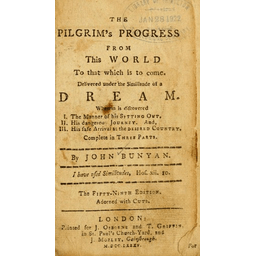 Pilgrim’s ProgressThe classic extended Christian allegory of danger, perseverance, temptation, and grace.
 Kings of Israel Video GameA strategic biblical game with an optional Bible-study mode and a much less intense tone.Gate ZeroA narrative adventure exploring the world and events of the Gospels through a larger game format.The PilgrimAnother indie faith-oriented journey for players seeking Christian themes in interactive form.
Frequently asked questions
Is The Bloody Cross free?
Yes. It is free on Steam, and itch.io allows free browser play or a name-your-own-price Windows download.
Is it suitable for children?
No. The official description warns about blood, death, addiction, emotional trauma, and suicide, and the developer presents it as mature Christian horror.
What is the game about?
A wanderer climbs a mountain symbolizing moral achievement, confronts sin and failure, and encounters Jesus’ offer of forgiveness and a call to follow him toward the cross.
How long is it?
The developer describes it as a short narrative-driven experience. The public pages reviewed do not provide a precise universal completion time.
Which platforms are supported?
Steam lists Windows, while itch.io offers a Windows download and an HTML5 browser version.
Did the developer use generative AI?
The itch.io page explicitly says no generative AI was used and describes the assets as hand-crafted.
Can a church use it for discussion?
Potentially with mature adults, but a leader should finish it first, disclose all major themes, provide an opt-out, and prepare appropriate pastoral or crisis referral paths.
Sources & further reading
More Devotional Apps
 365 Christian Men365 Christian Men delivers short, memorable stories of faith and courage across history, now inside the broader 365 Christian Stories ministry—most useful as a free conversation starter when biography is sourced, contextualized and never confused with Scripture.
 Contagious Disciple MakingThe Contagious Disciple Making app gathers free stories, training, Scripture lists and community tools around Discovery Bible Study and DMM—useful as a doorway when coaching, local church accountability and participant safety remain larger than the app.
 ReflectReflect builds a calm two-minute rhythm from Scripture, a personalized AI reflection, prayer and one honest question, with strong privacy documentation and no ads—but intimate context still reaches cloud services, and generated theology needs human judgment.
 Overflow Quiet Time CompanionOverflow is a free iPhone companion for turning a Bible, devotional or Christian app into a five-minute quiet-time rhythm—but its thoughtful simplicity comes with a tiny public track record and few recent feature additions.
 Following JesusFollowing Jesus gives new believers a free pocket companion for seven Christian foundations, devotionals, Bible reading, worship and video—useful immediately, though its iOS build and privacy label lag the much newer Subsplash Android app.
 helloHOPEhelloHOPE offers free Scripture-centered encouragement, prayer, calming music and stories for families facing a child’s diagnosis—but advertising and cross-app tracking labels are a poor match for such a sensitive moment.