Ecclesiastes 2
People in this chapter
Hand one man a king's fortune and a free hand, and let him chase every pleasure to the bottom. That is Ecclesiastes 2. He gives himself to wine and mirth. He builds houses, plants vineyards, gathers servants, herds, silver, gold, the delights of the sons of men. He withholds nothing his eyes desire. Then he looks at the whole pile and writes the result: all was vanity and vexation of spirit, and there was no profit under the sun (v. 11).1
Tap any highlighted phrase to jump to the commentary that unpacks it.
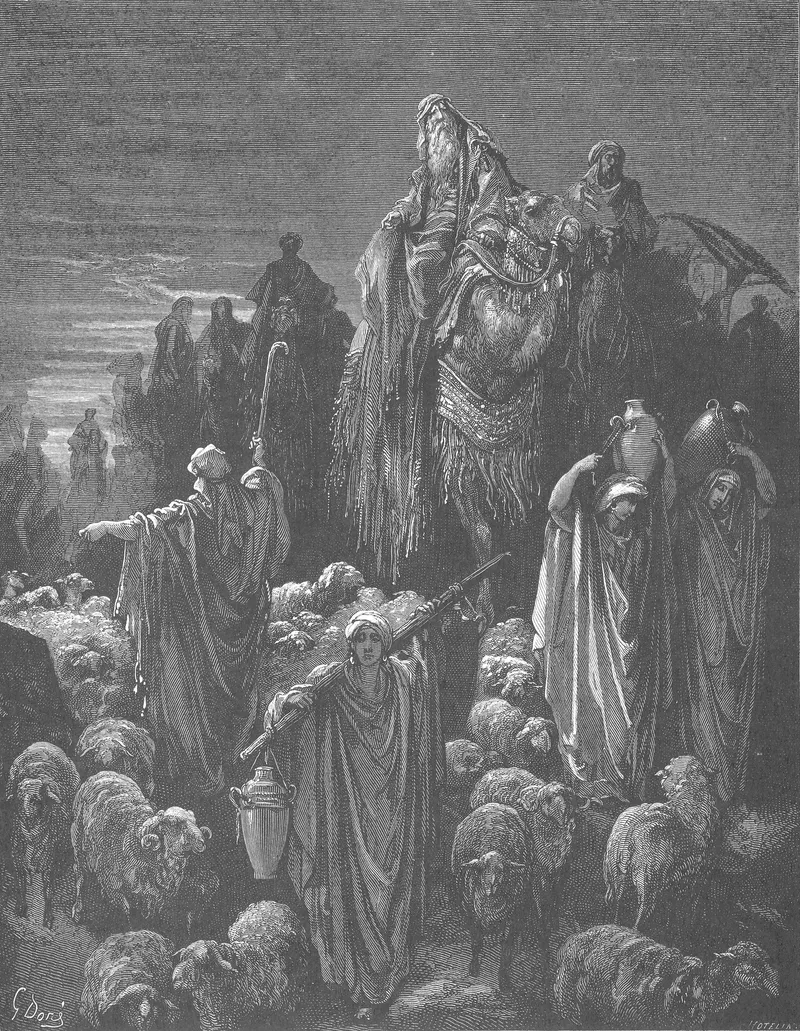
Ecclesiastes 2:1-3I Will Prove Thee with Mirth
1I said in mine heart, Go to now, I will prove thee with mirth, therefore enjoy pleasure: and, behold, this also is vanity. 2I said of laughter, It is mad: and of mirth, What doeth it? 3I sought in mine heart to give myself unto wine, yet acquainting mine heart with wisdom; and to lay hold on folly, till I might see what was that good for the sons of men, which they should do under the heaven all the days of their life.
This is not a man stumbling into indulgence. The word prove means to put on trial, to assay - and the Preacher runs his pleasures the way a scientist runs a test, under controlled conditions he is careful to record: he gives himself to wine yet acquainting mine heart with wisdom (v. 3). He plunges in, but keeps one part of his mind sober the whole time, watching, refusing to lose his grip on what he is learning.
His aim is large and human: to see what was that good for the sons of men, which they should do… all the days of their life. He wants to know what a person should actually spend a life on. And the first finding lands almost at once - of laughter he says It is mad, and of mirth, What doeth it? (v. 2). Pleasure pursued for its own sake cannot answer the question. It only fills the time.
Even here, before the experiment is fairly under way, the verdict is forming: this also is vanity.1
Ecclesiastes 2:4-11Houses, Gardens, and Every Delight
4I made me great works; I builded me houses; I planted me vineyards: 5I made me gardens and orchards, and I planted trees in them of all kind of fruits: 6I made me pools of water, to water therewith the wood that bringeth forth trees:
From fleeting pleasure the Preacher turns to something that feels more solid - the work of building: I made me great works; I builded me houses; I planted me vineyards; I made me gardens and orchards… I made me pools of water (vv. 4-6). Notice the drumbeat of I made me, I builded me, I planted me. Six times in three verses the eye returns to the self. This is the dream of the monument - to leave behind something visible and lasting, something that bears one's name, a defense against being forgotten.
And the projects are not small or shabby. Houses, vineyards, gardens stocked with all kind of fruits, irrigation pools dug to water whole forests of growing trees - this is creation on a grand scale, a man bending the landscape to his will. There is a real grandeur to it, and the chapter does not sneer at the work itself. But the repeated me quietly exposes the fault line. A life organized around what I can build for myself is building on a foundation that will not hold, however impressive the structure that rises on it.
7I got me servants and maidens, and had servants born in my house; also I had great possessions of great and small cattle above all that were in Jerusalem before me: 8I gathered me also silver and gold, and the peculiar treasure of kings and of the provinces: I gat me men singers and women singers, and the delights of the sons of men, as musical instruments, and that of all sorts. 9So I was great, and increased more than all that were before me in Jerusalem: also my wisdom remained with me. 10And whatsoever mine eyes desired I kept not from them, I withheld not my heart from any joy; for my heart rejoiced in all my labour: and this was my portion of all my labour. 11Then I looked on all the works that my hands had wrought, and on the labour that I had laboured to do: and, behold, all was vanity and vexation of spirit, and there was no profit under the sun.
The accumulation now reaches its peak, and the verbs pile up like the treasure itself: I got me… I gathered me also silver and gold, and the peculiar treasure of kings… I gat me men singers and women singers, and the delights of the sons of men (vv. 7-8). Servants, herds, precious metals, the rare treasures of kings and whole provinces, the finest music, every delight a human heart could name - he has it all, and more of it than anyone before him.
He says so plainly: So I was great, and increased more than all that were before me in Jerusalem (v. 9). This is the human dream realized without limit, and the Preacher is careful to record that he did not hold back from enjoying it: whatsoever mine eyes desired I kept not from them, I withheld not my heart from any joy (v. 10). We must not read him as a sour man who never tasted what he gathered.
He drank it all to the bottom. The pursuit itself even rejoiced his heart; the activity was its own kind of reward, this was my portion of all my labour. Which makes the next verse all the more arresting. The man who got everything, and enjoyed it, is about to tell us what it came to.
The hinge of the whole experiment is one deliberate action: I looked. He stops accumulating, steps back, and surveys the whole estate at once - the houses, the gardens, the herds, the treasure, the music. And the sum of it is vanity - hevel, vapor, breath you cannot hold - and vexation of spirit, a chasing after wind. Notice what the verdict does not say. It does not say any one piece was bad. The houses were real, the gardens beautiful, the joy genuine.
It says none of it yielded profit: nothing left over, no lasting gain the soul could keep. The reason is folded into the last three words, under the sun. Measured by what lies beneath the sky alone, with nothing above it in view, even total success comes out empty-handed. This is not the complaint of a man who failed. It is the testimony of a man who got everything he reached for, climbed to the summit of it, and found the summit bare.
If you have ever reached a thing you were sure would be enough and felt the strange flatness on the other side, you already know the view from up there.2
Ecclesiastes 2:12-14Wisdom Excelleth Folly
12And I turned myself to behold wisdom, and madness, and folly: for what can the man do that cometh after the king? even that which hath been already done. 13Then I saw that wisdom excelleth folly, as far as light excelleth darkness. 14The wise man’s eyes are in his head; but the fool walketh in darkness: and I myself perceived also that one event happeneth to them all.
Having tested pleasure and wealth, the Preacher turns to the one thing that might seem to stand above them - wisdom itself: I turned myself to behold wisdom, and madness, and folly (v. 12). And here he is scrupulously fair. He does not pretend wisdom and folly are the same; he grants wisdom a real and weighty advantage: wisdom excelleth folly, as far as light excelleth darkness. The wise man's eyes are in his head; but the fool walketh in darkness (vv. 13-14).
The image is plain and true. The wise man sees where he is going; his eyes are open, in their proper place, watching the road. The fool stumbles in the dark, blind to the pit in front of him. As far as living a life goes, that difference is as wide as the gap between day and night, and the Preacher will not minimize it. This matters, because what comes next is not a denial of wisdom's worth.
He has just conceded, in the strongest terms, that wisdom is light and folly is darkness. The shadow he is about to name does not fall because wisdom is worthless. It falls because of something that overtakes the wise and the foolish alike, no matter how clearly either one could see.
Ecclesiastes 2:15-17One Event Happeneth to Them All
15Then said I in my heart, As it happeneth to the fool, so it happeneth even to me; and why was I then more wise? Then I said in my heart, that this also is vanity. 16For there is no remembrance of the wise more than of the fool for ever; seeing that which now is in the days to come shall all be forgotten. And how dieth the wise man? as the fool. 17Therefore I hated life; because the work that is wrought under the sun is grievous unto me: for all is vanity and vexation of spirit.
Then one observation levels everything he has just praised. The one event of verse 14 is death, and it makes no distinction between the wise man and the fool - as it happeneth to the fool, so it happeneth even to me. The Preacher follows that logic without flinching to its hardest point: there is no remembrance of the wise more than of the fool for ever… And how dieth the wise man? as the fool (v. 16).
The open eyes do not keep the wise man out of the grave. His memory fades exactly as the fool's does; the centuries swallow both names. Within the frame of under the sun, death is the great equalizer that cancels wisdom's lead right at the finish line. And the weight of it crushes him: Therefore I hated life (v. 17). This is the floor of the chapter, and the book does not rush past it or apologize for it.
It lets the Preacher say the unbearable thing out loud, because the honesty is the point. A faith that cannot look death in the face has not yet looked at much. He stares straight at it - and his despair becomes the dark soil a truer hope will grow out of, a few verses on.
There is a particular sting in the Preacher's question, why was I then more wise? (v. 15). He had made wisdom itself his prize. Of all his pursuits, this was the noblest - not mere pleasure, not mere wealth, but understanding, the very thing the rest of Scripture prizes so highly. And now the leveling fact of death seems to mock even that. If the wise and the fool come to the same end and the same forgetting, what was the point of the long, hard work of becoming wise?
It is the bitterest moment of the experiment, because it strikes at his best achievement, not his worst. Yet notice what the question quietly assumes: that wisdom ought to count for something lasting, that it is wrong for the wise man's light simply to be snuffed out like the fool's. That instinct is not foolish; it is a true intuition pressing against the limits of the under the sun frame. The Preacher feels, even in his despair, that wisdom deserves a better end than the grave can give it - and he is right.
What he cannot yet see from beneath the sun is that the One who is Himself the wisdom of God will one day break the very one event that here seems to cancel all wisdom's worth.
Ecclesiastes 2:18-26From the Hand of God
18Yea, I hated all my labour which I had taken under the sun: because I should leave it unto the man that shall be after me. 19And who knoweth whether he shall be a wise man or a fool? yet shall he have rule over all my labour wherein I have laboured, and wherein I have shewed myself wise under the sun. This is also vanity. 20Therefore I went about to cause my heart to despair of all the labour which I took under the sun. 21For there is a man whose labour is in wisdom, and in knowledge, and in equity; yet to a man that hath not laboured therein shall he leave it for his portion. This also is vanity and a great evil.
If death is the first thief, here is the second: the unknown heir. I hated all my labour which I had taken under the sun: because I should leave it unto the man that shall be after me (v. 18). Everything the Preacher built - the houses, the gardens, the carefully gathered fortune - will pass, the moment he dies, into hands he cannot choose or control. And the cruelest part is the uncertainty: who knoweth whether he shall be a wise man or a fool? (v. 19).
All that disciplined, skillful work, wherein I have shewed myself wise, might be inherited by someone who tears it down in a generation. A lifetime of labour in wisdom, and in knowledge, and in equity handed over to a man that hath not laboured therein (v. 21) - the Preacher calls it not merely vanity but a great evil. There is a real grief here that anyone who has built anything will recognize: the helplessness of not being able to guarantee that what you spent your life on will be cared for once you are gone.
So thoroughly does this gnaw at him that he says, I went about to cause my heart to despair (v. 20) - he deliberately gave himself over to hopelessness about the whole project of toil under the sun. The verse is the bottom of the valley. The next ones begin, unexpectedly, to climb.
22For what hath man of all his labour, and of the vexation of his heart, wherein he hath laboured under the sun? 23For all his days are sorrows, and his travail grief; yea, his heart taketh not rest in the night. This is also vanity. 24There is nothing better for a man, than that he should eat and drink, and that he should make his soul enjoy good in his labour. This also I saw, that it was from the hand of God. 25For who can eat, or who else can hasten hereunto, more than I? 26For God giveth to a man that is good in his sight wisdom, and knowledge, and joy: but to the sinner he giveth travail, to gather and to heap up, that he may give to him that is good before God. This also is vanity and vexation of spirit.
Here the human cost is laid bare. The toil does not stay at the worksite. It follows a man home and into his bed, so that even the night, made for rest, gives none: his heart taketh not rest in the night (v. 23). Anyone who has stared at a dark ceiling while worry runs its loops knows the exact restlessness he names. And he stamps it one more time with the chapter's refrain - This is also vanity. Sorrow by day, no rest by night, the whole anxious round signifying nothing: this is the deepest ache of the book, fully exposed.
The heart that cannot rest is the truest symptom of a life lived only under the sun. Hold that picture for a moment - the sleepless, working heart that cannot put itself down. The very next verse begins to answer it.
And now, at last, the turn. After all the futility, a quiet, clean light comes in at verse 24, where the good of eating, drinking, and honest work is named from the hand of God. This is something humbler and far more durable than the old chase: the plainest goods of a life - bread, drink, work you can enjoy - taken as gifts, received rather than seized. And one phrase changes everything. The whole chapter until now has been a record of grasping - I made me, I gathered me, I got me. Here, for the first time, the open hand belongs to God.
The posture is no longer seizing. It is receiving. The same meal that turns to vapor the moment you try to wring ultimate meaning out of it becomes good the moment you take it as a gift from a Giver. For who can eat… more than I? (v. 25) - and there is the irony at the heart of the book. The man who tried hardest to seize joy is the very one who learned it can only be received.
Grasping harder only deepens the chase. The cure is to open the hand.1
The closing verse sets two whole ways of living side by side. To the one who is good in his sight, God gives a threefold gift - wisdom, and knowledge, and joy (v. 26). Look closely at that list. It is the very thing the Preacher has been straining to seize for himself for two chapters, now simply given. Over against it stands the endless, anxious round of mere accumulation, to gather and to heap up, only for the hoard to pass at last into other hands.
The chapter keeps its sober honesty even here - this also is vanity and vexation of spirit - for from beneath the sun the whole arrangement still looks like vapor. Yet something has been quietly planted that the experiment could never produce on its own: the difference between a life that grasps and a life that receives, between heaping up and being handed. Wisdom, knowledge, joy - the three things every page of this chapter has chased - were never trophies to be won.
They were gifts all along, set in an open hand, for anyone willing to live before the face of the Giver.
Research trail
Sources & further study
These references support the historical, linguistic, manuscript, and contextual notes in this chapter. Scripture remains the primary text; external sources are provided so readers can inspect the research directly.
- Ecclesiastes 2 - Translators' NotesThe NET Bible's detailed footnotes on Ecclesiastes 2 - the testing language of verse 1, the meaning of hevel behind “vanity,” the much-discussed phrase translated “vexation of spirit” in verse 11, and the shift at verse 24 where enjoyment is named a gift “from the hand of God.”
- Ecclesiastes 2 ↔ Matthew 6 & 11 · Luke 12 · 1 Corinthians 15Traces the threads tying Ecclesiastes 2 to the rest of Scripture - the labour that yields no profit under the sun (v. 11) read alongside the treasure laid up in heaven (Matt. 6:19-20), the rich man whose hoard is left to another (Luke 12:16-21), and the work that is not in vain in the Lord (1 Cor. 15:58).
- Ecclesiastes 2 · Hebrew + classical Jewish commentaryThe Hebrew text of Ecclesiastes 2 (Kohelet) with Rashi, Ibn Ezra, and other classical commentators side by side - useful for hevel (the “vanity” that means vapor or breath), for amal (the recurring word for “labour” and the toil it costs), and for the difficult phrase re'ut ruach rendered “vexation of spirit” in verse 11.
Where this echoes in Scripture
Houses, Gardens, and Every Delight
- Luke 12:16-21I will pull down my barns, and build greater... Thou fool, this night thy soul shall be required of thee.The Preacher's experiment as a parable - a man who builds and hoards (vv. 4-8), then loses it all to death.
- 1 Kings 10:23-24So king Solomon exceeded all the kings of the earth for riches and for wisdom.The historical scale behind verses 7-9 - a king who truly did increase more than all before him.
- Matthew 6:19-21Lay not up for yourselves treasures upon earth... But lay up for yourselves treasures in heaven.The answer to verse 11 - the profit that can be kept lies above the sun, not under it.
- Psalm 39:6Surely every man walketh in a vain shew... he heapeth up riches, and knoweth not who shall gather them.The same vapor (hevel) of verse 11 - a man heaping up what he cannot finally keep.
- Philippians 3:8I count all things but loss for the excellency of the knowledge of Christ Jesus my Lord.A man who weighed every gain the Preacher gathered and found the true profit in One above the sun.
One Event Happeneth to Them All
- Hebrews 9:27It is appointed unto men once to die, but after this the judgment.The one event of verse 14 - death common to all, but here set within a frame larger than the sun.
- Psalm 49:10For he seeth that wise men die, likewise the fool and the brutish person perish, and leave their wealth to others.The same hard sight as verses 14-16 - the wise and the foolish meeting one common end.
- 1 Corinthians 15:54-55Death is swallowed up in victory. O death, where is thy sting?The answer to the one event the Preacher dreads - the leveler itself overcome.
- Proverbs 4:18-19The path of the just is as the shining light... The way of the wicked is as darkness.The light-and-darkness contrast the Preacher affirms in verse 13 - wisdom as light, folly as the dark.
- John 11:25I am the resurrection, and the life: he that believeth in me, though he were dead, yet shall he live.The hope that reaches past verse 16 - the wise man's death no longer the last word.
From the Hand of God
- Matthew 11:28-29Come unto me, all ye that labour and are heavy laden, and I will give you rest.The answer to the restless heart of verse 23 - the rest the Preacher's toil could not earn, given freely.
- 1 Corinthians 15:58Always abounding in the work of the Lord, forasmuch as ye know that your labour is not in vain in the Lord.The reversal of verses 18-23 - labour that is not in vain, kept by the Lord rather than lost to an heir.
- Psalm 127:2It is vain for you to rise up early, to sit up late... for so he giveth his beloved sleep.The sleepless, striving heart of verse 23 - and the rest God gives as a gift, not a wage.
- 1 Timothy 6:17God, who giveth us richly all things to enjoy.The truth of verse 24 - the good things of life received as a gift from the hand of God.
- James 1:17Every good gift and every perfect gift is from above, and cometh down from the Father of lights.The shift of verse 24 - the good of life is given from above, not seized from under the sun.