Proverbs 31
People in this chapter
The book of wisdom ends in two voices, and the first is a mother's. The words of king Lemuel, the prophecy that his mother taught him (v. 1). A queen-mother instructs her royal son - warning him off the wine and the women that have ruined kings before him, and then pressing on him the one charge a crown exists to carry: Open thy mouth for the dumb in the cause of all such as are appointed to destruction… plead the cause of the poor and needy (vv. 8-9).
Power, she teaches him, is given not for self-indulgence but for advocacy - to lend a voice to those who have none.1
Tap any highlighted phrase to jump to the commentary that unpacks it.
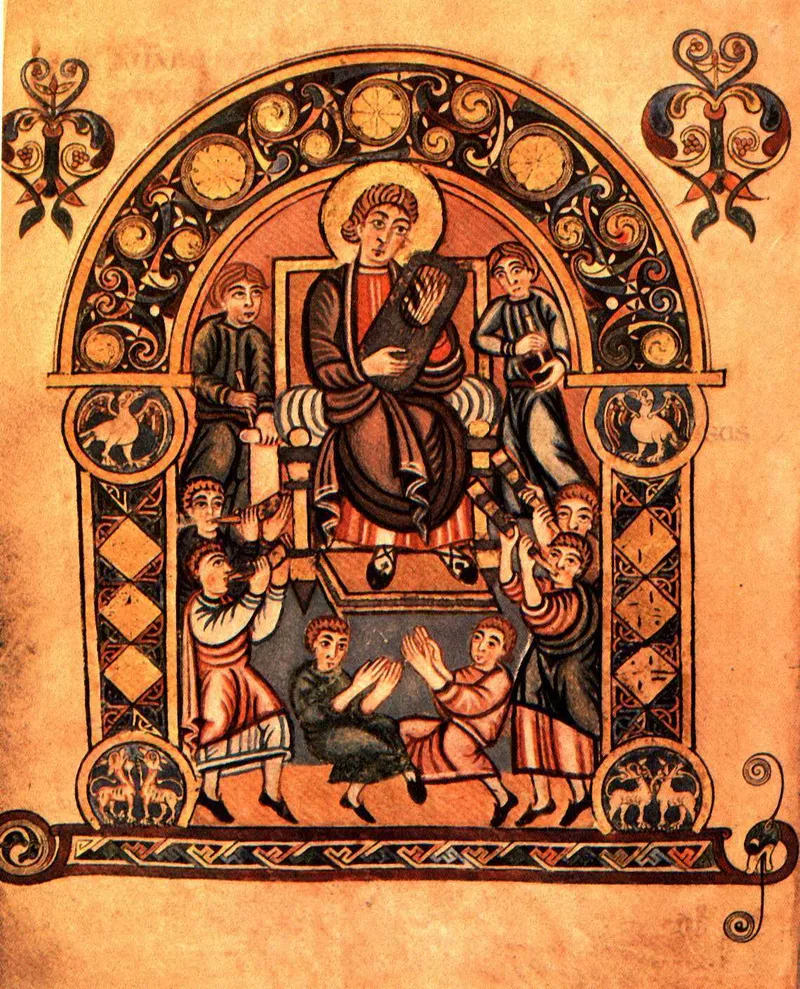
Proverbs 31:1-9Open Thy Mouth for the Dumb
1The words of king Lemuel, the prophecy that his mother taught him. 2What, my son? and what, the son of my womb? and what, the son of my vows? 3Give not thy strength unto women, nor thy ways to that which destroyeth kings. 4It is not for kings, O Lemuel, it is not for kings to drink wine; nor for princes strong drink: 5Lest they drink, and forget the law, and pervert the judgment of any of the afflicted. 6Give strong drink unto him that is ready to perish, and wine unto those that be of heavy hearts. 7Let him drink, and forget his poverty, and remember his misery no more. 8Open thy mouth for the dumb in the cause of all such as are appointed to destruction. 9Open thy mouth, judge righteously, and plead the cause of the poor and needy.
The book's closing words come from a place the ancient world rarely recorded: a mother teaching her son. The words of king Lemuel, the prophecy that his mother taught him (v. 1). We know nothing certain of Lemuel beyond this; the name means something like “belonging to God,” and the chapter simply lets a queen-mother speak. Her opening is all tenderness and urgency at once: What, my son? and what, the son of my womb? and what, the son of my vows? (v. 2).
Three times she names him hers - the son she bore, the son she dedicated to God with vows before he was ever a king. The repetition is the sound of a mother who has thought long and prayed hard about the man this child would become. And what she gives him is not flattery but warning. Give not thy strength unto women, nor thy ways to that which destroyeth kings (v. 3). She names the two appetites - unbridled desire and drink - that have toppled rulers throughout history, the very things that look like a king's privilege and turn out to be his ruin.
A mother who loves a son in power does not tell him he can do as he pleases; she tells him the truth about what power tempts a man to spend himself on.
Her warning about drink is not a blanket rule but an argument about office: It is not for kings, O Lemuel, it is not for kings to drink wine; nor for princes strong drink: lest they drink, and forget the law, and pervert the judgment of any of the afflicted (vv. 4-5). The danger she names is precise. A king who dulls his mind cannot keep the law clear in his head, and a fogged ruler hands down crooked verdicts - and it is always the afflicted, the one with no power to push back, who pays for a judge's clouded judgment.
The throne is built for clear-eyed justice, and anything that blurs it betrays the people most at the mercy of the court. Then she turns, strikingly, and finds a fitting place for the very thing she has forbidden the king: Give strong drink unto him that is ready to perish, and wine unto those that be of heavy hearts. Let him drink, and forget his poverty, and remember his misery no more (vv. 6-7).
The relief that would corrupt a ruler in his clarity can be a mercy to a sufferer in his pain. The point is not a theory of drink; it is a theory of compassion. The king is to stay sober precisely so that he can attend to the very people - the perishing, the heavy-hearted, the poor - whose cause his clear judgment is meant to defend.
The mother's counsel rises now to its summit, and it turns out the whole warning has been clearing the ground for this one charge: Open thy mouth for the dumb in the cause of all such as are appointed to destruction. Open thy mouth, judge righteously, and plead the cause of the poor and needy (vv. 8-9). Here is what a crown is for. The dumb are not the foolish but the voiceless - those who cannot speak for themselves, who have no advocate, no standing, no one to make their case.
The appointed to destruction are those already sliding toward ruin, the ones the powerful find easiest to ignore because they can do nothing in return. And to a king who could spend his voice on anything, his mother says: spend it on them. Twice she says open thy mouth - the very faculty a ruler is most tempted to use for himself, she bends toward the helpless. This is one of the high-water marks of the whole book's vision of justice.
Greatness is not measured by how loudly you can speak for yourself but by whether you will lift your voice for someone who cannot. The afflicted of verse 5, whom a careless king would wrong, become in verse 9 the very people a wise king exists to defend.
Proverbs 31:10-19Who Can Find a Virtuous Woman?
10Who can find a virtuous woman? for her price is far above rubies. 11The heart of her husband doth safely trust in her, so that he shall have no need of spoil. 12She will do him good and not evil all the days of her life. 13She seeketh wool, and flax, and worketh willingly with her hands. 14She is like the merchants’ ships; she bringeth her food from afar. 15She riseth also while it is yet night, and giveth meat to her household, and a portion to her maidens. 16She considereth a field, and buyeth it: with the fruit of her hands she planteth a vineyard. 17She girdeth her loins with strength, and strengtheneth her arms. 18She perceiveth that her merchandise is good: her candle goeth not out by night. 19She layeth her hands to the spindle, and her hands hold the distaff.
The poem opens with a question that is really a tribute: Who can find a virtuous woman? for her price is far above rubies (v. 10). The question is not despairing, as if such a woman could never be found; it is the language of treasure - the way one speaks of something so valuable that to find it is the discovery of a lifetime. And the valuation is exact: far above rubies. Anyone who has read this book will hear an echo, for these are nearly the same words it used of wisdom herself - wisdom is better than rubies (Prov. 8:11)2.
That echo is not an accident. All through Proverbs, Wisdom has been pictured as a woman - crying in the streets, building her house, setting her table, calling the simple to come. Now, at the very end of the book, that figure steps out of metaphor and into an ordinary life. The virtuous woman is wisdom no longer merely personified but embodied - lived out in a real person of strength and skill and faithfulness. To find her is to find wisdom with skin on.
The first thing the poem praises is her sheer, rare worth: she is treasure, prized above the costliest stones the earth yields.
The next thing praised is the trust she creates: The heart of her husband doth safely trust in her, so that he shall have no need of spoil. She will do him good and not evil all the days of her life (vv. 11-12). The picture is of a partnership so steady that her husband's heart can rest in it - he need not chase after plunder or grasp for more, because what she builds at home is itself a kind of wealth and security.
All the days of her life: this is not a fair-weather faithfulness but a steadiness that holds across decades. And then the poem does something quietly radical for its age - it spends verse after verse simply admiring her work. She seeketh wool, and flax, and worketh willingly with her hands (v. 13). Notice the word willingly. Her labour is not drudgery grimly endured; she works with her whole heart, with the gladness of someone whose hands are skilled and whose work is good.
Scripture nowhere treats this domestic, productive, hands-on life as a lesser thing. It is held up here as honourable, even glorious - the daily, skilled work of ordering a household and a livelihood is named as part of what makes her worth more than rubies.
The poem widens to show the full reach of her competence, and it is striking how large her world is. She is like the merchants’ ships; she bringeth her food from afar (v. 14) - she trades at a distance, sourcing the best from wherever it can be found. She riseth also while it is yet night, and giveth meat to her household, and a portion to her maidens (v. 15) - she is up before dawn, providing not only for her family but for those who work under her.
She considereth a field, and buyeth it: with the fruit of her hands she planteth a vineyard (v. 16) - she evaluates an investment, makes the purchase, and turns her own earnings into something that will yield for years. She is a producer, a merchant, an employer, an investor, a planter. She girdeth her loins with strength, and strengtheneth her arms (v. 17): the poem actually flexes - she is physically capable, and she builds her capacity rather than coasting on it.
She perceiveth that her merchandise is good: her candle goeth not out by night (v. 18). She knows the quality of what she makes, and she works late when the work calls for it. None of this is incidental praise. The book of wisdom is showing what wisdom looks like in the grain of ordinary economic life - in diligence, foresight, skill, and an honest day's labour stretched gladly across a whole life.
Proverbs 31:20-27The Law of Kindness
20She stretcheth out her hand to the poor; yea, she reacheth forth her hands to the needy. 21She is not afraid of the snow for her household: for all her household are clothed with scarlet. 22She maketh herself coverings of tapestry; her clothing is silk and purple. 23Her husband is known in the gates, when he sitteth among the elders of the land. 24She maketh fine linen, and selleth it; and delivereth girdles unto the merchant. 25Strength and honour are her clothing; and she shall rejoice in time to come. 26She openeth her mouth with wisdom; and in her tongue is the law of kindness. 27She looketh well to the ways of her household, and eateth not the bread of idleness.
At the heart of this section comes the line that the poem itself seems to regard as its center of gravity: Strength and honour are her clothing; and she shall rejoice in time to come (v. 25). The poem has just spent two verses on actual clothing - her household clothed with scarlet, her own coverings of silk and purple (vv. 21-22), good and fitting garments the poem does not despise. But now it lifts the image to what she truly wears.
Her real garments, the ones that catch the eye and hold it, are strength and honour. Strength again - the poem keeps returning to it - and honour, the weight of a dignity she has earned. These are draped about her like a robe; they are how she actually appears to those who know her. And because of them she can face the future unafraid: she shall rejoice in time to come, literally she laughs at the days ahead.
A life built on strength of character and clothed in honour need not dread what is coming, because what she is rests on something time cannot strip away. She is not afraid of the snow (v. 21); she is not afraid of the years either. Her security is woven into who she has become.
Then the poem turns to her speech, and what it says is quietly one of the loveliest descriptions of a person in Scripture: She openeth her mouth with wisdom; and in her tongue is the law of kindness (v. 26). Two things govern her speech, and they govern it together. The first is wisdom - when she opens her mouth, what comes out is worth hearing; she is not merely strong and busy and capable but genuinely wise, a counselor whose words carry weight.
The second is the more striking phrase: in her tongue is the law of kindness. A law - not an occasional kindness when she happens to feel it, but a settled rule that governs how she speaks, a fixed principle that her words will be kind. The two belong together, for wisdom without kindness turns sharp and kindness without wisdom turns soft, and she has both: truthful and gentle, wise and warm. Set this beside the charge to King Lemuel at the chapter's opening - open thy mouth for the voiceless - and a pattern emerges.
The whole chapter cares enormously about how a person uses the mouth: the king opens his to plead for the poor, the woman opens hers in wisdom and kindness. The tongue, the book of wisdom keeps insisting, is where character finally shows.
The poem also takes care to show that her reach runs both outward and inward, and slights neither. Outward: She maketh fine linen, and selleth it; and delivereth girdles unto the merchant (v. 24) - her industry feeds the wider economy; what she makes goes out into the world and is valued there. Her husband, too, is known in the gates, sitting among the elders of the land (v. 23) - the household she helps build gives him standing in the place where the community's business and justice are done.
But the poem will not let her outward success eclipse the inward labour that sustains it: She looketh well to the ways of her household, and eateth not the bread of idleness (v. 27). She watches over her own house with attentive care; she does not live off others' toil while contributing nothing. The phrase the bread of idleness is memorable - the food eaten by those who consume without producing, who rest on others' effort.
She is the opposite. There is a wholeness to her life that the poem clearly admires: she is productive in the marketplace and faithful in the home, generous to the poor and diligent for her own, and she does not pit these against each other. All of it together is what wisdom looks like in motion.
Proverbs 31:28-31A Woman That Feareth the LORD
28Her children arise up, and call her blessed; her husband also, and he praiseth her. 29Many daughters have done virtuously, but thou excellest them all. 30Favour is deceitful, and beauty is vain: but a woman that feareth the LORD, she shall be praised. 31Give her of the fruit of her hands; and let her own works praise her in the gates.
Now the poem brings in the voices of the people who know her best, and that is where its praise carries the most weight: Her children arise up, and call her blessed; her husband also, and he praiseth her (v. 28). This is the praise that cannot be faked. Strangers can be impressed by a performance, but the family who lives with a person day in and day out, who sees them tired and tested and unguarded, knows what they are actually made of - and these rise up to bless her.
Her children do not merely tolerate her; they call her blessed. Her husband does not take her for granted; he praises her aloud, and the poem even gives us his words: Many daughters have done virtuously, but thou excellest them all (v. 29). The Hebrew behind done virtuously is the same word, chayil, that opened the poem - many women have been strong and capable and worthy, he says, but you surpass them all. There is something deeply right about this.
A life of genuine character is finally vindicated not by its public reputation but by the verdict of those closest to it. The people with the most evidence reach the highest estimate. That is the surest sign that the worth the poem has been describing is real all the way through.
And now the whole poem - the whole book - comes to rest on its single foundation: Favour is deceitful, and beauty is vain: but a woman that feareth the LORD, she shall be praised (v. 30). The line is doing two things at once. First it clears away the two things the world is most tempted to praise. Favour - charm, the approval of the crowd, the gift of being liked - is deceitful; it shifts and it lies, here today and gone with the mood of the room.
Beauty - physical loveliness - is vain, not evil but fleeting, a breath, here for a season and then gone. The poem is not sneering at favour or beauty as if they were bad; it is simply telling the truth about how little they finally bear weight. And then it names the one thing that does: a woman that feareth the LORD. Here is the keystone of the entire book set into its final arch. Proverbs opened by declaring that the fear of the LORD is the beginning of knowledge (Prov. 1:7); now, thirty-one chapters later, it closes by declaring that this same fear of the LORD is the thing that shall be praised. Everything the poem has admired - her strength, her work, her generosity, her wisdom, her kindness - grows from this one root.
It is not that her good works earn her a fear of God; it is that her reverence for God is the soil all the rest grew in. The book ends exactly where it began, with the fear of the LORD - only now we have watched what it looks like when it fills a whole life.
The last line of the book is a charge to us: Give her of the fruit of her hands; and let her own works praise her in the gates (v. 31). It asks two things. First, give her of the fruit of her hands - let her share in the harvest of her own labour; do not let her work go unrewarded or unrecognized. And second, let her own works praise her in the gates. The gates were the most public place in the city - where the elders sat, where cases were tried, where reputations were made.
It is the very place her husband is known (v. 23), and now the poem says her works belong there too. She does not need to praise herself, to advertise her worth, to angle for recognition. Her works do the speaking. What she has built and done and become testifies for her in the most public square there is, louder than any words she could say on her own behalf. This is the book's final picture of a life well lived: not one that announces itself, but one so substantial that it requires no announcement - a life whose own accomplishments rise up, like her children, and call it blessed.
Research trail
Sources & further study
These references support the historical, linguistic, manuscript, and contextual notes in this chapter. Scripture remains the primary text; external sources are provided so readers can inspect the research directly.
- Proverbs 31 - Translators' NotesThe NET Bible's detailed footnotes on Proverbs 31 - the identity of King Lemuel and his mother's counsel (vv. 1-9), the charge to plead for the voiceless (vv. 8-9), the acrostic form of the poem, and the much-discussed phrase eshet chayil in verse 10.
- Proverbs 31 ↔ Proverbs 8 & 9 · Ephesians 5 · Revelation 19Traces the threads tying Proverbs 31 to the rest of Scripture - the woman whose worth is above rubies (v. 10) read beside Wisdom herself, who is better than rubies (Prov. 8:11) and builds her house (Prov. 9:1), and her portrait read alongside the church arrayed for her Lord as a glorious church, not having spot, or wrinkle (Eph. 5:27).
- Proverbs 31 · Hebrew + classical Jewish commentaryThe Hebrew text of Proverbs 31 with Rashi, Ibn Ezra, and other classical commentators side by side - useful for the acrostic structure of verses 10-31 (each line opening with the next letter of the alphabet), for chayil (v. 10, the “virtuous” that means strength and valor), and for yirah (v. 30, the “fear” of the LORD on which the whole portrait rests).
Where this echoes in Scripture
Open Thy Mouth for the Dumb
- Isaiah 1:17Learn to do well; seek judgment, relieve the oppressed, judge the fatherless, plead for the widow.The same charge as verses 8-9 - the powerful called to plead for those who cannot plead for themselves.
- Luke 4:18he hath anointed me to preach the gospel to the poor... to set at liberty them that are bruised.The King's own statement of His office - the vocation of verses 8-9 taken up in person.
- Psalm 72:4He shall judge the poor of the people, he shall save the children of the needy, and shall break in pieces the oppressor.The royal ideal of verse 9 - the king whose justice rescues the poor and needy.
- Proverbs 1:8My son, hear the instruction of thy father, and forsake not the law of thy mother.The book opened commending a mother's teaching; it closes with a mother teaching a king (v. 1).
- Hebrews 7:25he is able also to save them to the uttermost... seeing he ever liveth to make intercession for them.The advocate of verse 8 - the One who still opens His mouth to plead the cause of the perishing.
Who Can Find a Virtuous Woman?
- Proverbs 8:11For wisdom is better than rubies; and all the things that may be desired are not to be compared to it.The same valuation as verse 10 - the woman of worth priced exactly as wisdom herself was priced.
- Proverbs 9:1Wisdom hath builded her house, she hath hewn out her seven pillars.Wisdom pictured as a woman building a household - the figure the virtuous woman embodies in flesh.
- Ruth 3:11all the city of my people doth know that thou art a virtuous woman.The only other woman in Scripture called eshet chayil - Ruth, praised in the same word as verse 10.
- Colossians 3:23And whatsoever ye do, do it heartily, as to the Lord, and not unto men.The willing, wholehearted work of verses 13-19 - ordinary labour done as unto God.
- Ephesians 5:27a glorious church, not having spot, or wrinkle... but that it should be holy and without blemish.The woman of worth read forward - the church arrayed and made ready for her Lord.
The Law of Kindness
- Matthew 25:40Inasmuch as ye have done it unto one of the least of these my brethren, ye have done it unto me.The open hand to the poor of verse 20 - mercy to the least received as mercy to the King.
- Psalm 112:9He hath dispersed, he hath given to the poor; his righteousness endureth for ever; his horn shall be exalted with honour.The reaching hand and the honour of verses 20 and 25 - generosity that ends in lasting honour.
- Colossians 4:6Let your speech be alway with grace, seasoned with salt, that ye may know how ye ought to answer.The law of kindness on her tongue (v. 26) - speech ruled by grace as well as truth.
- Proverbs 1:7The fear of the LORD is the beginning of knowledge: but fools despise wisdom and instruction.The wisdom she opens her mouth with (v. 26) - rooted, the book insists, in the fear of the LORD.
- 1 Timothy 5:10well reported of for good works; if she have brought up children, if she have lodged strangers... relieved the afflicted.The same life commended in the church - good works, hospitality, and relief of the afflicted (vv. 20, 27).
A Woman That Feareth the LORD
- Proverbs 1:7The fear of the LORD is the beginning of knowledge: but fools despise wisdom and instruction.The book's opening keynote - sounded again as its closing word in verse 30, now grown into a whole life.
- Matthew 25:21Well done, thou good and faithful servant... enter thou into the joy of thy lord.The praise of verses 30-31 - the welcome held out to a life of faithful, God-fearing work.
- 1 Peter 3:3-4whose adorning... let it be the hidden man of the heart... a meek and quiet spirit, which is in the sight of God of great price.The same scale as verse 30 - the inward worth that outlasts outward beauty, of great price before God.
- 1 Corinthians 4:5then shall every man have praise of God.The praise of verse 30 brought to its fullness - the day when faithful works are praised before God Himself.
- Ecclesiastes 12:13Fear God, and keep his commandments: for this is the whole duty of man.The wisdom books agree at the end - the fear of God (v. 30) is the sum of a life well lived.