Proverbs 7
Proverbs 7 has a reputation as the book's most vivid chapter - the long, cinematic account of a seduction watched from a window - and it earns it. But the chapter is built so that the story never comes first. Before a single scene unfolds, the father sets a frame, and the frame is a positive command: My son, keep my words, and lay up my commandments with thee. Keep my commandments, and live; and my law as the apple of thine eye (vv. 1-2).
The warning that follows is fenced on both sides by this call to keep wisdom and live. The danger is named plainly, but it is never the point in itself; the point is the road the father is pleading with his son to stay on.1
Tap any highlighted phrase to jump to the commentary that unpacks it.
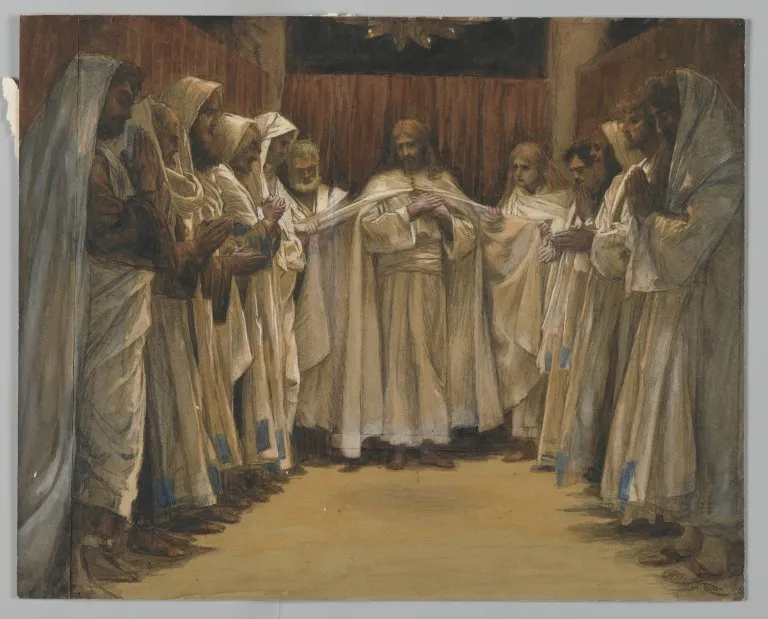
Proverbs 7:1-5Keep My Commandments, and Live
1My son, keep my words, and lay up my commandments with thee. 2Keep my commandments, and live; and my law as the apple of thine eye. 3Bind them upon thy fingers, write them upon the table of thine heart. 4Say unto wisdom, Thou art my sister; and call understanding thy kinswoman: 5That they may keep thee from the strange woman, from the stranger which flattereth with her words.
Before the chapter tells its famous story, it builds a frame - and the frame is a command to hold wisdom close. My son, keep my words, and lay up my commandments with thee (v. 1). The two verbs are quiet but deliberate: to keep is to guard, to watch over, the way one keeps something precious; to lay up is to store away as treasure, hidden where it cannot be lost. Then comes the heart of the appeal: Keep my commandments, and live; and my law as the apple of thine eye (v. 2).
The apple of thine eye is the pupil - the most sensitive, most instinctively protected part of the body; let a hand come near it and the eye shuts of itself. Guard wisdom, the father says, with that same reflex. And verse 3 makes the guarding both outward and inward: Bind them upon thy fingers, write them upon the table of thine heart. Bound on the fingers, the words are always in view, never out of reach; written on the heart, they are not merely consulted but loved, woven into the very place where desire and decision are made.
The father is not handing his son a rule to recall in a crisis. He is asking him to take wisdom so deeply in, beforehand, that it has already become part of him when the crisis comes.1
Then the father does something gentler than a warning - he tells his son to make wisdom family. Say unto wisdom, Thou art my sister; and call understanding thy kinswoman (v. 4). A sister is not a stranger or a stern instructor; she is kin, bound to you by blood, someone you cherish, defend, and would never betray. To call wisdom sister is to move it out of the category of cold obligation and into the category of love.
And the purpose is stated plainly in the next breath: That they may keep thee from the strange woman, from the stranger which flattereth with her words (v. 5). Here the chapter names the danger it is about - but look at how the defence is set up. The father does not say, resist her when she comes. He says, in effect, love wisdom now, so that when the flattering voice arrives it finds your heart already given to someone else. The stranger works by words - smooth, flattering speech that tells the hearer what he wants to hear - and the only thing that reliably answers a flattering word in the moment is a deeper loyalty formed long before.
The chapter's strategy is set in these opening verses: the way to keep a young man safe on a dangerous road is to bind him, in advance, to a wisdom he loves like a sister.
Proverbs 7:6-9In the Black and Dark Night
6For at the window of my house I looked through my casement, 7And beheld among the simple ones, I discerned among the youths, a young man void of understanding, 8Passing through the street near her corner; and he went the way to her house, 9In the twilight, in the evening, in the black and dark night:
Now the warning becomes a story, and the father tells it as an eyewitness: For at the window of my house I looked through my casement, and beheld among the simple ones, I discerned among the youths, a young man void of understanding (vv. 6-7). The detail of the window matters. The father is not inventing a cautionary fable; he is reporting something he watched happen, the way an older man sees in the street a younger one heading where he himself once nearly went.
And the first thing he notices is the young man's drift. Passing through the street near her corner; and he went the way to her house, in the twilight, in the evening, in the black and dark night (vv. 8-9). Trace the steps: he is near her corner, then on the way to her house, and the light is failing - twilight thickening into dark. Nothing dramatic has happened yet; that is the point.
The young man has made no single terrible decision. He has simply put himself, idle and aimless, in the wrong place as the night comes on. The ruin of this chapter does not begin with the woman's approach; it begins with a young man void of understanding wandering, without aim or guard, down a road he had no business being on. The first failure is not a deed but a direction.1
Proverbs 7:10-13She Caught Him, and Kissed Him
10And, behold, there met him a woman with the attire of an harlot, and subtil of heart. 11(She is loud and stubborn; her feet abide not in her house: 12Now is she without, now in the streets, and lieth in wait at every corner.) 13So she caught him, and kissed him, and with an impudent face said unto him,
The woman's approach is told plainly and then left behind - the chapter is interested not in lingering over the scene but in showing how the trap works. And, behold, there met him a woman with the attire of an harlot, and subtil of heart (v. 10). The two halves of that line are the whole danger: the outward appeal, and the subtil - calculating, cunning - heart behind it. What follows is a study in persuasion.
So she caught him, and kissed him, and with an impudent face said unto him (v. 13), and then comes the speech - and the speech is the real weapon. She dresses the invitation in the language of religion (I have peace offerings with me; this day have I payed my vows, v. 14), in flattery (I came forth to meet thee… and I have found thee, v. 15), in luxury (I have decked my bed… with fine linen of Egypt… myrrh, aloes, and cinnamon, vv. 16-17), and finally in the promise of safety from consequence (the goodman is not at home… will come home at the day appointed, vv. 19-20).
Every appeal is a lie of omission. Not one word of the speech mentions where the road actually goes. This is how the chapter teaches: it lets the reader hear the whole seductive pitch precisely so that he will recognise its shape - pleasant, flattering, religiously decorated, silent about the cost - when he meets it himself.
Proverbs 7:14-17I Have Decked My Bed
14I have peace offerings with me; this day have I payed my vows. 15Therefore came I forth to meet thee, diligently to seek thy face, and I have found thee. 16I have decked my bed with coverings of tapestry, with carved works, with fine linen of Egypt. 17I have perfumed my bed with myrrh, aloes, and cinnamon.
Proverbs 7:18-21Come, Let Us Take Our Fill of Love
18Come, let us take our fill of love until the morning: let us solace ourselves with loves. 19For the goodman is not at home, he is gone a long journey: 20He hath taken a bag of money with him, and will come home at the day appointed. 21With her much fair speech she caused him to yield, with the flattering of her lips she forced him.
The chapter is careful to name exactly what overcomes the young man, and it is not force: With her much fair speech she caused him to yield, with the flattering of her lips she forced him (v. 21). The word forced is almost ironic here, for no chains are used; the only weapon is fair speech and flattering. He is forced the way a current carries a swimmer who has stopped resisting - overcome not by strength but by smooth and steady persuasion, by words that flatter and soothe and never once tell him the truth.
This is the same danger the opening verses armed him against: the stranger which flattereth with her words (v. 5). The chapter has come full circle, and the lesson is sharpened. The flattering voice does not announce itself as an enemy; it presents itself as a gift, as attention, as the thing the hearer has been wanting. And against a steady stream of flattery, a young man with no deeper loyalty already formed has nothing to hold onto.
He yields not in a single moment of decision but by slow degrees, each word loosening him a little more, until what looked like his own free walking is in truth a being-led. The father warned him in verse 4 to love wisdom like a sister; here, in verse 21, is what happens to the heart that did not.
Proverbs 7:22-23As an Ox Goeth to the Slaughter
22He goeth after her straightway, as an ox goeth to the slaughter, or as a fool to the correction of the stocks; 23Till a dart strike through his liver; as a bird hasteth to the snare, and knoweth not that it is for his life.
The chapter ends its story with three swift, unforgettable images, and they all say the same thing: the victim does not know what is happening to him. He goeth after her straightway, as an ox goeth to the slaughter, or as a fool to the correction of the stocks; Till a dart strike through his liver; as a bird hasteth to the snare, and knoweth not that it is for his life (vv. 22-23).
An ox goeth to the slaughter placidly, even willingly, with no notion that the man leading it means its death; the beast thinks it is being fed. A bird hasteth to the snare, eager for the bait, never seeing the net. The young man moves toward the house straightway - promptly, without hesitation - imagining he is gaining pleasure, belonging, an evening's delight. The terrible phrase is the last one: he knoweth not that it is for his life. The cost is the highest there is, and it is the one thing he cannot see.
This is the deepest thing the chapter has to teach about sin's seduction. It does not feel, in the moment, like walking toward death; it feels like getting something you want. The slaughter is real, but it is hidden from the one walking toward it - which is exactly why the father has been pleading, from the first verse, that his son would let wisdom open his eyes before he ever takes the first step down that street.
Proverbs 7:24-27Her House Is the Way to Hell
24Hearken unto me now therefore, O ye children, and attend to the words of my mouth. 25Let not thine heart decline to her ways, go not astray in her paths. 26For she hath cast down many wounded: yea, many strong men have been slain by her. 27Her house is the way to hell, going down to the chambers of death.
The story done, the father turns back to his listeners and speaks the lesson plainly: Hearken unto me now therefore, O ye children, and attend to the words of my mouth (v. 24). Notice the shift from my son to ye children - the warning widens from one young man to all who will hear; this is no longer a private tale but a public plea. And the heart of it is verse 25: Let not thine heart decline to her ways, go not astray in her paths. The danger is located exactly where the chapter has insisted all along - in the heart. Before the feet ever turn down the wrong street, the heart inclines; the word decline pictures a leaning, a tilting, the small inward bending that precedes the outward step.
The father is not naive enough to think the battle is fought at the door of the house. It is fought far earlier, in the secret leaning of the heart toward a path. Then comes the warning's gravest note: For she hath cast down many wounded: yea, many strong men have been slain by her (v. 26). This is meant to strip away the young man's favourite illusion - that he is the exception, too clever or too strong to fall.
Many strong men have gone down this road and been slain. Strength is no defence here; the casualties are not the weak but the mighty. No one is too strong to need the guard the chapter has been urging from its first verse.
The chapter ends with one of the most unflinching sentences in all of Proverbs: Her house is the way to hell, going down to the chambers of death (v. 27). Every soft and flattering thing the woman said is answered, at last, by this single hard line. She spoke of a bed perfumed with myrrh and aloes; the father names where that bed actually leads. Her house - which seemed a place of pleasure and welcome - is in truth the way to hell, a corridor sloping downward to the chambers of death. The Hebrew word behind “hell” is Sheol, the realm of the dead; and the picture of going down to its chambers is deliberate and terrible - a descent which, the chapter has already warned, the traveller does not see he is making.
This is why the whole tale was told. Not to fascinate the reader with the danger, not to dwell on the sin, but to let him see - from the safety of the father's window - the end of a road whose end the traveller on it cannot see. The chapter that opened keep my commandments, and live closes going down to the chambers of death. Between those two lines lie the only two destinations the chapter knows: life, kept; or death, hidden at the end of a pleasant-seeming path.
The father has shown his son both ends so that he might choose, with open eyes, the road that leads home.
Research trail
Sources & further study
These references support the historical, linguistic, manuscript, and contextual notes in this chapter. Scripture remains the primary text; external sources are provided so readers can inspect the research directly.
- Proverbs 7 - Translators' NotesThe NET Bible's detailed footnotes on Proverbs 7 - the framing commands to bind and keep the father's words (vv. 1-4), the meaning of the “simple” young man “void of understanding” (v. 7), the staging of the scene at twilight, and the force of the closing images - the ox to the slaughter (v. 22) and the house that is the way to Sheol (v. 27).
- Proverbs 7 · Hebrew + classical Jewish commentaryThe Hebrew text of Proverbs 7 with Rashi, Ibn Ezra, and other classical commentators side by side - useful for the verb shamar (vv. 1-2, 5, the “keep” that guards and treasures), for peti (v. 7, the “simple” or naive young man), and for the pair zarah and nokriyah (v. 5, the “strange” and “stranger” woman) that runs through the book's opening chapters.
- Proverbs 7 ↔ John 14 · John 17 · Matthew 7 · Romans 6 · 1 Corinthians 1Traces the threads tying Proverbs 7 to the rest of Scripture - keep my commandments, and live (v. 2) read alongside If ye love me, keep my commandments (John 14:15) and the life it is for (John 17:3), the house that is the way to hell (v. 27) set beside the two gates of Matthew 7:13-14, and the chapter's arithmetic of the wages of sin (Rom. 6:23).
Where this echoes in Scripture
Keep My Commandments, and Live
- John 14:15If ye love me, keep my commandments.The keeping of verses 1-2 in the Lord's own words - commandments kept not as burden but as love.
- Deuteronomy 6:6-8And these words... shall be in thine heart... And thou shalt bind them for a sign upon thine hand.The binding and heart-writing of verse 3 - the same call to carry God's words on the hand and in the heart.
- Proverbs 4:6Forsake her not, and she shall preserve thee: love her, and she shall keep thee.The mutual keeping of verse 5 - guard wisdom, and the wisdom you love guards you.
- 1 Corinthians 1:30Christ Jesus, who of God is made unto us wisdom, and righteousness, and sanctification, and redemption.The wisdom called sister in verse 4 named at last in a Person - Christ made unto us wisdom.
- Psalm 119:11Thy word have I hid in mine heart, that I might not sin against thee.The laid-up, heart-written word of verses 1-3 - treasured beforehand as the guard against sin.
As an Ox Goeth to the Slaughter
- Isaiah 53:7he is brought as a lamb to the slaughter, and as a sheep before her shearers is dumb.The slaughter-image of verse 22 turned inside out - the Servant led knowingly, and for others.
- Proverbs 5:3-5For the lips of a strange woman drop as an honeycomb... But her end is bitter as wormwood... Her feet go down to death.The same flattering speech of verse 21 and the same hidden end - sweetness at the lips, death at the last.
- James 1:14-15every man is tempted, when he is drawn away of his own lust... and sin, when it is finished, bringeth forth death.The drift and the hidden cost of verses 8-23 - enticement that ends, unseen, in death.
- Genesis 39:12And she caught him by his garment... and he left his garment in her hand, and fled.The opposite of verse 13 - caught by the same hand, Joseph did not yield but fled.
- Proverbs 9:13-18A foolish woman is clamorous... her guests are in the depths of hell.The same loud, lurking figure of verses 11-12 and the same end as verse 27 - the depths of hell.
Her House Is the Way to Hell
- Matthew 7:13-14wide is the gate, and broad is the way, that leadeth to destruction... narrow is the way, which leadeth unto life.The way to hell of verse 27 set beside its opposite - the Lord's two gates, to destruction and to life.
- Romans 6:23For the wages of sin is death; but the gift of God is eternal life through Jesus Christ our Lord.The arithmetic beneath verse 27 - the wage the pleasant road pays, and the gift held out against it.
- John 14:6I am the way, the truth, and the life: no man cometh unto the Father, but by me.Against the house that is the way to death (v. 27), a Way who is Himself the life.
- Proverbs 2:18-19For her house inclineth unto death... None that go unto her return again.The same downward house of verse 27 - a road that slopes to death, hard to come back from.
- Proverbs 5:8Remove thy way far from her, and come not nigh the door of her house.The cure for verse 27 - the father's plea not to come near the door of the house at all.