Psalms 1
The book of Psalms begins not with ceremony or command but with a blessing, and with a choice. Before the songs of praise and the cries of lament, before the great prayers that the people of God have carried on their lips for three thousand years, the Psalter sets a single man before us and calls him blessed - and then shows us, by contrast, the life that is not.
Everything that follows in the book, every high hallelujah and every midnight groan, will be prayed by people walking one of these two ways. So the first psalm functions as a kind of threshold. It asks the question every reader must answer before going further in: which way are you walking, and what are you planting your life beside?1
Tap any highlighted phrase to jump to the commentary that unpacks it.
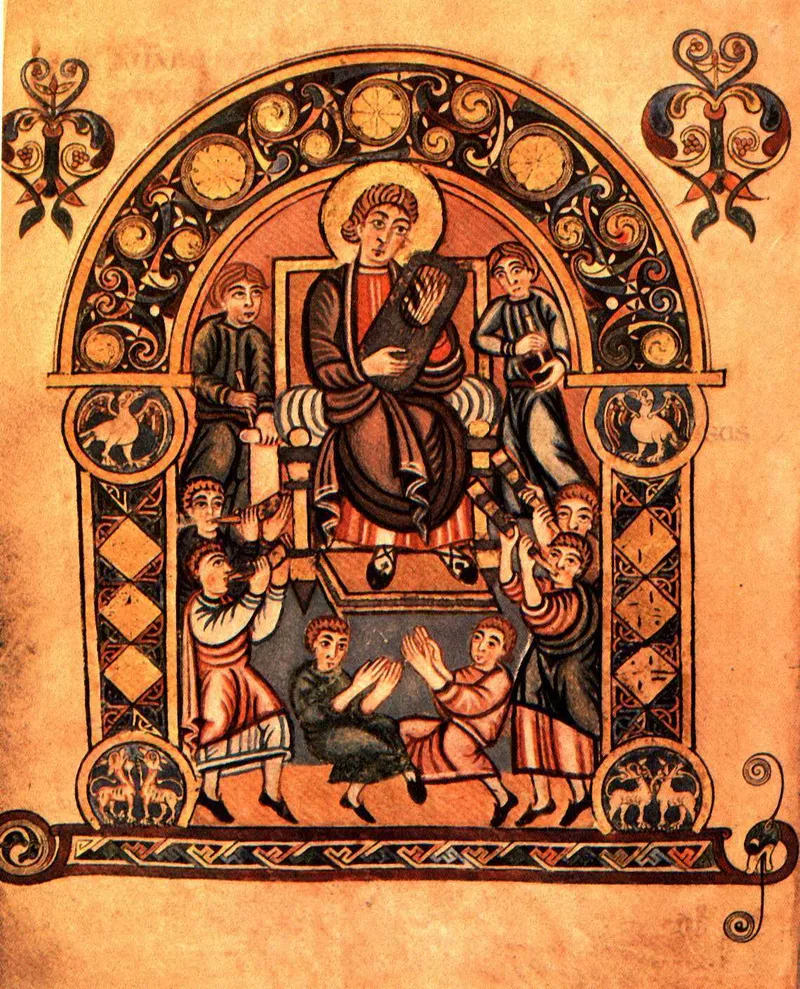
Psalm 1:1-3Like a Tree Planted by the Rivers of Water
1Blessed is the man that walketh not in the counsel of the ungodly, nor standeth in the way of sinners, nor sitteth in the seat of the scornful. 2But his delight is in the law of the LORD; and in his law doth he meditate day and night. 3And he shall be like a tree planted by the rivers of water, that bringeth forth his fruit in his season; his leaf also shall not wither; and whatsoever he doeth shall prosper.
The first word of the Psalter is not a command but a beatitude: Blessed. And the blessing is described, at first, by what the blessed man does not do - but listen to the order of the verbs. He does not walk in the counsel of the ungodly, nor stand in the way of sinners, nor sit in the seat of the scornful. Walking, standing, sitting: it is a slow settling, a quiet descent from one stage to the next.
First a man strolls along taking in the advice of those who leave God out; then he stops and stands on their road as one of them; at last he sits down, pulls up a chair, and joins the company of the scornful - those who have stopped seeking anything and now only mock what others seek.
The psalm is precise about how a life drifts. It rarely happens by one dramatic choice; it happens by degrees, by the company we keep and the counsel we let shape us, until we are seated comfortably where once we would only have passed by. The blessed man is the one who has turned from that whole gradual slide.
Having turned from the downward road, the blessed man turns toward something - and the psalm names it with a surprising word: delight. Not duty, not fear, not grim obligation, but his delight is in the law of the LORD. The word translated law is torah, which means less a code of regulations than a whole way of instruction - God's teaching, the shape of life He gives to those He loves. And the blessed man does not merely obey it; he delights in it, the way one delights in the company of a friend or the taste of good bread.
From that delight flows the next line: in his law doth he meditate day and night. This is not the meditation of an emptied mind but of a filled one - a constant, low return to the words of God, in the morning light and in the watches of the night, until they are no longer something he visits but the very air he breathes. The fruitfulness of the tree, which the next verse will celebrate, does not come from striving. It comes from this: a delight that keeps drawing the roots back, again and again, to the water.
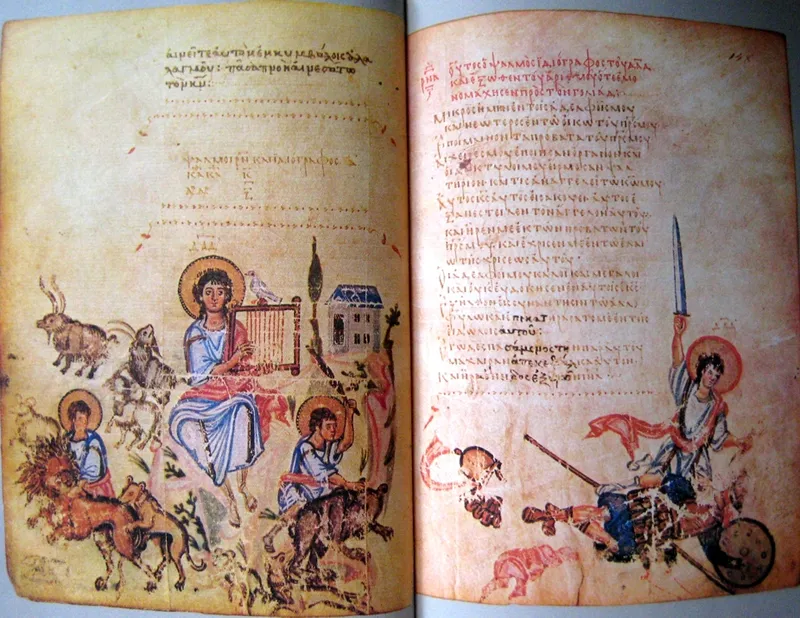
Psalm 1:4-6The Chaff the Wind Driveth Away
4The ungodly are not so: but are like the chaff which the wind driveth away. 5Therefore the ungodly shall not stand in the judgment, nor sinners in the congregation of the righteous. 6For the LORD knoweth the way of the righteous: but the way of the ungodly shall perish.
The psalm turns on two of the bluntest words in Scripture: not so. Everything said of the blessed man is now denied of the ungodly, and the denial comes by way of a single, devastating image - they are like the chaff which the wind driveth away. On the ancient threshing floor the harvested grain was crushed and then tossed into the air; the heavy kernels fell back to be gathered, while the light, dry husks - the chaff - were caught by the evening wind and scattered into nothing.
The contrast with the tree is total. The tree is planted, rooted, fixed by the water; the chaff has no root at all, no weight, no place it belongs.
Notice that the psalm does not say the ungodly are wicked here so much as that they are weightless - lives with nothing in them substantial enough to hold the ground when the wind rises. It is a sobering picture precisely because chaff looks so much like grain right up until the wind comes. The difference is invisible in the calm; it shows only in the threshing.
From the image the psalm draws its conclusion: therefore the ungodly shall not stand in the judgment, nor sinners in the congregation of the righteous (v. 5). The word stand reaches back to verse 1, where the sinner stood in the wrong way; now, in the day of reckoning, he cannot stand at all. To stand in the judgment means to hold one's ground, to remain on one's feet, to have enough weight not to be blown over when everything is tested. Chaff cannot do it; there is nothing to it.
The verse is not gloating over the fall of the wicked - there is no relish in it - but stating a plain consequence: a life with no root and no weight has nothing to stand on when the wind finally comes. And it cannot belong to the congregation of the righteous, that gathered company of the rooted, because it was never planted among them. The judgment does not so much impose a verdict from outside as reveal what was always true underneath: which lives had substance, and which were only husk.
Research trail
Sources & further study
These references support the historical, linguistic, manuscript, and contextual notes in this chapter. Scripture remains the primary text; external sources are provided so readers can inspect the research directly.
- Psalms in Israel's Worship - SBL OverviewOpen-access essay from the Society of Biblical Literature on the shape and setting of the Psalter - including how Psalm 1 was placed as a deliberate gateway, framing the whole collection as a book to be meditated upon, not merely sung.
- Psalm 1 · Hebrew + classical Jewish commentaryThe Hebrew text of Psalm 1 with Rashi, Ibn Ezra, and other classical commentators side by side - useful for ashrei (v. 1, the plural “blessednesses” that opens the book), the verb hagah (v. 2, “to meditate, to murmur under the breath”), and the derek (v. 6, the “way” or road that frames the whole psalm).
- Psalm 1 ↔ Jeremiah 17 · Matthew 7 · Revelation 22Traces the verbal threads tying Psalm 1's tree by the water to Jeremiah's blessed man who trusts the LORD (Jer. 17:7-8), the two builders and two ways of the Sermon on the Mount (Matt. 7:24-27), and the tree of life by the river in the new creation (Rev. 22:1-2).
Where this echoes in Scripture
Like a Tree Planted by the Rivers of Water
- Jeremiah 17:7-8Blessed is the man that trusteth in the LORD... he shall be as a tree planted by the waters.The same image (v. 3), with the root made explicit: trust in the LORD.
- Joshua 1:8Thou shalt meditate therein day and night... then thou shalt make thy way prosperous.The same word, hagah (v. 2), and the same promise of a way that prospers.
- John 15:5I am the vine, ye are the branches... without me ye can do nothing.How the chaff-light become rooted: grafted into the one Tree by the water.
- Matthew 5:3Blessed are the poor in spirit: for theirs is the kingdom of heaven.The Sermon on the Mount opens with the same word, makarios, as the Psalter (v. 1).
The Chaff the Wind Driveth Away
- Matthew 3:12He will gather his wheat into the garner; but he will burn up the chaff with unquenchable fire.The same threshing-floor image (v. 4), on the lips of John the Baptist.
- Romans 5:2By whom also we have access by faith into this grace wherein we stand.The standing the chaff lacks (v. 5), given as a gift in Christ.
- Psalm 1:6The LORD knoweth the way of the righteous: but the way of the ungodly shall perish.The whole psalm gathered into one line: two ways, and only one that God keeps.
- Matthew 7:24-27A wise man, which built his house upon a rock... and a foolish man, which built his house upon the sand.Jesus closes His sermon as the Psalter opens: two ways, tested by the same storm.