Psalms 111
Psalm 111 is one of a small cluster of psalms that open with the single Hebrew word Hallelujah - Praise ye the LORD. But its most striking feature is one an English reader cannot see on the surface: it is an acrostic. In the Hebrew, the psalm is broken into short lines, and each line begins with the next letter of the alphabet, twenty-two lines marching in order from the first letter to the last.
The form is deliberate, and it carries a quiet message of its own. To praise God from aleph to tav - from A to Z, as we might say - is to suggest that the whole of human speech, the entire alphabet out of which every word is built, finds its proper end in the praise of God.1
Tap any highlighted phrase to jump to the commentary that unpacks it.
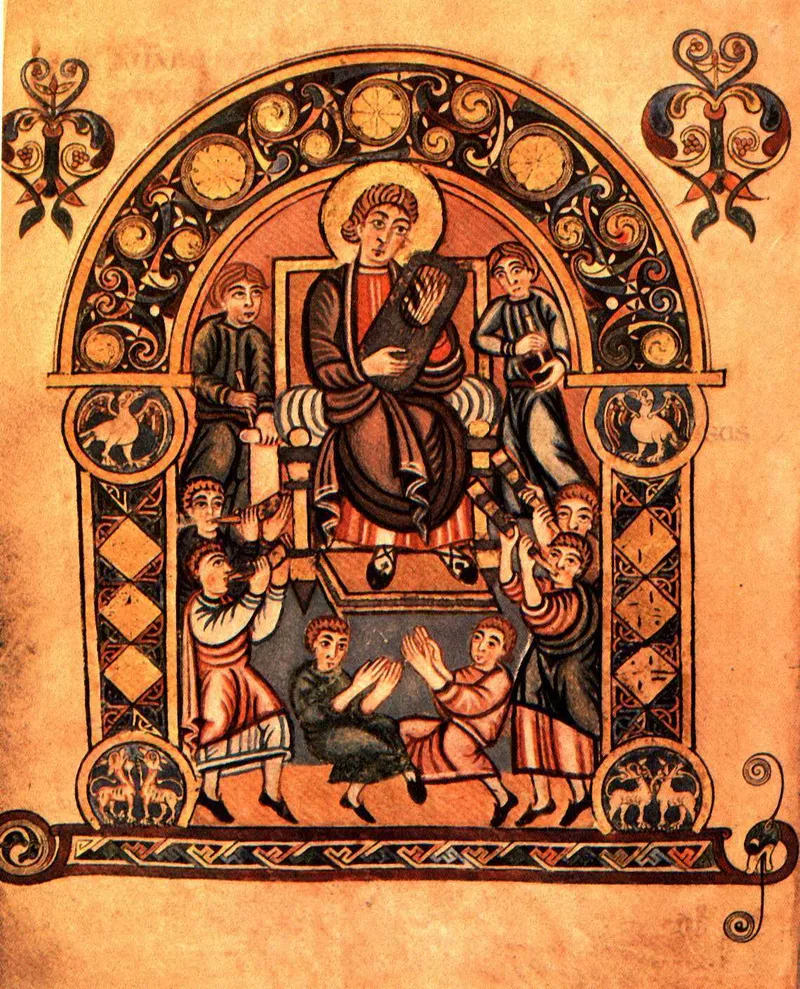
Psalm 111:1-6The Great and Wonderful Works of God
1Praise ye the LORD. I will praise the LORD with my whole heart, in the assembly of the upright, and in the congregation. 2The works of the LORD are great, sought out of all them that have pleasure therein. 3His work is honourable and glorious: and his righteousness endureth for ever. 4He hath made his wonderful works to be remembered: the LORD is gracious and full of compassion. 5He hath given meat unto them that fear him: he will ever be mindful of his covenant. 6He hath shewed his people the power of his works, that he may give them the heritage of the heathen.
The psalm opens with the great shout that gives this little family of psalms its name - Praise ye the LORD, a single word in the Hebrew, Hallelujah - and then the poet makes it personal: I will praise the LORD with my whole heart. Not a fraction of the heart, not praise offered with one eye on something else, but the whole heart turned in one direction. And notice at once that this whole-hearted praise is not meant to be hidden away.
It is offered in the assembly of the upright, and in the congregation - out loud, among others, in the gathered company of God's people. There is a kind of praise that can only happen alone, in the quiet; but there is another kind that needs the congregation, because praise shared strengthens everyone who hears it and bears witness to everyone who does not yet believe. The psalmist will spend the rest of the song giving reasons - the works, the righteousness, the compassion, the covenant of God - but he begins with the resolve itself: a whole heart, lifted in the midst of God's people, with nothing held back.2
The reason for the praise comes immediately, and it sets the theme for the entire psalm: The works of the LORD are great, sought out of all them that have pleasure therein (v. 2). The word works will sound again and again - God's work honourable and glorious (v. 3), His wonderful works remembered (v. 4), the works of his hands reliable (v. 7). This is not vague enthusiasm; it is praise rooted in what God has actually done, in creation and in history.
But the second half of the verse is the surprising part. These great works are sought out of all them that have pleasure therein - that is, those who delight in them go searching into them, studying them, turning them over. God's works reward attention. They are not shallow displays to be glanced at once and forgotten; they are deep enough to be examined for a lifetime, and the more one looks, the more there is to find.
There is a quiet invitation buried here: the people who take the most pleasure in God are precisely the ones who bother to seek out what He has done, rather than skating across the surface of it.1
Two homely, tender lines sit at the centre of the opening movement. He hath given meat unto them that fear him (v. 5) - the word meat here means food, provision, the daily sustenance God puts on the table of those who reverence Him. It calls to mind the manna in the wilderness and every meal since: the God of great and glorious works is also the God who feeds His people, who stoops to the level of an empty stomach.
And then the ground of all that providing: he will ever be mindful of his covenant. God does not feed His people out of momentary impulse; He provides because He has bound Himself to them by promise, and He never forgets that promise. To be mindful of the covenant is to keep it always in view, to act out of a commitment made long ago and never abandoned. This is the steadiness underneath every gift: behind the daily bread stands an everlasting faithfulness.
The God who remembers His covenant is a God whose care does not depend on our performance or His mood, but on His own unbreakable word.
Psalm 111:7-10Holy and Reverend Is His Name
7The works of his hands are verity and judgment; all his commandments are sure. 8They stand fast for ever and ever, and are done in truth and uprightness. 9He sent redemption unto his people: he hath commanded his covenant for ever: holy and reverend is his name. 10The fear of the LORD is the beginning of wisdom: a good understanding have all they that do his commandments: his praise endureth for ever.
The praise now turns from the greatness of God's works to their utter reliability: The works of his hands are verity and judgment; all his commandments are sure (v. 7). Verity is an old word for truth, for what is real and trustworthy; judgment here means right ordering, things done as they ought to be done. God does not act arbitrarily or carelessly; everything His hands do is true and right. And His commandments are sure - firm, dependable, not subject to revision.
The next verse presses the point: they stand fast for ever and ever, and are done in truth and uprightness (v. 8). Here is something the anxious heart needs to hear. We live in a world where promises are broken, where what seemed solid gives way, where the rules change without warning. The psalm insists that God's works and words are of a different kind altogether: they hold. They do not crumble with time or bend to convenience.
When God says a thing, it is verity; when God does a thing, it is judgment; when God commands a thing, it is sure. To build a life on what God has said is to build on the one foundation that stand[s] fast for ever and ever.
The ninth verse rises to the high point of the whole psalm, three great clauses stacked together: He sent redemption unto his people: he hath commanded his covenant for ever: holy and reverend is his name. First the act - God sent redemption, reached down and rescued. Then the bond - He commanded his covenant for ever, not a temporary arrangement but an everlasting one, established by His own decree. And then the response such a God demands: holy and reverend is his name. The word reverend - rare in English, rarer still in the Bible - means to be feared, held in awe, treated as utterly set apart.
It is the same family of words as the fear that opens the next verse. The point is that you cannot hold the redeeming, covenant-keeping God at arm's length or speak of Him casually. His very name is holy, set apart from all that is common, and reverend, calling forth awe. This is the seam where the psalm's two summits meet: a God who saves and keeps faith with His people, and whose name, precisely because of that, is to be held in the deepest reverence.
Redemption does not make God less awesome to us; it makes Him more.1
Research trail
Sources & further study
These references support the historical, linguistic, manuscript, and contextual notes in this chapter. Scripture remains the primary text; external sources are provided so readers can inspect the research directly.
- Psalm 111 - Translators' NotesThe NET Bible's detailed footnotes on Psalm 111 - the acrostic structure of the twenty-two lines, the sense of sought out in verse 2, the rare word rendered reverend in verse 9, and the difference between fear as terror and fear as reverent awe in verse 10.
- Psalm 111 · Hebrew + classical Jewish commentaryThe Hebrew text of Psalm 111 with Rashi, Ibn Ezra, and other classical commentators side by side - useful for seeing the acrostic letter by letter, for the noun peduth (v. 9, “redemption”), and for the long Jewish reflection on yirah (v. 10, the “fear” that begins wisdom).
- Psalm 111 ↔ Exodus 34 · Luke 1 · 1 Corinthians 1Traces the threads tying Psalm 111 to the rest of Scripture - the Sinai self-revelation echoed in gracious and full of compassion (Exod. 34:6 in v. 4), the redemption God sent taken up at the opening of the gospel (Luke 1:68 echoing v. 9), and the beginning of wisdom (v. 10) gathered up in the One whom God made unto us wisdom (1 Cor. 1:30).
Where this echoes in Scripture
The Great and Wonderful Works of God
- Exodus 34:6The LORD, The LORD God, merciful and gracious, longsuffering, and abundant in goodness and truth.The Sinai self-revelation behind verse 4's “gracious and full of compassion” - the oldest words Israel had about God's heart.
- John 1:14the Word was made flesh, and dwelt among us... full of grace and truth.The grace and compassion of verse 4 given a human face - the glory of God beheld.
- Psalm 145:4-5One generation shall praise thy works to another... I will speak of the glorious honour of thy majesty, and of thy wondrous works.The same praise rooted in God's works (vv. 2-4), handed down and sought out generation by generation.
- Exodus 2:24And God heard their groaning, and God remembered his covenant with Abraham.God being “mindful of his covenant” (v. 5) - divine remembering that turns into rescue.
Holy and Reverend Is His Name
- Luke 1:68Blessed be the Lord God of Israel; for he hath visited and redeemed his people.Verse 9's “He sent redemption unto his people” taken up at the opening of the gospel - redemption drawn near in person.
- Ephesians 1:7In whom we have redemption through his blood, the forgiveness of sins.The redemption God “sent” (v. 9) located in one place - and its cost named.
- Hebrews 13:20that brought again from the dead our Lord Jesus... through the blood of the everlasting covenant.The covenant “commanded... for ever” (v. 9) sealed and made everlasting.
- Proverbs 1:7The fear of the LORD is the beginning of knowledge: but fools despise wisdom and instruction.The refrain of verse 10 sounding through the wisdom books - reverence as the first step of all understanding.
- 1 Corinthians 1:30Christ Jesus, who of God is made unto us wisdom, and righteousness, and sanctification, and redemption.The wisdom and redemption of verses 9-10 gathered into one Person - where the psalm's two summits meet.