Psalms 121
Psalm 121 carries the heading A Song of degrees - one of fifteen short psalms (120-134) sung by pilgrims as they made their way up to Jerusalem for the great feasts. The word translated degrees means steps or goings-up, and the songs were the music of the climb. Jerusalem sits high in the Judean hills, and the roads that reached it were steep, lonely, and dangerous - a traveller was exposed to robbers, to the scorching daytime heat, to the cold and the dark of night, to a misstep on the rocky path.
Into that very real vulnerability this psalm speaks one of the steadiest promises in all of Scripture.1
Tap any highlighted phrase to jump to the commentary that unpacks it.
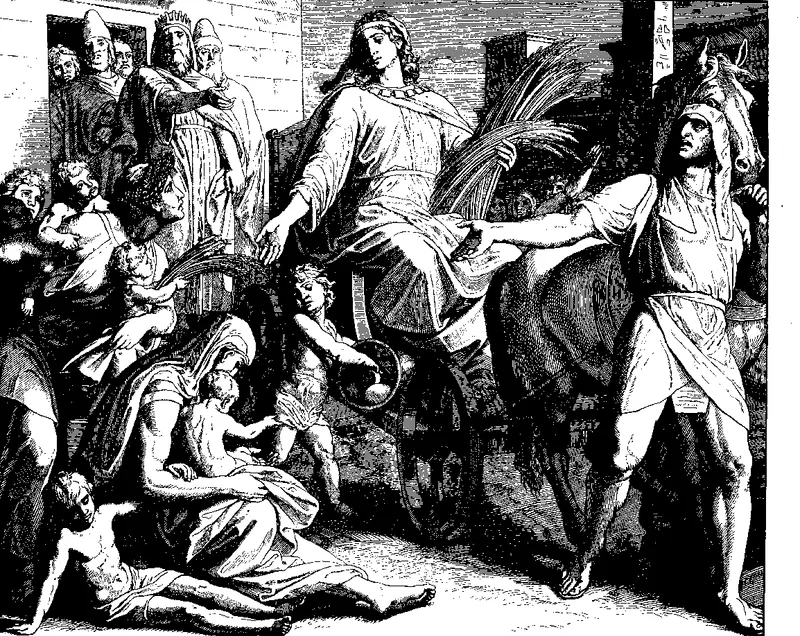
Psalm 121:1-4 · A Song of degreesMy Help Cometh from the LORD
1I will lift up mine eyes unto the hills, from whence cometh my help. 2My help cometh from the LORD, which made heaven and earth. 3He will not suffer thy foot to be moved: he that keepeth thee will not slumber. 4Behold, he that keepeth Israel shall neither slumber nor sleep.
The psalm begins with a gesture and a question folded together: I will lift up mine eyes unto the hills, from whence cometh my help. Picture the pilgrim on the road to Jerusalem, looking up at the high country he still has to cross. Those hills are not a postcard. They are the steep, broken terrain where bandits waited in the gullies, where the path could give way, where a traveller felt smallest and most exposed.
To lift the eyes unto the hills is to look straight at the danger and the distance, and to ask the question every traveller asks at the foot of a hard climb: where is my help going to come from? The Hebrew leaves room for hearing verse 1 as a genuine question - from whence cometh my help? - precisely so that verse 2 can answer it. This is how faith often begins: not with a confident slogan, but with an honest look at what frightens us and a question asked out loud.
The pilgrim does not pretend the hills are not there. He lifts his eyes, names his need, and waits for the answer - and the answer, when it comes, lifts his gaze higher than the hills.1
The answer does not stop where the question stopped. The pilgrim looked unto the hills; the reply lifts his eyes past them: My help cometh from the LORD, which made heaven and earth (v. 2). Help is not in the mountains, however grand they look; it is in the One who made them. And notice the title the psalm reaches for - not a tribal deity tied to one shrine, but the LORD, which made heaven and earth, the Maker of the whole created order, sky and soil and every hill on the horizon.
That is a deliberate move. The very landscape that threatens the traveller is the handiwork of the God he trusts; the hills that loom are no rivals to their Maker. There is enormous steadiness in this. When help is grounded in the One who made heaven and earth, it cannot run short, cannot be outflanked by the terrain, cannot be exhausted by the length of the road. The Maker of the mountains is the Keeper of the climbers.
Everything the pilgrim fears stands inside a world this God spoke into being - and so the fear is real, but it is not the largest thing in view.2
Now the song turns from I to thou - from the pilgrim's own confession to a voice speaking over him, reassuring him: He will not suffer thy foot to be moved: he that keepeth thee will not slumber (v. 3). Two homely pictures, exactly suited to a traveller. First, the foot - on a rocky, uneven track, a slipped foot could mean a fall, an injury, the end of the journey. To say God will not suffer thy foot to be moved is to promise a sureness of step, a steadiness on dangerous ground.
Second, and deeper, the watch that never lapses: he that keepeth thee will not slumber. A human guard on the night watch grows heavy-eyed; sooner or later he nods, and that is exactly when the danger slips past. The psalm answers the oldest fear of the watched-over - that the one keeping guard will fall asleep at the worst possible moment. He will not. The keeping here is not occasional or drowsy; it is wide awake and unbroken.
And the next verse will widen that single sleepless watch until it covers a whole people.
Psalm 121:5-8Preserved from This Time Forth and Even for Evermore
5The LORD is thy keeper: the LORD is thy shade upon thy right hand. 6The sun shall not smite thee by day, nor the moon by night. 7The LORD shall preserve thee from all evil: he shall preserve thy soul. 8The LORD shall preserve thy going out and thy coming in from this time forth, and even for evermore.
The psalm now names the truth it has been circling: The LORD is thy keeper: the LORD is thy shade upon thy right hand (v. 5). The first half is the whole song in four words - not the LORD does some keeping, or may keep, but the LORD is thy keeper, keeping is who He is toward His people. The second half adds a picture every traveller in that climate understood instantly: thy shade upon thy right hand. In a land where the sun is a genuine threat, shade is not a luxury but survival, and the image of God as one's shade means a presence that goes with you and stands between you and what would burn you.
The right hand is the place of strength and of action - in battle, the unshielded side - so to have the LORD as shade upon thy right hand is to be covered exactly where you are most exposed, kept close, at your side, in step with you on the road. It is one of Scripture's tenderest pictures of nearness: not a God watching from a far-off height, but a shade at your very shoulder, moving as you move.
From the picture of shade comes the promise it guarantees: The sun shall not smite thee by day, nor the moon by night (v. 6). By day the danger is obvious - the sun of the eastern wilderness can strike a traveller down, and to be smitten by the sun is to suffer real, sometimes fatal, harm. The mention of the moon by night completes the pair: between them, sun and moon mark the whole round of day and night, the entire span of time in which any harm could come.
The promise is comprehensive precisely because it names both halves of the cycle - there is no hour, light or dark, in which the pilgrim steps outside the Keeper's care. Note carefully what is and is not promised. The psalm does not say the sun will not shine or the road will not be hard; it says the sun shall not smite - shall not land the blow that wounds or destroys. The danger remains real; what is promised is that under this Keeper it will not finally have its way.
Day and night, the heat and the dark are held within the watch of the One who made both the sun and the moon in the first place.1
Now the keeping widens to its largest reach: The LORD shall preserve thee from all evil: he shall preserve thy soul (v. 7). The same verb that has been sounding all along - shamar - comes twice more, and the object of the keeping deepens. First, from all evil: not merely from this hill or that bandit, but from evil as such, the whole category of what would harm. Then, most deeply of all, he shall preserve thy soul - the inner life, the essential self, the part of a person that outlasts the body and the journey.
This is where the psalm proves it was never only about a safe road to Jerusalem. A pilgrim can reach the city and still lose heart; a person can be physically unharmed and inwardly destroyed. The promise to preserve thy soul reaches past every external danger to the keeping of the self at its core. And it quietly reframes the whole song: the foot that will not slip, the shade against the sun, the watch that never sleeps - all of it serves this deepest keeping, the preservation of the soul.
Whatever happens to the body on the road, the soul kept by the LORD is safe.
Research trail
Sources & further study
These references support the historical, linguistic, manuscript, and contextual notes in this chapter. Scripture remains the primary text; external sources are provided so readers can inspect the research directly.
- Psalm 121 - Translators' NotesThe NET Bible's detailed footnotes on Psalm 121 - the meaning of A Song of degrees, the question-and-answer shape of verses 1-2, the ancient fear of being “smitten” by sun and moon, and the comprehensive force of the closing going out and… coming in.
- Psalm 121 · Hebrew + classical Jewish commentaryThe Hebrew text of Psalm 121 with Rashi, Ibn Ezra, and other classical commentators side by side - useful for the six-fold drumbeat of shamar (vv. 3-8, “keep, preserve”), for ezer (vv. 1-2, “help”), and for the long Jewish discussion of whether verse 1 is a confident statement or an anxious question the next verse answers.
- Psalm 121 ↔ John 10 · John 17 · Revelation 7 · Jude 24Traces the threads tying Psalm 121 to the New Testament Keeper - the Good Shepherd from whose hand none can pluck His sheep (John 10:28), the kept ones of whom none… is lost (John 17:12), the city where the sun no longer smites (Rev. 7:16), and the One able to keep you from falling (Jude 24).
Where this echoes in Scripture
My Help Cometh from the LORD
- John 10:27-28I give unto them eternal life; and they shall never perish, neither shall any man pluck them out of my hand.The unsleeping Keeper of verse 4 made personal - a grip from which the kept ones can never be torn loose.
- Numbers 6:24The LORD bless thee, and keep thee.The same verb (shamar, “keep”) that drums six times through the psalm, set in Israel's great blessing.
- Psalm 124:8Our help is in the name of the LORD, who made heaven and earth.A companion Song of degrees with verse 2's exact confession - help in the Maker of heaven and earth.
- 1 Samuel 7:12Eben-ezer... Hitherto hath the LORD helped us.The memorial stone of help (ezer) - the same word the pilgrim reaches for in verses 1-2.
Preserved from This Time Forth and Even for Evermore
- Revelation 7:16-17neither shall the sun light on them, nor any heat... the Lamb... shall lead them unto living fountains of waters.Verse 6's promise made perfect at the journey's end - the sun no longer smiting the redeemed in the city of God.
- Jude 24unto him that is able to keep you from falling, and to present you faultless before the presence of his glory.The keeping of verse 8 carried all the way to glory - the One able to keep His own from falling.
- John 17:12those that thou gavest me I have kept, and none of them is lost.The psalm's “keep” spoken by the Good Shepherd over the ones the Father gave Him.
- Psalm 16:8I have set the LORD always before me: because he is at my right hand, I shall not be moved.The LORD as shade “upon thy right hand” (v. 5) - the nearness that keeps one from being moved.
- Deuteronomy 28:6Blessed shalt thou be when thou comest in, and blessed shalt thou be when thou goest out.The “coming in” and “going out” of verse 8 - a Hebrew way of naming the whole of life.