Psalms 137
Psalm 137 is the one psalm in the whole book that places us, unmistakably, in Babylon. After Jerusalem fell in 586 BC, her surviving people were carried hundreds of miles east into captivity, and this song is sung from there - or in the raw memory of it. It is a psalm of homesickness and grief, of fierce loyalty and, at the last, of unsparing anger. And it is honest about all of it. The Psalms have a way of refusing to tidy the human heart before bringing it to God, and few do it as nakedly as this one.1
Tap any highlighted phrase to jump to the commentary that unpacks it.
Psalm 137:1-6How Shall We Sing the LORD'S Song?
1By the rivers of Babylon, there we sat down, yea, we wept, when we remembered Zion. 2We hanged our harps upon the willows in the midst thereof. 3For there they that carried us away captive required of us a song; and they that wasted us required of us mirth, saying, Sing us one of the songs of Zion. 4How shall we sing the LORD’s song in a strange land? 5If I forget thee, O Jerusalem, let my right hand forget her cunning. 6If I do not remember thee, let my tongue cleave to the roof of my mouth; if I prefer not Jerusalem above my chief joy.
The psalm begins on the ground, sitting down: By the rivers of Babylon, there we sat down, yea, we wept, when we remembered Zion (v. 1). Babylon was a land of great canals drawn off the Euphrates, and along their banks the exiles gather - not to admire the engineering of the empire that conquered them, but to weep. Grief here is not a private feeling tucked away; it is a posture, a whole people seated by the water with nothing left to do but remember and mourn.
And then verse 2 gives the grief an unforgettable image: We hanged our harps upon the willows in the midst thereof. The harp was the instrument of Israel's praise, the very thing that carried the songs of the temple. Now it hangs silent in a tree by a foreign river - not broken, not thrown away, but hung up, set aside, because the hand that played it has no song left in it. There is something almost unbearable in the picture: the instruments of joy, still there, still strung, but mute, swaying in the branches over the water.
It is what sorrow does. It does not always smash the harp; sometimes it simply hangs it up, because the music that once came easily will not come at all.
Into that silence comes a demand, and it is a cruel one: For there they that carried us away captive required of us a song; and they that wasted us required of us mirth, saying, Sing us one of the songs of Zion (v. 3). Read the two descriptions of the captors carefully. They are the ones who carried us away captive and the ones who wasted us - who laid the city in heaps and dragged its survivors into exile.
And now these same destroyers want a performance. Sing us one of the songs of Zion - entertain us with the music of the God whose city we just burned. The cruelty is layered. It is not only that they demand a song; it is that they demand mirth, joy on command, from people they have shattered - and that they want the sacred songs of Zion turned into amusement for the conquerors. It is the particular humiliation of the powerless: to be ordered to smile, to be told to entertain the very people who broke you, as though your worship were a trinket to be displayed at the victor's table.
The exiles feel the full weight of it, and they will not comply.
The refusal hardens into a vow, and the vow is fierce: If I forget thee, O Jerusalem, let my right hand forget her cunning. If I do not remember thee, let my tongue cleave to the roof of my mouth; if I prefer not Jerusalem above my chief joy (vv. 5-6). This is a self-imprecation - the psalmist calling down a penalty on his own body if he should ever break faith with the city of God.
Notice which faculties he names. The right hand with its cunning - its skill - is the musician's hand on the strings; let it lose its skill, go limp and forget how to play, if I forget Jerusalem. The tongue is the singer's voice; let it stick fast to the roof of the mouth, struck dumb, if I stop remembering. The very instruments of the song he refuses to sing for Babylon, he pledges to forfeit rather than betray his true home.
And the climax names the real stake: if I prefer not Jerusalem above my chief joy. Jerusalem is not merely a place he is fond of; it is to be set above his highest happiness, the joy that orders all his other joys. This is loyalty raised to the level of identity. To forget Zion would not be a lapse of memory; it would be the unmaking of the self. The exile would rather lose his hand and his voice than lose his hold on the city where God had put His name.
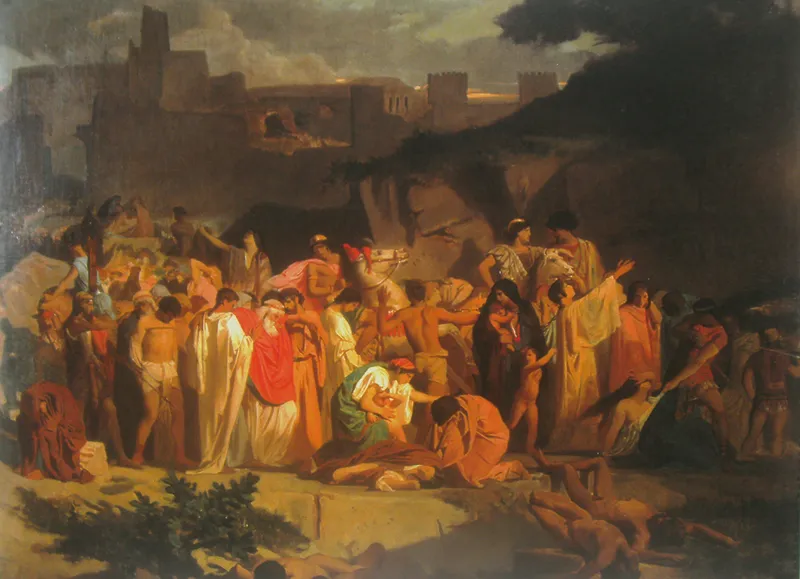
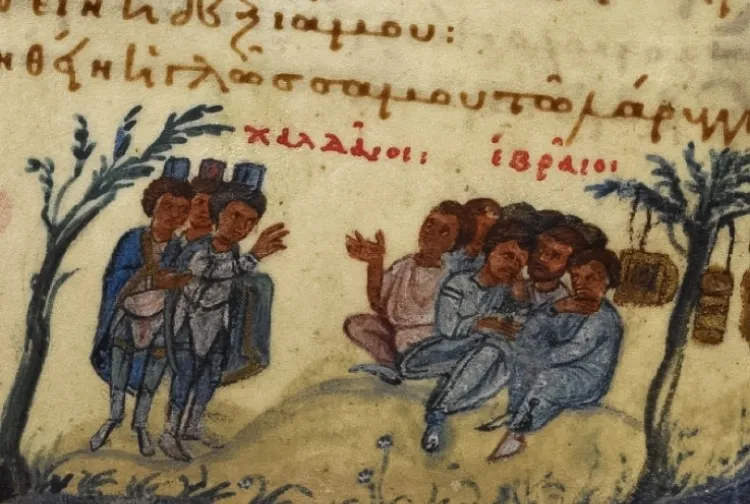
Psalm 137:7-9Remember, O LORD
7Remember, O LORD, the children of Edom in the day of Jerusalem; who said, Rase it, rase it, even to the foundation thereof. 8O daughter of Babylon, who art to be destroyed; happy shall he be, that rewardeth thee as thou hast served us. 9Happy shall he be, that taketh and dasheth thy little ones against the stones.
The psalm turns from grief to judgment, and the first name it brings before God is not Babylon but Edom: Remember, O LORD, the children of Edom in the day of Jerusalem; who said, Rase it, rase it, even to the foundation thereof (v. 7). Edom was Israel's neighbour and kin - descended from Esau, Jacob's brother - which made the betrayal sharper. When Babylon broke the city, the Edomites did not merely stand by; they cheered, and worse.
Rase it, rase it - the Hebrew is a cry to strip it bare, to tear the city down to its very foundations and leave nothing standing. The prophets remembered Edom's glee at the fall with grief and anger (the short book of Obadiah is largely about it). But notice how the verse begins: Remember, O LORD. The psalmist does not say, “Let me repay Edom,” or, “I will tear them down as they tore us down.” He asks God to remember - to hold before Himself what was done and to be the one who reckons with it.
Even as the psalm moves into its hardest territory, its instinct is to hand the matter upward, to lay the wrong in front of the only Judge who can be trusted to weigh it rightly.
Now the psalm turns to the great destroyer herself: O daughter of Babylon, who art to be destroyed; happy shall he be, that rewardeth thee as thou hast served us (v. 8). Two things are worth seeing clearly. First, the phrase who art to be destroyed is not a wish the psalmist is inventing; it is a verdict already announced. Babylon's fall had long been declared by the prophets - her doom was settled, her downfall certain.
The psalmist is not dreaming up a fate for Babylon; he is reaching for the judgment God has already pronounced and saying amen to it. Second, the language of rewardeth thee as thou hast served us is the ancient language of exact justice - measure for measure, the punishment fitting the crime. What Babylon did to others is what is now coming back upon Babylon; she will be paid in her own coin. This is why Scripture can hold Babylon up, again and again, as the great type of the proud world-system that sets itself against God and tramples the weak - and why the final reckoning belongs to God.
The psalmist does not appoint himself the avenger. He recognizes that the empire which wasted his people stands already under a sentence not of his making, and he longs for the day that sentence falls.
And then comes the verse that stops every honest reader cold: Happy shall he be, that taketh and dasheth thy little ones against the stones (v. 9). There is no use pretending it is not there, and no use rushing past it. It is the most shocking line in the Psalter. What we are hearing is the raw, unbandaged cry of the deeply violated - a people whose own little ones had been slaughtered exactly this way.
This was the standard horror of ancient warfare: when a city fell, its infants were killed against the rocks, and Babylon had done it to Jerusalem. The verse throws Babylon's own atrocity back in Babylon's face - as thou hast served us (v. 8) - crying for the conqueror to suffer precisely what the conqueror inflicted. Scripture records this cry; it does not commend it. The Bible is unflinchingly honest about what trauma sounds like from the inside, and it does not clean up the survivor's rage before letting it be heard.
But two things must be held alongside it. First, even here the psalmist does not take up the sword; he speaks, and the speaking is laid before God, in the language of the judgment God has already announced on Babylon - the reckoning left in God's hands, not seized into his own. Second, and decisively, this cry is not the last word Scripture speaks on enemies. It is the honest beginning - the place a shattered heart actually starts - and the fuller word, the word that shows where this bringing of pain to God finally leads, is spoken from a cross.
Research trail
Sources & further study
These references support the historical, linguistic, manuscript, and contextual notes in this chapter. Scripture remains the primary text; external sources are provided so readers can inspect the research directly.
- Psalm 137 - Translators' NotesThe NET Bible's detailed footnotes on Psalm 137 - the historical setting in the Babylonian captivity, the force of required of us a song in verse 3, the self-imprecation of verses 5-6, and the way the closing verses echo the brutal warfare of the ancient world that had been done to the exiles themselves.
- Psalm 137 · Hebrew + classical Jewish commentaryThe Hebrew text of Psalm 137 with Rashi, Ibn Ezra, and other classical commentators side by side - useful for the repeated verb zakar (to remember, vv. 1, 6, 7), its opposite shakach (to forget, v. 5), and for how the Jewish tradition has read and wrestled with the difficult closing verses.
- Psalm 137 ↔ Hebrews 11 · Galatians 4 · Luke 19 · Revelation 18Traces the threads tying Psalm 137 to the rest of Scripture - the longing for a lost city reaching toward a better country, that is, an heavenly (Heb. 11:16), the fall of Babylon in Babylon the great is fallen (Rev. 18:2), and the Lord who wept over the same Jerusalem (Luke 19:41).
Where this echoes in Scripture
How Shall We Sing the LORD'S Song?
- Hebrews 11:13-16they were strangers and pilgrims on the earth... they seek a country... a better country, that is, an heavenly.The exile's longing for a lost city taken up as the longing of faith for a home not yet seen.
- Galatians 4:26But Jerusalem which is above is free, which is the mother of us all.The Zion the exiles wept for (v. 1), named anew as the city that cannot be taken away.
- 1 Peter 2:11I beseech you as strangers and pilgrims, abstain from fleshly lusts.The exile's status - faithful in a strange land (v. 4) - made the posture of every believer.
- Deuteronomy 8:11Beware that thou forget not the LORD thy God.The danger the psalmist's vow guards against (vv. 5-6) - the slow forgetting that exile breeds.
Remember, O LORD
- Revelation 18:2Babylon the great is fallen, is fallen, and is become the habitation of devils.The fall longed for in verse 8, declared as God's own act on the proud world-system.
- Revelation 18:6Reward her even as she rewarded you, and double unto her double according to her works.The measure-for-measure language of verse 8 (“as thou hast served us”), now lifted into heaven's justice.
- Luke 19:41And when he was come near, he beheld the city, and wept over it.The One who wept over the same Jerusalem the exiles wept for (v. 1).
- Matthew 5:44Love your enemies, bless them that curse you, do good to them that hate you.The fuller word set over the cry of verses 8-9 - the way the cross finally takes.
- Luke 23:34Father, forgive them; for they know not what they do.The prayer of the One with His enemies before Him - the opposite of verse 9, and where the bringing of pain to God leads.