Psalms 46
Psalm 461 opens with a promise so foundational that whole hymns have been built on it: God is our refuge and strength, a very present help in trouble. Read it slowly, because every word carries weight. Not a refuge in the abstract, but our refuge. Not a distant strength, but a very present help - near, available, here. And not a help reserved for calm days, but help in trouble, precisely when it is needed.
Then the psalm names the trouble it has in mind, and it is no small thing: though the earth be removed, and though the mountains be carried into the midst of the sea; though the waters thereof roar and be troubled, though the mountains shake with the swelling thereof. This is creation coming undone - the solid ground dissolving, the everlasting hills sliding into the deep. And against that worst-imaginable scene the psalm sets a single, astonishing line: Therefore will not we fear.
Tap any highlighted phrase to jump to the commentary that unpacks it.
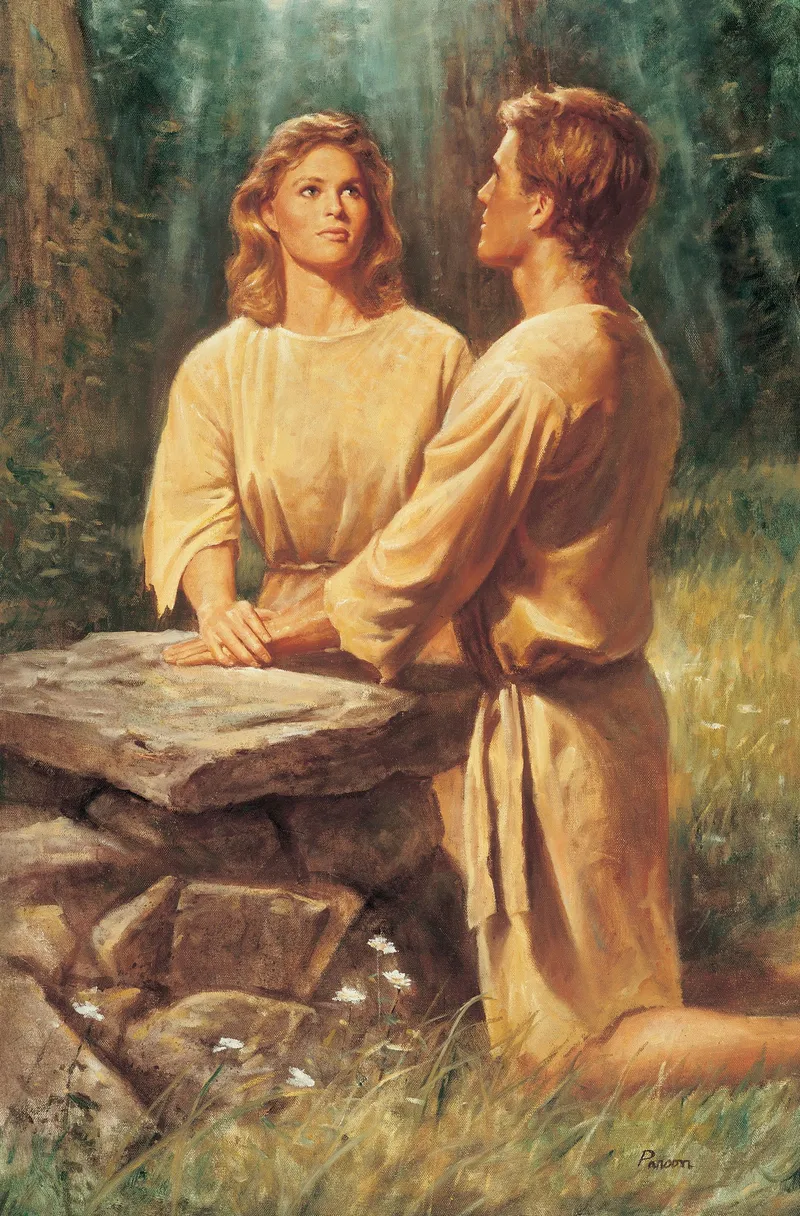
Psalm 46:1-3 · To the chief Musician for the sons of Korah, A Song upon AlamothA Very Present Help in Trouble
1God is our refuge and strength, a very present help in trouble. 2Therefore will not we fear, though the earth be removed, and though the mountains be carried into the midst of the sea; 3Though the waters thereof roar and be troubled, though the mountains shake with the swelling thereof. Selah.
The first verse is the whole psalm in miniature, and every phrase is chosen with care. God is our refuge and strength, a very present help in trouble. Take the words one at a time. He is a refuge - a place to run to, a shelter from what would destroy you. He is strength - not only a place to hide but the power to stand, to endure, to go on.
And then the phrase that turns a doctrine into a comfort: a very present help in trouble. The word present is doing enormous work. God is not a refuge in theory, a strength on paper, a help that has to be summoned from far away and may arrive too late. He is very present - already here, close at hand, found the moment He is needed. And He is help in trouble, not merely after it - not a God who waits for the storm to pass before He draws near, but one who is nearest in the thick of it.
Notice, too, the small word our. This is not a description of God in the abstract; it is a claim staked by a people who belong to Him. He is not simply a refuge somewhere in the universe; He is our refuge, bound to us, ours to flee to. Everything else in the psalm - the shaking earth, the roaring sea, the raging nations - is measured against this one settled fact stated first.1
Watch how the psalm reasons. It does not say we will not fear because nothing bad will happen. It says the opposite - it dares to name the very worst that could happen, and then refuses fear anyway. Therefore will not we fear, though the earth be removed, and though the mountains be carried into the midst of the sea; though the waters thereof roar and be troubled, though the mountains shake. These are not ordinary troubles.
The ancients looked at the mountains as the most permanent things in the world, the very pillars of the earth; and the sea was the image of chaos, the churning deep that creation had been ordered out of. So to picture the mountains carried into the midst of the sea is to picture the undoing of the world itself - the solid melting into the chaotic, order collapsing back into disorder.
This is the largest fear the human heart can hold: not that this or that will go wrong, but that everything will, that the ground beneath all things will give way. And the psalm sets its therefore against exactly that. The word though tolls four times, conceding the worst each time, and each time the refuge holds. The courage here is not the absence of danger; it is a confidence so anchored in God that even the end of the world cannot dislodge it.
And fittingly, the movement closes on Selah - a pause, a held breath, an invitation to stop and let the impossible calm of these verses sink in.
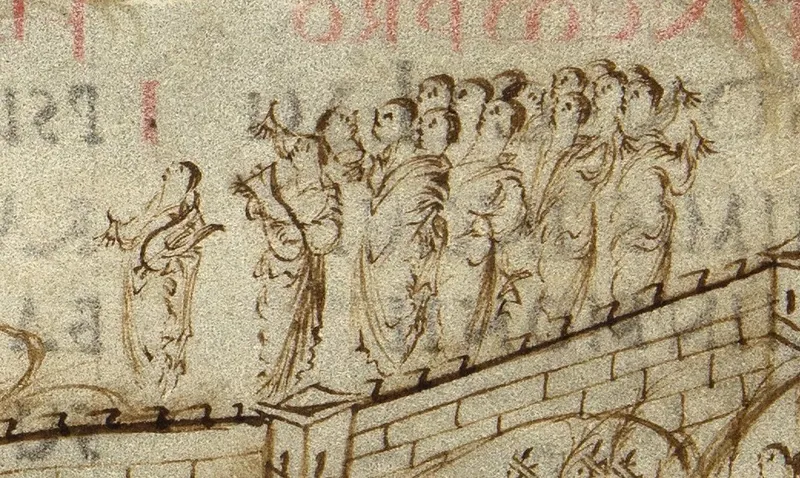
Psalm 46:4-7There Is a River
4There is a river, the streams whereof shall make glad the city of God, the holy place of the tabernacles of the most High. 5God is in the midst of her; she shall not be moved: God shall help her, and that right early. 6The heathen raged, the kingdoms were moved: he uttered his voice, the earth melted. 7The LORD of hosts is with us; the God of Jacob is our refuge. Selah.
After the roaring sea of the first movement, the second opens on a different kind of water altogether: There is a river, the streams whereof shall make glad the city of God, the holy place of the tabernacles of the most High. Feel the deliberate contrast. The waters of verses 2-3 roar and be troubled - they are the chaos that threatens to swallow the world. But here is a river whose streams do not threaten; they make glad. The same element that means destruction outside the city means joy within it.
There is a quiet wonder in the very fact that the verse names a river at all, for Jerusalem - the city of God in view here - sat on no great river the way Babylon sat on the Euphrates or Egypt on the Nile. Its water came secretly, from a hidden spring beneath the hill. And that is exactly the picture: the city's gladness does not come from a mighty visible torrent but from a quiet, unfailing stream that the watching nations cannot see and cannot stop.
The world's strength is loud and obvious; the city's supply is hidden and sure. While the sea rages against everything outside, a gentle river feeds the place where God dwells - and that is what makes it glad.
The reason the city stands is stated with beautiful simplicity: God is in the midst of her; she shall not be moved. Not her walls are high, not her army is strong, but God is in the midst of her. He is not standing guard at the gate or watching from a distance; He is in the center, at the heart, present among His people.
And the consequence follows at once: she shall not be moved. Hold this line against the rest of the psalm and watch the wordplay light up. In verse 2 the earth may be removed; in verse 6 the kingdoms were moved; the mountains shake, the nations rage. Everything in the psalm is in violent motion - except the one city where God lives, and she shall not be moved. The difference is not that the city is built more solidly than the mountains; it is that God is in it.
And then the timing: God shall help her, and that right early. The help is not only certain, it is prompt - at the break of day, at the turning of the tide, exactly when it is needed. The verse paints a city surrounded by a world coming apart, and at peace in the eye of the storm because the One who cannot be shaken has made His home inside her walls.
Verse 6 compresses the whole drama of history into a single line: The heathen raged, the kingdoms were moved: he uttered his voice, the earth melted. First the uproar - the nations raged, a word for the same churning tumult the sea made in verse 3, only now it is the nations who roar; and the kingdoms were moved, the great powers of the earth shaken and toppling. This is the political version of the cosmic chaos of the opening verses: not mountains sliding into the sea, but empires heaving and falling.
And against all that fury God does not raise an army or lift a hand. He uttered his voice - He simply spoke - and the earth melted. One word. The raging of the nations, set beside the voice of God, is like wax set beside fire; it cannot stand, it melts away. There is a deliberate echo here of the God who spoke the world into being - the same voice that said let there be now needs only to speak, and the proudest kingdoms dissolve.
The contrast the psalm is drawing could not be plainer: the nations expend all their violence and noise, and accomplish chaos; God breathes a single syllable, and the chaos undoes itself. The city in the midst of all this has nothing to fear, because the One in her midst rules the uproar with His voice.
Psalm 46:8-11Be Still, and Know
8Come, behold the works of the LORD, what desolations he hath made in the earth. 9He maketh wars to cease unto the end of the earth; he breaketh the bow, and cutteth the spear in sunder; he burneth the chariot in the fire. 10Be still, and know that I am God: I will be exalted among the heathen, I will be exalted in the earth. 11The LORD of hosts is with us; the God of Jacob is our refuge. Selah.
The final movement opens with a summons: Come, behold the works of the LORD, what desolations he hath made in the earth. After two movements that pictured chaos - the sea roaring, the nations raging - the psalm now calls us to come and look, to see for ourselves what God has actually done. And the word it uses is startling: desolations. We expect God's works to be acts of building, but here they are acts of breaking.
The point becomes clear in the next verse: the desolations God has made are the ruins of war. He has laid waste not His people but the machinery of human violence.
There is a deep irony folded into the word. The nations make desolations too - they ravage and burn and leave wreckage behind them. But the desolations God makes are the wreckage of warfare itself: He desolates the desolators, brings the destroyers to ruin. Come and behold, the psalm says - do not just take it on report, but consider with your own eyes the God who outlasts every empire and clears away the rubble of their conflicts. The God who is a refuge for His people is, to the raging of the nations, the One who brings their violence to nothing.
Verse 9 spells out what those desolations are, and it is a vision the whole aching world still longs for: He maketh wars to cease unto the end of the earth; he breaketh the bow, and cutteth the spear in sunder; he burneth the chariot in the fire. Look at the three weapons named - the bow, the spear, the chariot, which were the rifle, the artillery, and the tank of the ancient world, the full arsenal of organized violence.
And look at what God does to each: He breaketh the bow, snaps it; He cutteth the spear in sunder, splinters it; He burneth the chariot in the fire, reduces the war-machine to ash.
This is not peace negotiated between exhausted armies; it is peace imposed by God, who simply removes the means of war from human hands. And it reaches unto the end of the earth - not a local truce but a universal disarmament. The psalm dares to imagine a world in which God has ended war altogether, where the instruments of killing lie broken and burned because the King has decreed it so. It is the same hope the prophets would sing - swords beaten into plowshares, spears into pruninghooks, and the nations learning war no more.
The God who is with us is not only a shelter in the storm of violence; He is the One who will one day end the storm for good.
The command to be still flows straight into a declaration: I will be exalted among the heathen, I will be exalted in the earth. This is the goal toward which the whole psalm has been moving. The stilling of the nations is not an end in itself; it is so that God may be exalted - lifted high, recognized, honored as who He truly is. And the reach of it is total: among the heathen (the very nations who were raging in verse 6) and in the earth (the very earth that was being removed in verse 2).
What was in chaos at the start of the psalm is, by its end, the stage on which God's majesty is displayed.
Notice that this exaltation is something God accomplishes - I will be exalted, twice, in the first person. He does not wait to be promoted by human approval; He will see to His own glory, among the very peoples who once defied Him. And then the psalm closes the way it closed the previous movement, with the refrain sounded one final time: The LORD of hosts is with us; the God of Jacob is our refuge. Selah. It is the perfect resting place.
After the shaking earth, the roaring sea, the raging nations, the broken weapons, and the command to be still, the psalm leaves us exactly where it began - not with our circumstances resolved, but with our God present. With us. Our refuge. And one last Selah - a final held breath - to let the great truth settle into silence.
Research trail
Sources & further study
These references support the historical, linguistic, manuscript, and contextual notes in this chapter. Scripture remains the primary text; external sources are provided so readers can inspect the research directly.
- Psalm 46 - Translators' NotesThe NET Bible's detailed footnotes on Psalm 46 - the “Alamoth” superscription and its musical sense, the cosmic upheaval of verses 2-3, the city “made glad” by the river, and the force of the command Be still, and know that I am God against a raging world.
- Psalm 46 · Hebrew + classical Jewish commentaryThe Hebrew text of Psalm 46 with Rashi, Ibn Ezra, and other classical commentators side by side - useful for machaseh (v. 1, “refuge,” a place to flee to), for 'oz (v. 1, “strength, might”), for the title tseva'ot (vv. 7, 11, “of hosts,” the armies of heaven), and for the verb raphah behind “be still” (v. 10, to let go, to cease).
- Psalm 46 ↔ Matthew 1 · John 1, 7 · Revelation 22Traces the verbal threads tying Psalm 46's twofold refrain the LORD of hosts is with us (vv. 7, 11) to the name Emmanuel… God with us (Matt. 1:23) and the Word who dwelt among us (John 1:14), and the river that gladdens the city (v. 4) to the living water of John 7 and the river of life in Revelation 22.
Where this echoes in Scripture
A Very Present Help in Trouble
- Psalm 91:1-2He that dwelleth in the secret place of the most High... I will say of the LORD, He is my refuge and my fortress: my God; in him will I trust.The refuge of verse 1 - God as the shelter the faithful flee to and hide within.
- Isaiah 25:4For thou hast been a strength to the poor, a strength to the needy in his distress, a refuge from the storm.The same pairing as verse 1 - God as both strength and refuge for those in trouble.
- Hebrews 6:18That... we might have a strong consolation, who have fled for refuge to lay hold upon the hope set before us.The refuge of verse 1 carried into the gospel - believers who have fled to God to lay hold of hope.
- Psalm 18:2The LORD is my rock, and my fortress, and my deliverer; my God, my strength, in whom I will trust.The fortress-language of the psalm - God named as rock, strength, and the place of safety.
There Is a River
- Matthew 1:23Behold, a virgin shall be with child... and they shall call his name Emmanuel, which being interpreted is, God with us.The refrain of verses 7 and 11 made flesh - the child whose very name is “God with us.”
- John 1:14And the Word was made flesh, and dwelt among us, (and we beheld his glory...).God “in the midst of her” (v. 5) fulfilled - the Word who pitched His tent among us.
- Zechariah 2:5For I, saith the LORD, will be unto her a wall of fire round about, and will be the glory in the midst of her.The city kept by God's presence (v. 5) - His glory in her midst as both wall and defense.
- Psalm 2:1Why do the heathen rage, and the people imagine a vain thing?The raging nations of verse 6 - the uproar of the kingdoms set against the reign of God.
Be Still, and Know
- Mark 4:39And he arose, and rebuked the wind, and said unto the sea, Peace, be still. And the wind ceased, and there was a great calm.The command of verse 10 spoken in person - the One who stills the raging sea with a word.
- Isaiah 2:4And they shall beat their swords into plowshares, and their spears into pruninghooks: nation shall not lift up sword against nation.The wars made to cease of verse 9 - the prophet's vision of a world finally disarmed by God.
- Revelation 22:1-2And he shewed me a pure river of water of life... proceeding out of the throne of God and of the Lamb.The river that gladdens the city (v. 4) reaching its end - the river of life in the city with no more curse.
- John 7:38He that believeth on me, as the scripture hath said, out of his belly shall flow rivers of living water.The streams that make glad (v. 4) given by Christ - living water flowing to and from those who believe.