Psalms 6
People in this chapter
Psalm 6 is the first of the seven prayers the church has long called the Penitential Psalms - the songs it has reached for in sickness, in grief, and on the edge of death. It opens in a place most of us know from the inside: a body that is failing, a mind that cannot rest, and underneath it all a dread that the suffering itself is a sign of God's displeasure. O LORD, rebuke me not in thine anger, neither chasten me in thy hot displeasure. The prayer does not ask God to stop caring; it asks Him to temper His correction with mercy - to deal with a weak and broken man not as a judge but as a father (cf. Heb. 12:5-11).
From the very first line, the cry is not leave me alone but have mercy.1
Tap any highlighted phrase to jump to the commentary that unpacks it.
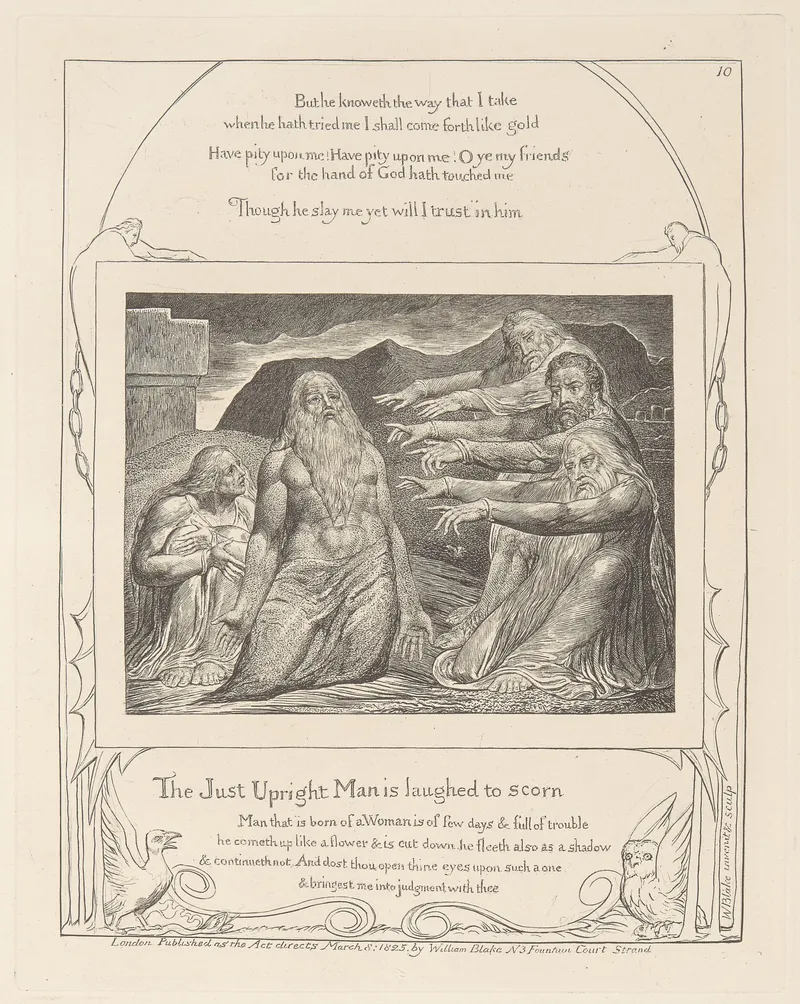
Psalm 6:1-3Have Mercy upon Me, for I Am Weak
1O LORD, rebuke me not in thine anger, neither chasten me in thy hot displeasure. 2Have mercy upon me, O LORD; for I am weak: O LORD, heal me; for my bones are vexed. 3My soul is also sore vexed: but thou, O LORD, how long?
The psalm does not open where we might expect - with the enemies, or the sickness, or the long sleepless nights. It opens with God, and with a fear about God: O LORD, rebuke me not in thine anger, neither chasten me in thy hot displeasure. Underneath all the suffering that is about to be described lies a deeper dread - the worry that the pain itself means God has turned against him.
But notice carefully what the prayer actually asks. It does not ask God to stop correcting him; it asks Him not to do it in anger. The words rebuke and chasten are the language of a father with a son (the same root the writer of Hebrews would later use: whom the Lord loveth he chasteneth, Heb. 12:6) - and a son under his father's discipline does not beg to be disowned; he begs the correction to come gently, mixed with mercy and not with wrath.
So the very first breath of this psalm is not despair but a kind of stubborn hope: it speaks to God as one who can still be appealed to, who corrects those He loves, and whose anger a weak man may plead to have tempered.
Psalm 6:4-7I Water My Couch with My Tears
4Return, O LORD, deliver my soul: oh save me for thy mercies’ sake. 5For in death there is no remembrance of thee: in the grave who shall give thee thanks? 6I am weary with my groaning; all the night make I my bed to swim; I water my couch with my tears. 7Mine eye is consumed because of grief; it waxeth old because of all mine enemies.
The plea sharpens: Return, O LORD, deliver my soul: oh save me for thy mercies' sake. The word return is striking. It speaks as though God had withdrawn, turned away, left the room - and the sufferer is begging Him to come back. This is the language of felt absence, not of settled doctrine; the psalmist is not making a claim about where God actually is, but describing the awful sense that He is far off.
And notice the ground he stands on when he asks to be saved: not his own goodness, but thy mercies' sake. The Hebrew word is chesed - God's steadfast, covenant-keeping love, the loyal kindness He has bound Himself to show His own. The sufferer has run out of every other argument. He cannot appeal to his strength, for he is weak; he cannot appeal to his record, for he fears God's rebuke. So he appeals to the one thing that never fails: the unwavering love of God Himself.
Save me, he says - not because of what I am, but because of what You are.
Now the psalm reaches its lowest, most unguarded point, and it does not flinch from the picture: I am weary with my groaning; all the night make I my bed to swim; I water my couch with my tears. This is grief without composure - a man so spent with weeping that, in the language of poetry, the bed itself is flooded and the couch awash. The word weary means worn out, exhausted to the bone; even the groaning has become labor.
And then the body keeps its own tally: mine eye is consumed because of grief; it waxeth old because of all mine enemies. The eyes, swollen and dimmed from crying, have aged as though years had passed in a few nights.
What is remarkable is not that the psalm describes such suffering, but that it leaves it in the prayer - unedited, undignified, held up to God exactly as it is. There is no attempt here to sound brave. The tears are simply poured out before the One who is trusted to see them.
Psalm 6:8-10The LORD Hath Heard the Voice of My Weeping
8Depart from me, all ye workers of iniquity; for the LORD hath heard the voice of my weeping. 9The LORD hath heard my supplication; the LORD will receive my prayer. 10Let all mine enemies be ashamed and sore vexed: let them return and be ashamed suddenly.
With no transition, no report that the sickness has lifted or the night has ended, the psalm turns - and the turn is total. The voice that a moment ago could only ask how long? now speaks with sudden authority: Depart from me, all ye workers of iniquity; for the LORD hath heard the voice of my weeping. What changed? Not the circumstances. The prayer. Three times over, like a man steadying himself on a rail, he names the one fact he is now sure of: the LORD hath heard the voice of his weeping; the LORD hath heard his supplication; the LORD will receive his prayer.
The very tears of verse 6 - which might have seemed like proof that God was far off - turn out to have been heard all along. This is the deep logic of the whole psalm: being heard is not the same as being instantly relieved. The pain may still be present; the answer to how long? may still be hidden. But the sufferer now knows he was never praying into an empty silence. He was heard. And from that one certainty, everything steadies.
Research trail
Sources & further study
These references support the historical, linguistic, manuscript, and contextual notes in this chapter. Scripture remains the primary text; external sources are provided so readers can inspect the research directly.
- Psalm 6 - Translators' NotesThe NET Bible's detailed footnotes on the textual and translation cruxes of Psalm 6 - the force of the “anger” and “chastening” the psalmist begs to be tempered (v. 1), the medical sense of bahal (“vexed, terrified, undone”) in verses 2-3, and the question of Sheol, “the grave,” in verse 5.
- Psalm 6 · Hebrew + classical Jewish commentaryThe Hebrew text of Psalm 6 with Rashi, Ibn Ezra, and other classical commentators side by side - useful for the plea chonneni (v. 2, “be gracious to me, have mercy”), the verb rapha (v. 2, “heal”), and the cry ad-anah (v. 3, “how long?”) that hangs unanswered over the whole psalm.
- Psalm 6 ↔ John 12 · Matthew 26 · Hebrews 5Traces the verbal threads tying Psalm 6's “my soul is sore vexed” to the garden where Jesus said Now is my soul troubled (John 12:27) and My soul is exceeding sorrowful, even unto death (Matt. 26:38), and to the One who offered up prayers and supplications with strong crying and tears and was heard (Heb. 5:7).
Where this echoes in Scripture
Have Mercy upon Me, for I Am Weak
- Hebrews 12:5-6My son, despise not thou the chastening of the Lord... for whom the Lord loveth he chasteneth.The “rebuke” and “chasten” of verse 1 read as a father's discipline, not a judge's wrath.
- Psalm 13:1-2How long wilt thou forget me, O LORD? for ever? how long wilt thou hide thy face from me?The same unfinished cry, how long? (v. 3), repeated until it almost becomes a refrain.
- Matthew 26:38My soul is exceeding sorrowful, even unto death: tarry ye here, and watch with me.The vexed soul of verse 3, taken onto the lips of Jesus in the garden.
- Exodus 34:6The LORD, The LORD God, merciful and gracious, longsuffering, and abundant in goodness.The plea have mercy (v. 2, chanan) appeals to God's own revealed name and nature.
I Water My Couch with My Tears
- Psalm 56:8Thou tellest my wanderings: put thou my tears into thy bottle: are they not in thy book?The tears of verse 6 are not wasted - every one is kept and counted by God.
- Hebrews 5:7...when he had offered up prayers and supplications with strong crying and tears... and was heard.The Lord Jesus prayed with the very tears of Psalm 6 - and was heard.
- Psalm 16:10For thou wilt not leave my soul in hell; neither wilt thou suffer thine Holy One to see corruption.The fear of Sheol in verse 5 meets its answer: One goes down into death and is not abandoned there.
- Revelation 21:4And God shall wipe away all tears from their eyes; and there shall be no more death.The flooded couch of verse 6 is not the end of the story - the tears are finally wiped away.
The LORD Hath Heard the Voice of My Weeping
- Psalm 30:5Weeping may endure for a night, but joy cometh in the morning.The night of tears (v. 6) giving way to morning - the same turn Psalm 6 makes in verse 8.
- 1 John 5:14-15If we ask any thing according to his will, he heareth us... we know that we have the petitions.The confidence of verses 8-9 - the LORD hath heard - stated as the believer's assurance.
- Hebrews 5:7...with strong crying and tears unto him that was able to save him from death, and was heard.The pattern of Psalm 6 fulfilled: tears poured out, and the prayer heard.
- Psalm 116:1-2I love the LORD, because he hath heard my voice and my supplications.The same settled testimony that closes Psalm 6: the LORD hath heard my supplication (v. 9).