Psalms 88
People in this chapter
Psalm 88 is unlike any other song in the Psalter, and it is meant to be read knowing that. Almost every lament in the book eventually turns: the singer pours out his trouble and then, somewhere before the end, lifts his head - but I have trusted in thy mercy… the LORD hath heard the voice of my weeping… I will yet praise him.
Psalm 88 does not turn. It begins in darkness and it ends in darkness, with no rescue described and no praise reached. Its final word, in the Hebrew as in the English, is simply darkness. This is the prayer Scripture gives to the night that does not lift - and the fact that the Bible contains it at all is itself a mercy.1
Tap any highlighted phrase to jump to the commentary that unpacks it.
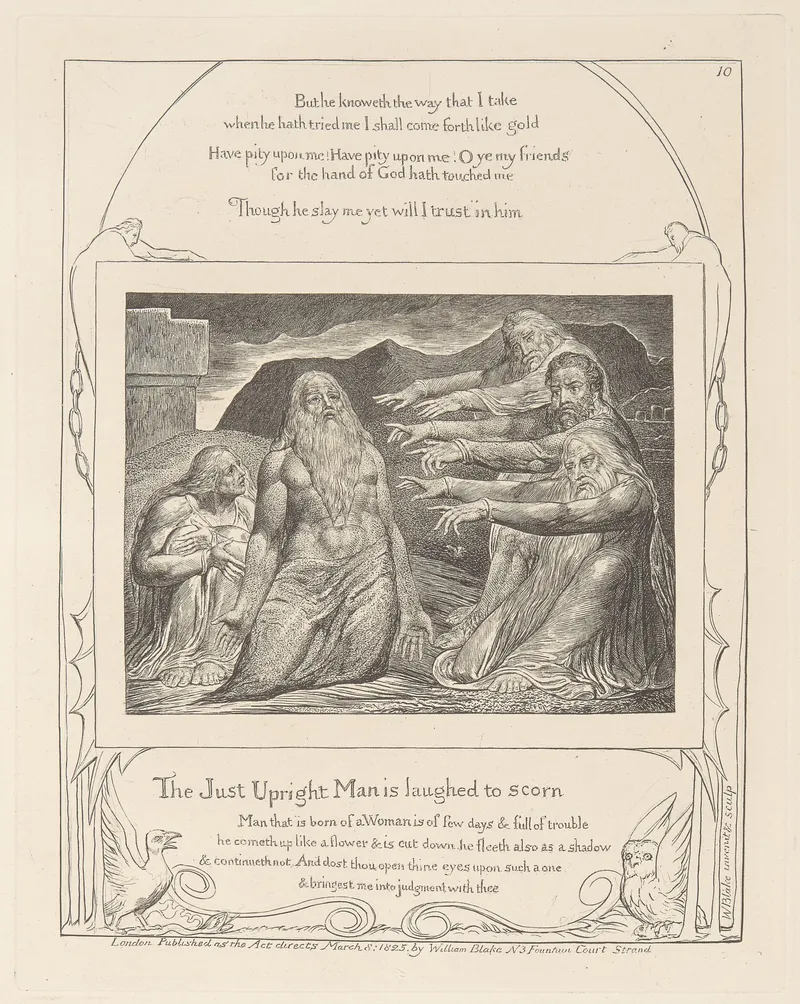
Psalm 88:1-7 · A Song or Psalm for the sons of Korah, Maschil of Heman the EzrahiteMy Life Draweth Nigh Unto the Grave
1O LORD God of my salvation, I have cried day and night before thee: 2Let my prayer come before thee: incline thine ear unto my cry; 3For my soul is full of troubles: and my life draweth nigh unto the grave. 4I am counted with them that go down into the pit: I am as a man that hath no strength: 5Free among the dead, like the slain that lie in the grave, whom thou rememberest no more: and they are cut off from thy hand. 6Thou hast laid me in the lowest pit, in darkness, in the deeps. 7Thy wrath lieth hard upon me, and thou hast afflicted me with all thy waves. Selah.
Before the darkness is named, the God to whom it is brought is named. O LORD God of my salvation, I have cried day and night before thee. It is worth pausing on that opening, because everything in the psalm depends on it. The singer does not begin by describing his despair; he begins by addressing God - and not as a distant judge but as the God of my salvation, the one he still belongs to, still expects rescue from, still cries out to day and night.
Hold that line in your mind, because it is the last clearly hopeful thing the psalm will say. Everything after it is trouble. But the trouble is spoken into the ear of this God, the one the singer has already called his salvation - and that direction of address, more than any feeling, is what makes this a prayer and not merely a cry of pain.
The description, when it comes, holds nothing back. For my soul is full of troubles: and my life draweth nigh unto the grave. This is not a soul with troubles in it; it is a soul full of them, with no room left for anything else - and a life that is no longer merely hard but sliding, drawing near to the edge of the grave itself. The singer feels himself dying, not in some distant future but now, his life ebbing toward the place of the dead.
What makes the line so honest is its refusal of proportion: he does not say his troubles are manageable, or that better days are surely coming. He says he is full, and he is sinking. There are seasons that feel exactly like this, and the psalm does not scold them or rush them. It writes them down.
The geography of the singer's despair grows more specific and more terrible: Thou hast laid me in the lowest pit, in darkness, in the deeps. Notice who he says put him there - thou hast laid me. He does not experience his suffering as an accident or as God's absence; he experiences it, harder still, as God's own doing. And the place is the lowest pit, the dark places where no light comes, the deeps where a sinking thing is lost.
Thy wrath lieth hard upon me, and thou hast afflicted me with all thy waves (v. 7) - wave after wave, with no gap between them to catch a breath.
We should not soften this. The singer believes God has done this to him, and he says so to God's face. What he does not do is turn away. He keeps the complaint inside the relationship, addressed to the very One he holds responsible - which is its own kind of faith, harder and more stubborn than the easy kind.
Psalm 88:8-12Shall Thy Wonders Be Known in the Dark?
8Thou hast put away mine acquaintance far from me; thou hast made me an abomination unto them: I am shut up, and I cannot come forth. 9Mine eye mourneth by reason of affliction: LORD, I have called daily upon thee, I have stretched out my hands unto thee. 10Wilt thou shew wonders to the dead? shall the dead arise and praise thee? Selah. 11Shall thy lovingkindness be declared in the grave? or thy faithfulness in destruction? 12Shall thy wonders be known in the dark? and thy righteousness in the land of forgetfulness?
After God, the people. Thou hast put away mine acquaintance far from me; thou hast made me an abomination unto them: I am shut up, and I cannot come forth. The suffering has emptied the room. Those who knew him have drawn back; he has become, in their eyes, something to avoid - an abomination, a thing they recoil from - and he is shut up, walled in, unable to come out to them or call them back.
This is the particular cruelty of long affliction: it isolates. Sickness, grief, depression, disgrace - they have a way of clearing the people out of a life, until the sufferer is left not only in pain but alone in it. And again he lays it at God's feet: thou hast put away mine acquaintance. Even his abandonment, he believes, is somehow from the hand of God.
Now the singer does something unexpected: he argues with God, and the argument is strangely tender. Wilt thou shew wonders to the dead? shall the dead arise and praise thee?… Shall thy lovingkindness be declared in the grave? or thy faithfulness in destruction? Shall thy wonders be known in the dark? (vv. 10-12). The logic runs like this: God, You love to do wonders, to be praised, to have Your lovingkindness and faithfulness declared - but the dead cannot do any of that.
If You let me go down to the grave, You lose a worshipper; the dust cannot tell of Your goodness. It is, underneath the gloom, a backhanded appeal to God's own glory - keep me alive, for Your praise.
The psalm is working only with what it can see, and from where the singer sits the grave looks like the end of all praise, the silence past which no song reaches. We will read these verses in the light of an empty tomb in a moment; the singer cannot yet. But notice that even his bleakest question is still pointed at God, still assuming that God's wonders and lovingkindness are the things most worth keeping. He has lost almost everything but his sense of what God is worth.
It is easy to miss, under the weight of the questions, what verse 9 quietly establishes about the man asking them: LORD, I have called daily upon thee, I have stretched out my hands unto thee. Daily. Not once, in a burst of grief, but day after day, with no answer, he has gone on calling and reaching. The hands stretched out are the posture of prayer and of pleading - the gesture of a child reaching up to be lifted.
And he makes it toward a God who, by every feeling he reports, has put him in the pit and emptied his life of friends.
This is the costliest kind of faith there is: not the prayer that is quickly answered, but the prayer repeated into silence, the hands stretched out again this morning to the same God who did not come yesterday. The psalm honors that persistence by simply recording it, without promising it will be rewarded by the final verse. Sometimes faithfulness looks like nothing more, and nothing less, than calling again today.
Psalm 88:13-18Lover and Friend Hast Thou Put Far From Me
13But unto thee have I cried, O LORD; and in the morning shall my prayer prevent thee. 14LORD, why castest thou off my soul? why hidest thou thy face from me? 15I am afflicted and ready to die from my youth up: while I suffer thy terrors I am distracted. 16Thy fierce wrath goeth over me; thy terrors have cut me off. 17They came round about me daily like water; they compassed me about together. 18Lover and friend hast thou put far from me, and mine acquaintance into darkness.
The final movement opens, against all the gloom, with a stubborn turning back to prayer: But unto thee have I cried, O LORD; and in the morning shall my prayer prevent thee. To prevent here is the old sense of the word - to go before, to come to meet, to arrive early. The singer is saying that his prayer will be there waiting at first light, that he will meet God at the dawn with his cry already on his lips.
After everything - the pit, the wrath, the emptied room, the unanswered questions - he resolves to pray again in the morning. It is one of the quiet glories of this dark psalm: the trouble has not produced silence or rebellion but a determination to keep showing up. But unto thee. Whatever else fails, the direction holds. He will bring the same dark, one more dawn, to the same God.
And then the great unanswered question, the one the psalm will never resolve: LORD, why castest thou off my soul? why hidest thou thy face from me? (v. 14). It is the cry of every sufferer who cannot square the God he believes in with the abandonment he feels - why? The singer presses it further into the rawest autobiography in the psalm: I am afflicted and ready to die from my youth up (v. 15) - this is not a recent wound but a lifelong one, suffering as far back as he can remember.
The terrors of God go over him; they have cut me off; they surround him daily like water, closing in from every side.
And the psalm does not answer the why. No voice comes from heaven to explain. The question is allowed to stand open, exactly as it so often stands open in a real life. Scripture does not always hand us the reason; sometimes it hands us only the permission to ask, and the God to ask it of.
It is important not to flinch from how this psalm ends. There is no but I will trust, no yet the LORD will deliver, no morning light breaking over the last verse. The song closes in the dark and stays there. And the Bible - this is the wonder of it - lets it. Inscribed in the very book of praise, set among the songs Israel sang in worship, is one song that does not resolve, one prayer for the night that does not lift.
That tells us something the cheerful psalms alone could not: that faith is not the same as feeling better, that a believer can be in unrelieved darkness and still be praying, still be heard, still belong to God. If your own season does not resolve on schedule - if the comfort has not come by the time the day is over - you are not outside the life of faith. You are inside a psalm. And the One who is the God of your salvation has been all the way to the bottom of it, and will, in His own time and not a moment before you can bear it, bring you out the far side.
Research trail
Sources & further study
These references support the historical, linguistic, manuscript, and contextual notes in this chapter. Scripture remains the primary text; external sources are provided so readers can inspect the research directly.
- Psalm 88 - Translators' NotesThe NET Bible's detailed footnotes on Psalm 88 - the superscription and its musical terms, the sense of “free among the dead” in verse 5, the geography of Sheol and the pit in verses 4-6, and the unrelieved darkness of the closing verse.
- Psalm 88 · Hebrew + classical Jewish commentaryThe Hebrew text of Psalm 88 with Rashi, Ibn Ezra, and other classical commentators side by side - useful for bor (vv. 4, 6, “the pit”), for machashak (vv. 6, 18, the “dark places” / “darkness”), and for the long discussion of how a psalm of faith could end without any turn to hope.
- Psalm 88 ↔ Matthew 27 · Matthew 26 · Job 3Traces the threads tying Psalm 88 to the One who entered its darkness - the darkness over the land and the forsaken cry of the cross (Matt. 27:45-46), the body laid in a new tomb (Matt. 27:60), the friends who forsook Him and fled (Matt. 26:56), and the kindred lament of Job 3.
- Art of the Ancient Near East · Heilbrunn TimelineThe Met's survey of the ancient Near Eastern world this psalm belongs to - the rock-cut cistern-pits and tombs behind the imagery of being laid in the lowest pit (v. 6), and the realm of the dead the singer pictures himself sinking into (vv. 3-5).
Where this echoes in Scripture
My Life Draweth Nigh Unto the Grave
- Matthew 27:45-46Now from the sixth hour there was darkness over all the land… My God, my God, why hast thou forsaken me?The darkness over the land and the forsaken cry - the One who entered Psalm 88's dark still addressing God as His own.
- Jonah 2:2Out of the belly of hell cried I, and thou heardest my voice.A cry from the depths, like verses 1-6 - prayer flung up from the place of the dead.
- Genesis 37:24And they took him, and cast him into a pit: and the pit was empty, there was no water in it.The bor of verses 4 and 6 - the cistern-pit a man is lowered into and cannot climb out of alone.
- Job 3:11Why died I not from the womb? why did I not give up the ghost when I came out of the belly?A kindred lament - the faithful sufferer who voices the rawest darkness, and is not condemned for it.
Shall Thy Wonders Be Known in the Dark?
- Psalm 30:9What profit is there in my blood, when I go down to the pit? Shall the dust praise thee?The same appeal as verses 10-12 - the plea that the grave silences praise, urged back to God as a reason to save.
- Isaiah 38:18For the grave cannot praise thee, death can not celebrate thee.Hezekiah's prayer in sickness echoes the psalm's questions - the dead cannot declare God's faithfulness.
- Job 19:13-14He hath put my brethren far from me, and mine acquaintance are verily estranged from me.The friends driven away in verse 8 - the isolation that deep affliction works in a life.
- 2 Timothy 1:10Our Saviour Jesus Christ, who hath abolished death, and hath brought life and immortality to light.The answer the psalm could not see - the One who brought light into the very dark of verse 12.
Lover and Friend Hast Thou Put Far From Me
- Matthew 26:56But all this was done, that the scriptures of the prophets might be fulfilled. Then all the disciples forsook him, and fled.The lover and friend put far off (v. 18) - the night Christ's own scattered into the dark and left Him alone.
- Psalm 22:1My God, my God, why hast thou forsaken me? why art thou so far from helping me?The unanswered why of verse 14 - the same forsaken cry, taken up by Christ on the cross.
- Lamentations 3:1-2I am the man that hath seen affliction by the rod of his wrath. He hath led me, and brought me into darkness, but not into light.Another faithful voice led into darkness - honest anguish given a place inside Scripture.
- John 16:32Behold, the hour cometh… that ye shall be scattered, every man to his own, and shall leave me alone.Jesus foretells the forsaking of verse 18 - and adds, and yet I am not alone, because the Father is with me.