Jonah 2
People in this chapter
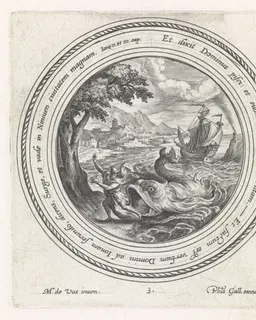
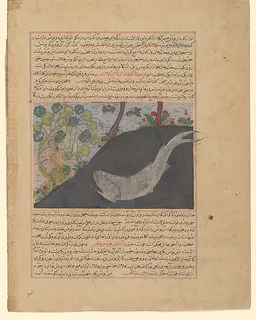
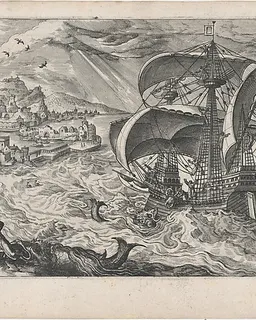
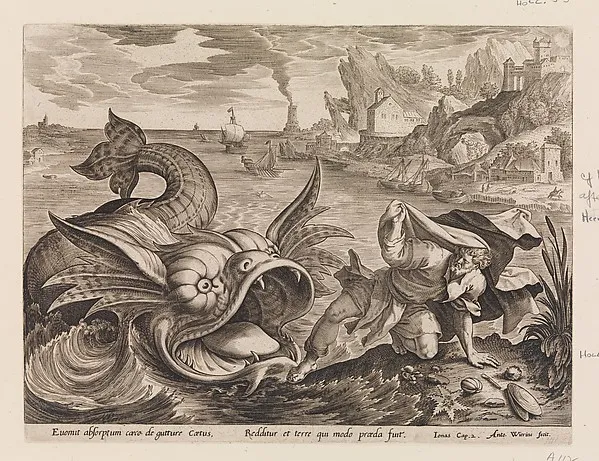
The first chapter ended with a sentence that should have been the end of the prophet: the LORD had prepared a great fish to swallow up Jonah; and Jonah was in the belly of the fish three days and three nights. Chapter 2 is what happened inside. It is a prayer - a whole psalm, really, woven through with the language of Israel's songbook - offered from the strangest sanctuary in all of Scripture: Then Jonah prayed unto the LORD his God out of the fish's belly (v. 1).
What is remarkable is how he prays. There is no panic in it, no bargaining, no demand to be let out. He looks back on a deliverance that has already begun and gives thanks for it. The man who ran from God has been caught by God, and from the lowest point of his flight he turns and speaks to Him again.1
Tap any highlighted phrase to jump to the commentary that unpacks it.
Jonah 2:1-6Out of the Belly of Hell Cried I
1Then Jonah prayed unto the LORD his God out of the fish’s belly, 2And said, I cried by reason of mine affliction unto the LORD, and he heard me; out of the belly of hell cried I, and thou heardest my voice. 3For thou hadst cast me into the deep, in the midst of the seas; and the floods compassed me about: all thy billows and thy waves passed over me. 4Then I said, I am cast out of thy sight; yet I will look again toward thy holy temple. 5The waters compassed me about, even to the soul: the depth closed me round about, the weeds were wrapped about my head. 6I went down to the bottoms of the mountains; the earth with her bars was about me for ever: yet hast thou brought up my life from corruption, O LORD my God.
The chapter opens with a sentence that is almost too strange to take in calmly: Then Jonah prayed unto the LORD his God out of the fish's belly (v. 1). Everything in those few words is worth pausing over. He prayed - the prophet who, in chapter 1, was the only person on a sinking ship not crying to his God, who lay asleep in the hold while pagan sailors begged heaven for mercy, now finally opens his mouth to the LORD.
And he prays from the fish's belly, the one place a prayer should never be able to leave. Notice, too, the tender phrase the narrator slips in: he prayed unto the LORD his God. After the running, after the hurled lot and the hurled body, after being swallowed whole into the dark, the relationship is still there. He is still Jonah, and the LORD is still his God. The whole prayer that follows is shaped like a psalm of thanksgiving - a grateful song looking back on a rescue already underway.
The man who fled the presence of the LORD discovers that there was no fleeing it after all, and that the presence he fled is the only presence that can save him.1
Jonah looks back on the moment the sea took him, and he names plainly whose hand was behind it: For thou hadst cast me into the deep, in the midst of the seas (v. 3). The sailors had thrown him overboard, but Jonah looks past their hands to God's. Thou hadst cast me. It carries the clear sight of a man who understands at last that the storm and the sea and the sinking were the LORD's own dealing with him.
And then the language begins to drown the reader along with the prophet: the floods compassed me about: all thy billows and thy waves passed over me. The words are borrowed straight from the songs of Israel, where the same image speaks of overwhelming distress - deep calling to deep, all God's waves and billows going over the sufferer. What rolls over Jonah are thy billows and thy waves; even the engulfing flood belongs to God.
In the next breath comes the cry of a man who feels utterly cut off: Then I said, I am cast out of thy sight (v. 4). It is the worst thing he can imagine - to be banished from before the very One whose presence he had tried to escape. Yet even here a thread of hope holds: yet I will look again toward thy holy temple. Cast out of God's sight, he turns his face toward the place where God meets His people, and refuses to stop looking.
The descent reaches its floor in verses 5 and 6, and the poetry pulls us all the way down with it: The waters compassed me about, even to the soul: the depth closed me round about, the weeds were wrapped about my head. I went down to the bottoms of the mountains; the earth with her bars was about me for ever. Every line sinks lower than the last. The waters close over him even to the soul - to the very seat of his life.
The seaweed of the deep tangles about his head like a shroud. He goes down to the bottoms of the mountains, the roots of the world beneath the sea, the deepest place imaginable. And then the most final image of all: the earth with her bars was about me for ever, as though the gates of the grave had shut behind him and locked, as though there were no way back. This is the language of death itself; Jonah is describing his own burial.
And it is exactly here, at the bottom, with the bars shut and for ever hanging in the air, that the whole prayer turns on a single word: yet hast thou brought up my life from corruption, O LORD my God (v. 6). Yet. The bars were shut, but God broke them open. The pit had closed, but God reached down into it. The life that went all the way down to corruption - to the place of decay and death - God brought up. Down, and then up; that is the shape of this prayer, and it is the shape of the gospel.
Jonah 2:7-10Salvation Is of the LORD
7When my soul fainted within me I remembered the LORD: and my prayer came in unto thee, into thine holy temple. 8They that observe lying vanities forsake their own mercy. 9But I will sacrifice unto thee with the voice of thanksgiving; I will pay that that I have vowed. Salvation is of the LORD. 10And the LORD spake unto the fish, and it vomited out Jonah upon the dry land.
The prayer turns from the depths to the turning point itself: When my soul fainted within me I remembered the LORD: and my prayer came in unto thee, into thine holy temple (v. 7). The hinge is the word remembered. This is the turning of the whole self back toward God at the moment everything else gave way. When Jonah's strength was utterly spent - my soul fainted within me, the ebbing of the last of his life - what surfaced was not a clever escape but a Person: I remembered the LORD. In the place where memory is the only strength left, Jonah remembered the right thing.
And his prayer, offered from the bottom of the sea, did not stay trapped under the waters with him; it came in unto thee, into thine holy temple. Back in verse 4 he had vowed, from the deep, that he would look again toward thy holy temple; now he testifies that the look was answered - the prayer climbed all the way up from Sheol and arrived in the presence of God. There is great comfort hidden in this.
A prayer prayed from the lowest, darkest, most disqualifying place a person can occupy rises. It arrives. The God who dwells in the holy temple hears the voice that cries from the belly of the grave.
Then Jonah draws a sharp line between two ways of meeting trouble: They that observe lying vanities forsake their own mercy (v. 8). A lying vanity is an idol - anything trusted to save that has no power to save, an empty nothing dressed up as a god. And Jonah's charge against those who cling to such things is piercing: in holding to what cannot help them, they forsake their own mercy. They abandon the very kindness that was reaching out to rescue them.
The tragedy is that running to idols means turning your back on the One who actually can help. There is a quiet confession folded into this line. Jonah himself had been observing a kind of lying vanity - his own will, his own course to Tarshish, his own determination to escape his calling. In running from the LORD he had been on the very edge of forsaking his own mercy. Now, from the fish's belly, he sees it for what it was.
The contrast sets up the great confession to come: over against every empty thing that cannot save stands the LORD, who can - and does.
Out of the depths, Jonah makes his vow: But I will sacrifice unto thee with the voice of thanksgiving; I will pay that that I have vowed (v. 9). The word But is doing the work of a hinge - over against those who forsake their mercy by clutching empty idols, Jonah turns the whole weight of his future toward the living God. Notice that his sacrifice is offered with the voice of thanksgiving, and that he speaks of it while he is still inside the fish, still surrounded by the sea, before he can see the shore.
He gives thanks for a deliverance he has not yet stepped into. That is the language of faith - counting the rescue so sure that the thanksgiving begins in the dark. And then, having emptied himself of every other hope, Jonah says the thing the whole book has been moving toward, three words that hold more than their size: Salvation is of the LORD. It is the confession of a man who has tried running and found it useless, tried his own way and gone down to the bottoms of the mountains, and at last has nothing left to trust but God.
He has lost everything else and found that the LORD is enough. Saving comes down from God, and it belongs to Him alone.
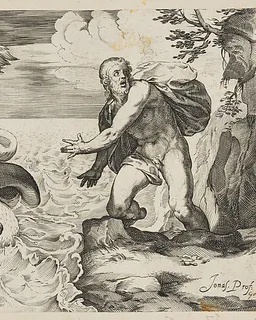
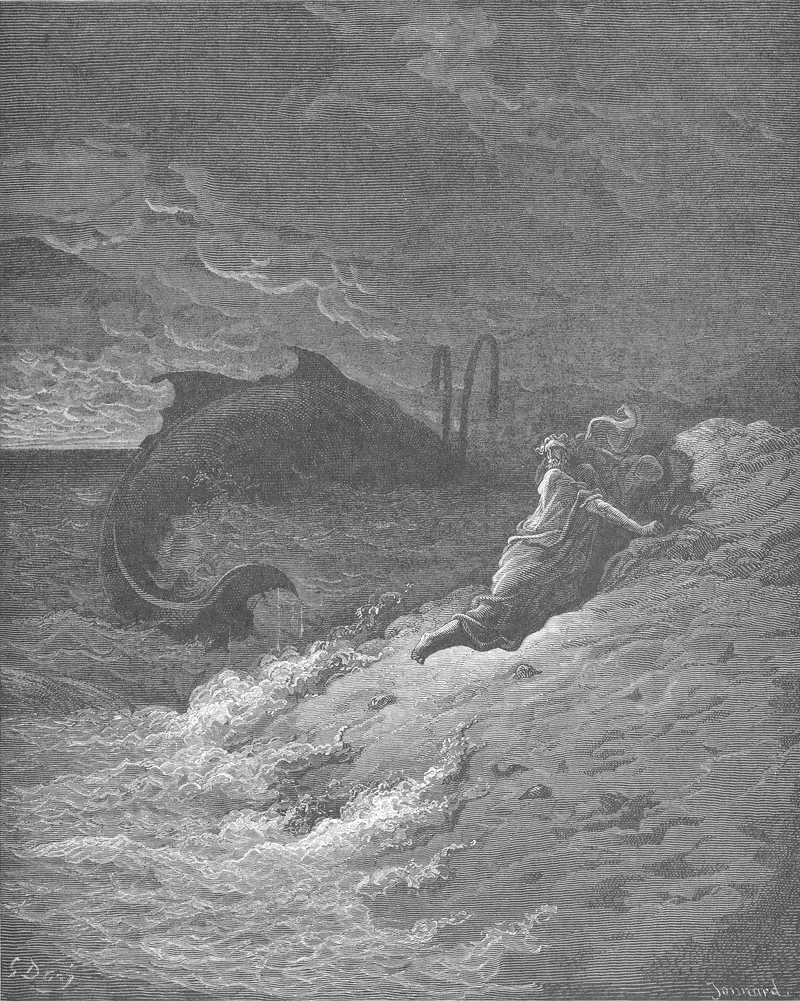
The chapter ends with one short, almost startling sentence: And the LORD spake unto the fish, and it vomited out Jonah upon the dry land (v. 10). After the towering prayer, the rescue itself takes a single line. The LORD does not wrestle the fish or coax it; He spake, and it obeyed at once - the same effortless word that prepared the great fish in the first place (1:17) and that had stirred up the storm.
The whole created order, from the wind to the waves to the monster of the deep, answers the voice of its Maker instantly. And the place Jonah is set down matters: the dry land. All through this prayer he has been in the realm of water and death - the deep, the floods, the bottoms of the mountains. Now he is back on solid ground, alive, given a second life and, as the next chapter will show, a second chance.
He had gone down to Joppa, down into the ship, down into the hold, down into the sea, down to the roots of the mountains; now, at the word of the LORD, he is brought all the way back up to the dry land. The descent is reversed. The man who confessed salvation is of the LORD from the belly of the deep now stands on the shore as living proof of it - saved by the God who spoke and was obeyed.
Research trail
Sources & further study
These references support the historical, linguistic, manuscript, and contextual notes in this chapter. Scripture remains the primary text; external sources are provided so readers can inspect the research directly.
- Jonah 2 - Translators' NotesThe NET Bible's detailed footnotes on Jonah 2 - the setting of the prayer in verse 1, the imagery of Sheol and the engulfing deep in verses 2-6, the difficult phrase brought up my life from corruption in verse 6, and the great confession of verse 9.
- Jonah 2 · Hebrew + classical Jewish commentaryThe Hebrew text of Jonah 2 with Rashi, Ibn Ezra, and other classical commentators side by side - useful for yeshuah (v. 9, the “salvation” that belongs to the LORD), for sheol (v. 2, the “belly of hell” from which Jonah cries), and for the dense weave of Psalm-language running through the whole prayer.
- Jonah 2 ↔ Psalms · Matthew 12 · Acts 2Traces the threads tying Jonah 2 to the rest of Scripture - the prayer's borrowed lines from the Psalms (vv. 2-9), the descent and rescue read beside thou wilt not… suffer thine Holy One to see corruption (Ps. 16:10; Acts 2:27), and the three days in the deep that Jesus claims as the sign of His own death and rising (Matt. 12:40).
Where this echoes in Scripture
Out of the Belly of Hell Cried I
- Matthew 12:39-40as Jonas was three days and three nights in the whale's belly; so shall the Son of man be three days and three nights in the heart of the earth.The Lord Jesus names Jonah's three days in the deep as the sign of His own death and rising - the key to verses 1-6.
- Psalm 16:10thou wilt not leave my soul in hell; neither wilt thou suffer thine Holy One to see corruption.The cry from the depths and the body not left to corruption - read beside verses 2 and 6.
- Psalm 42:7all thy waves and thy billows are gone over me.The very line Jonah borrows in verse 3 - the overwhelming flood that nonetheless belongs to God.
- Psalm 139:7-8Whither shall I go from thy spirit?... If I make my bed in hell, behold, thou art there.The truth Jonah proves in verses 2-4 - there is no descent so deep that God is not there to hear.
- Acts 2:24Whom God hath raised up, having loosed the pains of death: because it was not possible that he should be holden of it.The “yet” of verse 6 fulfilled - the life brought up from corruption, the grave unable to hold its prisoner.
Salvation Is of the LORD
- Psalm 3:8Salvation belongeth unto the LORD: thy blessing is upon thy people.The same confession as verse 9 - salvation as something that belongs to God and comes from Him.
- Matthew 1:21thou shalt call his name JESUS: for he shall save his people from their sins.The truth of verse 9 carried in a name - “Jesus” means the LORD is salvation.
- Acts 4:12Neither is there salvation in any other: for there is none other name under heaven given among men, whereby we must be saved.The exclusivity of verse 9 - salvation of the LORD alone, now named in the risen Christ.
- Revelation 7:10Salvation to our God which sitteth upon the throne, and unto the Lamb.Jonah's three words (v. 9) become the everlasting song of the redeemed before the throne.
- Jonah 1:17Now the LORD had prepared a great fish to swallow up Jonah... three days and three nights.The word that prepared the fish is the word that releases it (v. 10) - the whole rescue at the LORD's command.