Sirach 1
Where does wisdom come from? Sirach opens its long school of instruction by refusing to start with technique. Before a single piece of advice, the book lifts your gaze to the source: all wisdom is from the Lord God, has always been with Him, and stands before all time. The chapter piles up questions no one can answer. Who has numbered the sand of the sea, or the drops of rain, or measured the height of heaven and the depth of the abyss?
The point of the questions is humility. The wisdom that orders all things is past our finding out on our own. It must be given.
Tap any highlighted phrase to jump to the commentary that unpacks it.
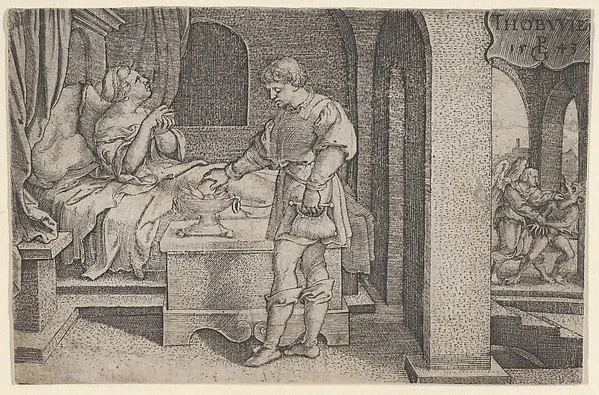
Sirach 1:1-5All Wisdom Is from the Lord, Before All Time
1All wisdom is from the Lord God, and hath been always with him, and is before all time. 2Who hath numbered the sand of the sea, and the drops of rain, and the days of the world? Who hath measured the height of heaven, and the breadth of the earth, and the depth of the abyss?
The whole book stakes everything on its first line. All wisdom is from the Lord God; it has always been with Him; it stands before all time. Whatever a person learns of living well is not finally a human invention but a gift that traces back to God Himself. By placing this claim first, Sirach overturns the natural order of a self-help manual. Practical skill, the chapters of advice that follow, all of it rests on a foundation laid here: wisdom is older than the world and belongs to God before it ever belongs to us.
The chapter presses the point with questions that have only one answer. Who has counted the grains of sand, the drops of rain, the days of the world? Who has measured the height of heaven or the depth of the abyss? No one. The questions are meant to make the reader small in the best way, to deflate the pride that imagines it can master wisdom by effort alone. The same God who alone can number the uncountable is the One in whom wisdom dwells.
If we are ever to have her, she will come down to us; we will not climb up to seize her.
4Wisdom hath been created before all things, and the understanding of prudence from everlasting. 5The word of God on high is the fountain of wisdom, and her ways are everlasting commandments.
Wisdom, the chapter says, was "created before all things," and understanding belongs to her "from everlasting." Sirach reaches for language that places wisdom at the very threshold of creation, present before the world began. Readers have long heard in lines like these an echo of the wisdom that Proverbs pictures beside God when He set the heavens in place, "rejoicing always before him" (Proverbs 8:30). The point is that wisdom is no afterthought and no late human discovery. She belongs to the deepest order of things, woven into reality by the God who is her home.
Then the source is named directly: "The word of God on high is the fountain of wisdom." Wisdom flows out of God's own utterance, His word, like water from a spring. And "her ways are everlasting commandments," which ties wisdom to obedience. To walk in wisdom is to walk in the lasting ways God has spoken, not to chase a private cleverness of our own. The fountain and the path are both God's. We drink where He pours, and we walk where He has marked the road.
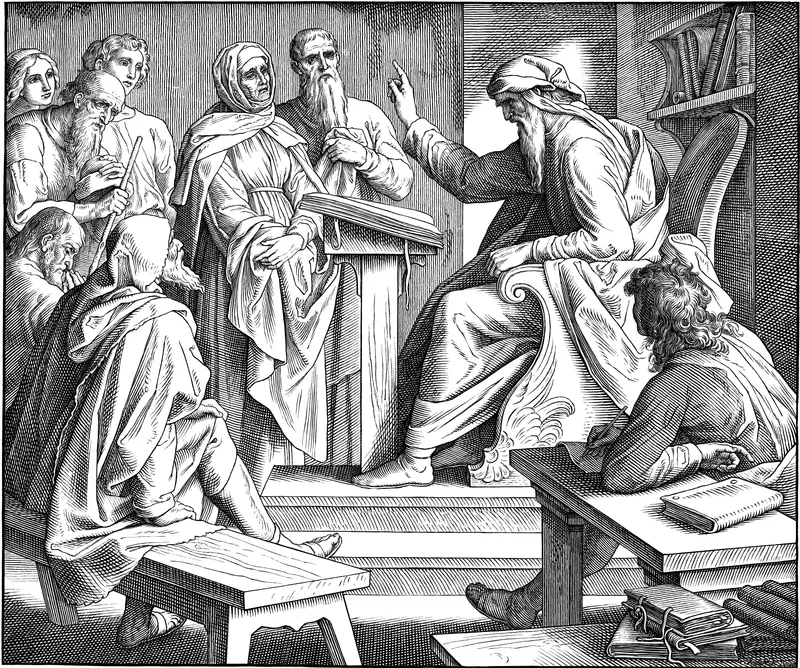
Sirach 1:6-10The Unsearchable Wisdom, Poured Out as a Gift
6To whom hath the root of wisdom been revealed, and who hath known her wise counsels? 8There is one most high Creator Almighty, and a powerful king, and greatly to be feared, who sitteth upon his throne, and is the God of dominion.
The chapter asks again who has reached the bottom of wisdom: to whom has "the root of wisdom" been revealed, who has traced out her counsels and the "multiplicity of her steps"? The image of a root says that what we see of wisdom in the world is only her surface; her source runs down out of sight into God. We can walk among the branches and never fathom the root. This is not meant to discourage the seeker but to keep him reverent, aware that the wisdom he receives is drawn from a depth he did not make and cannot exhaust.
The answer to all the questions is a Person. "There is one most high Creator Almighty," a king enthroned, the God of all dominion, "greatly to be feared." Wisdom is not a free-floating force to be tapped; she belongs to the living God who made and rules everything. Notice how naturally awe and nearness sit together here. The God on the throne, mighty and to be feared, is the very One who in the next breath shares His wisdom with His creatures. Reverence does not push Him away; it is the posture in which His gift is rightly received.
9He created her in the Holy Ghost, and saw her, and numbered her, and measured her. 10And he poured her out upon all his works, and upon all flesh according to his gift, and hath given her to them that love him.
Here the language turns intimate. God brought wisdom forth "in the Holy Ghost," and He "saw her, and numbered her, and measured her." The same God who alone can measure the abyss measures wisdom herself, knowing her fully as no creature can. The mention of the Holy Spirit links wisdom to the breath and presence of God moving over creation. What no one else can search out, God knows from within, because wisdom and His own Spirit are bound together at the source.
Now comes the turn that changes everything. The unsearchable wisdom is not locked in heaven. God "poured her out upon all his works, and upon all flesh according to his gift." There is a generosity laid into the whole creation, a measure of wisdom given to all that He has made. And then a narrowing of grace: He "hath given her to them that love him." A wider gift rests on all flesh, and a deeper portion is reserved for those whose hearts are turned toward God in love.
Wisdom is poured, not sold. The hands that receive her fullest are the hands lifted in love to the Giver.
Sirach 1:11-20The Fear of the Lord: Beginning, Fullness, and Crown
11The fear of the Lord is honour, and glory, and gladness, and a crown of joy. 12The fear of the Lord shall delight the heart, and shall give joy, and gladness, and length of days.
Now the chapter sounds the note it will return to again and again. The fear of the Lord, far from being grim, is named "honour, and glory, and gladness, and a crown of joy." It delights the heart and gives length of days. This is the surprising heart of the matter. The reverence Sirach commends is not the cringing dread of a slave before a tyrant. It is the awe of a creature standing rightly before the living God, and that awe turns out to be the doorway into joy.
To honour God as God is to come into a gladness the proud never find.
16The fear of the Lord Is the beginning of wisdom, and was created with the faithful in the womb, it walketh with chosen women, and is known with the just and faithful. 20To fear God is the fulness of wisdom, and fulness is from the fruits thereof.
Sirach now states the principle that anchors all the wisdom books: "The fear of the Lord is the beginning of wisdom." This is the same conviction Proverbs and the Psalms place at their foundation. Reverence is where the wise life starts. A person can be brilliant and well-read and still be a fool if he never bows before God; and a simple soul who fears the Lord has already taken the first and most important step toward true wisdom. Everything Sirach will teach in the chapters to come assumes this beginning. Without it, knowledge has no roots.
And then the same reverence is named not only as the beginning but as the goal: "To fear God is the fulness of wisdom." The fear of the Lord is where wisdom starts and where, ripened and complete, it ends. This is a striking thing to say. It means reverence is not a stage we outgrow as we mature, a beginner's lesson left behind once we advance. It deepens. The wisest person is not the one who has moved beyond the fear of the Lord but the one in whom it has grown full, bearing its fruit across a whole life.
Sirach 1:22-30The Crown of Wisdom, and the Fear That Drives Out Sin
22The fear of the Lord is a crown of wisdom, filling up peace and the fruit of salvation: 25The root of wisdom is to fear the Lord: and the branches thereof are longlived.
The fear of the Lord, already named the beginning and the fullness, is now called the "crown of wisdom," and it is said to fill up "peace and the fruit of salvation." A crown is what completes and adorns; it sits at the summit. So reverence is not only the root system underground but also the glory on top. And what it yields is peace and salvation, not anxiety. The person who lives in awe of God is brought into a settled peace, because his life is rightly ordered around the One who holds all things.
Reverence and rest are not at odds; the first leads into the second.
Sirach returns to the image of the tree: "The root of wisdom is to fear the Lord: and the branches thereof are longlived." Reverence is the hidden root, and out of it grows a life that endures. The picture recalls the blessed person of Psalm 1, planted by streams of water, whose leaf does not wither. A life grounded in the fear of the Lord has staying power. It is not blown over by every wind, because its roots go down into God. What is planted in reverence lasts.
27The fear of the Lord driveth out sin: 29A patient man shall bear for a time, and afterwards joy shall be restored to him.
Here is one of the most practical lines in the chapter: "The fear of the Lord driveth out sin." Reverence is not a passive feeling; it does active work in the soul. When the awareness of God is alive and warm, sin loses its foothold, the way light filling a room leaves no place for the dark. Much temptation thrives precisely where we have forgotten God, where we act as though no one sees. To carry a living sense of His presence is to find that many sins simply lose their grip.
The cure for the divided heart, which the chapter is about to confront, begins right here, in a reverence that crowds wrongdoing out.
The chapter adds a word for the long road: "A patient man shall bear for a time, and afterwards joy shall be restored to him." Wisdom does not promise that the reverent life is always easy in the moment. There are seasons of bearing, of waiting, of holding steady when the reward is not yet in sight. But the patience born of the fear of the Lord is not wasted. Joy is restored to the one who endures.
The fruit comes "afterwards," and the wise are those willing to wait for it, trusting the God who keeps His promises in His own time.
Sirach 1:33-40Keep Justice, and Come Not with a Double Heart
33Son, if thou desire wisdom, keep justice, and God will give her to thee. 35Is faith, and meekness: and he will fill up his treasures.
The chapter turns from grand vision to direct address: "Son, if thou desire wisdom, keep justice, and God will give her to thee." Here is the bridge between longing and receiving. Wisdom is a gift, but it is given to a particular kind of life. The one who keeps justice, who actually does what is right, is the one whose hands God fills. There is no shortcut around obedience. To desire wisdom while refusing to live justly is to ask for a gift while shutting the door through which it comes.
Keep justice, Sirach says, and the gift will be given.
What is "agreeable" to God, the chapter says, is "faith, and meekness," and to such a one He "will fill up his treasures." These are quiet virtues, the trust that holds on to God and the lowliness that does not exalt itself. They are not the traits the world calls strong, yet they are the soil wisdom grows in. The proud and the faithless cannot receive what God wants to give, because their hands are full of themselves. Faith and meekness open the hands. They are the receptive heart that God delights to fill.
36Be not incredulous to the fear of the Lord: and come not to him with a double heart. 37Be not a hypocrite in the sight of men, and let not thy lips be a stumblingblock to thee. 40Because thou camest to the Lord wickedly, and thy heart is full of guile and deceit.
The chapter ends where wisdom always comes to rest, at the condition of the heart: "come not to him with a double heart." A double heart is one divided against itself, honouring God with words while reserving a hidden loyalty elsewhere. Sirach has spent the whole chapter showing that wisdom is poured out by God and received in reverence and love; now he names the one thing that blocks it. You cannot receive the gift with a heart split in two. The God who pours wisdom out looks for a single, undivided heart turned wholly toward Him.
The warning grows sharp. Do not be "a hypocrite in the sight of men," do not let your own lips become a "stumblingblock" to you, lest your secrets be uncovered and you be brought low. The danger Sirach names is the gap between the face we show and the heart we hide, the religious performance that has no inward reality behind it. Such a life trips over itself in the end. The remedy is not better acting but a truer heart, the integrity that lets the inside and the outside finally match.
The final line names the root of the whole danger: a heart "full of guile and deceit" that comes to the Lord "wickedly." This is the opposite of the simplicity Sirach has been commending. The chapter that opened with the boundless wisdom of God closes by asking for one small, costly thing in return, a heart without guile. That is where all the grandeur finally comes down: do not come to God pretending.
Come honestly, or the gift cannot reach you. Wisdom is poured into open, single, truthful hearts.
Where this echoes in Scripture
All Wisdom Is from the Lord, Before All Time
- James 1:5If any of you lack wisdom, let him ask of God, that giveth to all men liberally, and upbraideth not; and it shall be given him.The same promise: wisdom is from God, and He gives it freely to those who ask.
- Proverbs 8:22-23The LORD possessed me in the beginning of his way, before his works of old. I was set up from everlasting, from the beginning.Wisdom present before all things, exactly as Sirach declares.
- 1 Corinthians 2:7But we speak the wisdom of God in a mystery, even the hidden wisdom, which God ordained before the world unto our glory.The wisdom of God, hidden and ancient, made known to those who love Him.
The Unsearchable Wisdom, Poured Out as a Gift
- Colossians 2:3In whom are hid all the treasures of wisdom and knowledge.The root of wisdom, hidden in God, made known in Christ.
- Romans 11:33O the depth of the riches both of the wisdom and knowledge of God! how unsearchable are his judgments, and his ways past finding out!The unsearchable wisdom whose root no one has traced.
- Acts 2:17And it shall come to pass in the last days, saith God, I will pour out of my Spirit upon all flesh.God pouring out His gift on all flesh, as Sirach says of wisdom.
The Fear of the Lord: Beginning, Fullness, and Crown
- Proverbs 9:10The fear of the LORD is the beginning of wisdom: and the knowledge of the holy is understanding.The same foundation: reverence is where wisdom begins.
- Psalm 111:10The fear of the LORD is the beginning of wisdom: a good understanding have all they that do his commandments.Wisdom begins in awe and is proven in obedience.
- Luke 1:50And his mercy is on them that fear him from generation to generation.The reverent are met with mercy, the gladness Sirach promises.
The Crown of Wisdom, and the Fear That Drives Out Sin
- Proverbs 16:6By mercy and truth iniquity is purged: and by the fear of the LORD men depart from evil.The same truth: the fear of the Lord turns a person away from sin.
- Psalm 1:3And he shall be like a tree planted by the rivers of water... his leaf also shall not wither.The long-lived branches of a life rooted in reverence.
- Galatians 6:9And let us not be weary in well doing: for in due season we shall reap, if we faint not.Joy restored afterward to the patient, just as Sirach promises.
Keep Justice, and Come Not with a Double Heart
- James 1:8A double minded man is unstable in all his ways.The double heart Sirach warns against, and the instability it breeds.
- Psalm 86:11Teach me thy way, O LORD; I will walk in thy truth: unite my heart to fear thy name.The prayer for exactly what this passage seeks: an undivided heart.
- Matthew 6:1Take heed that ye do not your alms before men, to be seen of them.Jesus warns against the same hypocrisy of a performed, divided faith.