Painter of the Bible
Bernardo Daddi
Bernardo Daddi was the leading Florentine painter of the generation immediately after Giotto and the principal supplier of small-format devotional altarpieces and panel paintings to the city's wealthy lay confraternities…

Their faith
Why Bernardo Daddi painted Christ
Bernardo Daddi, a prominent figure in the Florentine art scene of the 14th century, was deeply rooted in his Christian faith. Trained in the workshop of Giotto, Daddi's artistic journey was infused with a reverence for sacred themes, which he expressed through his prolific output of devotional altarpieces and panel paintings. His works were primarily commissioned by wealthy lay confraternities and private patrons, reflecting a vibrant culture of faith and devotion in Florence. Daddi's commitment to his craft was not merely professional; it was a spiritual practice, as he sought to create art that would inspire prayer and contemplation. His intimate and jewel-like paintings, designed for personal devotion, reveal a heart dedicated to God and the beauty of His creation.
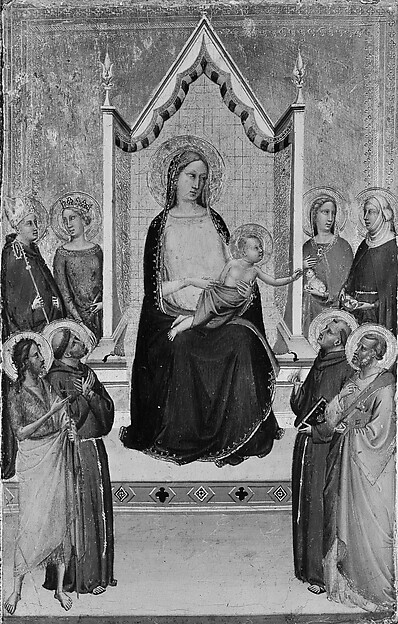
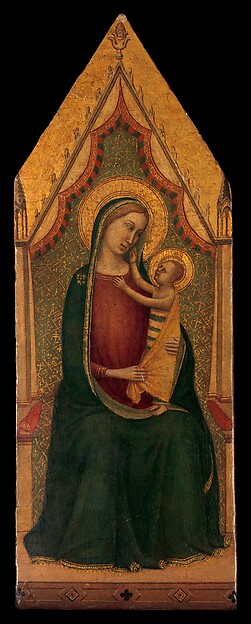
Daddi's faith significantly shaped his artistic vision, as seen in his masterpieces such as the Madonna and Child with Angels, housed in the marble tabernacle of the Confraternity of Orsanmichele, and the polyptych of San Pancrazio, which features a central Madonna and Child surrounded by saints. These works exemplify his ability to convey divine grace and the sacred through soft, intimate figures and vibrant colors that invite viewers into a deeper relationship with the divine. The portable diptychs, resembling jeweled boxes, further illustrate Daddi's intention to create art that was not just for public display but for personal reflection and prayer. Through his devotion and artistry, Daddi continues to inspire viewers, reminding them of the beauty and holiness found in the life of Christ and the saints.
Life & work
Bernardo Daddi was the leading Florentine painter of the generation immediately after Giotto and the principal supplier of small-format devotional altarpieces and panel paintings to the city's wealthy lay confraternities and private patrons in the second quarter of the fourteenth century. Born in Florence around 1290, trained almost certainly in Giotto's late workshop (his earliest documented works show direct dependence on Giotto's Bardi Chapel manner), and active in Florence from the 1320s until his death in the city around 1348 — possibly in the Black Death epidemic that killed most of his generation — he ran a productive workshop that turned out Madonnas, polyptychs, and small portable diptychs for both ecclesiastical and domestic use.
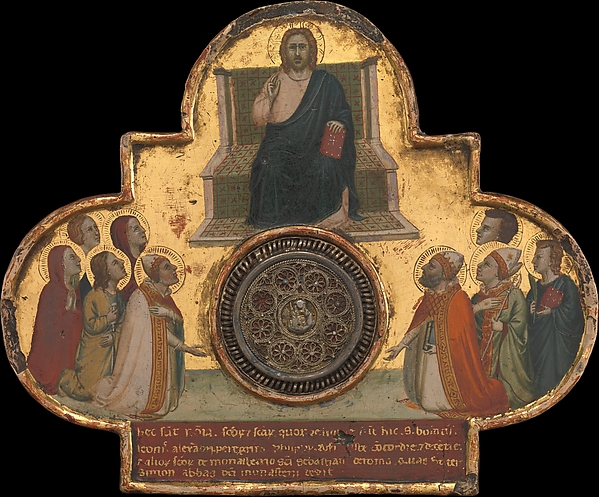
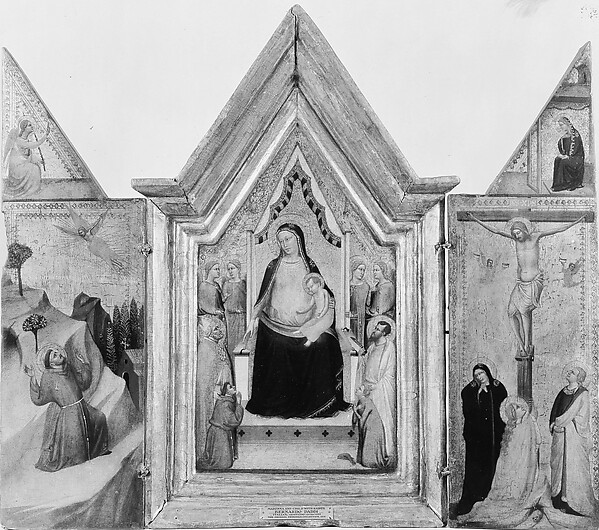
His central religious works include the great altarpiece for the Confraternity of Orsanmichele in Florence (1346–1347, the Madonna and Child with Angels enshrined in Andrea Orcagna's marble tabernacle still in the church); the polyptych of San Pancrazio (now in the Uffizi, c. 1336–1340), with its central Madonna and Child flanked by a register of saints and a predella of biblical scenes; the Triptych of the Crucifixion (Bigallo, Florence); the small Madonna of the Magnificat (Uffizi); and a long sequence of small portable diptychs and triptychs of the Madonna with Saints, the Crucifixion, and scenes from the lives of the saints, scattered across museums in Florence, Berlin, London, the Vatican, and the great American collections (the Cloisters, the Frick, the Museum of Fine Arts in Boston).
His personal style is an unmistakable softening of Giotto's monumental Trecento manner: smaller-scale figures, sweeter facial types, jewel-bright color (rose, mint-green, deep ultramarine), elaborately tooled gold-ground decoration, and an unusual feeling for the small intimate panel intended for private prayer rather than for the high altar. The portable diptychs in particular — closed they look like jeweled boxes, opened they reveal a Madonna and a Crucifixion or a Nativity facing each other across a small hinge — became, through Daddi's workshop, one of the standard Florentine devotional formats for the wealthy lay patron of the mid-fourteenth century.
He led one of the most prolific Florentine workshops of the second quarter of the Trecento and trained or influenced the next Florentine generation — Andrea Orcagna, Nardo di Cione, the Master of the Fogg Pietà — that carried Florentine painting through the disruption of the Black Death and into the late Trecento.
Bible scenes Bernardo Daddi painted
John
Matthew
Luke